-
We detected your language preference as English. Would you like to switch to the English version for a better experience?
Switch to English
Stay here


Thiourea dioxide, also known as Formamidine sulfinic acid (FASA) or Aminoiminomethanesulfinic acid (AIMS), is a versatile compound with significant chemical properties and practical applications. This article delves into the preparation methods, chemical properties, and applications of thiourea dioxide across various industries, aiming to provide readers with a comprehensive understanding of its significance and potential applications.
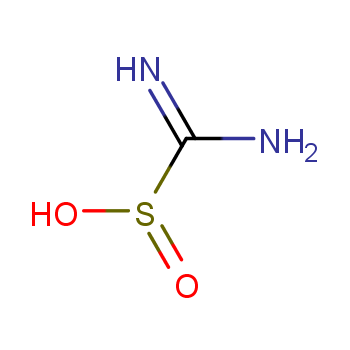
Thiourea dioxide (TUD) is an organic sulfur compound, typically white or pale yellow in color. It exists as odorless crystalline powder, stable in both solid form and cold water solutions. Relatively soluble in water (30 g/L at 20°C) but insoluble in typical organic solvents, thiourea dioxide offers ease of recovery and reuse post-reaction. First reported by Barnett in 1910, thiourea dioxide is prepared by oxidizing thiourea with hydrogen peroxide. In recent years, it has found diverse applications in chemical and industrial processes, serving as a versatile reagent, catalyst, and reducing agent.
The toxicity of thiourea dioxide raises significant concerns regarding its potential hazards to human health and related safety considerations. Studies suggest that exposure to high concentrations of thiourea dioxide may lead to irritation upon contact, inhalation, or ingestion, causing discomfort to the skin, eyes, and respiratory system. Additionally, environmental implications warrant cautious handling and storage to prevent leakage or contamination.
Thiourea dioxide's solubility in water (27 g/L at room temperature) and its exothermic decomposition above 126°C release toxic gases (sulfur oxides, ammonia, carbon monoxide, amine oxides, and hydrogen sulfide) and carbon dioxide. Prolonged exposure to temperatures exceeding 50°C in a humid environment may result in significant decomposition, causing skin and mucous membrane irritation, and corrosive effects on eye tissues.
Understanding the potential health hazards and safety considerations of thiourea dioxide is paramount. Therefore, thorough knowledge of possible exposure routes is necessary to avoid unnecessary risks. Regulatory guidelines and safety protocols are crucial for proper handling, storage, and utilization, including the adoption of appropriate personal protective equipment such as gloves, goggles, and masks to minimize exposure risks and ensure operations in a safe environment.
Thiourea dioxide plays a vital role in textile dyeing and printing processes. Its unique chemical properties enable precise control over dye penetration and colorfastness, resulting in vibrant and durable hues on textile materials. Thiourea dioxide facilitates uniform color distribution and improves color retention, enhancing the overall quality of dyed fabrics. Its compatibility with various textile fibers makes it a universal choice for achieving desired shades and enhancing textile aesthetics.
Thiourea dioxide contributes significantly to bleaching operations in the pulp and paper industry. As an effective bleaching agent, it aids in the removal of lignin and other impurities from pulp fibers, resulting in brighter and more uniform paper products. Using thiourea dioxide in pulp bleaching processes leads to the production of high-quality paper with enhanced brightness and printability. Moreover, its relatively low environmental impact compared to traditional bleaching agents makes it an attractive option for sustainable pulp processing practices.
Thiourea dioxide plays a crucial role in the extraction of metals from ores. Its ability to form stable complexes with metal ions facilitates the leaching of valuable metals from ores, enabling efficient metal recovery processes. By enhancing the solubility of metal ions in leaching solutions, thiourea dioxide increases metal extraction rates and reduces processing costs. The application of thiourea dioxide contributes to the efficient utilization of mineral resources and supports the sustainability of metal extraction operations.
Before discussing the disposal of thiourea dioxide, it is essential to understand its nature. Thiourea dioxide is an inorganic compound categorized as Class 4.2, unsuitable for export by sea and only permissible for land transportation. This necessitates special handling methods to ensure safety and environmental protection.
For safe disposal of thiourea dioxide, adherence to relevant regulatory requirements and strict compliance with operational procedures is imperative. (1) Selecting appropriate storage facilities to store thiourea dioxide in cool, dry, well-ventilated areas away from flammable substances and water sources. (2) When handling and using thiourea dioxide, wearing gloves and masks to avoid skin and eye contact. (3) Attention should also be paid to moisture prevention and rain protection to prevent moisture absorption or exposure to rainwater.
In addition to safe disposal, environmentally friendly disposal techniques should be considered. As a reducing agent, thiourea dioxide can be utilized in industrial processes such as dyeing with vat dyes. Furthermore, conversion of thiourea dioxide into other useful chemicals, such as ammonium sulfate, can be explored.
In handling thiourea dioxide, a thorough understanding of regulatory requirements and best practices is essential. For instance, when exporting thiourea dioxide, compliance with relevant sea export regulations, including booking, warehousing, stuffing, declaration, scheduling, customs clearance, port entry, boarding, and signing, is necessary. Additionally, familiarity with safety instructions for thiourea dioxide, including storage, handling, and usage requirements, is crucial.
The industrial production and manufacturing process of thiourea dioxide involve various methods and raw materials. Industrially, thiourea dioxide is typically prepared by the reaction of urea and sulfur dioxide. This reaction can take place under alkaline conditions, and the product can be crystallized in acidic medium to obtain pure material. Another method involves the reaction of urea with sulfur dioxide and carbon dioxide to generate thiourea, which is then dried, cooled, and crushed to obtain thiourea dioxide.
Commercially, thiourea dioxide serves as a significant chemical compound widely used in industries such as textiles, photography, pharmaceuticals, and more. Its commercial availability largely depends on global production and consumption patterns. Currently, the Asia-Pacific region is the primary producer and consumer of thiourea dioxide, with China holding a significant position in the global market. With changing global market dynamics and technological advancements, production and consumption in other regions are gradually increasing.
As a versatile compound, thiourea dioxide plays a crucial role in industries ranging from textiles to metal extraction and pulp processing. Its applications span a wide range from dyes and printing agents to metal extracting agents, demonstrating its diversification and necessity in the industrial sector. However, attention should be paid to the potential toxicity and environmental impact of thiourea dioxide, and adopting appropriate safety measures and handling methods is essential. We encourage further research and responsible use of thiourea dioxide to explore its broader application potential and promote the sustainable development of related industries.
[1]http://www.sciencedirect.com/science/article/pii/0143720894850011/pdf?md5=023b1416e09ac3bcad441575ebe38ce2&pid=1-s2.0-0143720894850011-main.pdf
[2]https://en.wikipedia.org/wiki/Thiourea_dioxide
[3]https://pubchem.ncbi.nlm.nih.gov/compound/61274#section=2D-Structure
[4]https://www.atamanchemicals.com/thiourea-dioxide_u25398/
|
 |
|
 |
 EN
EN
 Agricultural News
 Food News
 Industrial News
 Cosmetic News
 Pharmaceutical News
 Science News

 3YRS
3YRS

