-
We detected your language preference as English. Would you like to switch to the English version for a better experience?
Switch to English
Stay here


Zirconium acetate, an important inorganic compound, has various wide-ranging applications. What is zirconium acetate used for? This article delves into the diverse zirconium acetate uses and its application scenarios in different fields, aiming to provide readers with a comprehensive understanding of the compound's versatile uses and potential application value.
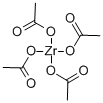
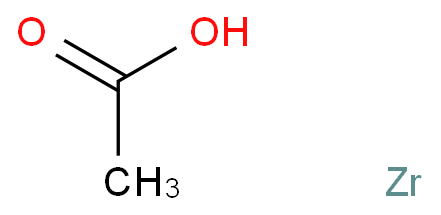
Zirconium acetate is a transparent, colorless, weakly acidic solution containing about 22% ZrO2. What are the uses of zirconium acetate? It is considered to contain neutral hydroxy-bridged zirconium species, beneficial for various applications including adhesives, antiperspirants, printing inks, petroleum production, paints, pigment coatings, and metal treatment. Zirconium acetate is also used in manufacturing waterproof materials and fibers, providing ideal functionality for cross-linking between textile substrates and waterproof wax films. Additionally, zirconium acetate finds application in wax emulsions. In this case, zirconium forms covalent bonds between the carboxyl groups of the substrate and cellulose-based wax. Zirconium acetate serves as a binder in the refractory materials industry. Another application of zirconium acetate is as a catalyst.
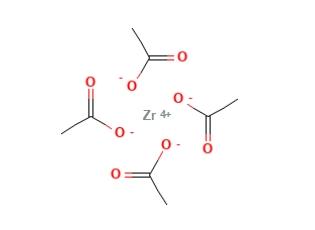
Zirconium acetate acts as a cross-linking agent, forming bonds between fibers and other chemical treatments. This enhances the durability of fabric surface treatments such as flame retardants, wrinkle resistance, and dyes.
Zirconium acetate is a key component in manufacturing waterproof finishing agents for textiles. It combines with wax emulsions, effectively adhering them to textile fibers, creating a barrier against water while maintaining breathability.
Zirconium compounds have been used to improve the dye fastness and functional properties of cotton and wool. By enhancing the adhesion of various treatments, zirconium acetate contributes to the overall durability and performance of textiles.
Paper sizing is a process that improves paper strength, printability, and water resistance. Zirconium acetate acts as an adhesive between cellulose fibers in paper, essentially filling the spaces between them, resulting in denser and stronger paper.
Zirconium acetate is also used as a component in moisture barrier coatings for packaging materials. These coatings form a barrier to protect contents from moisture damage, particularly beneficial for packaging perishable products such as food, pharmaceuticals, and electronic components.
Various forms of zirconium-based adsorbents have been significantly used for purifying various water pollutants. Zirconium-based adsorbents, characterized by hard Lewis acidity, have strong affinity for electronegative ligands and are widely distributed, abundant, cost-effective, non-toxic, environmentally friendly, insoluble in water, and resistant to oxidants and acids.
But in conventional water treatment processes such as filtration or disinfection, zirconium acetate is not widely used. However, it can be used as a coagulant. Zirconium acetate helps destabilize and aggregate certain suspended particles in water, making them easier to remove through filtration.
A promising area of exploration for zirconium acetate is its ability to remove heavy metals and specific pollutants from water. Here are some possible working mechanisms:
Chelation: Zirconium acetate can act as a chelating agent, meaning it can bind to certain metal ions and form complexes. These complexes can be separated from contaminated water through processes like precipitation or filtration. This has the potential to remove heavy metals like lead, arsenic, and mercury from contaminated water sources.
Further research is needed to fully understand the effectiveness and practicality of using zirconium acetate for large-scale removal of heavy metals in water treatment plants.
In ceramic production, zirconium acetate serves as a binder. Before molding and firing, the binder secures ceramic particles together. Zirconium acetate decomposes at relatively low temperatures, leaving behind zirconium oxide (zirconia), a key component of many high-performance ceramics. By serving as a binder in ceramics and providing strengthening and anti-reflective properties in glass, zirconium acetate contributes to creating more durable and high-performance end products.
In the glass industry, zirconium acetate can be used for:
Glass Strengthening: Through sol-gel processes, zirconium acetate can convert into a thin layer of zirconium oxide on the surface of glass. This zirconium oxide layer enhances the strength and scratch resistance of glass.
Anti-Reflective Coatings: Zirconium acetate can also be used to create a thin film coating that reduces reflections on glass surfaces. This is particularly useful for lenses in eyewear or optical instruments, improving light transmission.
Zirconium acetate is a compound that can be used to make materials waterproof. It is a transparent acidic aqueous solution, often used in conjunction with wax or other waterproofing materials. Zirconium acetate forms a barrier by bonding with the fibers of the material, preventing water penetration. This can be applied to waterproof various materials, including textiles, paper, and leather. Here are some benefits of using zirconium acetate as a water repellent: Effective for various materials; relatively durable, can withstand repeated washing or exposure to the elements; zirconium acetate is invisible and does not alter the appearance of treated materials.
Zirconium acetate is a compound used for multiple industrial applications. It possesses the ability to enhance water repellency, hence its particular value. Zirconium acetate, in liquid form, acts as a cross-linking agent, bonding waterproof waxes to fabrics and other materials. This creates a lasting barrier, effectively shedding water. Zirconium acetate is also a source of zirconium ions, useful in various catalytic processes.
The working principle of zirconium acetate is to establish strong bonds between waterproof molecules and the underlying material. For example, when applied to textiles, zirconium acetate helps bond wax coatings to fibers. This coating forms a barrier, preventing water droplets from penetrating the material. Instead, water condenses and rolls off the fabric surface, keeping it dry. The effectiveness of zirconium acetate stems from its ability to form strong chemical bonds and its compatibility with various waxes and resins used in waterproof applications.
Zirconium acetate, as a versatile inorganic compound, holds a wide range of applications and significant research value. Through the introduction in this article, we can observe the important uses of zirconium acetate in fields such as water treatment, materials science, and chemical engineering, providing robust support for the development and innovation in relevant fields. With the continuous advancement of science and technology, it is believed that the application scope of zirconium acetate will continue to expand, making greater contributions to the progress and development of human society.
[1] https://www.luxfermeltechnologies.com/products/zirconium-acetate-zac/
[2] https://connectchemicals.com/en/product-finder/zirconium-acetate-za
[3] https://www.sciencedirect.com/science/article/abs/pii/S1385894721020957
[4] https://pubchem.ncbi.nlm.nih.gov/compound/24237
|
 |
 |
 |
 |
 EN
EN
 Agricultural News
 Food News
 Industrial News
 Cosmetic News
 Pharmaceutical News
 Science News

 3YRS
3YRS

