
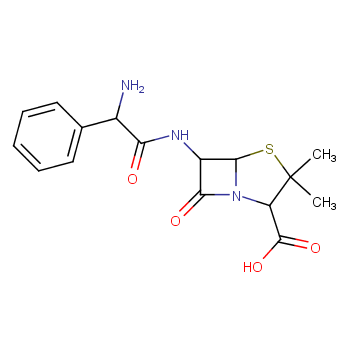
Ampicillin, with the chemical formula C16H19N3O4S and CAS number 69-53-4, is a broad-spectrum antibiotic belonging to the penicillin class. It is commonly used to treat a variety of bacterial infections, including respiratory infections, urinary tract infections, and gastrointestinal infections.
Augmentin, with the chemical formula C24H27KN4O10S and CAS number 74469-00-4, is a combination drug that contains amoxicillin and clavulanate potassium. The clavulanate component enhances the effectiveness of amoxicillin by inhibiting bacterial enzymes that can degrade the antibiotic, broadening its effectiveness against resistant bacteria.
Ampicillin and Augmentin are both penicillin-based antibiotics used to treat bacterial infections, but they differ significantly in their composition and the scope of bacterial strains they target. While ampicillin is effective against a wide range of bacteria, Augmentin is a more potent option, offering enhanced resistance against beta-lactamase-producing bacteria due to the clavulanate component.


Augmentin's synthesis involves a key addition—clavulanic acid—which distinguishes it from ampicillin, enabling the drug to combat more resistant strains of bacteria. Both antibiotics share similar mechanisms of action but differ in their broader spectrum of bacterial resistance due to this added compound in Augmentin.
Ampicillin and Augmentin are both used to treat bacterial infections, though their applications and effectiveness may vary due to differences in their composition. Ampicillin is widely used in the treatment of a variety of infections caused by both gram-positive and gram-negative bacteria. Augmentin, on the other hand, is particularly effective in treating infections caused by beta-lactamase-producing bacteria, which are resistant to many common antibiotics, including ampicillin.

Ampicillin is often prescribed for the treatment of respiratory infections, such as pneumonia and bronchitis, urinary tract infections (UTIs), and infections of the gastrointestinal tract, such as salmonella and shigella. Its broad-spectrum activity allows it to target a wide range of bacterial pathogens, making it an essential option for treating these infections. Ampicillin is typically used in cases where the bacterial strain has not developed resistance mechanisms like beta-lactamase production.
In addition to its use in treating infections, ampicillin is also employed in the prevention of bacterial endocarditis in patients undergoing dental or surgical procedures who are at risk for bacterial infection. Ampicillin is generally well-tolerated, though gastrointestinal discomfort and allergic reactions may occur in some individuals.
Augmentin is a more powerful antibiotic than ampicillin due to the presence of clavulanate, which protects amoxicillin from beta-lactamase enzymes produced by certain resistant bacteria. This makes Augmentin an ideal choice for treating infections caused by bacteria that have developed resistance to other penicillin-based antibiotics. Common conditions treated with Augmentin include sinus infections, ear infections, skin infections, and respiratory infections such as pneumonia.
Augmentin is particularly useful in treating infections in hospitalized patients or those with compromised immune systems, as it is effective against a broader range of bacterial strains. Like ampicillin, Augmentin is also used for preventing bacterial infections following surgical procedures and in certain conditions like diabetic foot infections or intra-abdominal infections.
In conclusion, while both ampicillin and Augmentin are effective antibiotics, Augmentin offers a broader range of applications due to its enhanced ability to combat beta-lactamase-producing bacteria. Ampicillin is suitable for treating a variety of infections, particularly in cases where antibiotic resistance is not a significant concern. However, for more complex infections or those caused by resistant bacteria, Augmentin is the preferred treatment option due to its increased potency.
| Drawback |
Ampicillin |
Augmentin |
|---|---|---|
| Gastrointestinal Issues | Occasionally causes mild nausea, vomiting, or diarrhea | Commonly causes gastrointestinal disturbances, including diarrhea and nausea |
| Allergic Reactions | Rare, but may cause rash or anaphylaxis | Rare, but can cause severe allergic reactions, including anaphylaxis |
| Resistance Development | May lose effectiveness against beta-lactamase-producing bacteria | Can still be effective against resistant bacteria due to the clavulanate component |
| Impact on Gut Flora | Can disrupt gut flora, leading to yeast infections or diarrhea | More likely to cause disturbances in gut flora, leading to yeast overgrowth or severe diarrhea |
| Liver Concerns | Rare, but may affect liver function | May cause liver damage, especially in individuals with pre-existing liver conditions |
If you're looking to purchase these compounds, Guidechem is your go-to platform for sourcing high-quality raw materials and reliable suppliers. With our extensive global network, we connect you to a wide range of Ampicillin suppliers and Augmentin suppliers, ensuring you find the right products to meet your specific research or production requirements. Whether you're in pharmaceuticals, food additives, or other industries, Guidechem simplifies the sourcing process, offering verified supplier information, competitive pricing, and seamless communication.
[1]Ampicillin and Its Uses in Medicine by Dr. M. S. Patel.
[2]Augmentin: A Review of its Pharmacology and Clinical Applications by Dr. K. L. Johnson.
[3]The Role of Clavulanate in Enhancing Antibiotic Efficacy in Journal of Antibiotic Research.
[4]Resistance Mechanisms in Bacteria: A Clinical Perspective in Antimicrobial Agents and Chemotherapy.
 |
|


 6YRS
6YRS


