-
We detected your language preference as English. Would you like to switch to the English version for a better experience?
Switch to English
Stay here


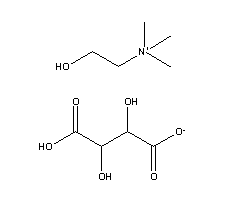
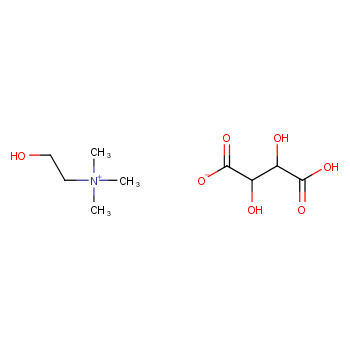
Choline Bitartrate, with the chemical formula C9H19NO7 and CAS number 87-67-2, is a stable and cost-effective source of choline. It is commonly used in dietary supplements to support brain health and liver function.
Choline Citrate, with the chemical formula C6H7O7.C5H14NO and CAS number 77-91-8, is known for its high bioavailability. This form of choline is more readily absorbed and utilized by the body, making it a preferred choice for cognitive enhancement and other neurological benefits.
Choline Bitartrate and Choline Citrate serve as excellent sources of choline, an essential nutrient that plays a critical role in brain function, liver health, and overall cellular processes. The primary difference between these two compounds lies in their bioavailability and applications—Choline Citrate is generally more effective for neurological support, while Choline Bitartrate is widely used for its affordability and stability.


Both compounds rely on the reaction of choline chloride with organic acids, but their differences in structural composition result in distinct physical and biochemical properties, influencing their applications.
Choline is a vital nutrient that supports numerous physiological processes, including brain function, liver health, and muscle performance. Choline Bitartrate and Choline Citrate offer distinct advantages, catering to different health goals.

Choline Bitartrate is an economical and widely available form of choline, making it an accessible choice for individuals looking to enhance their overall health. It is frequently used in dietary supplements to support cognitive function, particularly memory and learning. Additionally, it plays a critical role in liver health by aiding in the prevention of fat accumulation, which can lead to conditions like non-alcoholic fatty liver disease (NAFLD).
Thanks to its affordability, Choline Bitartrate is widely incorporated into multivitamin formulations and standalone supplements, making it accessible to a broad range of users. Its role in supporting cellular function is particularly notable, as it aids in the synthesis of phosphatidylcholine, a vital component of cell membranes that ensures structural integrity and proper cell signaling. Additionally, it is often recommended for those aiming to enhance liver health and maintain overall metabolic efficiency, highlighting its versatility as a dietary supplement.
Choline Citrate is renowned for its superior bioavailability, allowing the body to absorb and utilize it more efficiently. This makes it particularly effective for neurological applications, such as improving focus, mental clarity, and overall cognitive performance. Its ability to cross the blood-brain barrier facilitates the production of acetylcholine, a neurotransmitter essential for memory and learning.
In addition to its cognitive benefits, Choline Citrate is widely used to enhance athletic performance by improving muscle function, supporting nerve signaling, and helping to reduce exercise-induced fatigue. Its rapid absorption makes it particularly effective for athletes seeking quick recovery and sustained energy. Furthermore, this form of choline is often favored in therapeutic applications for managing neurological conditions such as Alzheimer's disease and improving overall brain health, including memory retention and mental focus.
Choline Bitartrate is a cost-effective and versatile choice, commonly used for promoting overall health, supporting liver function, and ensuring adequate choline levels in the body. Its affordability and availability make it a popular option for general supplementation. On the other hand, Choline Citrate is known for its superior bioavailability, allowing it to be absorbed more efficiently. This enhanced absorption makes it particularly effective for targeting neurological and cognitive functions, such as improving memory, focus, and mental clarity. While both compounds provide valuable health benefits, the decision between them depends on individual goals. Those seeking liver health or a general wellness boost might prefer Choline Bitartrate, while individuals focusing on brain health and cognitive performance may benefit more from Choline Citrate.
| Drawbacks |
Choline Bitartrate |
Choline Citrate |
|---|---|---|
| Bioavailability | Lower bioavailability compared to choline citrate | Higher bioavailability, but at a higher cost |
| Cost | More affordable, widely accessible | More expensive, may not be suitable for all budgets |
| Specialized Uses | Limited to general health applications | Primarily used for neurological and therapeutic purposes |
If you're looking to purchase these compounds, Guidechem is your go-to platform for sourcing high-quality raw materials and reliable suppliers. With our extensive global network, we connect you to a wide range of Choline Bitartrate suppliers and Choline Citrate suppliers, ensuring you find the right products to meet your specific research or production requirements. Whether you're in pharmaceuticals, food additives, or other industries, Guidechem simplifies the sourcing process, offering verified supplier information, competitive pricing, and seamless communication.
[1] The Role of Choline in Health by L. M. Smith.
[2] Advances in Neurology by J. T. Campbell.
[3] Clinical Applications of Choline Supplements in Nutrition Research Reviews.
[4] Liver Health and Nutritional Interventions by P. A. Johnson.
|
 |
 |
 |
|
 EN
EN
 Agricultural News
 Food News
 Industrial News
 Cosmetic News
 Pharmaceutical News
 Science News

 1YR
1YR

