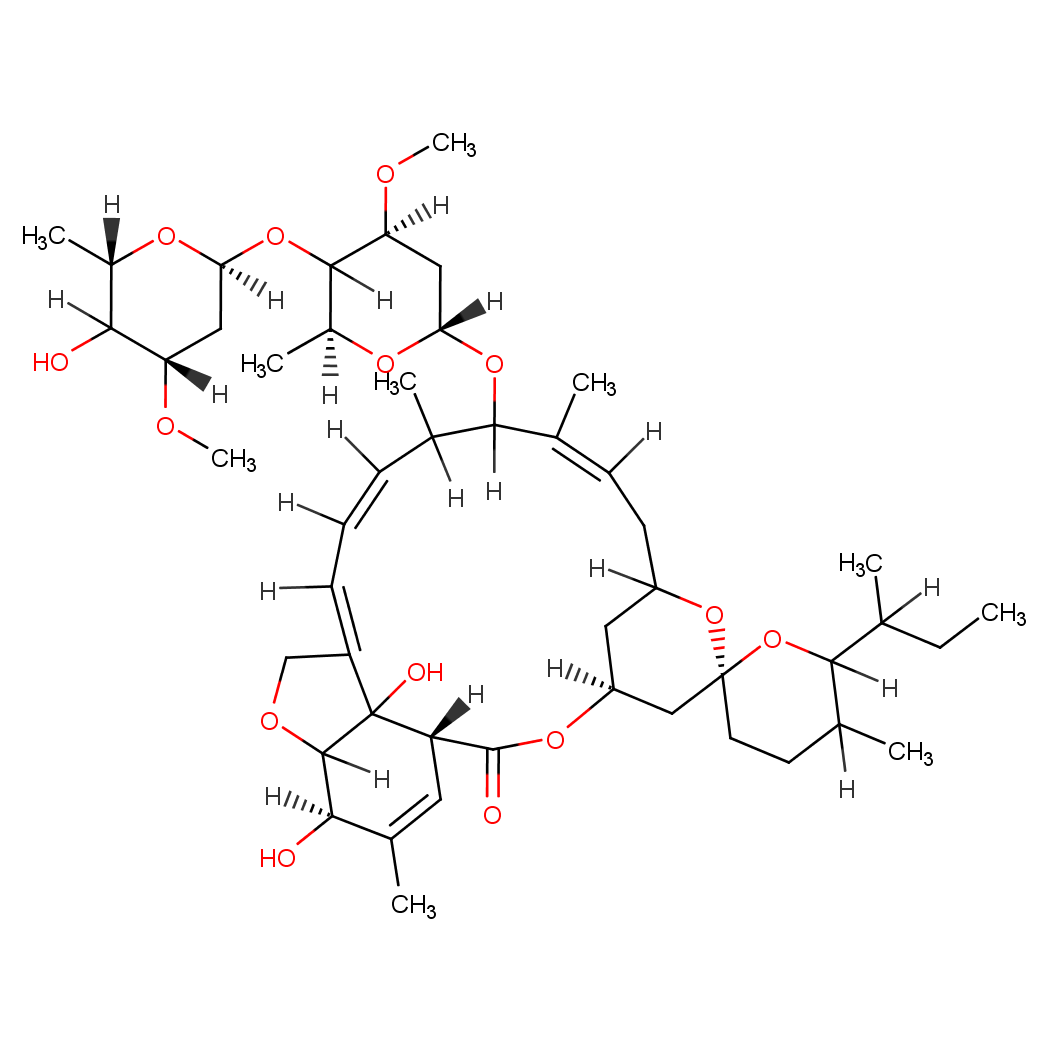
Ivermectin, with the chemical formula C48H74O14 and CAS number 70288-86-7, is a broad-spectrum anthelmintic agent. It acts by affecting the nervous system of scabies mites, ultimately causing their death. However, ivermectin is not ovicidal, meaning it does not kill mite eggs. It is commonly available as an oral systemic drug with a typical dosage of 200 µg/kg (CDC, 2017b).
Permethrin, with the chemical formula C21H20Cl2O3 and CAS number 52645-53-1, is a synthetic pyrethroid used as a topical agent. It is most often found in 5% creams or lotions. Permethrin acts as both a neurotoxin to adult mites and an ovicidal agent, providing comprehensive action against scabies.
Both ivermectin and permethrin are highly effective for scabies treatment, demonstrating high clearance rates. Between the two drugs, no highly significant differences are observed in overall efficacy, although their modes of administration and specific actions differ.


Both ivermectin and permethrin differ significantly in their synthesis methods, with ivermectin being derived from a naturally occurring substance and permethrin being entirely synthetic. These distinct synthesis routes influence not only their chemical composition but also their mechanisms of action. Ivermectin acts by disrupting parasitic nerve function, while permethrin targets the nervous system of insects, making them highly effective in their respective applications in scabies treatment.
When it comes to treating scabies, both ivermectin and permethrin provide effective solutions, though they differ significantly in their methods of application, mechanism of action, and the types of patients for whom they are most suitable. The choice between these two treatments depends largely on the severity of the infestation, the patient's health status, and their ability to tolerate specific treatments. Both drugs have their merits and limitations, which should be considered when determining the best approach for managing scabies.

Ivermectin is widely used for the systemic treatment of scabies, particularly in cases that are severe or resistant to topical therapies, such as crusted scabies. This form of scabies is often more challenging to treat, as it involves a larger number of mites and skin involvement that can be difficult to reach with topical applications. Ivermectin is taken orally, providing a convenient method to treat the infestation throughout the body, including areas where topical treatments may not be effective. Its systemic action ensures that even the most hidden areas, like between the fingers and toes or under the nails, are covered. However, one limitation of ivermectin is that it is non-ovicidal, meaning it does not kill the eggs of the mites. As a result, a single dose may not be sufficient to fully eradicate the infestation. Multiple doses over the course of a few weeks are often necessary to ensure that newly hatched mites are also eliminated. Ivermectin is especially beneficial for individuals who cannot tolerate topical treatments due to skin irritation, or for those dealing with community-wide outbreaks where quick and widespread treatment is needed.
Permethrin is considered the gold standard for the topical treatment of scabies, largely due to its dual action against both the adult mites and their eggs. As a synthetic pyrethroid, permethrin acts by disrupting the nervous system of the mites, leading to their paralysis and death. It is typically applied as a 5% cream, which is generously spread over the skin from the neck down, ensuring that all areas of potential infestation are treated. Permethrin is well-tolerated, even by sensitive populations such as children and pregnant women, making it an excellent choice for widespread use. Its ovicidal properties further enhance its effectiveness by killing the eggs, which reduces the likelihood of reinfestation and helps prevent the need for repeated treatments. Permethrin's ability to target both the mites and their eggs makes it the treatment of choice for most cases of scabies, especially when caught early or in moderate infestations. It is often considered the first-line therapy due to its proven efficacy and ease of use.
In cases of crusted scabies, where the infestation is particularly severe and resistant, healthcare providers may recommend a combination of ivermectin and permethrin. This combined therapy leverages the strengths of both medications to provide comprehensive coverage. Permethrin’s ovicidal properties are crucial in ensuring that the eggs are eradicated, while ivermectin’s systemic action ensures that the entire body is treated, even in areas that are difficult to reach with topical creams. In such cases, permethrin is typically applied every few days for one to two weeks, allowing it to effectively target any active mites and their eggs. Meanwhile, ivermectin is administered orally, often over one to three weeks, to ensure that any remaining mites, including those in hard-to-reach areas, are fully treated. The combination of both medications is particularly effective for patients with severe infestations or those who experience recurrent scabies despite previous treatments. This approach ensures a more thorough eradication of the mites, leading to faster resolution and reduced risk of recurrence.
| Side Effect |
Ivermectin |
Permethrin |
|---|---|---|
| Skin Irritation | Rare, but may occur in some cases, causing mild irritation or rash, typically at the site of application. In most cases, the irritation subsides without treatment. | Common, may cause redness, itching, or a burning sensation. It is often seen in individuals with sensitive skin or those with existing skin conditions. |
| Systemic Reactions | Possible, including dizziness, nausea, headaches, and fatigue, especially if the medication is absorbed into the bloodstream in higher amounts. These effects are usually mild and temporary. | Unlikely, as permethrin is primarily applied topically and is less likely to cause systemic effects. However, in rare cases, individuals may experience mild headaches or dizziness. |
| Allergic Reactions | Rare, but can occur, leading to symptoms like itching, swelling, or difficulty breathing. Immediate medical attention is recommended if an allergic reaction is suspected. | Rare, though some individuals may experience allergic reactions such as skin rashes, swelling, or difficulty breathing, especially if they are allergic to any of the ingredients. |
In conclusion, both ivermectin and permethrin have vital roles in the treatment of scabies, and their use depends on the specific circumstances of the infestation. Ivermectin is an essential tool for systemic treatment, especially in severe cases or when topical treatments are not feasible, while permethrin remains the first-line choice for its dual action and ease of use in typical scabies cases. The combination of both treatments offers a highly effective solution for severe or crusted scabies, ensuring a comprehensive approach to eradicating the mites and preventing reinfestation.
When choosing between Ivermectin and Permethrin for your health, it's crucial to consider the specific condition you're treating, the effectiveness of the treatment, and any potential side effects. Ivermectin is a systemic anti-parasitic medication, effective for treating a wide range of internal and external parasitic infections, including head lice, scabies, and certain types of worm infestations. It works by targeting the nervous system of parasites, leading to their paralysis and death. As it is taken orally or topically, it may be more suitable for internal parasitic infections or for patients who require a broader-spectrum treatment.
In contrast, Permethrin is a topical insecticide and anti-parasitic treatment. It is often preferred for treating conditions like scabies and head lice, where a localized application to the skin is more appropriate. Permethrin works by disrupting the nerve function of the parasites, leading to their death. Its topical application makes it a good option for those seeking a treatment that targets specific areas of the body and reduces systemic exposure. However, for larger infestations or internal parasites, Ivermectin may be more effective.
Both treatments have their advantages depending on the situation. Ivermectin is a powerful systemic treatment, offering convenience for internal or widespread parasitic infections. However, its systemic nature can lead to side effects such as dizziness, nausea, and in rare cases, more severe reactions, especially if used incorrectly. Permethrin, while generally safer for topical use, may cause skin irritation in some individuals, though it is less likely to cause systemic side effects.
Ultimately, if you're dealing with a localized parasitic infection, such as head lice or scabies, and you prefer a topical treatment, Permethrin is likely your best choice. On the other hand, for widespread or internal parasitic infections, Ivermectin would be more effective, though you should be cautious about potential side effects. It’s important to follow the guidance of your healthcare provider to determine which option is most suitable for your health needs.
*For optimal results and to ensure that you are taking the appropriate form and dosage, it is highly recommended to follow the guidance of your healthcare provider. They can help you determine the most suitable medication based on your specific health requirements and any underlying medical conditions.
If you're looking to purchase these compounds, Guidechem is your go-to platform for sourcing high-quality raw materials and reliable suppliers. With our extensive global network, we connect you to a wide range of Ivermectin suppliers and Permethrin suppliers, ensuring you find the right products to meet your specific research or production requirements. Whether you're in pharmaceuticals, medical supplies, or other industries, Guidechem simplifies the sourcing process, offering verified supplier information, competitive pricing, and seamless communication.
[1]AusPAR 2013.
[2]CDC Guidelines for Scabies Treatment 2017b.
[3]Comparative Efficacy Studies on Scabies Treatments in Journal of Dermatology.
[4]The Role of Ivermectin and Permethrin in Dermatological Therapy in Clinical Reviews.
 |
 |
 |



 2YRS
2YRS


