-
We detected your language preference as English. Would you like to switch to the English version for a better experience?
Switch to English
Stay here


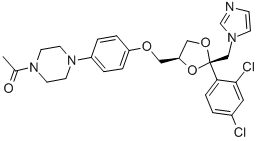
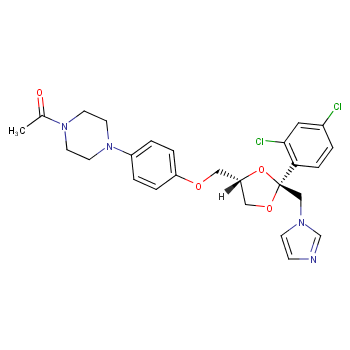
Ketoconazole, with the chemical formula C26H28Cl2N4O4 and CAS number 65277-42-1, is an antifungal medication commonly used to treat various fungal infections, including athlete's foot, jock itch, dandruff, tinea versicolor, blastomycosis, histoplasmosis, and coccidiomycosis.
Miconazole, with the chemical formula C18H14Cl4N2O and CAS number 22916-47-8, is another antifungal medication that is particularly effective in treating fungal infections such as athlete's foot, jock itch, and vaginal fungal infections.
Ketoconazole and Miconazole are both widely prescribed antifungal medications, but they differ in terms of their applications, formulations, and side effects. Ketoconazole cream is commonly used to treat a variety of fungal infections, including dandruff and tinea versicolor, while Miconazole is more often used to treat vaginal fungal infections. Despite their similarities, their side effects and recommended uses vary significantly.


Both Ketoconazole and Miconazole are potent antifungal agents, yet they differ in their applications and therapeutic uses, depending on the type of infection and the specific needs of the patient. While both compounds share similar mechanisms of action by inhibiting ergosterol synthesis, they are used in distinct medical contexts. Below is a comprehensive overview of their individual applications in the treatment of fungal infections:

Ketoconazole is a versatile antifungal medication widely used in both systemic and topical treatments. One of its primary applications is in the treatment of common dermatophyte infections such as athlete's foot (tinea pedis), tinea versicolor, ringworm (tinea corporis), and jock itch (tinea cruris). Ketoconazole cream is often prescribed for these conditions because it is effective at targeting and disrupting the fungal cell membrane by inhibiting the enzyme lanosterol demethylase, which is essential for ergosterol synthesis. Ergosterol is a crucial component of the fungal cell membrane, and its disruption results in the death of the fungal cell, which makes Ketoconazole an excellent choice for treating superficial skin fungal infections.
Beyond topical uses, Ketoconazole is also utilized in the management of scalp-related conditions such as dandruff and seborrheic dermatitis. Its ability to reduce inflammation on the scalp and inhibit fungal growth makes it an effective treatment, especially in cases where the condition is associated with an overgrowth of the yeast Malassezia. By addressing both the fungal infection and the associated scalp irritation, Ketoconazole shampoos or topical treatments offer significant relief to patients struggling with persistent dandruff and seborrheic dermatitis.
For more severe, systemic fungal infections, Ketoconazole is used in oral form to treat infections such as blastomycosis, histoplasmosis, and coccidiomycosis. These fungal diseases affect internal organs and require deeper tissue penetration, which oral Ketoconazole can provide. It is particularly useful in treating chronic or widespread infections, where the localized action of topical treatments would be insufficient. Ketoconazole’s broad-spectrum antifungal properties allow it to target a wide variety of fungal species, making it a valuable option for treating systemic infections in immunocompromised individuals or those with chronic conditions.
While Ketoconazole is effective, it is important to note that its use has been limited in certain situations due to potential side effects, particularly concerning liver function. As a result, it is often prescribed with caution for long-term use, and alternative antifungal medications are considered when appropriate.
Miconazole, another widely used antifungal agent, has a particular focus on treating vaginal and skin infections. It is most commonly known for its effectiveness in treating vaginal candidiasis, commonly referred to as yeast infections. Candida albicans and other species of Candida are the primary culprits behind these infections, and Miconazole works by disrupting the synthesis of ergosterol, a key component of the fungal cell membrane. By targeting this process, Miconazole inhibits the growth of the fungus and causes the destruction of fungal cells, providing relief from the uncomfortable symptoms associated with vaginal yeast infections, such as itching, burning, and discharge.
Miconazole is available in various formulations to suit the needs of patients, including creams, suppositories, and oral tablets. The cream is typically used for localized treatment, while suppositories are designed for vaginal use, ensuring direct delivery of the active ingredient to the infected area. The oral form is less commonly used, but may be recommended in certain cases of severe or recurrent infections.
In addition to its use for vaginal candidiasis, Miconazole is also effective for treating a range of skin fungal infections, including athlete's foot, jock itch, and ringworm. These conditions are caused by dermatophytes, a group of fungi that infect the skin, hair, and nails. Miconazole's broad-spectrum antifungal properties enable it to target both dermatophytes and yeasts, making it an excellent option for treating superficial skin infections. It is often available in creams, powders, or sprays for topical application, which allows for localized treatment of the infected areas.
In cases of athlete's foot, Miconazole is particularly beneficial as it helps reduce the spread of the infection, alleviates itching and burning, and promotes faster healing. For jock itch and ringworm, the cream formulation is commonly applied to the affected areas to prevent the infection from worsening and to inhibit further fungal growth.
Miconazole is often preferred for its safety profile, especially in women who are pregnant or breastfeeding, as it is generally considered safe when used topically or vaginally in the recommended doses. It is also less likely to cause systemic side effects compared to oral antifungals, making it a go-to option for localized fungal infections.
In conclusion, Ketoconazole is a versatile antifungal agent used for a wide range of fungal infections, including both skin and systemic conditions, while Miconazole is more commonly used for localized fungal infections such as vaginal yeast infections and athlete’s foot. Both drugs share similar mechanisms of action but are formulated and prescribed differently based on the type of infection being treated.
| Side Effect |
Ketoconazole |
Miconazole |
|---|---|---|
| Skin Rash | Rare, could cause mild skin irritation | Common, may cause skin irritation or burning |
| Nausea | Possible, especially with oral administration | Uncommon, typically well-tolerated topically |
| Abdominal Pain | Can cause mild to moderate abdominal discomfort | Rare, typically localized irritation |
| Dizziness | Rare, but possible with systemic use | Rare, generally does not cause dizziness |
| Headache | Common, especially with oral tablets | Uncommon, usually occurs with prolonged use |
When choosing the right antifungal treatment for your needs, it's crucial to consider the type of infection, its severity, and any potential sensitivities you may have. Ketoconazole is a broad-spectrum antifungal agent, suitable for treating both superficial and systemic fungal infections. It’s especially effective for chronic conditions like dandruff, seborrheic dermatitis, and more serious fungal infections such as histoplasmosis or blastomycosis. However, it can cause liver toxicity when taken orally for prolonged periods, and patients with pre-existing liver conditions must use it cautiously.
On the other hand, Miconazole is typically used for more localized fungal infections, such as vaginal yeast infections or athlete's foot. It is less likely to cause systemic side effects compared to Ketoconazole, as it is usually applied topically. Miconazole’s advantage lies in its lower incidence of side effects, making it a safer choice for people with sensitive stomachs or those looking for a topical solution. However, it may not be as effective for deep tissue infections and does not address the more serious fungal conditions that Ketoconazole can treat.
Ultimately, if you're seeking a treatment for a localized fungal infection with minimal side effects, Miconazole is the superior choice. It is safe, well-tolerated, and provides targeted relief for most surface-level fungal issues. However, if you're dealing with more severe or systemic fungal infections and require a broad-spectrum agent, Ketoconazole may be more suitable, though its potential for liver toxicity means it should be used with care and under medical supervision.
*For optimal results and to ensure that you are taking the appropriate form and dosage, it is highly recommended to follow the guidance of your healthcare provider. They can help you determine the most suitable antifungal treatment based on your specific health requirements and any underlying medical conditions.
If you're looking to purchase these compounds, Guidechem is your go-to platform for sourcing high-quality raw materials and reliable suppliers. With our extensive global network, we connect you to a wide range of Ketoconazole suppliers and Miconazole suppliers, ensuring you find the right products to meet your specific research or production requirements. Whether you're in pharmaceuticals, food additives, or other industries, Guidechem simplifies the sourcing process, offering verified supplier information, competitive pricing, and seamless communication.
[1]Pharmacology of Ketoconazole by P. S. Black.
[2]The Efficacy of Miconazole in Vaginal Candidiasis by M. L. Smith.
[3]Topical Antifungal Agents: A Review of Ketoconazole and Miconazole in Journal of Clinical Dermatology.
[4]Comparison of Ketoconazole and Miconazole for Fungal Infections in Clinical Therapeutics.
 |
 |
 |
 |
 |
 |
 EN
EN
 Agricultural News
 Food News
 Industrial News
 Cosmetic News
 Pharmaceutical News
 Science News

 15YRS
15YRS

