
Moxidectin, with the chemical formula C37H53NO8 and CAS number 113507-06-5, is a macrocyclic lactone (ML) antiparasitic drug commonly used to treat onchocerciasis (river blindness). It has a wider margin of safety compared to ivermectin, mainly due to its reduced interactions with P-glycoprotein (P-gp) and lower affinity for mammalian CNS GABA-A receptors.
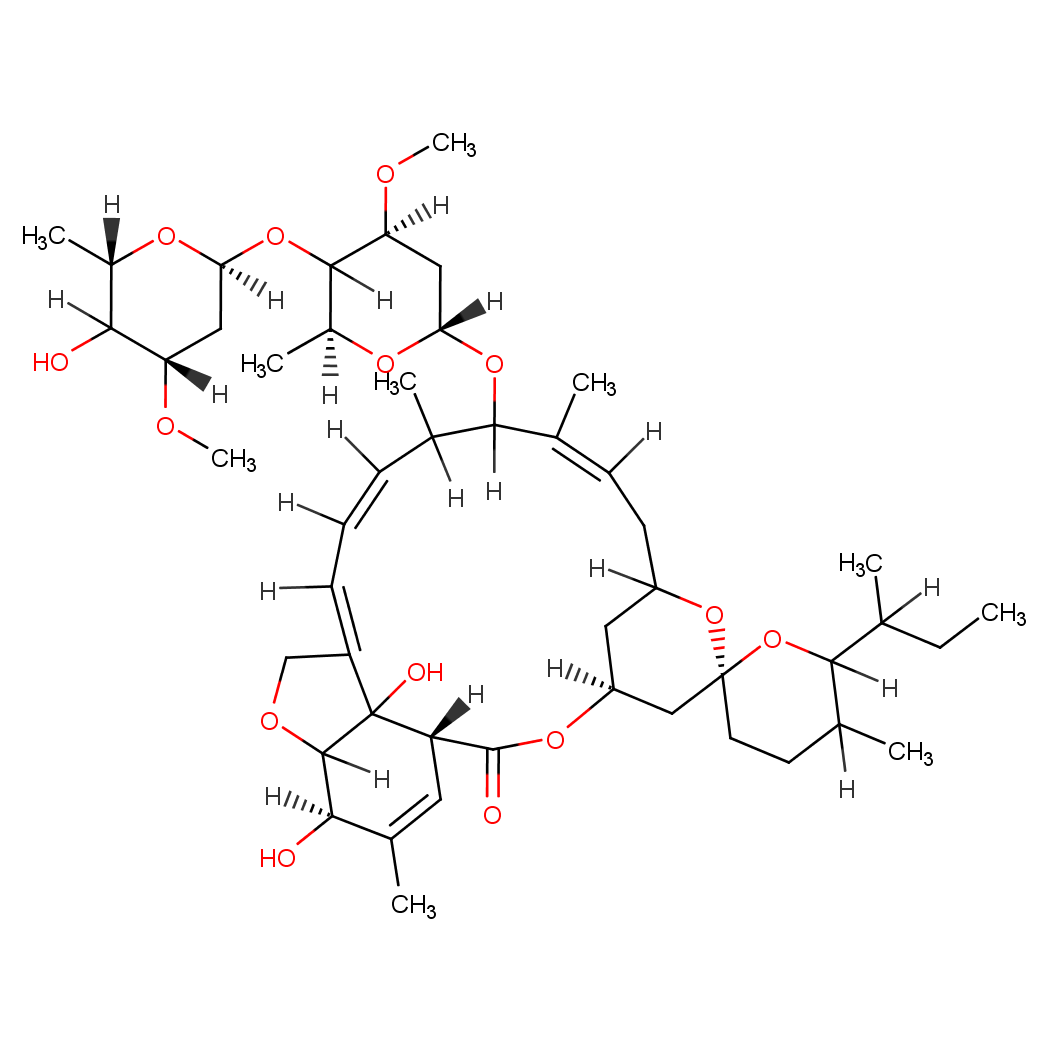
Ivermectin, with the chemical formula C48H74O14 and CAS number 70288-86-7, is another widely used macrocyclic lactone drug, employed for treating a variety of parasitic infections, including scabies, strongyloidiasis, and river blindness. It has been a staple in both human and veterinary medicine for several decades.
Studies have reported that, one of the key advantages of moxidectin over ivermectin is that moxidectin is administered as a fixed dose, whereas ivermectin dosage is weight-dependent. Moreover, recent evidence indicates that higher doses of ivermectin than the standard dose are safe, although moxidectin has a superior safety profile due to its reduced interactions with P-gp and lower affinity for the mammalian central nervous system (CNS).


While both moxidectin and ivermectin are derived from microorganisms within the Streptomyces genus, they differ subtly in their chemical structures. The key variation lies in the side chains of their macrocyclic lactone rings, which leads to differences in their pharmacokinetics, safety profiles, and overall effectiveness in treating parasitic infections.
Moxidectin and Ivermectin are both members of the macrocyclic lactone (ML) class, which also includes drugs such as abamectin and selamectin. These compounds share many similarities, but several key differences make moxidectin a preferred option in certain clinical contexts. Both moxidectin and ivermectin are used to treat parasitic infections, but they are prescribed for slightly different sets of conditions. The applications of these drugs are significant in both human and veterinary medicine.

Moxidectin has emerged as a key treatment for onchocerciasis, commonly known as river blindness, a debilitating condition caused by the parasitic worm Onchocerca volvulus. This parasitic disease is widespread in sub-Saharan Africa, where it is a leading cause of blindness and severe skin disease. Moxidectin is particularly effective at targeting and killing the microfilariae—the larval stage of the parasite—without harming the adult worms. The drug is administered in a fixed-dose form, simplifying its administration and improving patient compliance. This fixed-dose approach is one of moxidectin’s significant advantages over ivermectin, which typically requires weight-based dosing, making it less convenient for large-scale population treatment efforts.
Although moxidectin is primarily known for its role in treating onchocerciasis, its therapeutic applications extend beyond this condition. The drug has been used off-label in some cases to treat other parasitic infections, though these uses are less well-documented. Furthermore, moxidectin’s broader safety profile—combined with its fixed dosing—makes it a preferable choice in areas with high transmission rates of onchocerciasis. Its safety and efficacy in a variety of patient populations, including those who may be at higher risk of adverse effects from ivermectin, further enhance its utility in clinical settings.
In recent years, moxidectin has also been under investigation for its potential use in the treatment of other neglected tropical diseases. For example, research is ongoing to evaluate its effectiveness in treating filariasis, particularly lymphatic filariasis, where it could potentially offer benefits over ivermectin due to its ability to target both the microfilariae and the adult parasites. These studies may open up new avenues for moxidectin’s role in global health.
Ivermectin, one of the most widely recognized antiparasitic drugs, is used to treat a broad array of parasitic diseases. It is commonly prescribed for conditions such as scabies, strongyloidiasis, cutaneous larva migrans, ascariasis, and various forms of filariasis. It also remains a first-line treatment for onchocerciasis, although its use is often limited by the necessity for weight-based dosing, which can complicate large-scale public health efforts. Despite this drawback, ivermectin’s effectiveness across multiple parasitic infections makes it a versatile and valuable drug in the clinical setting.
In addition to its human applications, ivermectin has become a staple in veterinary medicine. It is commonly used to treat a range of parasitic infestations in animals, including gastrointestinal nematodes, ectoparasites like mites and lice, and certain types of ticks and worms. The drug is widely used in the prevention of heartworm in dogs, a major concern for veterinarians, particularly in regions where mosquitoes are prevalent and heartworm disease is endemic. In equine and livestock medicine, ivermectin is often the go-to treatment for controlling parasites, and it is included in many deworming protocols.
Ivermectin’s broad spectrum of activity, coupled with its established use in both humans and animals, has made it a cornerstone in parasitic disease management worldwide. Its application extends beyond typical parasitic infections; ivermectin has also been studied for its potential in treating conditions like head lice, river blindness, and even COVID-19, though the latter use remains under scrutiny and is not widely endorsed by health authorities.
In conclusion, moxidectin and ivermectin are both highly effective antiparasitic drugs, but moxidectin offers certain advantages, particularly its fixed-dose administration and reduced side effects. Moxidectin is primarily used for onchocerciasis, while ivermectin has a broader range of applications, including treatment for several types of parasitic infections. Both drugs are invaluable in the fight against parasitic diseases, but their specific applications and dosing schedules make them suited to different clinical contexts.
| Side Effect |
Moxidectin |
Ivermectin |
|---|---|---|
| Allergic Reactions | Rare, could include rash, itching, or swelling | Rare, could include rash, itching, or difficulty breathing |
| Central Nervous System Side Effects | Unlikely, as moxidectin has a reduced affinity for CNS GABA-A receptors | Possible, may cause dizziness, confusion, or even seizures in severe cases |
| Drug Interactions | Fewer interactions due to reduced P-gp involvement | May interact with drugs that affect the P-glycoprotein system |
| Use in Pregnancy | Should be used with caution in pregnancy; not well studied | Should be avoided in pregnancy unless absolutely necessary |
| Use in Pediatric Populations | Approved for use in children over 6 years | Approved for use in children over 6 months |
When choosing between moxidectin and ivermectin for treating parasitic infections, it's important to consider the specific condition being treated, potential side effects, and the safety profile of each drug. Moxidectin has a distinct advantage in treating onchocerciasis, as it is more effective with a fixed dosage, making it a simpler and more convenient option for patients. Its safety profile, particularly its reduced interaction with the central nervous system, makes it a suitable choice for those who are concerned about neurological side effects. Moreover, moxidectin has shown promising results in clinical studies, demonstrating that it provides effective parasite control with fewer adverse reactions compared to ivermectin.
In contrast, ivermectin remains a widely used and highly effective treatment for a broad range of parasitic infections, including scabies, strongyloidiasis, and ascariasis. It is also used in veterinary medicine, where it plays a crucial role in controlling parasitic diseases in animals. However, ivermectin requires a weight-based dosage, which can complicate its use, especially in large populations. While ivermectin is effective, it may cause central nervous system side effects like dizziness or confusion, particularly when overdosed or used inappropriately.
Ultimately, if you're seeking a drug specifically for treating onchocerciasis with a safer and more convenient dosing regimen, moxidectin is the superior choice due to its fixed dose and better safety profile. However, if you are dealing with a range of parasitic infections and require a well-established, broad-spectrum treatment, ivermectin remains an effective and widely available option, though it may be more challenging in terms of dosing accuracy and side effects.
*For optimal results and to ensure that you are taking the appropriate form and dosage, it is highly recommended to follow the guidance of your healthcare provider. They can help you determine the most suitable drug based on your specific health requirements and any underlying medical conditions.
If you're looking to purchase these compounds, Guidechem is your go-to platform for sourcing high-quality raw materials and reliable suppliers. With our extensive global network, we connect you to a wide range of moxidectin suppliers and ivermectin suppliers, ensuring you find the right products to meet your specific research or production requirements. Whether you're in pharmaceuticals, animal health, or other industries, Guidechem simplifies the sourcing process, offering verified supplier information, competitive pricing, and seamless communication.
[1]Moxidectin and Its Use in Onchocerciasis by J. W. Smith.
[2]Comparative Study of Moxidectin and Ivermectin in Journal of Parasitology.
[4]The Pharmacodynamics of Macrocyclic Lactones in Pharmacology Review.
[5]https://www.jwatch.org/na45955/2018/01/29/moxidectin-vs-ivermectin-onchocerciasis
[6]Mwacalimba K, Sheehy J, Adolph C, et al. A review of moxidectin vs. other macrocyclic lactones for prevention of heartworm disease in dogs with an appraisal of two commercial formulations[J]. Frontiers in Veterinary Science, 2024, 11: 1377718.
 |
 |
 |



 2YRS
2YRS


