-
We detected your language preference as English. Would you like to switch to the English version for a better experience?
Switch to English
Stay here


Peptide Comparison | B2B Research-Grade Procurement Guide
A technical and commercial comparison for research-peptide procurement, analytical QC laboratories, cosmetic-channel compliance review, and anti-doping-aware sourcing teams.

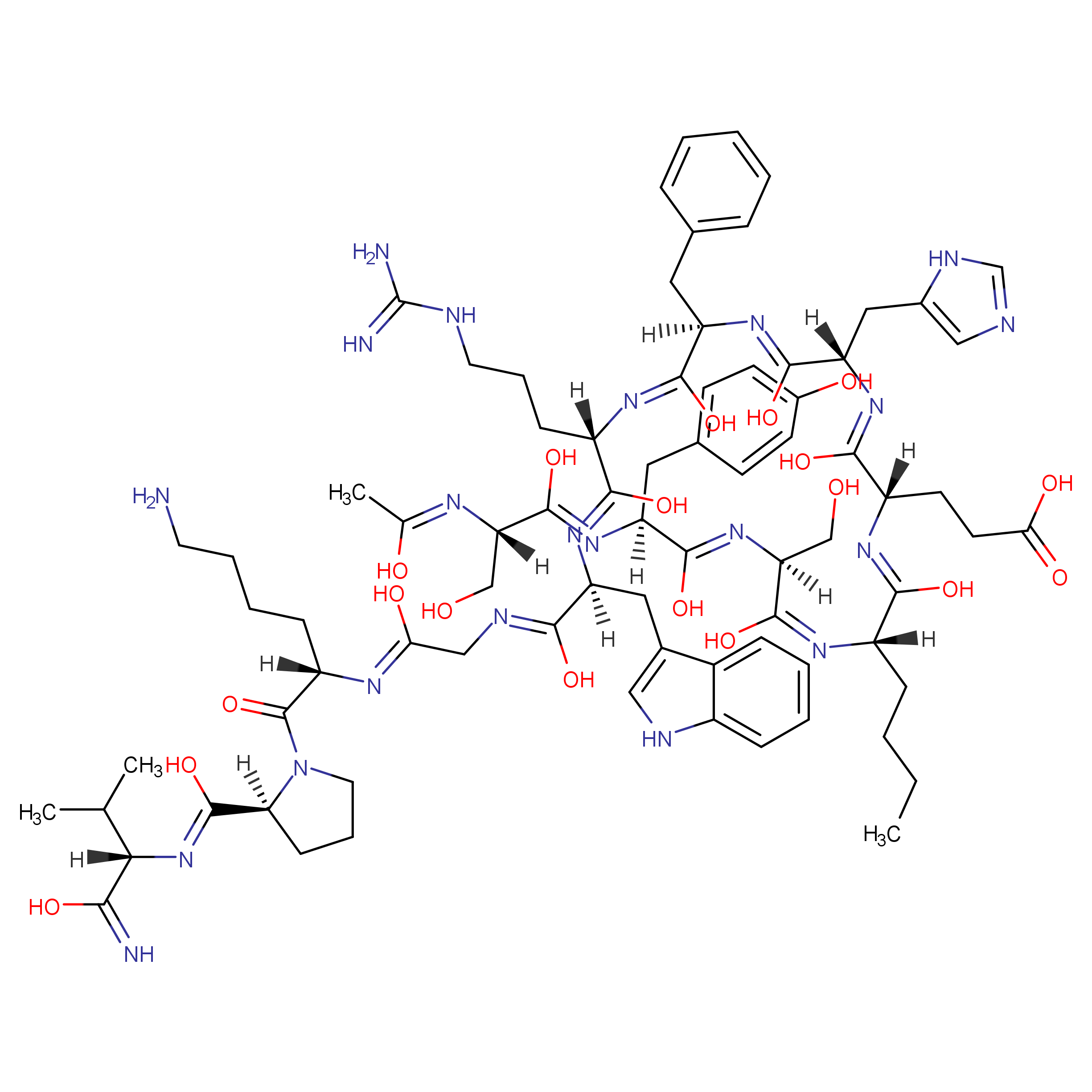
Melanotan 1 (CAS 75921-69-6) is MT-I, a synthetic nine-residue cyclic melanocortin analogue modeled on gamma-MSH with near-selective MC1R activity; Melanotan 2 (CAS 121062-08-6) is MT-II, the shorter [Nle4, D-Phe7] alpha-MSH(4–10) cyclic heptapeptide that activates both MC1R and MC4R. MT-I has the molecular formula C78H111N21O19 (approx. 1,646.8 g/mol as the free peptide); MT-II is C50H69N15O9 (approx. 1,024.2 g/mol). The extra N-terminal extension of MT-I is what keeps it MC1R-selective, while MT-II loses that selectivity and gains MC4R-driven activity.
For procurement, the key distinction is regulatory, not just pharmacological: neither peptide is an approved therapeutic in most major markets, MT-II in particular is explicitly prohibited in sport (WADA Section S0 — non-approved substances) and is a controlled/restricted item in several jurisdictions, and the commercial market runs on research-grade material whose quality varies enormously by lot. Purity by HPLC, sequence confirmation by MS, acetate content, water content and TFA removal are the buying conversation — and cold-chain documentation decides whether the received vial still matches its CoA.
| Comparison Parameter | Melanotan 1 | Melanotan 2 |
|---|---|---|
| Chemical class | Synthetic cyclic peptide; gamma-MSH analogue (9-mer, Asp7–Lys9 lactam ring, D-Phe7) | Synthetic cyclic peptide; [Nle4, D-Phe7] alpha-MSH(4–10) heptapeptide, same lactam pharmacophore |
| CAS Registry Number | 75921-69-6 | 121062-08-6 |
| Molecular formula | C78H111N21O19 | C50H69N15O9 |
| Molecular weight | Approx. 1,646.8 g/mol (free peptide) | Approx. 1,024.2 g/mol (free peptide; acetate-salt forms weigh more) |
| Receptor profile | Predominantly MC1R (skin/tanning axis) | MC1R + MC4R (tanning plus appetite/sexual-behavior axis) |
| Anti-doping status | Prohibited (S0 class, as an unapproved melanocortin agonist) | Prohibited at all times (WADA S0); the more frequently detected analyte |
| Primary commercial channel | Research-grade lyophilized peptide | Research-grade lyophilized peptide; largest grey-market volume of the two |
| Lewis structure guide | Melanotan 1 Lewis structure | Melanotan 2 Lewis structure |
| Chemical relationship | The longer gamma-MSH framework | The truncated core cyclic heptapeptide |
Molecular weights are free-peptide values; commercial acetate salts add acetic-acid equivalents, which is why acetate-content data (or NMR/IC determination) belongs on the CoA. Receptor and WADA summaries reflect published classifications; confirm the current-year WADA list before any athlete-facing decision.
Melanotan 1 is a nine-amino-acid cyclic peptide whose design keeps the N-terminal extension of gamma-MSH while introducing the Asp–Lys lactam bridge and D-Phe7 that lock the bioactive conformation. That extension biases the molecule toward MC1R, the melanocyte receptor behind melanogenesis, which is why it was explored as a UV-photoprotection/tanning agent.
Commercially it is supplied as a lyophilized acetate salt, reconstituted with bacteriostatic water in research settings. Its peptide nature drives the whole quality conversation: sequence confirmation, aggregation/oxidation control, residual TFA from RP-HPLC purification, and water content that distorts mass-based dosing.
Melanotan 2 is the truncated core: the His–Phe–Arg–Trp–Lys–Pro region with Nle4 substitution and the same D-Phe7 lactam cyclization. Losing the N-terminal extension does not eliminate activity — it redistributes it. The compound becomes a potent MC4R agonist as well as an MC1R agonist, which is the pharmacological basis of both its popularity in unregulated channels (appetite and sexual-function claims) and its scrutiny by regulators and anti-doping agencies.
MC4R engagement also explains the side-effect profile repeatedly reported in the literature (nausea, flushing, appetite change). The approved-medicine comparator in this receptor area is setmelanotide (an MC4R-targeted drug), which is a useful reminder that melanocortin pharmacology is a real, safety-laden drug space, not a cosmetic curiosity.
| Property | Melanotan 1 | Melanotan 2 |
|---|---|---|
| Length | 9 residues (nonapeptide with gamma-MSH extension) | 7 residues (heptapeptide core analogue) |
| Cyclization | Asp7–Lys9 lactam bridge, D-Phe7 in the constrained ring | Asp–Lys lactam bridge, D-Phe7 in the constrained ring |
| Key substitutions | D-Phe7; Nle in the conserved position | Nle4, D-Phe7 |
| Receptor bias | MC1R-selective | Balanced MC1R/MC4R |
| Mass per mole of “active ring” | Higher MW due to extension; molar dose must use 1,646.8 | Lower MW; molar dose must use 1,024.2 |
| Stability handling | Freeze-dried, cold storage, minimize freeze-thaw | Same handling class; oxidation/aggregation are the common lot failures |
Both peptides carry “melanotan,” both tan through MC1R, and grey-market listings frequently mislabel one for the other. But a 1,646.8 Da MC1R-selective agent and a 1,024.2 Da MC1R/MC4R agent produce measurably different outcomes: dosing in milligrams converts to very different molar amounts, and the MC4R activity of MT-II brings appetite and autonomic effects MT-I was designed not to have.
For any research program, the identity anchor is MS-confirmed sequence plus intact-mass match, not the catalog name. For any human-use question, the honest note is that neither peptide holds marketing authorization in the US, EU, UK or Australia, and supply outside a research context is a regulatory violation in several jurisdictions.
Molar-mass implication for dosing accuracy
A lot sold as “10 mg per vial” contains about 6.07 µmol of MT-I but 9.76 µmol of MT-II — a 1.6× difference driven entirely by molecular weight. Protocol transfers between the two peptides without molar recalculation silently over- or under-dose every subject.
Melanotan 1 is not a consumer tanning product and has no approved human indication. Its legitimate commercial lane is research supply with documentation to match.
Melanotan 2’s MC4R activity is not a side detail — it is the reason its safety and regulatory profile is worse than MT-I’s despite a smaller molecule. Procurement that treats the two as one “tanning peptide” SKU inherits the wrong risk file.
Any injectable, nasal or oral human-consumption concept for either peptide requires new-drug-pathway authorization; none exists in major markets, and several (Australia, UK, parts of the EU) have specific import/possession controls, especially for MT-II. Cosmetic-adjacent “tan booster” positioning does not downgrade the drug classification — it raises it. Documentation should state the research-only status on the CoA, label and invoice chain.
For unapproved peptides, the only honest “grades” are analytical ones: research-grade with a full CoA package vs anything less. The buyer’s job is to demand the package and reject what is not in it.
| Industry / Use | Target Grade | Essential Documentation and Checks |
|---|---|---|
| Receptor/pharmacology research | Research-grade with MS-confirmed sequence and intact mass | Per-batch CoA: HPLC purity (gradient, C18) with individual impurities listed, ESI-MS or MALDI intact mass, amino-acid analysis or sequence confirmation, TFA/acetate content, water/KF content, endotoxin data where cell-based work requires it. |
| Anti-doping / forensic reference work | Certified reference solution/solid with assignment uncertainty | Value assignment traceability, concentration accuracy, stability data, and no cross-contamination between MT-I and MT-II standards (the classic method artifact). |
| Cell-based melanogenesis assays | Low-endotoxin, sterile-filtered or aseptically processed material | Endotoxin (LAL) and bioburden per application, aggregation/oxidation profile (RP-LC plus size checks), carrier-free reconstitution guidance. |
| Comparative selectivity studies | Matched-purity lots for both peptides from documented routes | Lot-to-lot consistency evidence, same buffer/excipent basis when supplied as solutions, and stability (freeze-thaw count) records. |
| Any human-consumption context | No legal grade exists in major markets | Do not qualify. A supplier offering a “cosmetic” or “wellness” grade of either peptide is describing an unlawful channel; decline and document. |
Regulatory note: WADA prohibits both melanocortin agonists under S0 (substances not approved for human use), with MT-II the more commonly detected. Australia’s customs/therapeutic-goods controls and UK Misuse-of-Drugs-adjacent enforcement have both targeted consumer MT-II shipments. Confirm current lists and local schedules before any transaction.
Peptide CoAs are marketing documents unless they contain the raw chromatograms and spectra. Insist on actual data, not summary ticks:
| QC Attribute | Melanotan 1: Audit Focus | Melanotan 2: Audit Focus | Recommended Verification |
|---|---|---|---|
| Identity / sequence | Expected ions for the 9-mer framework; MS/MS fragment consistency | Expected ions for the 7-mer core; confirm Nle4 mass shift and D-Phe7 retention behavior | Intact MS within stated tolerance; trypsinase/digest fragment confirmation where available; reject CoAs that only say “matches”. |
| Purity (RP-HPLC) | Named individual impurities, not aggregate only; watch deletion sequences | Same; watch the MT-I cross-contamination peak (shared SPPS chemistry) | Gradient C18 with UV at 214/280 nm; each peak integrated above its reporting threshold; ≥98% typical research bar. |
| Acetate / counter-ion content | IC or NMR; drives mass-vs-molar math | Same | Salt form stated explicitly on the CoA; unreported salt state makes every molar dose guesswork. |
| TFA residual | Ion chromatography or NMR; relevant to cell-based assays | Same | TFA removal step documented; high residual TFA suppresses cell responses and biases bioassays. |
| Water content | KF or qNMR; hygroscopic acetate salts drift fast | Same | Batch-level water percentage on the CoA, with retest after opening; mass-based reconstitution must correct for it. |
| Aggregation / particulates | Visual + light-scatter or SEC where claimed | Same | Reconstituted-vial inspection SOP; aggregation is a leading cause of irreproducible peptide biology. |
SPPS-purified peptides carry acetonitrile, water and TFA/acetic-acid systems rather than classic pharmaceutical solvent sets. Apply ICH Q3C logic by declaring the actual purification solvents and their removal steps, with residual data where the assay is sensitive to them (cell and receptor work especially).
Important distinction: these are the audit targets for unapproved research peptides, not claims about any specific lot. The data package, not the purity headline, decides acceptance.
Procurement warning: mislabeled “melanotan” lots are common, and MT-II inside a study expecting MT-I breaks both the science and the compliance file.
Grey-market and even research-channel listings have shipped MT-II labeled MT-I and vice versa — the intact-mass difference (about 622 Da) is trivially detectable by MS yet routinely invisible on summary CoAs. In receptor studies, the swapped peptide activates the wrong melanocortin subtype and every downstream conclusion inherits that error; in any athlete-facing context, the MT-II mislabel creates an anti-doping violation.
Prevention: accept only lots with per-batch intact-mass spectra, demand the MT-I/MT-II separation peak in the HPLC trace, and run your own identity confirmation (MS or, at minimum, retention comparison against a verified standard) before any material enters a study.
The legitimate supply chain for these peptides is research-grade SPPS manufacture concentrated in China, India, the US and EU specialty peptide houses; the consumer-facing channel is a compliance problem, not a market.
For programs requiring both peptides, qualify a single documented supplier with controlled SPPS scheduling rather than sourcing each from unvetted listings; the dominant quality failure is cross-sequence contamination.
| Control | Procurement Recommendation |
|---|---|
| Container | Sealed vials under inert headspace with stopper integrity; lyophilized cake under vacuum or nitrogen. |
| Temperature | Cold storage (2–8 °C long-term; -20 °C for extended) with documented cold-chain transit for solution forms; dry peptide tolerates shorter ambient legs. |
| Reconstitution | Bacteriostatic water or specified buffer; minimize freeze-thaw; aliquot single-use volumes. |
| Light | Amber or light-barrier packaging; oxidation-sensitive residues demand exclusion. |
| Documentation | CoA with raw data attached, research-only statement, batch-level water and salt content, and cold-chain record on delivery. |
Peptide RFQs that omit the data package produce unreliable quotes. Specify:
B2B Chemical Sourcing
Compare suppliers on the raw data attached to each CoA and on their cross-contamination controls, then match the receptor profile your model actually requires.
Request per-batch HPLC/MS data and cold-chain records directly from shortlisted suppliers; research use only, and verify local legal status before ordering.
If the mechanism question is melanocyte/MC1R biology alone, Melanotan 1 avoids the MC4R confound that appetite and autonomic effects introduce from Melanotan 2. If the question is the MC4R axis or comparative selectivity, Melanotan 2 is the tool. Either way, the molar dose must be recomputed from the actual peptide, because the same 10 mg delivers ~1.6× the moles of MT-II.
If the protocol has any human-consumption intent, neither is the answer — no marketing authorization exists in the major markets.
Three raw-data attachments: (1) the analytical HPLC trace with every peak above the reporting threshold integrated, (2) the intact-mass spectrum with the measured value vs calculated value and tolerance, and (3) water plus salt (acetate/TFA) content by KF/IC or qNMR. A certificate that only lists “purity 99%, MS confirmed” with no data supports nothing.
For cell work add endotoxin; for bioanalytical work add a cross-contamination check for the sibling peptide.
Reconstitution triggers hydrolysis and aggregation pathways that the dry cake is stable against. Standard practice: prepare a single concentrated stock, aliquot into single-use volumes immediately, store cold, and never refreeze a thawed aliquot. Record the freeze-thaw count as an attribute of the lot.
Peptide adsorption to plastic is real at low concentration; choose carrier-protein-free dilution strategies validated for the assay rather than assuming mass in equals mass available.
Both are prohibited as unapproved substances under S0 at all times (in and out of competition). Practically, MT-II is the analyte more often encountered in doping controls because of its consumer misuse; anti-doping laboratories separate MT-I from MT-II by mass and retention, so mislabeling a sample or a supply chain contaminates the record.
Confirm the current-year list before any supply, storage or disposal decision involving athlete populations.
Editorial and compliance note
These peptides are unapproved investigational/research substances in major markets. This guide supports analytical and procurement due diligence for lawful research use; it is not medical, legal or anti-doping compliance advice. Verify current schedules and lists before acquisition.
 |
 |
 |
 EN
 Agricultural News
 Food News
 Industrial News
 Cosmetic News
 Pharmaceutical News
 Science News


 2YRS

