
I. Executive Summary
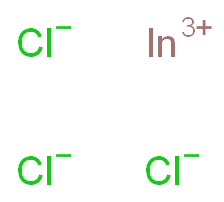
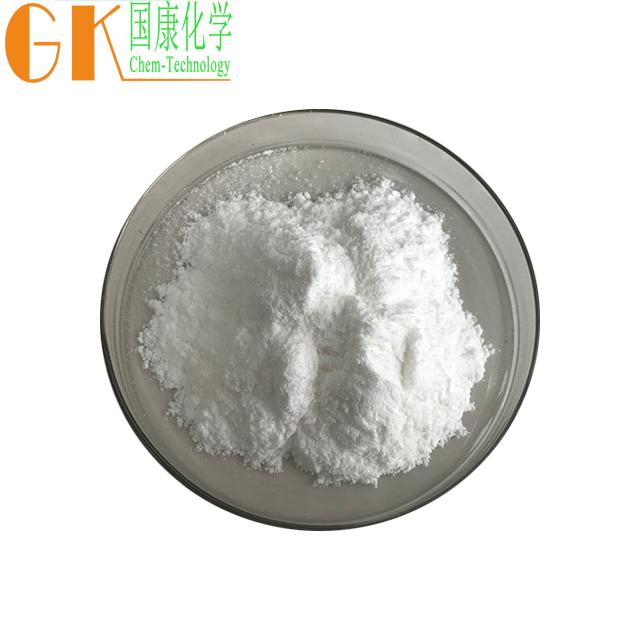
Indium(III) chloride (CAS 10025-82-8, InCl3, relative molecular mass 221.18) is the workhorse halide of the strategic metal indium: a white, strongly deliquescent solid used as a precursor to transparent conductive oxides and as a semiconductor and photovoltaic precursor. What makes it strategically interesting is not the chloride but the element. Indium appears on the European Union list of critical raw materials and on the United States Geological Survey critical minerals list, is produced almost entirely as a by-product of zinc smelting, and has been brought into China's export-licensing regime, so availability is governed by policy and by the zinc cycle rather than by demand for the salt.
Technically the product is defined by two things: grade and dryness. Buyers specify 4N or 5N with explicit limits on iron, copper, tin, thallium, lead, zinc and cadmium, and they specify anhydrous material with tight water and oxychloride limits because the chloride hydrolyses on contact with moisture. Anhydrous indium chloride cannot be made by simply heating the hydrate, since that route yields indium oxychloride; producers chlorinate indium metal directly or dehydrate under hydrogen chloride, and plant design follows from that constraint.
Commercially, demand is pulled by flat-panel display capacity, by thin-film and next-generation photovoltaics, by compound-semiconductor epitaxy and by fine-chemical catalysis, and is increasingly shaped by critical-raw-material policy: the European Critical Raw Materials Act with its extraction, processing, recycling and single-country benchmarks, and United States critical-minerals programmes. Recycling, particularly of indium-tin-oxide sputtering targets and display glass, has moved from talking point to genuine second supply source. Compliance rests on REACH and CLP in Europe, TSCA in the United States, corrosive-class transport rules and hermetic moisture-proof packaging.
II. Product Deep Dive: Molecular Mechanisms and Production Evolution
2.1 Physicochemical Properties and Mechanisms
Indium(III) chloride is a hygroscopic solid that sublimes at elevated temperature and is freely soluble in water, where indium sits as the aquated In3+ ion and hydrolyses progressively unless the solution is kept acidic. In organic media it behaves as a soft, water-tolerant Lewis acid, which is unusual among metal chlorides: unlike aluminium chloride or titanium tetrachloride it survives protic and aqueous conditions.
- Lewis acid behaviour and halide-bridged speciation: In solution the chloride forms bridged dimeric and polymeric species and chloro-complexes, and that speciation governs both catalytic activity and hydrolysis sensitivity. The practical consequence is that an opened drum is not the same material as a sealed one, because water uptake shifts composition toward oxychlorides and hydroxides.
- Conversion to oxide and chalcogenide functional materials: Hydrolysis or base precipitation gives indium hydroxide and, on calcination, indium oxide; reaction with tin salts in solution gives the mixed oxide system used for transparent conductive films, and reaction with selenium or sulphur sources under reducing conditions gives the chalcogenide phases used in thin-film photovoltaics. Impurity metals in the salt are carried straight into the functional layer, which is why grade matters far more here than in bulk applications.
2.2 Synthesis and Manufacturing Technologies
There are two production logics. The primary route dissolves indium metal in hydrochloric acid and finishes the product as a hydrate or as an anhydrous salt, and the secondary route recovers indium from zinc-smelter residues, spent sputtering targets or display glass, purifies it to metal or salt, and feeds the same finishing operations.
- Metal dissolution and anhydrous finishing: Indium metal of 4N to 5N grade is dissolved in hydrochloric acid, the solution is filtered and purified, and the salt is crystallised as a hydrate. Anhydrous material cannot be obtained by heating that hydrate, because thermal dehydration drives hydrolysis to indium oxychloride; instead producers chlorinate the metal directly with chlorine or hydrogen chloride gas at elevated temperature, or dehydrate under a hydrogen chloride atmosphere, followed by sublimation or vacuum drying in corrosion-resistant equipment.
- Purification to electronic grade and analytical control: Separation from zinc, iron, copper, tin, thallium, lead and cadmium is achieved by solvent extraction, ion exchange and controlled crystallisation. Release testing relies on ICP-MS and ICP-OES for trace metals and, for 5N and above, on glow-discharge mass spectrometry, with water and oxychloride determined alongside assay. Thallium deserves an explicit limit rather than a generic total-impurity figure.
2.3 Core Application Matrix
- Transparent conductive oxide precursor: Indium-tin-oxide sputtering targets and vapour-deposition routes to indium oxide and indium-zinc-oxide films, where trace iron, copper and thallium degrade film conductivity and optical transmission.
- Semiconductor, photovoltaic and display materials: Precursor for compound-semiconductor epitaxy and doping, for copper-indium-gallium-selenide absorbers and buffer layers, and for indium-phosphide quantum dots used in displays.
- Lewis acid catalysis and fine-chemical synthesis: A water-tolerant Lewis acid for carbon-carbon bond formation and related transformations, catalyst grade trades on consistent activity, which means consistent speciation and low hydrolysis.
III. Global Market Supply-Demand Landscape and Export Trends
3.1 Demand Drivers and Market Shifts
Demand is pulled by three end markets with different cycles. Display and touch-panel capacity, still the largest consumer of indium through sputtering targets, has matured in China and Korea but continues to add large-format capacity; photovoltaics adds demand through copper-indium-gallium-selenide absorbers and buffer layers; and compound semiconductors and quantum-dot displays add smaller but high-value volume. Against that, indium thrifting — less target material per panel and alternative transparent conductors — has been eroding intensity per unit for years, so tonnage growth lags end-market growth.
3.2 Capacity Distribution and Export Flows
Supply is a by-product of zinc. Primary indium is recovered from residues of zinc smelting and refining, so capacity sits where zinc capacity sits: overwhelmingly in China, with meaningful recovery in Korea, Japan, Canada, Belgium and Germany. Because the economics are driven by zinc, indium supply cannot respond quickly to its own price signal, and policy can interrupt it abruptly — Beijing brought indium into its export-licensing regime in 2025, extending a sequence that began with gallium and germanium in 2023.
3.3 Market Bifurcation and Pricing Dynamics
Price is set by three forces. The first is zinc smelter operating rates and residue availability, which determine how much indium enters the market irrespective of demand. The second is policy and inventory behaviour: export licensing, strategic stockpile decisions and precautionary buying can move price sharply without any change in consumption. The third is grade: 5N electronic-grade chloride with certified trace-metal and water limits commands a substantial premium over 4N catalyst or ceramic grade, and buyers of the former typically accept multi-year contracts with price-review clauses rather than spot purchasing.
IV. In-depth Analysis of Global Compliance and Regulatory Barriers
Compliance for indium chloride has an unusual shape: ordinary chemical-inventory and classification duties, a corrosive-transport regime, and — because the element is designated critical — a layer of supply-security and due-diligence expectations that do not arise for most inorganic salts.
4.1 European Market: REACH, CLP, and Sector-Specific Directives
- REACH, CLP and corrosive classification: The substance is registered under REACH, importers must hold or be covered by that registration, and safety data sheets must follow Annex II as amended by Regulation (EU) 2020/878. The classification is corrosive in character, and for indium compounds the respiratory and repeated-dose endpoints are taken seriously by occupational hygienists in light of the indium-tin-oxide literature and the International Agency for Research on Cancer evaluations of indium compounds. Downstream users must set exposure controls accordingly.
- Critical Raw Materials Act and recycling duties: Regulation (EU) 2024/1252 sets benchmarks for extraction, processing and recycling within the Union and caps dependence on any single third country, and indium appears on both the critical and strategic lists. European buyers therefore ask suppliers for country-of-origin and processing-location data and for evidence of recycled content, and they are building closed-loop arrangements with sputtering-target refiners.
4.2 North American Market: TSCA, EPA, and FDA Regulations
- TSCA, the EPA and critical-minerals policy: The substance is on the TSCA inventory and import requires the positive certification at entry, with manufacture and processing subject to EPA reporting obligations where thresholds apply. Beyond chemical control, indium's designation on the United States Geological Survey critical minerals list and its place in Department of Energy critical-materials assessments shape purchasing behaviour, and defence-related supply chains are subject to domestic-content and sourcing restrictions.
- Occupational exposure and product-level requirements: Facilities handling indium compounds must set occupational exposure limits, and the recognised association between indium-tin-oxide exposure and interstitial lung disease, together with carcinogenicity evaluations of certain indium compounds, makes containment, local exhaust ventilation and health surveillance expected rather than optional. Electronics customers additionally require composition declarations consistent with hazardous-substance restrictions and responsible-sourcing reporting.
4.3 The Critical Hurdle: Quality Control and Safety Limits
Compliance Warning: Two things go wrong with this product, and both are avoidable. The first is water: anhydrous indium chloride that has picked up moisture is no longer the specified material, because hydrolysis produces indium oxychloride and hydrogen chloride, which corrodes packaging and degrades the assay. Specify water and oxychloride limits, require hermetic moisture-proof packaging with intact seals, and test on arrival rather than relying on release data. The second is trace metals: because indium is recovered from zinc residues, thallium, cadmium and lead can be present at levels irrelevant to a catalyst but fatal to a transparent conductive film, so insist on a full ICP-MS trace panel matched to the end use.
V. Green Trade Barriers and ESG in Manufacturing
Environmental performance for this product is inseparable from how the indium was sourced. Primary indium carries the footprint of zinc smelting, while secondary indium from sputtering targets and display glass carries a recovery footprint that is usually far lower and that buyers increasingly reward.
5.1 Carbon Footprint and Circular Economy
Primary indium is a by-product, so its allocated footprint depends on how zinc smelting emissions are apportioned, and that smelting is energy-intensive and carries its own residue-management issues; honest accounting requires the allocator to be stated. Secondary indium from spent sputtering targets is a genuine circular-economy success, since target makers and refiners operate closed loops with high recovery rates, while recovery from end-of-life display glass is technically feasible but still limited by collection economics. Buyers now request a cradle-to-gate footprint per kilogram on a Scope 1, 2 and 3 basis following recognised methodologies.
5.2 Sustainable Sourcing and Traceability
Traceability expectations run to the smelter and, for recycled content, to the collection and refining chain. Suppliers should maintain documented chain of custody from zinc residue or scrap through refining to the finished salt, with recycled-content statements that withstand audit. Because critical-raw-material due diligence is written into European policy and corporate procurement rules, a supplier able to document recycled content and country of origin will be preferred at equal price, and in some tenders at a slightly higher one.
VI. Supply Chain Resilience and Export Logistics
Indium chloride logistics are dominated by two properties: corrosivity and deliquescence. Both point the same way: hermetic, moisture-proof, corrosion-compatible packaging and dry, covered storage, and both make air freight the default for electronic-grade lots.
6.1 Packaging Standards and Moisture/Contamination Control
- Hermetic, moisture-proof packaging: Anhydrous material is packed in sealed glass or lined metal containers, frequently double- or triple-bagged under dry nitrogen or argon with desiccant and a moisture indicator, then placed in a robust outer drum. Because the salt attacks ordinary steel in the presence of moisture, contact surfaces and closures must be compatible, and every seal should be verifiable on arrival.
- Segregation and contamination control: Indium is high-value and low-volume, so lots are small and identification matters: containers should be individually numbered with the analysis certificate traceable to the lot, and kept segregated from strong bases and oxidising agents. Reused containers should be excluded for electronic grades.
6.2 Dangerous Goods Identification and Transit Protocols
Indium chloride is consigned as a Class 8 corrosive solid under ADR, IMDG and IATA, normally under UN 3260, which fixes packaging, marking, documentation and segregation requirements. Air freight is typical for electronic-grade lots because value density is high and transit short, while sea freight is used for larger hydrate consignments in moisture-barrier packaging. Export-licensing requirements in the country of origin, including the indium-specific controls introduced by China, must be cleared before booking, since licence lead times rather than vessel schedules usually set the delivery date.
VII. Enterprise Global Expansion Strategy Guide
Strategy for this molecule is resource strategy first and chemical differentiation second. The winners will be those able to guarantee supply of the right grade under a policy regime that is tightening, and to demonstrate recycled content without compromising specification.
- Secure supply at two levels: Contract indium units, not just salt, with a mix of primary smelter-linked volume and secondary material from target and display glass recycling, and qualify at least one source outside the dominant producing country. Hold strategic inventory of finished salt, and build licence lead time into every quotation.
- Sell grade integrity and analytical depth: Offer 4N and 5N grades with full ICP-MS trace panels, glow-discharge mass spectrometry where required and explicit water and oxychloride limits, plus certificates traceable to individual containers. Electronic customers will pay for that documentation because a trace-metal excursion can scrap a coating campaign.
- Turn circularity into an offer: Qualify recycled indium through the same specification as primary material, publish verified recycled content, and operate or contract take-back arrangements for spent targets and off-spec salt. Pair that with containment and exposure-control documentation for indium compounds, since occupational hygiene is now part of supplier qualification.
VIII. Conclusion
Indium chloride will remain a small-tonnage, high-value, policy-exposed product. Demand follows displays, photovoltaics and compound semiconductors; supply follows zinc smelters and export licensing; and price responds to stockpile decisions and precautionary buying as much as to consumption. Thrifting will continue to reduce indium intensity per device.
For exporters the conclusion is that resource position and analytical credibility are the two durable advantages. Secure indium units from more than one origin, treat recycled streams as a first-class source, hold inventory against licence lead time, and publish grade data that electronic customers can design against. Those competing only on price will be exposed to every policy change in the producing country.
IX. Industry Resource Connection and Supplier Ecosystem
Powered by Guidechem
This white paper is exclusively compiled by the Guidechem Intelligence Team based on global customs data, regulatory databases, and industry research. Guidechem is a leading global B2B chemical platform, dedicated to connecting global buyers with verified, high-quality manufacturers.
Relying on Guidechem's extensive global database, we have mapped the core participants in the current global Indium chloride supply chain:
- China — primary indium and export-licensing gate: Chinese zinc smelters in Yunnan, Guangxi, Hunan and Inner Mongolia supply the largest share of primary indium, with refining and salt finishing in the same industrial belt. Their constraint is that export licensing now governs shipment timing, so buyers plan around licence lead time rather than production time.
- European Union — secondary refining, CRMA policy and closed loops: Belgian, German and French refiners recover indium from zinc residues and end-of-life material, and European policy sets the critical-raw-material benchmarks and due-diligence expectations that shape purchasing worldwide. Closed-loop arrangements between target makers and refiners are most mature here, and recycled-content documentation is most rigorously audited.
- Japan and Korea — ITO target, display and semiconductor ecosystem: Japanese and Korean target makers and panel producers set the practical purity requirements for indium salts, They import metal and salt, convert it into targets and films, and drive both closed-loop recycling and the thrifting that shapes long-run demand.
Disclaimer: The content of this white paper is compiled based on public market data and regulatory information available as of 2026. Global chemical regulations are subject to dynamic adjustments. In actual export operations, enterprises must consult professional regulatory advisors or relevant competent authorities to obtain the latest compliance guidance.




 EN
 Agricultural News
 Food News
 Industrial News
 Cosmetic News
 Pharmaceutical News
 Science News


 3YRS


