-
We detected your language preference as English. Would you like to switch to the English version for a better experience?
Switch to English
Stay here


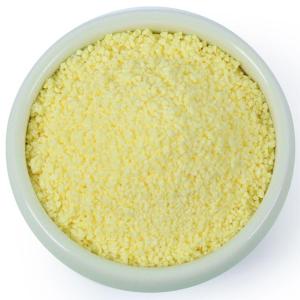
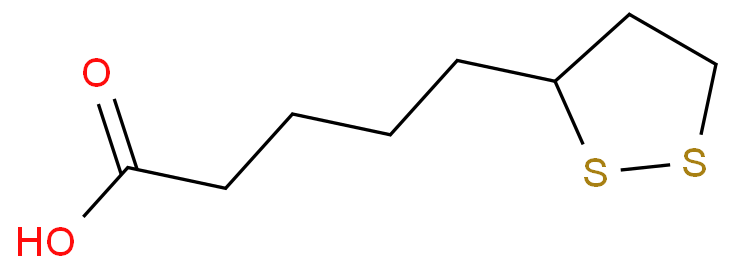
Alpha-lipoic acid, also called thioctic acid (CAS 1077-28-7), is a cyclic disulfide of formula C8H14O2S2 and molecular weight 206.33, formally 5-(1,2-dithiolan-3-yl)pentanoic acid. The commercial racemate is a yellow crystalline solid melting near 60 to 62 degrees Celsius, poorly soluble in water but readily soluble in alkaline media and in organic solvents. It is nature's lipoyl cofactor, covalently bound in multienzyme complexes, and it interconverts with its reduced dithiol form, dihydrolipoic acid. Because the molecule contains a strained five-membered disulfide ring, it is light sensitive and thermally labile, which shapes every downstream handling decision.
Commercial interest spans three markets with very different evidence standards. As a pharmaceutical substance, thioctic acid has a long European prescribing history in diabetic polyneuropathy and is manufactured under ICH Q7 GMP with monograph and dossier support. As a dietary ingredient, alpha-lipoic acid is sold globally on antioxidant and metabolic positioning under supplement law rather than drug approval, with the R-enantiomer and its sodium salt marketed as premium variants. In cosmetics and, increasingly, in nanomaterials, the dithiolane ring serves as an antioxidant active and as a surface-anchoring ligand.
Supply is dominated by synthetic routes built on adipic acid chemistry, with enantioselective variants and resolution used to access the R-enantiomer and with fermentative and enzymatic approaches under active development. China supplies the bulk of racemic material, while European and Indian sites serve pharmacopoeial and R-enantiomer demand. Pricing is driven by solvent and sulfur costs, purification difficulty and isomer specification. Regulatory exposure is moderate for the substance itself but strict at the level of claims, residual solvent control and impurity profiling.
Lipoic acid is best understood as a redox couple. In its oxidised disulfide form it is the cofactor of the E2 subunits of pyruvate dehydrogenase, alpha-ketoglutarate dehydrogenase and branched-chain ketoacid dehydrogenase, where the lipoyl arm swings between active sites to carry acyl groups and electrons. Reduction to dihydrolipoic acid generates a dithiol of low redox potential that regenerates other antioxidants and chelates redox-active metal ions. The same chemistry explains both the biological role of the molecule and its notorious formulation instability.
Industrial synthesis is dominated by a classical sequence built from adipic acid, with newer enantioselective, chemoenzymatic and fermentative routes competing on purity, cost and isomer control. Ring closure to the strained dithiolane is the defining step of the whole process.
Demand growth is steady rather than explosive. Ageing populations and rising diabetes prevalence sustain European and Asian pharmaceutical consumption, while the supplement channel continues to expand in North America and increasingly in China and Southeast Asia. Formulation innovation is the real growth engine: stabilised salts, sustained-release systems and combination products address the poor and variable oral bioavailability of the plain racemate. Cosmetic and nanomaterial demand is small in tonnage but high in unit value and specification. Weak composition-of-matter protection for the racemate keeps the market competitive.
Capacity is concentrated in China for racemic material, with European, Indian and Japanese producers serving pharmacopoeial and enantiomerically enriched demand under GMP. Trade flows run from Asian bulk producers to Western supplement brand owners, contract manufacturers and pharmaceutical formulators, while high-purity R-enantiomer material moves between qualified sites under tighter documentation. The substance is normally declared under Chapter 29 headings for organosulfur carboxylic acids. Because high-purity material commands several times the price of technical material, export declarations and specification statements must match the grade actually shipped.
The market is clearly bifurcated. Technical and supplement-grade racemate competes on price and is increasingly commoditised, with margins compressed by Chinese capacity additions. Pharmacopoeial and R-enantiomer grades are priced against documentation, chiral purity, residual solvent control and audit readiness, and are far more defensible. In 2026 expect continued price erosion at the commodity end and firmer pricing for GMP and enantiopure material, with buyers of injectable-grade substance accepting longer lead times in exchange for dossier support.
Alpha-lipoic acid has an unusual regulatory profile: the same molecule is an approved drug substance in some markets and a dietary ingredient in others. That duality determines everything from GMP obligations to permissible claims. Exporters must therefore establish the declared end use before quoting, and must keep pharmaceutical and supplement documentation strictly separate.
The classical synthetic route is solvent and sulfur intensive, so environmental performance is a genuine cost and compliance issue rather than a communications exercise. Buyers in regulated channels increasingly ask for solvent recovery rates and verified emissions data before qualifying a supplier.
Emissions concentrate in reaction and purification: solvent use in ring closure and extraction, energy for high-vacuum distillation and drying, and treatment of sulfide- and sulfate-containing aqueous waste. Scope 1 covers on-site combustion and waste treatment emissions, Scope 2 purchased electricity and steam, and Scope 3 purchased solvents, sulfur reagents, adipic-acid-derived intermediates, packaging and freight. Abatement levers include solvent recovery by distillation, replacement of restricted polar aprotic solvents with greener alternatives, catalytic or enzymatic routes that avoid halogenated intermediates, and sulfide oxidation to recoverable sulfate. Reporting should follow the GHG Protocol and ISO 14064, expressed cradle-to-gate per kilogram at a stated grade, because enantiopure material carries a substantially higher intensity than racemate.
Sourcing diligence focuses on inputs and restricted-substance control. Adipic acid and sulfur reagents carry upstream petrochemical footprints that dominate Scope 3, and several solvents common in this chemistry face REACH restriction pressure, so substitution roadmaps are now part of supplier qualification. Buyers expect ISO 9001 and ISO 14001 certification, Responsible Care or equivalent systems, and documented compliance with restricted substance lists. Social diligence includes forced-labour screening and supply-chain due-diligence compliance, and halal, kosher and vegan declarations are requested for supplement and food channels.
Lipoic acid is light sensitive, thermally labile and prone to polymerisation, so packaging and temperature control are part of the specification. Shipments that ignore these properties arrive with depressed assay even when the material left the plant fully in specification.
Lipoic acid is generally not assigned a UN number and travels as non-dangerous goods by road, sea and air, although classification must be confirmed against the supplier's notified GHS classification because acute toxicity endpoints affect labelling and, in some jurisdictions, transport documentation. Temperature-controlled shipping is recommended for high-purity and enantiopure grades, with calibrated data loggers and documented excursion handling. Documentation should state isomer specification, assay, impurity profile and end use so that customs classification and import controls are defensible, and high-value shipments should move under clearly allocated Incoterms with matching insurance cover.
Successful exporters separate the three businesses this molecule supports and invest in the documentation each one requires. The following sequence reflects that logic.
Alpha-lipoic acid is a chemically distinctive, commercially three-sided molecule: a mitochondrial cofactor, a global dietary ingredient and a nanomaterial ligand. Its value is set less by synthesis accessibility than by chirality, purity, stability in transit and the quality system behind the certificate. Suppliers who treat these as one undifferentiated product consistently lose the regulated accounts and end up competing on price alone.
Through 2026 the decisive variables are capacity-driven price erosion in racemic commodity grades, tightening control of restricted solvents and halogenated residues, and rising expectations for verified emissions and stability evidence. Organisations investing in chiral analytics, green solvent substitution and dossier depth will hold margin, while those competing on bulk racemate will face continued compression.
Powered by Guidechem
This white paper is exclusively compiled by the Guidechem Intelligence Team based on global customs data, regulatory databases, and industry research. Guidechem is a leading global B2B chemical platform, dedicated to connecting global buyers with verified, high-quality manufacturers.
Relying on Guidechem's extensive global database, we have mapped the core participants in the current global (±)-Lipoic acid supply chain:
Disclaimer: The content of this white paper is compiled based on public market data and regulatory information available as of 2026. Global chemical regulations are subject to dynamic adjustments. In actual export operations, enterprises must consult professional regulatory advisors or relevant competent authorities to obtain the latest compliance guidance.
 |
 |
 |
 EN
 Agricultural News
 Food News
 Industrial News
 Cosmetic News
 Pharmaceutical News
 Science News


 13YRS

