-
We detected your language preference as English. Would you like to switch to the English version for a better experience?
Switch to English
Stay here


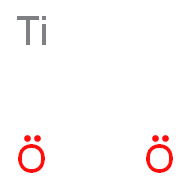
Titanium dioxide (TiO2), identified by CAS 13463-67-7, is the world's preeminent white pigment and an irreplaceable functional additive across coatings, plastics, inks, cosmetics, and selected food and pharmaceutical applications, prized for its exceptional refractive index, opacity, and UV-scattering performance. Global production exceeds 8 million tonnes per annum, anchored by the sulfate and chloride manufacturing routes, and the material's ubiquity in everyday products—from architectural paint to sunscreens—renders it a strategic bulk chemical whose supply security and regulatory status directly affect downstream manufacturing costs worldwide.
The titanium dioxide industry is navigating a pivotal inflection as tightening health classifications, particularly the European Union's categorization of powdery TiO2 as a suspected carcinogen by inhalation (Category 2), and the revocation of the E171 food-additive authorization reshape demand geography and formulation strategies. China has consolidated into the dominant low-cost production base, while Western producers increasingly specialize in high-purity, surface-treated, and application-engineered grades that command quality premia, producing a bifurcated market where commodity tonnage and premium functionality diverge.
This white paper delivers a comprehensive B2B assessment of CAS 13463-67-7 covering its pigmentary mechanism, manufacturing technologies, application matrix, and the multifaceted global compliance and ESG landscape that now dictates cross-border trade. By integrating capacity data, regulatory trajectories under REACH, CLP, TSCA, FDA, and APAC frameworks, and emerging carbon and circularity pressures, the analysis equips procurement, regulatory, and strategy leaders with a decision-grade reference and a regional supplier-ecosystem map to de-risk sourcing in 2026.
Titanium dioxide is an inorganic oxide existing naturally as rutile, anatase, and brookite crystalline polymorphs, of which the pigmentary rutile and anatase forms are industrially produced for their high refractive indices (2.7 and 2.5 respectively) that deliver unmatched light-scattering and hiding power. The white opacity of TiO2 arises from the mechanism of diffuse reflectance: its refractive index is sufficiently high relative to binders and polymers that incident light is scattered at pigment-particle interfaces, while optimal particle sizing in the 200–300 nm range maximizes scattering efficiency and brightness. Surface treatment with silica, alumina, and zirconia layers is applied to improve dispersion, durability, and to encapsulate the photoactive surface that would otherwise catalyze polymer degradation under UV exposure, a critical functionality-control mechanism in coatings and plastics.
Two principal commercial routes convert ilmenite or titanium slag feedstock into pigmentary TiO2: the sulfate process, which digests ore with sulfuric acid and yields a versatile but waste-intensive product, and the chloride process, which chlorinates upgraded feedstock to TiCl4 and oxidizes it to high-purity, tightly sized pigment with superior tinting strength and lower byproduct load. The chloride route now dominates new Western capacity owing to its cleaner profile and product consistency, while the sulfate process remains prevalent in China because of its tolerance for lower-grade ores and lower capital intensity, though environmental enforcement is progressively closing the least efficient sulfate plants.
Global titanium dioxide demand is fundamentally tied to construction, automotive, and consumer-goods cycles, with coatings remaining the primacy driver and plastics and cosmetics providing steadier, higher-margin growth vectors. A structural shift is underway as environmental and health concerns curtail food-grade E171 usage in the EU and as formulators in coatings migrate toward higher-opacity, lower-load formulations that reduce per-unit TiO2 intensity, partially muting volume growth even as value migrates to engineered grades. Simultaneously, the Asia-Pacific construction and manufacturing boom sustains robust baseline demand, while sustainability-led substitution pressures are prompting innovation in extenders and TiO2 alternatives that restrain long-term volume expansion in mature markets.
China has emerged as the unequivocal production leader for CAS 13463-67-7, combining vast sulfate-process capacity with rapidly scaling chloride facilities that increasingly serve both domestic and export markets across Asia, Africa, and Latin America. Western capacity in North America and Europe is concentrated among a handful of integrated producers who export premium chloride-grade pigment globally but face energy-cost and carbon-pricing disadvantages that have triggered plant rationalization and a strategic retreat from commodity tonnage. Export flows thus run predominantly from China and, to a lesser extent, from Middle Eastern and European chloride producers toward import-dependent regions, while antidumping duties in several markets illustrate the geopolitical sensitivity of this bulk pigment trade.
Titanium dioxide pricing tracks titanium feedstock (ilmenite, slag, rutile) availability and energy costs, with the market historically exhibiting pronounced cyclicality as capacity additions lag demand and trigger multi-year boom-bust swings in contract and spot prices. A durable bifurcation now separates commodity sulfate pigment, contested on price and increasingly constrained by environmental compliance cost, from specialty chloride and surface-treated grades that command substantial premia justified by performance, purity, and regulatory qualification. Buyers in 2026 should anticipate continued feedstock-driven volatility, periodic regional supply tightness from Chinese environmental curtailments, and a widening quality spread between compliant and non-compliant origins.
Titanium dioxide presents one of the more complex compliance profiles among bulk chemicals because its regulatory treatment varies sharply by physical form, particle size, and intended application, and because a single substance spans pigments, cosmetics UV filters, food additives, and pharmaceuticals. Enterprises must map the precise use and form of CAS 13463-67-7 to the correct regulatory regime in each jurisdiction, maintaining application-specific documentation to satisfy import and product-safety authorities.
Environmental, social, and governance pressures are especially acute for titanium dioxide because both the sulfate and chloride processes are energy- and resource-intensive and generate characteristic waste streams, making the sector a focal point for green trade barriers, effluent limits, and carbon accountability. Producers that can demonstrate reduced acid and solid-waste footprints, renewable-energy integration, and transparent Scope 1–3 emissions reporting are better positioned to serve ESG-driven brand owners and to withstand tightening import and procurement standards.
The carbon intensity of CAS 13463-67-7 is dominated by energy consumed in calcination, acid digestion, and chlorine cycling, with the sulfate route generally carrying a heavier waste and emission burden than the chloride route, prompting producers to pursue waste-acid recovery, co-product valorization of ferrous sulfate, and electrification coupled to renewable power. Circular-economy strategy centers on extending pigment service life through durable formulations, recovering TiO2 from coatings and plastics streams where technically feasible, and improving process closure to minimize virgin feedstock and landfill, all of which reduce exposure to carbon-border adjustments and strengthen ESG credentials in tenders.
Traceability for titanium dioxide increasingly requires documentation linking each lot to its feedstock origin, process route, and purity certification, enabling buyers to verify conflict-free and environmentally responsible sourcing and to substantiate non-E171, food-exclusion, or pharma-grade claims. Leading suppliers adopt ISO 14001 environmental management, third-party audits, and digital batch records that capture heavy-metal testing and carbon allocation, allowing brand owners to defend sustainability claims and to comply with emerging due-diligence regulations on embedded emissions and responsible mineral sourcing across the TiO2 value chain.
Titanium dioxide is shipped predominantly as a dry powder or slurry, and its logistics resilience depends on moisture control, dust-suppression, and correct hazardous-classification handling for powder forms, alongside the bulk infrastructure needed to move millions of tonnes efficiently. Because TiO2 is a low-value-per-weight bulk solid, freight availability, demurrage, and port throughput often rival the ex-works price in determining delivered cost, elevating logistics to a strategic pillar for global buyers of CAS 13463-67-7.
Under GHS/CLP, powdery titanium dioxide meeting dustiness and concentration thresholds is classified as a Category 2 inhalation suspect carcinogen, requiring hazard labeling, Safety Data Sheets, and dust-control handling during loading and unloading, although it is not a flammable or acutely toxic dangerous good under ADR/IMDG transport rules. Transit protocols therefore emphasize sealed, dust-tight packaging, avoidance of aerosol generation during transfer, respiratory-protective handling at terminals, and accurate declaration of the CLP classification to carriers and customs, while slurry grades are managed as non-hazardous liquids with corrosion-resistant containment and temperature-stable transit.
For participants across the titanium dioxide value chain, a resilient global strategy must reconcile cost leadership with regulatory qualification and ESG performance, because the substance's divergent treatment by form and application makes one-size sourcing impossible. The following prioritized actions convert this analysis into an executable expansion framework for CAS 13463-67-7.
Titanium dioxide remains an irreplaceable white pigment whose strategic calculus in 2026 is defined by the tension between indispensable functionality and intensifying health, environmental, and trade regulation that varies sharply by form and market. China's dominance in commodity tonnage and the West's hold on premium, compliant grades produce a bifurcated landscape in which qualification and documentation are as decisive as price for global B2B success with CAS 13463-67-7.
Enterprises that proactively manage form-specific compliance, CLP and FDA dossiers, and ESG-driven sourcing will convert regulatory complexity into competitive advantage, securing resilient supply amid feedstock volatility and green trade barriers. The regional ecosystem map below provides the macro structure needed to execute compliant, sustainable titanium dioxide procurement across North America, Europe, and Asia-Pacific.
Powered by Guidechem
This white paper is exclusively compiled by the Guidechem Intelligence Team based on global customs data, regulatory databases, and industry research. Guidechem is a leading global B2B chemical platform, dedicated to connecting global buyers with verified, high-quality manufacturers.
Relying on Guidechem's extensive global database, we have mapped the core participants in the current global Titanium dioxide supply chain:
Disclaimer: The content of this white paper is compiled based on public market data and regulatory information available as of 2026. Global chemical regulations are subject to dynamic adjustments. In actual export operations, enterprises must consult professional regulatory advisors or relevant competent authorities to obtain the latest compliance guidance.
 |
 |
 |
 |
 EN
EN
 Agricultural News
 Food News
 Industrial News
 Cosmetic News
 Pharmaceutical News
 Science News

 3YRS
3YRS

