Guideview >  Articles >  Trends  > Zinc gluconate:Exports & Compliance White Paper 2026

Zinc gluconate:Exports & Compliance White Paper 2026

Zinc gluconate (CAS 4468-02-4) is a mineral supplement ingredient for food and pharma. Discover 2026 export trends, food-grade and GMP documentation, and reliable bulk sourcing on Guidechem. Vaughan5 MIN READOctober 8, 2026
Zinc gluconate White Paper

I. Executive Summary

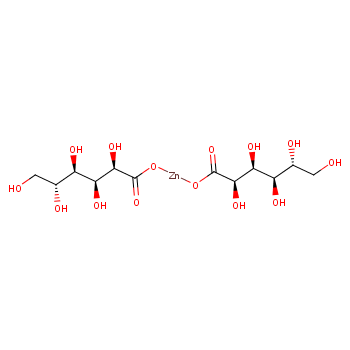
Zinc gluconate (CAS 4468-02-4) is the zinc(II) salt of D-gluconic acid, supplied as a white crystalline to granular powder of formula C12H22O14Zn and molecular weight 455.68, containing roughly 14 percent elemental zinc. Freely soluble in water and essentially odourless, it is preferred over zinc sulfate and chloride in taste-critical formats. Commercial grades differ by assay, heavy-metal limits, particle size and documentation tier rather than by chemistry. Buyers should therefore specify the target sector first, because pharmaceutical, food, feed and cosmetic grades share one CAS number but not one specification.

Demand rests on zinc's status as an essential trace element and on the tolerability of the gluconate anion. Zinc is a catalytic and structural cofactor in several hundred enzymes and in zinc-finger transcription factors, and it underwrites immune function, epithelial integrity and wound repair. Gluconate is a normal intermediate of glucose oxidation, so the salt is well tolerated and palatable, which is why it dominates lozenge, syrup and chewable formats.

Supply chains start with glucose: D-gluconic acid or glucono-delta-lactone is produced by fermentation or enzymatic oxidation, then converted with a zinc source such as zinc oxide, basic zinc carbonate, or zinc sulfate via double decomposition with calcium gluconate. Chinese producers dominate gluconate salt capacity, while European and North American plants focus on pharmacopoeial grades supported by CEP or drug master file documentation. Pricing tracks zinc metal and gluconic acid costs, with pharmacopoeial and low-cadmium grades carrying a clear premium.

II. Product Deep Dive: Molecular Mechanisms and Production Evolution

2.1 Physicochemical Properties and Mechanisms

Zinc gluconate dissociates in aqueous and gastric media to the hydrated zinc(II) ion and two gluconate anions, and its biology is essentially the biology of Zn2+. Zinc is redox-inert in biological systems and acts as a Lewis acid and structural stabiliser rather than an electron-transfer agent, which explains its wide enzyme repertoire. The gluconate counter-ion improves aqueous solubility and organoleptic acceptability and is metabolised through normal carbohydrate pathways, leaving no exotic residue.

  • Zinc as Catalytic and Structural Cofactor: Zn2+ sits at the active sites of carbonic anhydrase, alkaline phosphatase, alcohol dehydrogenase and copper-zinc superoxide dismutase, and stabilises zinc-finger motifs in transcription factors, so adequate status supports DNA synthesis, cell division and antioxidant defence. Deficiency manifests as impaired immunity, delayed wound healing and taste disturbance.
  • Counter-Ion Contribution and Tolerability: Gluconate is a mild anion derived from glucose oxidation, giving zinc gluconate better palatability and gastric tolerance than sulfate or chloride salts and making it the standard choice for lozenges, syrups and paediatric formats. Absorption is homeostatically regulated through metallothionein and ZIP and ZnT transporters, and sustained high intakes reduce copper uptake.

2.2 Synthesis and Manufacturing Technologies

Manufacture is a two-stage problem: make clean gluconic acid, then make a clean zinc salt. Impurity control is the defining process challenge, because zinc ores and zinc chemicals naturally carry cadmium, lead, arsenic and iron that must be stripped to pharmacopoeial and food-law levels.

  • Gluconic Acid by Fermentation or Catalytic Oxidation: D-gluconic acid is produced by submerged fermentation with Aspergillus niger or Gluconobacter oxydans, by enzymatic oxidation using glucose oxidase with catalase, or by electrochemical oxidation of glucose, with the glucono-delta-lactone equilibrium managed through pH control. Clarification, carbon treatment and ion exchange remove colour, protein and residual sugar before salt formation.
  • Salt Formation, Polishing and Crystallisation: Neutralisation with zinc oxide or basic zinc carbonate gives zinc gluconate directly, while double decomposition of calcium gluconate with zinc sulfate and gypsum removal offers an alternative route, with ion-exchange routes used for low-chloride grades. Carbon and chelating-resin polishing removes iron, copper, lead and cadmium, then vacuum concentration, crystallisation and fluid-bed or spray drying deliver free-flowing powder at controlled particle size.

2.3 Core Application Matrix

  • Pharmaceuticals and Dietary Supplements: Zinc gluconate is a standard oral zinc source in lozenges, effervescent and chewable tablets, syrups and premixes used in nutritional support protocols. Pharmacopoeial material must meet USP and Ph.Eur. monographs, supplement manufacture must follow 21 CFR Part 111 or equivalent GMP, and drug products must comply with ICH Q3D limits.
  • Food Fortification and Food Supplements: It is among the zinc sources permitted for food supplements in the European Union under the legislation implementing Directive 2002/46/EC, and is used in fortified beverages, cereals and dairy alternatives where neutral taste matters. Food-grade material must satisfy applicable additive and contaminant rules, including maximum levels for lead, cadmium and mercury.
  • Oral Care, Cosmetics and Technical Uses: Dentifrices and mouthwashes use zinc gluconate for plaque control and volatile sulfur compound reduction, while skin-care formulations use it for sebum regulation and soothing; further volumes go into micronutrient fertiliser premixes and culture-media formulations. Cosmetic use requires a documented safety assessment and MoCRA-aligned obligations in the United States.

III. Global Market Supply-Demand Landscape and Export Trends

3.1 Demand Drivers and Market Shifts

Demand is structurally stable and slowly rising, driven by public-health zinc programmes, everyday wellness positioning and population groups with marginal intake such as older adults and vegetarian consumers. Growth in 2026 is concentrated in convenient formats: gummies, effervescents, stick packs and oral-care products, all of which reward gluconate's taste profile. Clean-label expectations are pushing formulators away from inorganic salts, while authorities keep total zinc intake under review, which caps growth per dose.

3.2 Capacity Distribution and Export Flows

Production capacity for gluconate salts is concentrated in China, particularly in its northern and eastern industrial provinces, while European and North American plants retain pharmacopoeial and food-grade capacity close to regulated customers. Trade flows run from bulk producers to Western premix houses, supplement brand owners and oral-care manufacturers, with higher-value pharmacopoeial material moving between qualified GMP sites. Zinc gluconate is declared under Chapter 29 headings for salts of organic acids, and shipments face food-law import controls more often than chemical controls. Because zinc is exchange-traded and volatile, contracts commonly carry metal escalation clauses.

3.3 Market Bifurcation and Pricing Dynamics

The market splits into three tiers. Technical and feed grades compete on zinc content and price and are highly substitutable with zinc sulfate and zinc oxide. Food and supplement grades compete on documentation, taste and contaminant limits and are moderately defensible. Pharmacopoeial grades are smallest by volume and most defensible, with pricing driven by monograph conformity, CEP or drug master file support and audit readiness. In 2026 expect stable-to-firm pricing as smelter economics, environmental compliance costs and freight push conversion costs upward.

IV. In-depth Analysis of Global Compliance and Regulatory Barriers

Zinc gluconate sits at the intersection of food law, pharmaceutical GMP and chemical inventory control. The substance itself is well known and registered, but each application triggers a separate regime covering permitted use, maximum levels, labelling and claims. Exporters who treat it as one generic commodity consistently underestimate the documentation their customers are legally required to hold.

4.1 European Market: REACH, CLP, and Sector-Specific Directives

  • REACH, CLP and Food-Supplement Rules: The substance is registered under REACH and is not on the candidate list of substances of very high concern, but soluble zinc compounds typically carry aquatic hazard classification, which drives labelling, environmental risk assessment and, where thresholds apply, dangerous-goods documentation in transport. Food-supplement use is governed by Directive 2002/46/EC and the regulation listing permitted vitamin and mineral sources, with contaminant maxima under the EU contaminants regulation.
  • Pharmaceutical, Feed and Cosmetic Controls: Medicinal use requires Ph.Eur. monograph conformity, ICH Q7 GMP for active substances, CEP or active substance master file support and compliance with ICH Q3D elemental impurity limits, alongside national marketing authorisations. Feed use is regulated under Regulation (EC) No 1831/2003 and users must verify inclusion in the EU Register of Feed Additives, while cosmetic use requires safety assessment under Regulation (EC) No 1223/2009.

4.2 North American Market: TSCA, EPA, and FDA Regulations

  • TSCA, FDA Listings and Dietary-Supplement Obligations: The substance is listed on the TSCA inventory and imported under standard certification, while its use as a dietary ingredient relies on DSHEA, with the applicable FDA food listings for zinc salts to be confirmed before use. Finished supplement manufacturers must meet 21 CFR Part 111 GMP, and claims are policed by the FDA and FTC, so structure and function claims must be substantiated.
  • Drug, Food-Contact and Environmental Rules: Pharmaceutical customers expect USP monograph conformity, drug master file support, FDA establishment registration and listing, and ICH Q3D conformity, while food-contact and fortification uses require confirmation of the relevant FDA provision. Discharge of zinc is controlled under Clean Water Act permits and local limits, and Proposition 65 should be assessed for the finished product.

4.3 The Critical Hurdle: Quality Control and Safety Limits

Compliance Warning: The dominant risk in this trade is elemental impurity control, because zinc raw materials can carry cadmium, lead, arsenic and iron and because regulators in every major market now apply strict limits to finished products. Require ICP-MS or ICP-OES data on every lot against ICH Q3D or USP and Ph.Eur. limits, and verify that the aquatic hazard classification claimed by the supplier matches the grade actually shipped, since that classification changes transport documentation. Confirm identity by assay and infrared or specific rotation rather than simple anion tests, and ensure certificates state loss on drying, reducing substances, chloride, sulfate and microbial counts.

V. Green Trade Barriers and ESG in Manufacturing

Zinc gluconate carries a double environmental profile: an agricultural carbohydrate backbone with land and water implications, and a metal whose extraction and refining are energy intensive. Buyers working toward Scope 3 reduction targets increasingly ask which zinc source and which glucose source a producer uses, and expect traceability evidence rather than generic assurances.

5.1 Carbon Footprint and Circular Economy

Emissions are dominated upstream. Zinc concentrates and refined zinc carry energy-intensive smelting and refining footprints in Scope 3, glucose production carries agricultural nitrous oxide, fertiliser and land-use emissions, and only evaporation, crystallisation and spray drying sit in Scope 1 and Scope 2 at the gluconate plant. Abatement levers include renewable electricity, mechanical vapour recompression in concentration, heat recovery from drying and mother-liquor recycle. Zinc is highly recyclable and European circular-economy policy treats secondary zinc favourably, so documented recycled or low-carbon zinc content is a genuine differentiator. Reporting should follow the GHG Protocol and ISO 14064 cradle-to-gate per kilogram at a stated grade.

5.2 Sustainable Sourcing and Traceability

Sourcing diligence is now a substantive qualification gate rather than a formality. Buyers expect ISO 9001 and ISO 14001 certification, responsible-minerals due diligence aligned to OECD guidance and, where applicable, exchange responsible-sourcing requirements, and documented screening for cadmium and lead at the zinc oxide or carbonate supplier. Glucose and gluconic acid should be traced to a defined agricultural origin, with genetically modified organism status declared and non-GMO supply available for sensitive markets. Social diligence includes forced-labour screening and supply-chain due-diligence compliance, and halal, kosher and vegan certification is frequently requested for food channels.

VI. Supply Chain Resilience and Export Logistics

Zinc gluconate is a stable, mildly hygroscopic crystalline solid, so its main logistics enemies are moisture, heat and cross-contamination with other metal salts. Packaging and warehousing decisions therefore determine whether assay and flow properties survive the journey to the customer.

6.1 Packaging Standards and Moisture/Contamination Control

  • Moisture, Light and Cross-Contamination Control: Material is packed in polyethylene-lined fibre drums, lined cartons or approved bags with desiccant where required, sealed under low humidity and stored cool and dry to prevent caking. Dedicated or validated-clean equipment should be used to avoid contamination with other metal salts, and allergen status preserved through the packing line.
  • Food-Contact Compliant and Pharmaceutical Packaging: Food and pharmaceutical grades require packaging conforming to food-contact frameworks such as Regulation (EC) No 1935/2004 or the relevant FDA provisions, with tamper-evident seals, lot coding and, for pharmaceutical supply, qualified primary packs supported by stability data. Bulk consignments should be palletised and stretch-wrapped, with certificates that reconcile by lot number.

6.2 Dangerous Goods Identification and Transit Protocols

Most zinc gluconate shipments travel as non-dangerous goods, but grades carrying an aquatic chronic hazard classification may be assigned UN 3077 as an environmentally hazardous solid, Class 9, packing group III, above the applicable quantity threshold, so classification must be confirmed per grade rather than assumed. Air freight follows IATA rules and sea freight the IMDG Code, with marine pollutant status determined by the same classification. Shipments should carry lot-specific certificates, food-law or pharmacopoeial declarations as applicable, and clear end-use statements to satisfy import controls. Warehousing should segregate food, feed and pharmaceutical grades physically and in inventory systems.

VII. Enterprise Global Expansion Strategy Guide

Exporters that succeed with zinc gluconate treat documentation and grade discipline as part of the product.

  1. Build a Three-Tier Grade Architecture: Separate technical, food and pharmacopoeial production with distinct raw-material specifications, dedicated campaigns and separate release panels, and resist downgrading rejected pharmaceutical lots into food channels without full re-testing and documentation. Tier separation is what makes customer audits survivable.
  2. Secure Zinc and Glucose Supply with Traceability: Contract zinc oxide or carbonate from suppliers with documented responsible-sourcing and impurity profiles, and qualify glucose or gluconic acid sources with defined origin, GMO status and contaminant data. Hedging zinc exposure through exchange-linked contracts stabilises quotations for customers.
  3. Win Regulated Accounts with Dossiers and ESG Evidence: Invest in CEP or drug master file support, ICH Q3D elemental impurity data, stability studies and audit readiness, then add verified Scope 1 to 3 emissions reporting and ISO certifications. Regulated customers buy evidence, and their qualification cycles convert that evidence into multi-year contracts.

VIII. Conclusion

Zinc gluconate is a mature, well-characterised zinc salt whose commercial logic rests on tolerability, taste neutrality and documentation rather than on novel chemistry. It competes on three distinct tiers, and the winners keep technical, food and pharmacopoeial production genuinely separate. Buyers should specify the sector and applicable monograph before requesting a quotation.

Through 2026 the decisive factors are zinc and glucose cost volatility, tightening elemental impurity expectations, and the growing requirement for verified environmental and responsible-sourcing evidence in food and pharmaceutical tenders. Suppliers combining tight heavy-metal control with complete dossiers will hold margin, while those competing on zinc content alone will remain exposed to metal price cycles and to customers who can substitute cheaper inorganic salts.

IX. Industry Resource Connection and Supplier Ecosystem

Powered by Guidechem

This white paper is exclusively compiled by the Guidechem Intelligence Team based on global customs data, regulatory databases, and industry research. Guidechem is a leading global B2B chemical platform, dedicated to connecting global buyers with verified, high-quality manufacturers.

Guidechem Global Zinc gluconate Supplier Ecosystem List

Relying on Guidechem's extensive global database, we have mapped the core participants in the current global Zinc gluconate supply chain:

  • North America Ecosystem: Buyers are dominated by dietary-supplement brand owners, contract manufacturers, oral-care companies and pharmaceutical formulators operating under DSHEA, 21 CFR Part 111 and FDA drug GMP. Suppliers must be ready for USP conformity, drug master file support, Proposition 65 assessment and supplier audits.
  • Europe Ecosystem: Demand centres on food-supplement and pharmaceutical customers working under Directive 2002/46/EC, the Ph.Eur. monograph and ICH Q3D, with REACH and CLP documentation and aquatic classification handled carefully. Buyers increasingly require verified environmental declarations and traceability for both the zinc and carbohydrate portions.
  • Asia-Pacific and China Ecosystem: China supplies the bulk of global gluconate capacity and a growing share of pharmacopoeial material, while India, Japan and Southeast Asia add fast-growing supplement and oral-care demand. The region offers cost and scale with variable documentation maturity, so buyers should qualify plants directly and verify contaminant data lot by lot.

Disclaimer: The content of this white paper is compiled based on public market data and regulatory information available as of 2026. Global chemical regulations are subject to dynamic adjustments. In actual export operations, enterprises must consult professional regulatory advisors or relevant competent authorities to obtain the latest compliance guidance.

Make Guideview Preferred Source on Google
Related News