
I. Executive Summary
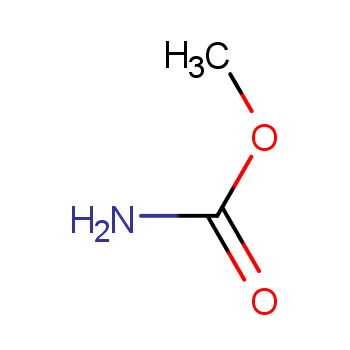
Methyl carbamate (CAS 598-55-0), CH3NO2 with relative molecular mass near 75.1, is the simplest carbamic acid ester and one of the most widely handled small carbamate building blocks. It melts at roughly 52 to 56 °C, boils around 176 to 177 °C and dissolves readily in water and alcohols. Its importance rests on carbamoyl transfer toward N-substituted carbamate agrochemicals, co-reaction in amino-formaldehyde textile finishes, and fine chemical synthesis.
Because the molecule is small, polar and hygroscopic, the practical specification is dominated by three items rather than headline assay: water content, residual methanol and ammonia, and urea-derived by-products such as biuret-family species. These impurities influence stoichiometric control in carbamoylation and colour formation in resin applications. Buyers specifying only nominal minimum purity routinely experience variability that cannot be reconciled after shipment.
Commercially the segment tracks urea and methanol economics, yet it faces intense scrutiny because the carbamate group is associated with cholinesterase-inhibiting toxicology across several downstream actives. This paper therefore couples process economics with compliance discipline. Classification, labelling and transport data must be confirmed against official inventories and the supplier's current safety data sheet; no usage recommendation is made here.
II. Product Deep Dive: Molecular Mechanisms and Production Evolution
2.1 Physicochemical Properties and Mechanisms
Methyl carbamate is a low-melting crystalline solid whose small size and high dipole moment give unusual solubility for its molecular weight: high solubility in water and polar alcohols, limited solubility in non-polar hydrocarbons. The nitrogen retains amide-like character, moderating nucleophilicity while still allowing acyl transfer. The ester hydrolyses under strongly acidic or alkaline conditions, releasing methanol, ammonia and carbonate species, which governs both storage practice and wastewater design.
- Carbamoyl transfer reactivity: The relevant industrial reaction class is transcarbamoylation, exchanging the methyl ester's alkoxy group with a phenol or alcohol acceptor to give the substituted carbamate while liberating methanol. Reaction is driven by methanol removal and catalysis; temperature control matters because competing N-methylation, urea formation and thermal decomposition generate the impurity burden that downstream purification must remove. This explains why upstream water and methanol residues are damaging: they shift equilibrium and inflate cycle times.
- Handling-relevant physical behaviour: Because the product melts near typical tropical container temperatures, cargo exposed to hot holds can soften, cake or partially liquefy, and re-solidification produces blocks that complicate sampling. The solid is also hygroscopic, so absorbed water depresses effective assay. Combustible-dust behaviour depends on particle-size distribution, so processors should obtain dust-hazard testing on their own material rather than relying on generic values.
2.2 Synthesis and Manufacturing Technologies
Three route classes dominate. The urea alcoholysis route reacts urea with methanol under elevated temperature and pressure while continuously removing ammonia. The legacy chloroformate route uses phosgene-derived chemistry followed by ammonolysis, surviving only in tightly integrated facilities with high containment. The carbonate route reacts dimethyl carbonate with ammonia, avoiding chlorine but demanding control of competing methylation. Selection trades feedstock cost against hazard profile, impurity pattern and permitting reality.
- Urea methanolysis with ammonia management: The urea-plus-methanol route is attractive because both feedstocks are commodity-priced and chlorine-free. Economics hinge on shifting equilibrium by stripping ammonia continuously and recycling methanol. Typical impurities are unconverted urea, biuret-family condensation products, ammonium carbamate and water. Plants therefore invest in stripping columns, methanol distillation recovery and low-temperature finishing, with the final water specification enforced at the packaging step rather than earlier.
- Route comparison, purification and specification: The carbonate route converts dimethyl carbonate with ammonia, forming methanol as coproduct; the technical difficulty is suppressing N-methylation yielding higher-substituted carbamates. Regardless of route, refining relies on vacuum distillation or melt crystallisation under inert atmosphere, since colour and water content deteriorate on hot exposure to moist air. In-process control combines gas chromatography for assay and methanol, Karl Fischer titration for water, and ion chromatography for ammonium residues.
2.3 Core Application Matrix
- Agrochemical intermediate to N-methyl carbamate actives: The largest historical outlet is conversion into substituted aryl or oxime carbamates used as insecticidal actives. Demand here is governed by the registration status of each finished active substance, not by the intermediate itself, so intermediate buyers must watch national pesticide approvals and maximum residue limit reviews in destination markets when forecasting volumes.
- Textile and polymer finishing co-reactant: Methyl carbamate participates in amino-formaldehyde crosslinking chemistry for durable-press and easy-care finishes, contributing carbamate functionality into resin networks. Users in this segment prioritise consistency of melting behaviour, low free formaldehyde contribution from their own formulation, minimal colour and tight chloride and ash figures that could otherwise catalyse premature resin gelation.
- Fine chemical and pharmaceutical building block: As a compact bifunctional synthon it is used to install protected amine or carbamate functionality, in heterocycle construction and in protected-intermediate routes. This channel demands documented impurity profiles, trace-metal screening, residual solvent declarations and change-control commitments, and it pays a clear premium over technical-grade material.
III. Global Market Supply-Demand Landscape and Export Trends
3.1 Demand Drivers and Market Shifts
Demand follows three downstream cycles. Agrochemical consumption is shaped by national reviews of cholinesterase-inhibiting carbamate actives, contracting volumes in several markets while remaining stable elsewhere. Textile finishing correlates with apparel production indices in South and Southeast Asia. Fine-chemical demand is smaller but grows with outsourced protected-intermediate synthesis. The consequence for exporters is a portfolio effect: softness in one channel is offset by strength in another, provided specifications can be switched quickly.
3.2 Capacity Distribution and Export Flows
Production concentrates where urea and methanol are available at scale, with China the dominant exporter and India a growing second pole serving agrochemical intermediate customers. Smaller European, Japanese and United States volumes are frequently captive or toll output inside integrated sites. Flows therefore run from Asian manufacturing provinces to formulation hubs in India, Brazil, Turkey and Southeast Asia, while European buyers import modest volumes through distributors holding local registrations and safety stock.
3.3 Market Bifurcation and Pricing Dynamics
Prices track urea and methanol, yet realised pricing diverges by grade. Technical-grade material for resin or agrochemical conversion competes on delivered cost per contained kilogram. High-purity material supporting pharmaceutical synthesis commands a durable premium justified by impurity limits, validated methods, change control and audit access. When feedstock costs spike, this premium widens because lower-tier buyers defer purchases while licensed pharmaceutical customers cannot substitute qualified sources easily.
IV. In-depth Analysis of Global Compliance and Regulatory Barriers
Compliance risk concentrates in two places. The substance itself must be registered and correctly classified and labelled in each destination, and because classifications may differ between authorities the exporter must verify against official inventories rather than inherited documents. Separately, several applications sit inside sectors with their own approval regimes, notably pesticide actives and textile articles. A cargo can be chemically perfect yet commercially unusable if the customer's sector registration does not cover the intended use.
4.1 European Market: REACH, CLP, and Sector-Specific Directives
- REACH registration and CLP obligations: Import into the European Union presupposes a registration covering the applicable tonnage band and a dossier consistent with current hazard assessment guidance. Classification and labelling must be confirmed against official inventory entries and notified; hazard statements must never be copied from an unrelated supplier's document. Extended safety data sheets with exposure scenarios apply where a registration requires them, and downstream users must verify that their use remains within identified conditions.
- Sector rules downstream: Where the intermediate feeds insecticidal carbamate actives, those substances must hold approval under the plant protection products framework with residue limits for treated crops set under the residue regulation; loss of approval removes the outlet regardless of intermediate quality. For textile use, Union restrictions on substances in articles plus voluntary OEKO-TEX brand criteria set de facto limits on residuals in finished goods.
4.2 North American Market: TSCA, EPA, and FDA Regulations
- TSCA inventory and reporting: United States import requires an appropriate Toxic Substances Control Act inventory designation, chemical data reporting where thresholds are met, and importer certification. Hazard communication must align with the current occupational standard, making documents, labels and training auditable. Since entry data are increasingly verified automatically, inconsistency between invoice description, safety data sheet and label is a recurrent source of delay.
- Downstream agency interfaces: Carbamate insecticidal actives derived from this intermediate are regulated as pesticides, requiring registration and tolerance-setting under the federal insecticide framework plus worker protection provisions. Customers using carbamate resins in articles intended to contact food must additionally hold appropriate food-contact clearances for their own formulations. These downstream approvals sit with customers, but experienced intermediate suppliers support them with impurity and residual-solvent data packages.
4.3 The Critical Hurdle: Quality Control and Safety Limits
Compliance Warning: Buyers must not rely on this document or any inherited document for hazard classification, hazard statements or transport numbers, since classifications differ between authorities and change over time; the governing sources are official inventories, the supplier's current safety data sheet and current dangerous goods lists. Operationally, treat the material as a low-melting, hygroscopic, dust-forming solid: closed or ventilated transfer, dust collection designed against site-specific testing, gloves and eye protection, and ignition-source control. Because the carbamate toxicophore is associated with cholinesterase-inhibiting activity in several related substances, exposure control must be designed by qualified occupational-health professionals. No usage or formulation guidance is provided.
V. Green Trade Barriers and ESG in Manufacturing
Route choice is now an environmental argument as much as an economic one because buyers quantify emissions and hazardous-reagent exposure rather than merely checking permits. Elimination of chlorine-based chemistry, methanol recovery instead of discharge, and ammonia capture separate credible producers from commodity suppliers, and these differences increasingly appear in tender scoring.
5.1 Carbon Footprint and Circular Economy
Meaningful carbon accounting must include the upstream footprint of urea and methanol, both energy-intensive, so cradle-to-gate footprints are dominated by Scope 3 inputs rather than plant operations. Clients increasingly request figures in recognised chemical-industry format, split by emission scope. Reductions come from heat integration around reactor and distillation train, methanol recovery, ammonia capture and reuse, and lower-temperature finishing; certified renewable or circular methanol is an emerging differentiator.
5.2 Sustainable Sourcing and Traceability
Traceability is driven by downstream brand obligations rather than by intermediate retailers. Textile and apparel customers demand traceable origin for finishing chemistry and documented restricted-substance compliance, while agrochemical customers need batch genealogy supporting registration files. Implementation means batch-numbered records linking urea and methanol lots to the packaged lot, retention samples under controlled humidity, ISO 9001 and ISO 14001 certification, and third-party sustainability assessment.
VI. Supply Chain Resilience and Export Logistics
Logistics for this material are shaped by the low melting point and hygroscopicity described earlier rather than by acute hazards. Two failure modes dominate claims: caking after exposure to hot transport conditions, and water uptake from humid environments or damaged liners. Both are preventable through specification of container routing, liner integrity checks and storage conditions, and both are difficult to remedy once cargo has consolidated in transit.
6.1 Packaging Standards and Moisture/Contamination Control
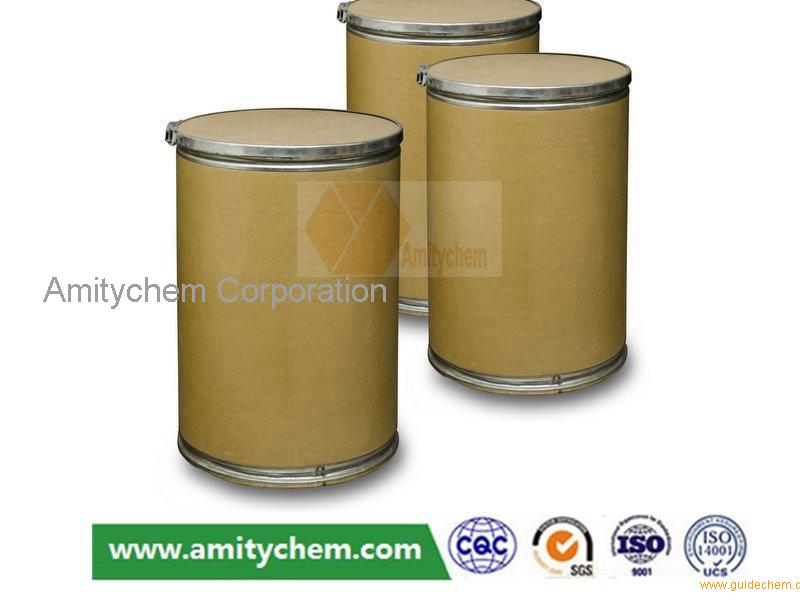
- Standard packed forms: Typical offerings are twenty-five kilogram polyethylene-lined multiwall bags on pallets, fibre drums with inner liner, and five hundred to one thousand kilogram flexible intermediate bulk containers with moisture-barrier liner. Liners should be heat-sealed with desiccant added for high-humidity routes, and drums stored off-floor on treated pallets to avoid moisture wicking and satisfy phytosanitary rules for wood packaging.
- Molten and bulk alternatives: Large integrated sites sometimes transfer the product molten in heated road tankers with temperature logging, eliminating packaging cost but introducing solidification risk on delay. Where molten transfer is used, contracts should specify temperature bands, discharge windows and re-heat responsibility. For drummed export, water content should be verified by sampling the actual shipment lot rather than warehouse stock.
6.2 Dangerous Goods Identification and Transit Protocols
Transport classification cannot be assumed and is best verified per shipment against current dangerous goods lists for road, sea and air modes plus the classification in the supplier's current safety data sheet, since authorities may differ. Exporters should secure written classification confirmation before booking, avoid deck exposure in hot seasons or use insulated liners, request temperature and humidity monitoring on tropical routes, and segregate cargo from foodstuffs and from strong acids or alkalis.
VII. Enterprise Global Expansion Strategy Guide
Suppliers win in this segment by reducing total delivered risk rather than by shaving unit price. The three priorities below reflect how professional buyers actually award repeat business for simple, competitive intermediates.
- Qualify on the three real parameters: Build the quality agreement around water content, residual methanol and ammonium or urea-related residues, with validated gas chromatography, Karl Fischer and ion-chromatography methods and defined re-test intervals. Publish the exact analytical method references with the offer so that laboratories can reconcile results, and retain reference samples long enough to investigate disputes in transit claim windows.
- Disclose route class and support registrations: State clearly which route class is used, since customers in regulated sectors must avoid certain reagent legacies and must file route-dependent impurity data. Maintain registration support documents, updated exposure scenarios, and letters of access where relevant, and offer change-control commitments covering route, site and raw material changes that could otherwise invalidate a customer's filing.
- Diversify application channels and logistics: Serve at least two of the three demand channels so the portfolio is buffered against a single registration withdrawal, and pre-qualify alternative packaging and routing options ahead of peak season. Regional warehousing in major import hubs shortens delivery for drummed grades and materially improves claim response, which matters more than nominal price for pharmaceutical and textile customers alike.
VIII. Conclusion
Methyl carbamate in 2026 is a commodity-intermediate with a compliance-shaped future. Its economics still follow urea and methanol, but margin now accrues to producers able to demonstrate chlorine-free route credentials, tight control of water and methanol residues, consistent physical form through tropical logistics and registration support matched to each destination. Those capabilities convert a low-margin molecule into a defensible, repeat-order business.
This document is intended for industrial procurement, regulatory and technical professionals. All classification, labelling, exposure and transport information must be confirmed against official inventories, current dangerous goods lists and the supplier's current safety data sheet for the specific shipment, and this text offers no usage, formulation or dosing recommendation of any kind.
IX. Industry Resource Connection and Supplier Ecosystem
Powered by Guidechem
This white paper is exclusively compiled by the Guidechem Intelligence Team based on global customs data, regulatory databases, and industry research. Guidechem is a leading global B2B chemical platform, dedicated to connecting global buyers with verified, high-quality manufacturers.
Relying on Guidechem's extensive global database, we have mapped the core participants in the current global Methyl carbamate supply chain:
- China integrated nitrogen-chemicals cluster: The largest exporting base, in provinces with adjacent urea, methanol and agrochemical intermediate capacity. Advantages are feedstock integration and flexible plants able to swing between urea alcoholysis and carbonate routes; the challenge is heterogeneity, from modern continuous units with solvent recovery to older batch plants exporting without full registration support.
- India agrochemical intermediate specialists: Indian producers typically combine carbamate intermediate manufacture with conversion into insecticidal actives, giving strong knowledge of registration-driven impurity requirements. Many operate dedicated plants supplying global agrochemical formulators under international customer audits, making them natural partners for route transparency and change control.
- Europe, Japan and North America compliance-driven tier: Smaller volumes, frequently captive or toll-produced inside integrated sites, with distributors and formulators holding local registrations, exposure scenarios and safety stock. Buyers pay a premium for documentation quality, proximity and claim resolution; Japanese producers contribute strength in high-purity grades.
Disclaimer: The content of this white paper is compiled based on public market data and regulatory information available as of 2026. Global chemical regulations are subject to dynamic adjustments. In actual export operations, enterprises must consult professional regulatory advisors or relevant competent authorities to obtain the latest compliance guidance.



 EN
 Agricultural News
 Food News
 Industrial News
 Cosmetic News
 Pharmaceutical News
 Science News


 6YRS

