
I. Executive Summary
Poly(vinyl acetate), CAS 9003-20-7, is the waterborne workhorse behind wood adhesives, packaging converting, interior coatings and cosmetic film formers. Its commercial position rests on the long shift from solvent-borne to water-based systems driven by volatile organic compound regulation. Demand is reinforced by packaging and e-commerce growth, formaldehyde-free wood bonding and styling-product formulation. The resin is also the principal precursor to polyvinyl alcohol and polyvinyl butyral.
Competitive advantage in this resin lies in formulation rather than in the molecule alone. Glass transition near 30 °C, minimum film-forming temperature, particle size, protective colloid choice and residual vinyl acetate monomer content determine performance and compliance more than nominal solids. Because acetate ester groups hydrolyse slowly, formulators must balance adhesion against water sensitivity and acetaldehyde formation. Regulatory pressure now extends from volatile organic compound limits to restrictions on surfactant residues and synthetic polymer microparticles.
This white paper addresses adhesive formulators, coatings technologists, cosmetic chemists and procurement teams. It explains latex film formation, copolymer design, emulsion polymerisation practice and residual monomer control. It then maps demand drivers, capacity and pricing, European, United States and Asia-Pacific compliance, ESG expectations, packaging and transit discipline, and a practical expansion strategy. The emphasis throughout is on specification discipline rather than promotional claims.
II. Product Deep Dive: Molecular Mechanisms and Production Evolution
2.1 Physicochemical Properties and Mechanisms
Poly(vinyl acetate) is an amorphous thermoplastic with a glass transition near 30 °C and a molecular weight that varies widely by grade. Its performance in dispersions comes from latex film formation rather than from dissolution. As water evaporates, particles pack, deform and interdiffuse into a continuous film above the minimum film-forming temperature. Polar acetate groups generate adhesion to cellulose and glass.
- Latex Film Formation and Adhesion Mechanism: Particles typically between 0.1 and 2 micrometres pack as water leaves, then deform and interdiffuse once the temperature exceeds the minimum film-forming value. Coalescents and plasticisers lower that threshold for cold weather. Adhesion arises from polar interaction and hydrogen bonding with the substrate, reinforced by mechanical interlocking, and crosslinkers raise water resistance to EN 204 durability classes.
- Structure-Property Design Through Copolymerisation: Ethylene lowers glass transition and improves flexibility and alkali resistance. Acrylic and vinyl ester comonomers add hydrophobicity, ultraviolet stability and pigment binding. Functional monomers and colloid choice tune open time, wet tack and water resistance. This design space is where most product differentiation actually occurs.
2.2 Synthesis and Manufacturing Technologies
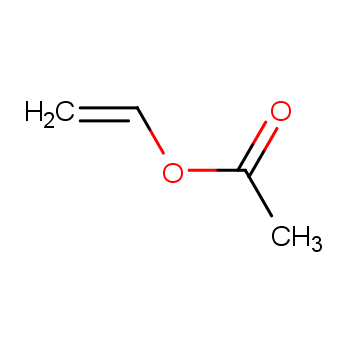
Vinyl acetate monomer is made by acetoxylation of ethylene, or by the acetylene route in coal-based economies. Polymerisation is free-radical and overwhelmingly carried out as a semi-batch aqueous emulsion, with solution polymerisation in methanol reserved for polyvinyl alcohol production. Aqueous phase design and monomer feed control determine particle size and residual monomer.
- Semi-Batch Emulsion Polymerisation and Colloid Systems: A seeded semi-batch process feeds monomer under redox control to manage nucleation and composition. Protective colloids or surfactant systems set particle size, shear stability and water resistance. Fouling control and heat balance are the main scale-up challenges.
- Residual Monomer Stripping and Finishing Operations: Free vinyl acetate is reduced to parts-per-million levels by post-polymerisation and steam stripping. Finishing adds preservative, defoamer and pH adjustment before filtration. Release testing covers solids, viscosity, pH, particle size, grit and residual monomer.
2.3 Core Application Matrix
- Wood, Packaging and Converting Adhesives: The dominant outlet is wood bonding, from furniture assembly to exterior EN 204 grades. Packaging converting uses fast-setting dispersions for cartons, tubes and laminates. Buyers judge open time, setting speed, bond strength and machine cleanliness.
- Cosmetics and Personal Care Film Formers: Cosmetic grades act as film formers in hair styling gels, sprays and mousses, in nail enamel and in peel-off masks. These applications demand very low residual monomer, controlled microbiology and full documentation for safety assessment. European placement requires compliance with the Cosmetics Regulation and good manufacturing practice under ISO 22716.
- Construction, Coatings and Nonwoven Binders: Vinyl acetate ethylene dispersions bind interior paints, primers, plasters, tile adhesives and cement modifiers. They also bind nonwovens and carpet backings and feed redispersible powder production. Specialty grades serve food-contact adhesives and chewing gum base.
III. Global Market Supply-Demand Landscape and Export Trends
3.1 Demand Drivers and Market Shifts
Four drivers shape demand. Volatile organic compound regulation continues to convert solvent-borne systems to waterborne. Packaging growth, formaldehyde-free panels and indoor air schemes add further pull. Cosmetics and hygiene nonwovens add steady specialty volume. Against this, all-acrylic systems displace vinyl dispersions in premium exterior paints, and mature paper converting markets grow slowly.
3.2 Capacity Distribution and Export Flows
Monomer capacity is concentrated in Asia-Pacific, the United States Gulf Coast, Western Europe and the Middle East. Dispersion production is regional because shipping water is uneconomic. Monomer trades globally while emulsions are made near customers. China increasingly exports commodity dispersions, while specialty grades remain localised.
3.3 Market Bifurcation and Pricing Dynamics
Pricing follows vinyl acetate monomer, which tracks ethylene, acetic acid and methanol. Commodity dispersions use monomer-indexed formula contracts, while specialty grades carry specification premiums. Freight matters because half of a dispersion shipment is water. Buyers optimise by raising solids and qualifying regional sources.
IV. In-depth Analysis of Global Compliance and Regulatory Barriers
Compliance is unusual because the polymer is exempt from registration while monomer, additives and physical form are regulated. Restrictions on surfactant residues, microparticles and organic compounds shape formulation directly. Sector rules for cosmetics, construction, food contact and indoor air then apply. Suppliers must manage a dossier rather than a certificate.
4.1 European Market: REACH, CLP, and Sector-Specific Directives
- REACH Restrictions, CLP and Microplastics Assessment: Polymers are exempt from REACH registration, but monomers and additives are registered and restrictions still apply, including the limit on alkylphenol ethoxylate residues. The microplastics restriction requires assessment of whether solid polymer particles occur in cosmetic applications. Exemptions exist for biodegradable, soluble and film-forming uses.
- Sector Rules for Cosmetics, Coatings and Construction Products: Cosmetic uses require safety assessment, notification, ISO 22716 practice and ISO 17516 limits. Paints must satisfy Decopaint limits, while construction adhesives face performance and fire standards. Indoor air schemes increasingly determine specification success.
4.2 North American Market: TSCA, EPA, and FDA Regulations
- TSCA Status, EPA Coatings Rules and Formaldehyde Limits: The polymer is listed on the TSCA Inventory and imports require certification. Paints must meet EPA architectural coating limits plus California state rules. Wood adhesive users must satisfy formaldehyde standards for composite wood products.
- FDA Food-Contact, Gum-Base and Modernised Cosmetics Rules: Food-packaging adhesives rely on food-contact clearances, and the polymer is permitted in chewing gum base. Cosmetics manufacturers face registration, listing and safety substantiation under the Modernization of Cosmetics Regulation Act. These obligations make documentation decisive in United States business.
4.3 The Critical Hurdle: Quality Control and Safety Limits
Compliance Warning: Never substitute a technical dispersion into cosmetic, food-contact or low-emission applications. The specification must fix residual vinyl acetate monomer by headspace gas chromatography, acetaldehyde formation potential, alkylphenol ethoxylate absence, preservative type and limits, and where crosslinkers are used, formaldehyde release. Solids, viscosity, pH, particle size and minimum film-forming temperature must be verified by certificate of analysis and independent testing. Microbiological limits under ISO 17516 apply to cosmetic grades, and any change in colloid, preservative or stripping regime must trigger change control and requalification.
V. Green Trade Barriers and ESG in Manufacturing
Waterborne dispersions have a genuine environmental advantage in volatile organic compound terms, and they reduce worker exposure and fire risk. The polymer nevertheless remains fossil-derived and is not readily biodegradable. Microplastic concerns and end-of-life behaviour therefore shape customer perception as much as emissions do. Buyers increasingly ask for verified carbon footprints, bio-attributed content and microplastics assessments. Suppliers able to document all three gain access to regulated and brand-led tenders.
5.1 Carbon Footprint and Circular Economy
Scope 1 arises from monomer production, stripping and effluent treatment. Scope 2 covers reactor and spray-drying electricity, with powders especially intensive. Scope 3 covers ethylene and acetic acid feedstocks, freight and customer application. Abatement includes bio-attributed monomer, higher solids, heat recovery and EN 15804 declarations.
5.2 Sustainable Sourcing and Traceability
Traceability requires monomer route, radiocarbon-verified bio-content and substances of very high concern screening. Mass-balance chain-of-custody certification supports bio-attributed grades. ISO 9001, ISO 14001 and ISO 45001 certification and EcoVadis scores are routine expectations. Documentation quality often decides tenders before price.
VI. Supply Chain Resilience and Export Logistics
Logistics for dispersions is governed by temperature, not hazard. Emulsions are not dangerous for transport, yet freezing irreversibly breaks them and heat accelerates microbial risk. Buyers specify storage windows and stock rotation as carefully as polymer specification. Consistent rheology on arrival is essential to automated lines.
6.1 Packaging Standards and Moisture/Contamination Control
- Frost-Free Storage, Shelf Life and Stock Rotation: Dispersions are delivered in drums, intermediate bulk containers or tankers, kept frost-free between 5 and 35 °C. Insulated or temperature-monitored transport is standard in winter. Shelf life is six to twelve months, so rotation and re-testing of viscosity protect continuity.
- Preservation, Filtration and Contamination Control: In-can preservation prevents microbial degradation, and preservative choice is constrained by sensitisation rules. Dedicated or cleaned lines and filtration prevent cross-contamination and grit. Dispersions must not contact cementitious alkali or solvents, and mixing equipment needs scheduled cleaning.
6.2 Dangerous Goods Identification and Transit Protocols
Dispersions travel as non-dangerous goods, but frost protection dominates transit planning. Intermediate bulk containers should be insulated, and tanker returns require documented cleaning. Documentation should include safety data sheets, certificates of analysis and prior-cargo evidence for food grades. Voyages through cold latitudes require explicit risk assessment.
VII. Enterprise Global Expansion Strategy Guide
The following actions reflect how established dispersion producers and formulators approach this market. They are sequenced so that compliance readiness, regional footprint and sustainability documentation reinforce one another. Because water makes long-distance trade uneconomic, proximity and technical service matter as much as chemistry. Formulation support is difficult to replicate remotely. Suppliers who combine local production with strong dossiers consistently win specification-driven business.
- Build Compliance-Ready Low-Emission Formulations: Offer low residual monomer, alkylphenol ethoxylate free and low-odour grades supported by measured emissions data. Provide formaldehyde-free crosslinking routes where wood durability classes demand it. Document microplastics assessments for cosmetic applications. This converts regulation from a barrier into a specification advantage with brand owners and retailers.
- Localise Dispersion Production and Deepen Technical Service: Because freight cost scales with water content, produce or blend dispersions close to customers and qualify regional tolling partners. Pair plants with formulation laboratories that support adhesive durability classes, paint formulation and cosmetic styling development. Technical service of this kind creates switching costs that commodity imports cannot match.
- Differentiate With Verified Sustainability Data: Offer bio-attributed grades through recognised mass-balance certification with radiocarbon-verified content. Publish environmental product declarations and product carbon footprints aligned to ISO 14067 and EN 15804. Raise solids where feasible to cut freight emissions. Suppliers combining verified data with local availability will be preferred as corporate reporting extends into purchased goods.
VIII. Conclusion
Poly(vinyl acetate) remains central to waterborne bonding, coating and styling technologies despite its maturity. Demand follows volatile organic compound policy, packaging volumes, formaldehyde-free panel requirements and indoor air quality expectations. Pricing will continue to track vinyl acetate monomer and regional freight economics. The organisations that succeed treat formulation, documentation and local service as a single offer, and regional blending capacity is a strategic asset.
Buyers should qualify dispersions against written specifications covering solids, viscosity, pH, particle size, minimum film-forming temperature, residual monomer and preservative limits. Frost protection, shelf life and stock rotation should be validated under realistic transit conditions before volumes are committed. Producers should invest in low-emission grades, regional blending and verified sustainability data rather than competing only on solids price. Regulatory texts and eco-label criteria should be re-checked with qualified advisers before specification.
IX. Industry Resource Connection and Supplier Ecosystem
Powered by Guidechem
This white paper is exclusively compiled by the Guidechem Intelligence Team based on global customs data, regulatory databases, and industry research. Guidechem is a leading global B2B chemical platform, dedicated to connecting global buyers with verified, high-quality manufacturers.
Relying on Guidechem's extensive global database, we have mapped the core participants in the current global Poly(Vinyl Acetate) supply chain:
- North America Ecosystem: North American supply combines integrated Gulf Coast monomer production with regional dispersion plants serving adhesives, coatings and packaging converters. The tier operates under TSCA, EPA coatings rules, composite wood formaldehyde standards and modernised cosmetics obligations. Buyers value technical service, regional availability and documentation depth over marginal price advantage.
- Europe Ecosystem: European producers are mature dispersion specialists operating under REACH restrictions, the microplastics assessment requirement, Decopaint limits and construction product rules. Sustainability expectations are high, with eco-labels and indoor air schemes shaping specifications. The tier leads in low-emission, low-monomer and bio-attributed grades and demands rigorous documentation from suppliers.
- Asia-Pacific and China Ecosystem: Asia-Pacific holds the largest monomer capacity, including coal-based acetylene routes, and a fast-growing dispersion industry serving domestic packaging, construction and nonwovens demand. Commodity grades are highly cost competitive and increasingly exported, while specialty capability is still developing. Buyers should verify monomer route, residual monomer control, preservative regime and certification status before qualifying a source.
Disclaimer: The content of this white paper is compiled based on public market data and regulatory information available as of 2026. Global chemical regulations are subject to dynamic adjustments. In actual export operations, enterprises must consult professional regulatory advisors or relevant competent authorities to obtain the latest compliance guidance.




 EN
EN
 Agricultural News
 Food News
 Industrial News
 Cosmetic News
 Pharmaceutical News
 Science News


 6YRS
6YRS

