-
We detected your language preference as English. Would you like to switch to the English version for a better experience?
Switch to English
Stay here


Maleic acid is a colorless to white crystalline dicarboxylic acid with the formula C4H4O4 and CAS number 110-16-7. First isolated from apple juice, from which its name derives (Latin malum, meaning apple), it has evolved into one of the most industrially significant unsaturated organic acids, serving as a gateway molecule to polymers, resins, water-treatment additives, and pH-control systems. Because it carries two carboxylic acid groups flanking a carbon-carbon double bond, maleic acid sits at the intersection of acid chemistry and alkene chemistry, a duality that explains its broad reactivity and persistent industrial demand.
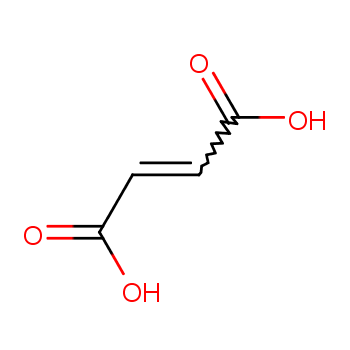
For product developers, the key technical questions are not simply whether maleic acid works, but where its cis-configured unsaturation gives a functional advantage over its trans-isomer fumaric acid, how its two acid groups influence buffering and chelation, and what regulatory constraints govern its use in food, cosmetics, and industrial water systems.
| Parameter | Value / Description |
|---|---|
| Chemical name | (2Z)-But-2-enedioic acid; cis-butenedioic acid |
| CAS number | 110-16-7 |
| EC number | 203-742-5 |
| Molecular formula | C4H4O4 |
| Molecular weight | 116.07 g/mol |
| Appearance | Colorless to white crystalline powder or prisms with a faint acid odour |
| Melting point | Approximately 135 °C |
| Primary uses | Resin and polymer synthesis, acidulant and pH control, water-treatment inhibitors, textile finishing, chemical intermediates |
Maleic acid is an organic compound belonging to the dicarboxylic acid family, meaning its molecule terminates in two carboxylic acid (-COOH) functional groups. In maleic acid these two groups are attached to opposite ends of a short two-carbon unsaturated backbone, and because both carboxyls sit on the same side of the double bond, the molecule adopts a cis configuration. That single geometric detail is the source of nearly every distinguishing property of maleic acid, from its high water solubility to its tendency to cyclise into an anhydride on heating. Its formula, C4H4O4, is shared with fumaric acid, but the two are structural isomers with markedly different physical constants and behaviour.
In nature maleic acid occurs only in trace amounts, appearing in small quantities in certain plants and as a by-product of specific microbial metabolic pathways. It is important to separate maleic acid from malic acid, its more common namesake: despite the shared "mal-" root, malic acid is a hydroxy-substituted succinic acid found abundantly in apples and is a mainstream food acidulant, whereas maleic acid is an unsaturated dicarboxylic acid used predominantly as an industrial intermediate. Confusion between the two causes specification errors, so technical teams should always confirm identity by CAS number.
Commercially, maleic acid is rarely handled as the free diacid for large-volume uses; instead it is produced and shipped primarily as maleic anhydride and hydrolysed to the acid on demand or consumed directly as the anhydride. The free acid is a versatile building block because it combines two reactive handles: the carboxyl groups that support salt formation, esterification, and buffering, and the electron-poor double bond that participates in addition and copolymerisation.
View the maleic acid encyclopedia entry →
| CAS Registry Number | 110-16-7 |
| EC / EINECS Number | 203-742-5 |
| Molecular Formula | C4H4O4 |
| Molecular Weight | 116.07 g/mol |
| SMILES | OC(=O)\C=C/C(O)=O |
| Geometric isomer | Fumaric acid (trans), CAS 110-17-8 |
Maleic acid dissociates in two steps, with each carboxyl group releasing a proton at a characteristic pH. The first dissociation is comparatively strong because the second carboxyl group and the adjacent double bond withdraw electron density, stabilising the resulting anion; the second occurs at a higher pH. Two ionisable groups within a small molecule give maleic acid useful buffering capacity across a window of acidic pH values, which is why it is formulated into cosmetics, foods, and industrial baths as a pH regulator. Note that as pH rises past the first pKa, solubility and metal-binding strengthen, but the fraction of the protonated, membrane-permeable species falls.
The cis arrangement of the two carboxyl groups is sterically close, allowing maleic acid to form stable five-membered chelate rings with divalent and trivalent metal ions such as calcium, magnesium, and iron. This chelation is the basis for its use as a scale inhibitor and sequestrant, since the acid binds scale-forming cations and holds them in solution. The same close geometry means the two groups can attack each other intramolecularly: on heating, maleic acid readily loses water to form its cyclic anhydride, a reaction fumaric acid cannot perform as easily because its trans groups point in opposite directions.
The carbon-carbon double bond in maleic acid is flanked by two electron-withdrawing carboxyl groups, making it strongly electron-poor and therefore highly reactive toward nucleophiles, radicals, and dienes. It participates in Michael additions, radical copolymerisation with vinyl monomers, and Diels-Alder reactions, giving access to a broad family of copolymers, dispersants, and resins.
Commercial maleic acid is essentially a downstream product of maleic anhydride manufacture. The dominant industrial route oxidises benzene or, increasingly, n-butane over a vanadium-phosphorus oxide catalyst in air to yield maleic anhydride, which is then hydrolysed with water to open the anhydride ring and form maleic acid. The shift toward n-butane feedstock reflects cost and environmental advantages over benzene, since butane oxidation avoids the carcinogenic aromatic feedstock. Where high-purity acid is required, the anhydride is dissolved in water under controlled temperature to avoid over-heating, and the solution is concentrated or crystallised.
A second route isomerises fumaric acid to maleic acid. Because fumaric acid is the trans isomer, this conversion requires a catalyst that can rotate the double bond and shift it from trans to cis geometry; mineral acids and certain halogen or radical initiators are used to drive the equilibrium toward the desired cis form. This route is employed where fumaric acid is available cheaply or where a specific cis product is wanted, though the reversibility of isomerisation demands careful process control.
Emerging bio-based processes aim to produce maleic acid directly by fermentation, using engineered bacteria or yeast whose metabolic pathways are redirected to accumulate the acid. These routes remain largely developmental but are attractive because they could decouple maleic acid supply from petrochemical feedstock. For most buyers, however, maleic acid or its anhydride originates from catalytic oxidation chemistry, and specification discussion should centre on isomeric purity, residual anhydride content, and water content.
Maleic acid belongs to the unsaturated dicarboxylic acids, a small but strategically important class that also includes its isomer fumaric acid and short-chain analogues such as itaconic and mesaconic acid. Within this family maleic acid is distinguished by its cis geometry, high water solubility, and strong tendency to cyclise. The sections below outline the principal derivatives that are commercially supplied and the structural feature that gives each its function.
Dehydration of maleic acid yields maleic anhydride (C4H2O3), the most important commercial derivative and the form in which the bulk of maleic chemistry is traded. Its strained cyclic anhydride ring reacts readily with alcohols, amines, and water, positioning it as a precursor for alkyd and polyester resins, fumaric acid, and maleate esters.
Fumaric acid is the trans geometric isomer, produced by isomerising maleic acid. Because it is a naturally occurring food acid and a firmer crystalline solid, it serves as an acidulant in foods and beverages and as a building block in resins, polymers, and certain pharmaceutical syntheses. The maleic-to-fumaric interconversion is a textbook example of how a single geometric change reshapes a molecule's applications.
Reaction of maleic acid or its anhydride with alcohols gives dialkyl maleates such as dimethyl, diethyl, and dibutyl maleate, which function as plasticisers, coating resins, and synthetic intermediates. Copolymerisation with monomers such as styrene, acrylic acid, or vinyl ethers produces maleic-acid copolymers that act as dispersants, scale inhibitors, and corrosion inhibitors.
The table below compares maleic acid with fumaric acid and maleic anhydride, the two species most often weighed against it in formulation and procurement decisions. It highlights how cis geometry, anhydride ring strain, and saturation state translate into practical differences in solubility, thermal behaviour, and preferred use.
| Property | Maleic Acid (cis) | Fumaric Acid (trans) | Maleic Anhydride |
|---|---|---|---|
| CAS number | 110-16-7 | 110-17-8 | 108-31-6 |
| Molecular weight | 116.07 g/mol | 116.07 g/mol | 98.06 g/mol |
| Water solubility | Very high, rising with temperature, reflecting the polar cis carboxyl pair | Low; only sparingly soluble despite the same formula | Hydrolyses in water, converting to maleic acid |
| Melting point | Approximately 135 °C | Approximately 287 °C with sublimation | Approximately 53 °C |
| Thermal behaviour | Cyclises to anhydride on heating, losing water at modest temperatures | Heat-stable; does not readily cyclise because trans groups are distant | Readily opens its ring upon reaction with water or alcohols |
| Toxicity note | Irritant to skin, eyes, and respiratory tract; tissue-toxic at higher exposure | Generally regarded as low-toxicity and permitted as a food acid | Corrosive and a strong irritant; reacts with moisture in tissue |
| Primary role | Intermediate, acidulant, pH regulator, chelant | Food acidulant and resin monomer | Bulk resin and polymer feedstock |
| Appearance | Colorless, odourless crystals or white crystalline powder |
| Odour | Faint acid odour |
| Density | Approximately 1.59 g/cm3 |
| Boiling point | Approximately 355 °C (decomposes); loses water to anhydride on heating |
| Vapour pressure | Approximately 1.34 × 10⁻⁵ mm Hg at 25 °C |
| Solubility | Highly soluble in water; dissolves in alcohols, ethers, and acetone |
| Stability | Steady under normal storage; protect from oxidisers and high heat that promote degradation |
Maleic acid and its derivatives appear in a wide cross-section of industries because of their combined acidity and unsaturation. The table below maps each principal application to its functional mechanism and the reason a formulator would choose maleic chemistry over an alternative acid or monomer.
| Industry | Function and rationale | Typical use level / note |
|---|---|---|
| Water treatment | Maleic-acid copolymers sequester calcium and magnesium and form protective films, preventing scale in heat exchangers and retarding corrosion. | Trace to low ppm in cooling water |
| Polymers and resins | Maleic anhydride condenses with glycols and polyols to build unsaturated polyester and alkyd resins with strong adhesion, durability, and weather resistance. | Core monomer; the largest share of global maleic tonnage |
| Food and beverage | Serves as an acidulant for tartness and a pH-control agent that stabilises product safety and shelf life. | Permitted only in specified categories |
| Textile finishing | Improves dye uptake and adhesion and can participate in fibre cross-linking to raise strength and wrinkle resistance. | Applied in finishing baths |
| Adhesives and sealants | Maleic-based adhesives bond wood, concrete, metal, and plastics in construction and automotive assemblies requiring strong, durable joints. | Structural and sealant grades |
| Cosmetics and personal care | Acts as a pH regulator and buffering agent so cleansers and toners remain within the pH range best suited to skin and hair. | Low use levels; verify ingredient status |
| Oil recovery and intermediates | Maleic derivatives are additives in enhanced oil recovery, and the acid is a starting material for fumaric acid, maleic anhydride, and esters. | Additive and feedstock roles |
Taken together, these uses show that maleic acid rarely acts alone. In water treatment it is the copolymer that performs; in resins it is the anhydride that condenses; in foods and cosmetics it is the free acid that adjusts pH. Selecting maleic chemistry therefore means deciding which derivative to specify and which functional group the process will exploit.
Confirm whether the process requires the free diacid, the anhydride, or a maleate salt or ester, because these species behave differently in water and on heating. If free acid is required, specify maleic acid by CAS 110-16-7 and verify that anhydride content is low, since residual anhydride hydrolyses in the batch and shifts the acid value.
Dissolve maleic acid in the aqueous phase under stirring at moderate temperature. Because the molecule cyclises to anhydride on heating, avoid excessive heat during dissolution; add the solid to water rather than heating a concentrated slurry, and monitor temperature.
Adjust pH with a compatible base such as sodium or potassium hydroxide, and remember that maleic acid is diprotic, so the buffering region has two steps. Titrate to the target pH rather than a fixed neutralisation ratio, and recheck pH after thermal processing because anhydride formation or hydrolysis can move it.
Where the unsaturation must survive into the finished product, keep the batch away from radical initiators, strong oxidisers, and prolonged heat. Where the acid is used for chelation, add it after the metal-bearing stream is fully in solution so the chelate forms with available ions.
The following example illustrates how maleic chemistry might be incorporated into a cooling-water scale and corrosion inhibitor. It is presented for illustration only; actual dosages must be established by bench and pilot testing under the specific water chemistry.
| Component | Function | Illustrative share |
|---|---|---|
| Maleic acid / maleic anhydride copolymer (hydrolysed) | Chelates hardness ions and inhibits scale-crystal growth on hot surfaces | Active scale inhibitor |
| Chemically compatible phosphonate or zinc salt | Supports anodic or cathodic film formation against corrosion | Corrosion inhibitor |
| Maleic acid (free acid) | Adjusts and buffers the pH of the treatment solution | pH regulator |
| Demineralised water | Diluent carrier; avoids adding further hardness to the system | Balance |
Regulatory treatment of maleic acid varies by jurisdiction and use category, and the summaries below are for orientation only. They are not legal advice and may not reflect the most recent amendments; always confirm current status with the competent authority or a qualified regulatory professional before commercialising a product.
| Jurisdiction / Body | Instrument | Relevance to maleic acid |
|---|---|---|
| US FDA | 21 CFR 582.1069 | Listed among substances affirmed as generally recognised as safe for specified direct-food use; confirm category before use. |
| European Union | Cosmetics and food-contact frameworks; ECHA registration | EC 203-742-5 is registered under REACH; cosmetic use is limited to pH-regulator roles within any applicable restrictions. |
| National authorities | Member-state bodies; New Jersey Department of Health fact sheet 1151 | Workplace and hazardous-substance lists apply; the acid appears on hazardous-substance registers because it is cited by DOT and EPA. |
| EFSA / equivalent | Food-additive safety evaluation | Food use is assessed case by case; confirm permitted categories and maximum levels before marketing. |
| REACH | Regulation (EC) 1907/2006 | Registrable and subject to classification, labelling, and safety-data-sheet obligations; check the harmonised classification. |
| ISO / HACCP | Quality and food-safety management standards | In food-contact or potable-water systems, document purity, sourcing, and traceability under the site's HACCP plan. |
Maleic acid displays relatively low acute toxicity when handled correctly, but it is a genuine irritant and corrosive hazard at higher concentrations and must never be treated as benign simply because it occurs in trace amounts in fruit. Contact with the skin and eyes produces irritation and, with concentrated or prolonged exposure, tissue damage, so engineering controls and personal protective equipment are the primary safeguards.
Inhalation of maleic acid vapour or aerosol can irritate the nose, throat, and lungs, producing coughing, wheezing, or shortness of breath, with severity dependent on concentration and duration. Acute exposure has been associated with dizziness and lightheadedness, and at high inhalation levels neurological effects including tremors, seizures, and in extreme cases coma have been reported. Because the substance can be absorbed through intact skin, dermal contact increases total body burden and should be minimised by glove selection and prompt washing.
Evidence of chronic toxicity is limited, and the material is not currently considered a carcinogen, but its reproductive and long-term effects have not been extensively characterised, so prudent practice is to limit exposure and monitor the workplace. Where maleic acid or its derivatives enter formulations reaching consumers or the environment, confirm acceptable exposure levels against the current regulatory assessment.
| Application context | Indicative handling guidance |
|---|---|
| Industrial intermediate / resin manufacture | Use closed handling with local exhaust ventilation, corrosion-resistant equipment, and full PPE including gloves, goggles, and respiratory protection. |
| Water-treatment additive | Dose as a dilute solution under controlled pH; verify compatibility with the specific alloy and the microbicide programme. |
| Food / beverage use | Only within explicitly permitted categories and levels; never infer permission from natural occurrence in fruit. |
| Cosmetic pH control | Confirm cosmetic-ingredient status and any concentration restriction; buffer to pH and re-verify after thermal processing. |
No. Despite the similar names, they are different compounds. Malic acid is a hydroxy-substituted succinic acid found abundantly in apples and used as a mainstream food acidulant, whereas maleic acid is an unsaturated cis-dicarboxylic acid used mainly as an industrial intermediate. Always distinguish the two by CAS number: malic acid is 6915-15-7 and maleic acid is 110-16-7.
They share the formula C4H4O4 but differ in geometry. Maleic acid is the cis isomer, which makes it far more water-soluble, more prone to chelation, and able to cyclise into maleic anhydride on heating. Fumaric acid is the trans isomer, only sparingly soluble, heat-stable, and widely permitted as a food acid.
Its two cis carboxyl groups chelate scale-forming cations such as calcium and magnesium and hold them in solution, preventing the mineral deposits that foul heat exchangers. Maleic-acid copolymers also form protective films that slow metal corrosion.
It can be handled safely with proper controls, but it is a corrosive irritant to skin, eyes, and the respiratory tract and can be absorbed through the skin. Use gloves, eye and respiratory protection, work in a well-ventilated area, and provide eyewash and showers.
| Identifier | Value | Look-up |
|---|---|---|
| Product name | Maleic Acid | Chemical dictionary entry |
| CAS number | 110-16-7 | Supply listings |
| Supplier search | Maleic Acid suppliers worldwide | Find suppliers |
|
 |
 |
 |
 |
 |
 EN
EN
 Agricultural News
 Food News
 Industrial News
 Cosmetic News
 Pharmaceutical News
 Science News

 3YRS
3YRS

