-
We detected your language preference as English. Would you like to switch to the English version for a better experience?
Switch to English
Stay here


Auditing bulk Quercetin Dihydrate (CAS 6151-25-3) suppliers requires more than comparing prices. For pharmaceutical, nutraceutical, and food ingredient buyers, supplier qualification must include MSDS risk assessment, COA verification, GMP compliance audits, inbound QC testing, and warehouse stability management. This guide provides a practical framework for QA directors, procurement managers, and regulatory teams evaluating global Quercetin Dihydrate supply chains in 2026.

Before approving any Quercetin Dihydrate supplier, buyers should perform a detailed review of the Material Safety Data Sheet (MSDS/SDS). According to current GHS classifications, Quercetin Dihydrate is classified as Acute Oral Toxicity Category 3 and carries hazard statement H301: Toxic if swallowed. Some SDS versions also identify potential mutagenicity concerns requiring enhanced handling controls during industrial processing. This classification directly impacts warehouse management, worker training, and occupational exposure procedures.

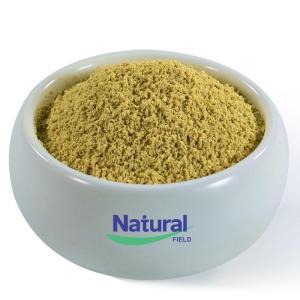
One of the most overlooked risks during bulk procurement is powder handling. Commercial Quercetin Dihydrate is typically supplied as a fine yellow crystalline powder with a high surface area. During weighing, charging, blending, and pneumatic transfer operations, airborne particulate generation can cause respiratory irritation and elevated dust accumulation within enclosed manufacturing facilities.
From an EHS perspective, QA and HSE teams should evaluate whether supplier documentation addresses:
MSDS Section 7 (Handling and Storage) and Section 8 (Exposure Controls/Personal Protection) should explicitly recommend adequate ventilation, ignition source elimination, and engineering controls. Facilities processing multiple metric tons annually should additionally conduct a formal Dust Hazard Analysis (DHA) aligned with NFPA guidance for combustible particulate materials.
Industry experience shows that supplier qualification failures are more frequently linked to incomplete safety assessments than to raw material pricing. A low-cost ingredient that requires expensive engineering upgrades can significantly increase total ownership cost.
The answer is unequivocally yes. A missing Certificate of Analysis (COA) represents a major compliance deficiency for pharmaceutical excipients, nutraceutical ingredients, and food-grade botanical extracts.
For international shipments, customs authorities, import inspectors, and customer QA departments frequently require batch-specific quality documentation. A compliant Quercetin Dihydrate COA should contain the following critical specifications:
Because Quercetin Dihydrate is frequently produced from Sophora japonica flower bud extracts, procurement teams should specifically review residual ethanol and methanol testing. Residual solvent limits must conform to ICH Q3C(R9), while elemental impurity control should align with ICH Q3D(R1). Gas chromatography remains the preferred analytical approach for solvent verification. :contentReference[oaicite:0]{index=0}
Purity Thresholds and Facility Audits: Aligning Grade Specifications with Regulatory Standards
A robust supplier qualification program combines documentation review with secondary or on-site audits. For pharmaceutical and high-end nutraceutical manufacturers, a three-zone audit model is recommended.
Auditors should also inspect batch production records (BPRs), deviation reports, change control systems, CAPA documentation, and supplier qualification programs.
Particular attention should be given to traceability systems capable of documenting:
A fully traceable supply chain enables bidirectional batch investigations and significantly reduces regulatory exposure during recalls or customer complaints.
The majority of industrial-grade Quercetin Dihydrate available globally falls within the 95.0%–98.0% assay range when measured by HPLC on an anhydrous basis.
Higher-purity materials intended for pharmaceutical development, medical nutrition, or premium dietary supplements generally achieve ≥98.0% purity with tighter impurity controls.
Purchasing managers should avoid assuming that higher purity automatically delivers superior commercial value. Food-grade applications often benefit more from comprehensive microbiological compliance and elemental impurity control than from an additional 1% assay increase.
For pharmaceutical-grade materials, suppliers should demonstrate compliance with:
Expert Commentary: According to industry GMP auditors working with botanical APIs and nutraceutical actives, the most common procurement mistake is overpaying for ultra-high assay material while overlooking impurity characterization and microbiological controls. A supplier with complete traceability, validated cleaning procedures, and strong batch consistency often delivers greater regulatory value than a supplier advertising only the highest purity figure.
In the current regulatory environment, third-party certifications have become critical supplier differentiation tools. Buyers increasingly prioritize suppliers holding:
Certified manufacturing sites generally demonstrate stronger controls over:
As global regulatory inspections intensify in 2026, manufacturers supplying North American and European markets increasingly require upstream vendors to maintain documented GMP systems capable of withstanding customer and regulatory audits.
"Supply-chain resilience is no longer measured only by continuity of supply. Regulatory readiness, data integrity, and traceability are now strategic procurement metrics." — Industry GMP Compliance Analysts, 2026
Post-Delivery Protocols: Inbound Quality Control and Lifecycle Management
Absolutely. Even when a supplier provides a complete COA, incoming material should undergo independent verification before release to production.
A practical three-step inbound testing strategy includes:
FTIR fingerprint matching is particularly valuable because it can rapidly identify substitution fraud involving lower-cost botanical extracts marketed as Quercetin Dihydrate.
Routine incoming verification significantly reduces the risk of production deviations, regulatory observations, and product recalls.
Proper storage conditions directly influence product stability and formulation performance.
Recommended warehouse conditions include:
One critical technical consideration is hydration state stability. Excessive heat or prolonged low-humidity exposure may gradually convert Quercetin Dihydrate into the anhydrous form. This transition can alter dissolution behavior, flowability, and formulation performance.
Conversely, excessive humidity can increase moisture uptake, potentially affecting physical properties and storage stability.
Under controlled storage conditions, commercially packaged Quercetin Dihydrate typically maintains a shelf life of 24–36 months. Annual retesting is recommended to confirm ongoing compliance with assay, moisture, and impurity specifications.
Q1: Does every shipment of Quercetin Dihydrate require a COA?
Yes. Every commercial batch should be accompanied by a batch-specific COA containing assay results, moisture data, heavy metals, microbiological status, and residual solvent results.
Q2: What purity is normally available in the market?
Most commercial Quercetin Dihydrate products are supplied between 95% and 98% purity by HPLC, while pharmaceutical-grade materials often exceed 98%.
Q3: Is supplier GMP certification mandatory?
While not always legally mandatory, GMP-certified suppliers provide stronger process control, documentation integrity, traceability, and regulatory confidence.
Q4: Should incoming material be tested if the supplier is already approved?
Yes. Identity verification, moisture testing, and physical inspection remain essential components of incoming quality control programs.
References
[1] ICH Q3C(R9), Impurities: Guideline for Residual Solvents, International Council for Harmonisation (ICH), 2024. :contentReference[oaicite:1]{index=1}
[2] ICH Q3D(R1), Guideline for Elemental Impurities, International Council for Harmonisation (ICH), 2019. :contentReference[oaicite:2]{index=2}
[3] Quercetin Dihydrate Safety Data Sheet (SDS), GHS Classification and Occupational Handling Requirements, ChemicalBook SDS Database, 2026. :contentReference[oaicite:3]{index=3}
[4] FDA Guidance for Industry: Q3C Impurities—Residual Solvents, U.S. Food and Drug Administration. :contentReference[oaicite:4]{index=4}
[5] CAS Registry Substance Data: Quercetin Dihydrate (CAS 6151-25-3), Chemical Abstracts Service (CAS).
[6] European Pharmacopoeia and USP General Chapters relating to botanical extract quality control, identity testing, elemental impurities, and microbiological quality.
Looking for stable, high-purity Quercetin Dihydrate with complete COA documentation, GMP-compliant manufacturing, traceable supply chains, and global logistics support? Guidechem connects buyers with qualified international suppliers capable of meeting pharmaceutical, nutraceutical, and food-grade procurement requirements.
 |
|
 |
 |
 |
 |
 EN
EN
 Agricultural News
 Food News
 Industrial News
 Cosmetic News
 Pharmaceutical News
 Science News

 2YRS
2YRS


Expert Commentary: Many procurement teams still focus primarily on assay value and price-per-kilogram. However, for botanical-derived flavonoids such as Quercetin Dihydrate, occupational exposure management should be evaluated during supplier onboarding. In 2026, leading pharmaceutical manufacturers increasingly integrate EHS scoring into Approved Vendor Lists (AVL), making safety documentation quality a strategic sourcing criterion rather than a regulatory formality.