-
We detected your language preference as English. Would you like to switch to the English version for a better experience?
Switch to English
Stay here


Potassium bicarbonate, also known as potassium hydrogen carbonate, is an alkaline mineral widely used in food and nutrition. Bakers use it as an alternative to baking soda and baking powder, beverage makers add it to bottled water to enhance taste, and because potassium is an electrolyte it appears widely in dietary supplements. Its rise reflects changing consumer needs around sodium reduction and mineral fortification.
For product developers, the questions that matter are not simply whether potassium bicarbonate raises a dough, but how its decomposition behaviour differs from that of sodium bicarbonate, how its basic character shifts the pH of a matrix, and how its sodium-free profile changes the sensory and labeling strategy.
| Function | Suitable Users | Core Technical Indicators | Compliance Framework |
|---|---|---|---|
| Leavening and raising agent | Bakers and snack manufacturers seeking volume in baked and high-temperature processed goods | Reacts with acids to release carbon dioxide, and above 80 degrees C it decomposes to potassium carbonate, water and carbon dioxide | GRAS under good manufacturing practices in the US; raising agent under E 501 in the EU |
| Effervescent and acidity regulator | Beverage developers producing flavored drinks and effervescent tablets | Combination with acid liberates carbon dioxide for effervescence; as a weak base it buffers and holds pH balance | Permitted as a food additive across major markets, subject to category-specific rules |
| Antacid | Developers of over-the-counter digestive health products | Neutralizes excess stomach acid and can neutralize excess acid in blood and tissues | Use as a nutrient supplement is recognized; medical claims require separate review |
| Potassium source for low-sodium systems | Brands reformulating to reduce sodium while fortifying with potassium | Sodium-free alternative to sodium bicarbonate that contributes dietary potassium | Sodium-free positioning must be reconciled with potassium intake and labeling limits |
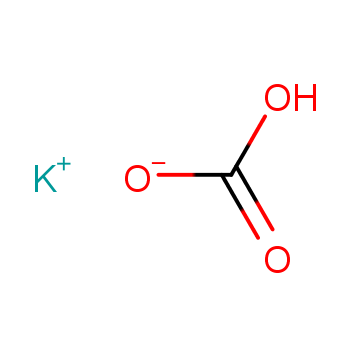
Potassium bicarbonate is a chemical with the formula KHCO3, supplied as a white crystalline powder and used as a food additive. One primary use is as a buffering agent in food and beverages, where it acts as a pH regulator that prevents excessive acidity or alkalinity, and as a good source of potassium it helps consumers meet the daily recommended intake of that mineral.
The formula indicates that the salt comprises one potassium ion, K+, and one bicarbonate ion, HCO3-, and when it is dissolved in water it dissociates into these constituent ions. That dissociation is the foundation of its function: the free bicarbonate acts as a weak base that buffers the surrounding matrix and can be paired with an acid to generate gas.
In baking, potassium bicarbonate acts as a leavening agent by releasing carbon dioxide gas when it reacts with an acid. The bicarbonate ion reacts with the acid to form carbon dioxide, water and a salt, so the leavening action is really an acid-base reaction whose rate and yield are governed by the choice and level of the acidulant.
Explore the potassium bicarbonate technical encyclopedia for additional chemical and application information.
| Parameter | Specification / Description |
|---|---|
| IUPAC name | Potassium hydrogen carbonate |
| Common names | Potassium bicarbonate, potassium acid carbonate |
| Formula | KHCO3 |
| Molecular weight | 100.115 g/mol |
| CAS number | 298-14-6 |
| EC number | 206-059-0 |
| E and INS numbers | E 501(ii); INS 501(ii) |
| Appearance | White powder or crystal; odorless |
Potassium bicarbonate delivers its effects through two chemically distinct routes: the acid-base neutralization of the bicarbonate ion and the thermal decomposition of the salt at elevated temperature. Because the same molecule can generate gas by either route, the mechanism that dominates in a given product depends on the processing conditions and on the presence of an acidulant.
When combined with an acid such as cream of tartar, potassium bicarbonate produces carbon dioxide gas, which causes dough or batter to rise. When heated above 80 degrees C it decomposes into potassium carbonate, water and carbon dioxide, so it also liberates gas during high-temperature processing. This dual pathway lets it aerate both chemically leavened and high-temperature processed goods.
Combination with an acid liberates carbon dioxide, which creates effervescence in beverages and in effervescent tablets. Because it is a weak base, potassium bicarbonate can also act as a buffer, helping to maintain the pH balance in various substances, so the same compound serves as a gas source and as a pH-control agent depending on how it is dosed.
As an antacid, potassium bicarbonate works by neutralizing excess stomach acid, and it can neutralize excess acid in the blood and tissues as well. This buffering capacity is the physiological counterpart of its food-science role and explains the interest in it both as a digestive aid and as a systemic alkali in nutrition research.
Potassium bicarbonate may be prepared by passing carbon dioxide into an aqueous solution of a water-soluble potassium compound, such as potassium carbonate, under conditions effective to produce the bicarbonate. The reaction adds one molecule of carbon dioxide and one of water to the carbonate to convert it to the bicarbonate, and the product is then crystallized and dried.
The feedstock potassium carbonate is itself derived from mineral sources and has a long history, having been used by ancient artists as far back as 3500 BC for making glass and soap. That lineage connects the modern food-grade additive to one of the oldest industrial chemicals.
Potassium bicarbonate belongs to the family of bicarbonate salts, whose best-known member is sodium bicarbonate. Because the two are chemically analogous and functionally interchangeable in many applications, comparing them is the most useful way to understand the properties that distinguish the potassium salt.
Sodium bicarbonate is commonly used as baking soda, while potassium bicarbonate is generally a component of baking powder. Both have almost equal strength, and the pH of sodium bicarbonate in 1 percent aqueous solution is 8.5 compared with 8.3 to 8.4 for potassium bicarbonate in 0.1 M solution. The key commercial difference is that potassium bicarbonate is a sodium-free alternative to sodium bicarbonate for low-sodium food formulations.
Because it avoids sodium, potassium bicarbonate supports low-sodium claims while simultaneously supplying potassium, an important nutrient and electrolyte. This dual benefit makes it attractive to formulators working for consumers who are sensitive to sodium or who are actively seeking to increase their potassium intake through processed foods.
Commercial material is supplied as powder or crystal, and some baking-powder grades are coated, for example with food-grade soap, to control particle size and reactivity. The choice of grade and coating determines how the salt behaves during mixing and storage, so it should be selected against the intended release profile rather than treated as a generic commodity.
| Parameter | Potassium Bicarbonate | Sodium Bicarbonate |
|---|---|---|
| Formula and cation | KHCO3, potassium cation | NaHCO3, sodium cation |
| pH in dilute solution | 8.3 in 0.1 M aqueous solution | 8.5 in 1 percent aqueous solution |
| Strength as leavening agent | Almost equal to sodium bicarbonate | Almost equal to potassium bicarbonate |
| Typical commercial role | Generally a component of baking powder | Commonly used as baking soda |
| Nutritional contribution | Supplies potassium, an essential electrolyte | Supplies sodium, which many consumers restrict |
| Key advantage | Sodium-free option for low-sodium formulations | Lower cost and near-universal availability |
| Property | Typical Value / Description |
|---|---|
| Physical form | Powder or crystal |
| Color and odor | White; odorless, with a slightly bitter taste |
| Molecular weight | 100.115 g/mol |
| pH (0.1 M aqueous solution) | 8.3 |
| Density | 2.17 g/cm3 |
| Melting or decomposition point | Decomposes between 100 and 120 degrees C |
| pKa | 6.37 |
| Solubility | Freely soluble in water, 22.4 g per 100 mL |
| Storage | Ambient temperature in a closed container |
| Claims | Kosher, Halal and Vegan, product specific |
| Category | Typical Product Examples | Key Formulation Objective |
|---|---|---|
| Bakery | Cake, bread, cookies, tortilla, pizza, muffins and crackers | Build volume, tender texture and even coloration |
| Snacks and savory | Waffles and pancakes | Aerate batters for a light, uniform crumb |
| Soft drinks | Flavored beverages and effervescent beverage tablets | Create effervescence and control acidity |
| Convenience | Cake premix, dough mixes, powdered beverages and batters | Deliver consistent leavening in dry blends |
| Meat and infant food | Processed meat and infant formulae | Adjust pH and support water-holding in sensitive matrices |
| Chocolate and confectionery | Hard-boiled candies, chocolates and chewable formats | Buffer acidity and control texture in sugar systems |
Because potassium bicarbonate both aerates and shifts pH, its functional footprint in a food matrix extends well beyond simple gas generation. The table below summarises the principal effects reported in the technical literature.
| Property | Effect |
|---|---|
| Volume | Reacted with acids or decomposed by heat, it liberates carbon dioxide, and this aeration increases the volume of the matrix |
| Texture | The aeration makes food smooth, fluffy and lighter, and can bring effervescence to liquids; a study found significant tenderizing and juiciness effects in meatloaf |
| pH | Being basic, it increases the pH of the food to which it is added |
| Shelf life and rheology | Used to replace sodium tripolyphosphate in silver carp batter, it raised pH and changed rheology and protein conformation, improving gel characteristics and water-holding capacity |
| Freeze-thaw tolerance | Reportedly helped lock in the internal water content of frozen tilapia fillets and improved storage quality |
Potassium bicarbonate releases carbon dioxide only when it meets an acid, so the choice of acidulant sets the rate and the point of gas release. Select the acid against the process temperature and the target crumb structure, and verify that the acid and the bicarbonate are kept separate in dry blends until the reaction is intended to begin.
Typical dosage is 0.5 to 1.5 percent or more, depending on the application, and the level should be established against the observed volume, texture and pH rather than by analogy with sodium bicarbonate. Because the salt is basic, its level also drives the final pH of the matrix, so the dose and the acidulant should be optimized together.
The material is stable under a range of storage conditions, including variations in temperature and humidity, but it decomposes at 110 degrees C and reacts readily with acids, so it should be held dry in a closed container at ambient temperature. Protect dry blends and effervescent systems from ambient moisture to avoid premature reaction and loss of gas yield.
Using potassium bicarbonate to reduce sodium is a strong technical move, but it shifts the mineral profile toward potassium, and excessive potassium intake can be harmful for some individuals. Balance the reformulation against the target consumer and confirm that the sodium-free or reduced-sodium claim remains accurate on the finished label.
The formulations below are illustrative technical examples drawn from published sources rather than universal commercial recipes. Actual ingredient levels must be recalculated against the target texture, performance and destination-market requirements of each project.
| Application | Component | Illustrative Quantity | Technical Role |
|---|---|---|---|
| Cookies | Flour | 222.7 g | Structure-building bulk ingredient |
| Cookies | Sugar, shortening, dextrose solution and water | To balance the recipe | Sweetness, fat phase and moisture control |
| Cookies | Potassium bicarbonate | 1.0 percent | Leavening that improved elongational viscosity, dough strength and coloration |
| Baking powder | Coated potassium bicarbonate, 35 micron | 36 percent | Leavening base, coated with 0.5 percent food-grade soap to control reactivity |
| Baking powder | Disodium pyrophosphate | 42 percent | Acidulant that reacts with the bicarbonate to release gas |
| Baking powder | Starch | 22 percent | Anticaking and moisture buffer in the dry blend |
| Processed cheese | Cheese | 90 percent | Base matrix |
| Processed cheese | Potassium bicarbonate and lemon juice concentrate | 0.5 to 1.0 percent and 3.0 to 5.0 percent | Emulsifying salt and acidulant that control melt and texture |
In the cookie system, adding potassium bicarbonate improved elongational viscosity and mitigated dough stickiness, and it also improved cookie texture and positively influenced coloration. The baking powder example shows the salt dosed at 36 percent alongside disodium pyrophosphate as the acidulant, while the processed cheese example uses a low level of the bicarbonate with lemon juice concentrate to control melt and pH.
Potassium bicarbonate is regulated by several food safety agencies depending on the region, and it is treated as an established food additive rather than a novel ingredient. Because permitted levels and category conditions change by jurisdiction, the compliance path should be confirmed against the current legislation of every intended market.
| Market / Framework | Technical Relevance | Compliance Action |
|---|---|---|
| US FDA | The FDA regulates potassium bicarbonate as a food additive that is generally recognized as safe when used according to good manufacturing practices, and it can also be used as a nutrient supplement. | Confirm the permitted use and level for the specific food category. |
| European Union | EFSA regulates potassium bicarbonate as a food additive with the E number E501, permitted as a raising agent in various food products. | Verify the current additive listing and category conditions for the intended use. |
| Codex Alimentarius | The GSFA assigns INS 501(ii) and lists category maxima, with GMP levels for many dairy, fish and formula categories and 2,000 mg/kg for infant formulae. | Check the GSFA category maximum for each specific food product. |
| WHO acceptable daily intake | The acceptable daily intake is described by the WHO as not limited, reflecting its low toxicity margin at normal use. | Use the ADI as risk-assessment input alongside any population-specific advice. |
| GMP and labeling | Good manufacturing practice supports control of moisture, caking and traceability for a reactive, hygroscopic dry ingredient. | Maintain supplier qualification, batch traceability and validated quality procedures. |
Potassium bicarbonate is generally recognized as safe by the US FDA when used according to good manufacturing practices, and it is considered safe for consumption as a food additive and dietary supplement ingredient. When consumed in moderate amounts it contributes to the overall dietary intake of potassium, a mineral that is essential to maintaining proper heart, muscle and nerve function.
The physiological benefits attributed to potassium are the reason the salt appears in nutrition-focused products. Potassium is an electrolyte that helps regulate the movement of fluids and nutrients in and out of cells, it helps counteract the blood-pressure-raising effects of sodium, and adequate levels support muscle contraction and nerve impulses, which is relevant to exercise performance.
Studies have also linked a potassium-rich diet with bone health. Bicarbonate had a favourable effect on bone resorption and calcium excretion, suggesting that increasing the alkali content of the diet may attenuate bone loss in healthy older adults, and other work has reported that potassium bicarbonate may improve bone health. These findings support its use as a functional potassium source rather than as an inert additive.
The cautionary note is that excessive intake of potassium can be harmful, especially for individuals with certain medical conditions or those taking certain medications. That makes potassium bicarbonate a material whose safety is a matter of dose and of population rather than of hazard, so reformulation toward higher potassium levels should be reviewed against the target consumer group.
| Food Category | GSFA Max Level | Formulation Note |
|---|---|---|
| Pasteurized cream, plain | GMP | Dose to the required pH and stability in the dairy matrix. |
| Sterilized, UHT and whipped creams | GMP | Buffer acidity while maintaining whipping performance. |
| Dried whey and whey products | GMP | Control pH and flow in the dried powder production stream. |
| Frozen battered fish and fish products | GMP | Support water retention and freeze-thaw quality during storage. |
| Infant formulae and special medical purpose formulae | 2,000 mg/kg | Observe the specific maximum for these sensitive categories. |
| Follow-up formulae and complementary foods | GMP | Verify the applicable category rule and nutrient contribution. |
These use levels are illustrative regulatory references and should not be interpreted as universal legal maximums. Product developers should use the current permitted levels and category limits applicable to the intended market, product category and population.
Potassium bicarbonate is used as a leavening or raising agent that reacts with acids such as cream of tartar to release carbon dioxide, as an effervescent agent in beverages and tablets, as a weak-base acidity regulator and buffer, and as an antacid. It is also added to bottled water and used as a nutrient supplement that contributes dietary potassium.
Both are bicarbonate salts of almost equal strength and both act as leavening and buffering agents. The 1 percent aqueous solution pH of sodium bicarbonate is 8.5, whereas potassium bicarbonate is 8.3 to 8.4 in 0.1 M solution. Potassium bicarbonate is a sodium-free alternative for low-sodium formulations and supplies potassium, an important electrolyte.
Potassium bicarbonate is generally recognized as safe by the US FDA when used according to good manufacturing practices, and the WHO has set its acceptable daily intake as not limited. It is considered safe as a food additive and dietary supplement ingredient, but excessive potassium intake can be harmful for individuals with certain medical conditions or taking certain medications.
In the United States the FDA regulates potassium bicarbonate as a food additive that is generally recognized as safe under good manufacturing practices, and it may also be used as a nutrient supplement. In the European Union, EFSA regulates it as a food additive with the E number E501, permitted as a raising agent. Requirements change by jurisdiction, so the current provisions of each intended market should be verified.
| Identifier | Value | Resource |
|---|---|---|
| CAS number | 298-14-6 | Chemical dictionary |
| EC number | 206-059-0 | Technical encyclopedia |
| E and INS numbers | E 501(ii); INS 501(ii) | Supply search |
| Supplier / trade search | potassium bicarbonate food grade | Supplier search |
1. US Food and Drug Administration. Code of Federal Regulations Title 21, Section 184.1613, on potassium bicarbonate as a GRAS food additive and nutrient supplement.
2. European Food Safety Authority. Assessment of potassium bicarbonate as the food additive E501.
3. FAO and WHO. Monograph on food additive 338 and GSFA Online additive details for potassium bicarbonate.
4. Google Patents. Published baking powder and processed cheese formulations containing potassium bicarbonate.
5. Hindawi, Journal of Food Quality. Research on potassium bicarbonate in bakery and fish systems.
6. Wiley Online Library, Food Science and Nutrition, and MDPI Molecules. Studies on potassium bicarbonate in food matrices and rheology.
7. American Heart Association journals and PubMed Central. Studies on potassium intake, bicarbonate and bone and cardiovascular health.
 |
 |
 |
 EN
EN
 Agricultural News
 Food News
 Industrial News
 Cosmetic News
 Pharmaceutical News
 Science News

 1YR
1YR

