-
We detected your language preference as English. Would you like to switch to the English version for a better experience?
Switch to English
Stay here


Paint retailers stock only a handful of base paints, yet customers expect to walk out with any color they can imagine. The magic behind this is the universal colorant — a concentrated pigment dispersion that must mix cleanly into both water-based acrylic latex paints and solvent-based alkyd paints from the same dispenser bank. This dual compatibility is the formulation challenge at the heart of the topic: pigments are insoluble solids that must be wetted, deagglomerated and stabilized in a carrier system whose polarity changes completely depending on the base paint being tinted. Get the surfactant balance wrong and the result is polarity shock, flocculation, poor color development, streaks and off-tone color acceptance. This guide explains how universal colorants are built, why they work, how they compare with alternative coloration routes, and what formulators must control during dosing, mixing and quality testing.
| Function | Target Applications | Key Specifications | Compliance Status |
|---|---|---|---|
| Point-of-sale tinting of both water-based and solvent-based architectural base paints with a single colorant set | Decorative emulsion paints, alkyd enamels, wood stains, protective and marine coatings | Pigment content 20–50%; VOC-free glycol carrier; Hegman fineness > 7; color strength tolerance ±5% vs. standard | Compliant with EU Directive 2004/42/EC VOC limits when VOC-free; REACH-registered components; TSCA-listed |
| In-can pigment dispersion stabilized against flocculation in opposite polarity environments | Factory-shade (in-plant) coloration, tinting pastes for industrial and refinish coatings | Nonionic surfactant package; viscosity 1–5 poise for dispenser compatibility; shelf life ≥ 18 months at 23 °C | Colorant index pigments (C.I. Pigment White 6, Red 101, Blue 15:1, Violet 19) with full EU CLP labeling |
A universal colorant is not a solution of dye — it is a dispersion: solid pigment particles, typically 0.1–0.5 µm in size, distributed as discrete particles in a liquid carrier of water and hygroscopic glycol. The colorant must survive three environments during its life: its own water/glycol carrier, a water-based latex paint, and a solvent-based alkyd paint. The mechanism that makes this possible rests on three steps: wetting, deagglomerating and stabilizing.

The same colorant must perform in both aqueous latex paints and solvent-borne alkyd systems — a demanding dual-polarity requirement.
The dispersant and wetting agent adsorb onto the pigment surface and lower the interfacial tension between pigment and carrier liquid, so that air and moisture films are displaced from the pigment surface during milling. Mechanical energy in a bead mill then breaks agglomerates down to primary particles, and the adsorbed additive layer prevents them from re-agglomerating.
The key design choice is the stabilizing mechanism. Electrostatic stabilization — the mutual repulsion of charged particle surfaces — works well in water but collapses in low-polarity alkyd media. Universal colorants therefore rely on steric stabilization: nonionic surfactants of the alcohol ethoxylate type adsorb on the pigment with their hydrophobic tail, while their polyethylene glycol chain extends into the carrier. The generic structure of the workhorse nonionic surfactants is:
The ethoxylate chain is compatible with polar water through hydrogen bonding of its ether oxygens, while the long alkyl tail is compatible with nonpolar alkyd resin. This amphiphilic character lets the same adsorbed layer keep pigments separated in both aqueous and solvent environments — the molecular basis of universality.
When a water-glycol colorant is injected into a solvent-based alkyd base, the local environment around each pigment particle flips abruptly from polar to nonpolar — a phenomenon called polarity shock. If the surfactant package is not balanced, the steric layer desorbs or rearranges, particles flocculate, and the color develops weak and rubbed-out shade differs from the mixed-in shade. Well-designed colorants use surfactant blends with fast re-orientation kinetics and co-solvents (glycols such as propylene glycol) that moderate the transition. After mixing, color acceptance is verified with a rub-out test: part of the tinted paint film is rubbed before it sets; if the rubbed area shifts in shade, flocculation is occurring in the drying film.

Polarity shock: the water-based colorant enters a solvent-based base paint and the pigment environment flips from polar to nonpolar, risking flocculation.
Not every pigment is suited to universal colorant service. The pigment must tolerate water processing, resist dissolving or hydrolyzing in the glycol carrier, and deliver color in both alkaline latex and mildly acidic-to-neutral alkyd environments. In practice the palette is drawn from well-established organic and inorganic pigments with proven lightfastness and chemical resistance.
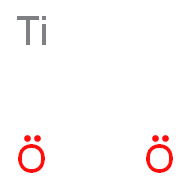
Titanium dioxide (C.I. Pigment White 6) and iron oxides (C.I. Pigment Red 101, Yellow 42, Black 11) form the backbone of the white and earth-tone colorants. They offer excellent opacity, weather resistance, low cost and outstanding batch-to-batch consistency, but they scatter rather than absorb light, so their tinting strength in deep shades is limited, and their chroma is inherently muted. Rutile TiO2 is the universal hiding pigment; iron oxide red (CAS 1309-37-1) is supplied as a powder or predispersed oxide with superb alkali and UV resistance.
Phthalocyanine blue (C.I. Pigment Blue 15:1) and green (Blue 15:3/Green 7), quinacridone violet (C.I. Pigment Violet 19, CAS 1047-16-5), azo reds and yellows, and carbon black (C.I. Pigment Black 7, CAS 1333-86-4) deliver the high chroma and tinting strength that inorganics cannot. Their trade-offs: higher cost, more demanding dispersion requirements (smaller primary particles agglomerate more strongly), and occasional limitations in heat or chemical resistance. Phthalocyanine blue (CAS 147-14-8) is the archetype — extremely high tint strength, essentially insoluble in both water and solvents, and completely lightfast, making it ideal for universal service. Check the phthalocyanine blue dictionary entry for its physical properties.
Metallic flakes and pearlescent pigments are generally excluded from universal colorants because platelet orientation is destroyed by the vigorous milling used to make dispersions. Functional additives such as hollow polymer spheres stay in the base paint, not the colorant, since their function depends on intact particle geometry.
Soluble dyes offer brilliant transparent shades but are unusable in universal colorants: a dye dissolved in the aqueous carrier precipitates instantly on entering a solvent-based paint (the extreme case of polarity shock), and dyes bleed, migrate and chalk in exterior exposure. Dispersion of insoluble pigment is the only robust cross-polarity route.
| Pigment / Route | CAS No. | Water Solubility | Dispersion Stability | Tinting Strength / Chroma | Typical Applications |
|---|---|---|---|---|---|
| Titanium dioxide (rutile, PW6) | 13463-67-7 | Insoluble | Easy to disperse; very stable in both polarities | High hiding power, low chroma (white) | White colorant, pastel tinting of all base paints |
| Iron oxide red (PR101) | 1309-37-1 | Insoluble | Excellent; chemically inert, UV-stable | Moderate strength, muted earth-tone red | Exterior masonry, wood stains, red-brown shades |
| Phthalocyanine blue (PB15:1) | 147-14-8 | Insoluble | Requires strong milling; stable once dispersed | Very high strength and chroma, perfect lightfastness | Blue colorant for all architectural paints |
| Quinacridone violet (PV19) | 1047-16-5 | Insoluble | Hard pigment; needs optimized dispersant package | High strength, vivid violet-red, excellent durability | Premium exterior reds and violets |
| Carbon black (PBk7) | 1333-86-4 | Insoluble | Hardest to wet (high surface energy); prone to flocculation | Extreme tint strength; jetness in masstone | Gray shading, black colorant, deep-tone bases |
| Soluble dyes (e.g. azo dye colorants) | Varies | Soluble in water | Precipitate in solvent-based paints — unusable | Brilliant, transparent | Inkjet inks, wood stains, waterborne systems only |
| Pigment powder dosed at factory (in-plant) | Per pigment | Insoluble | Dispersed in the matching binder system — no polarity change | Full, optimized per system | Factory shading of single-technology product lines |
The titanium dioxide supply landscape matters to colorant formulators because rutile TiO2 from different chloride- and sulfate-process plants differs in surface treatment (alumina/silica coatings) and therefore in dispersant demand.
The general composition of a universal colorant balances pigment loading against viscosity limits set by automatic dispensers, and against the need for freeze-thaw and microbial stability in a mostly aqueous carrier.
| Component | Typical Level (wt%) | Function |
|---|---|---|
| Pigment (organic / inorganic) | 20–50 | Color and opacity |
| Water (deionized) | 20–40 | Main carrier phase |
| Glycol (propylene glycol / glycerin) | 10–30 | Freeze-thaw protection, wet-edge, polarity bridge, humectancy in the dispenser |
| Dispersant / wetting agent blend | 2–10 | Pigment wetting and steric stabilization |
| Nonionic surfactant (alcohol ethoxylate) | 3–10 | Dual-polarity compatibility in both base paint types |
| Rheology modifier (e.g. HEC / associative thickener) | 0.5–2 | Anti-settling, dispenser-clean viscosity control |
| Defoamer | 0.3–1 | Suppresses foam from surfactants during tinting and application |
| Preservative / biocide | 0.1–0.3 | In-can microbial protection of the aqueous carrier |
1. Premix: charge water, glycol, dispersant and surfactant under moderate stirring until homogeneous. 2. Pigment addition: add pigment powder slowly into the vortex to avoid lumping. 3. Milling: disperse in a bead mill or high-speed dissolver until fineness of grind (ISO 1524 / ASTM D1210, Hegman gauge) reaches typically > 7 (below ~25 µm; color development is assessed per ASTM D387). 4. Let-down: add rheology modifier, defoamer and preservative; adjust viscosity to the dispenser specification (typically 1–5 poise). 5. Quality control: measure color strength against a master standard (aim ±5%), then run color-acceptance tests in a white water-based base and a white solvent-based base, including the rub-out test. 6. Point-of-sale tinting: dose colorant at typically up to 10–12% of total paint volume for deep tones into the appropriate base (pastel/mid/deep bases with graded TiO2 levels), then shake or stir for 30–60 seconds minimum.
Universal colorants are regulated primarily through the raw materials they contain — pigments, glycols, surfactants and biocides — plus the VOC contribution they make to the finished paint at point of sale. The table below summarizes the key frameworks a formulator must satisfy in the major jurisdictions.
| Jurisdiction / Body | Regulation or Standard | Relevance to Universal Colorants |
|---|---|---|
| USA (EPA) | National VOC emission limits for architectural coatings (40 CFR Part 59, Subpart D) | Colorant added in store counts toward the VOC of the tinted paint — drives VOC-free colorant carriers |
| USA (TSCA inventory) | Toxic Substances Control Act | All colorant components (pigments, surfactants, glycols, biocides) must be on the TSCA inventory |
| EU (chemicals) | REACH Regulation (EC) No 1907/2006; CLP Regulation (EC) No 1272/2008 | Registration of colorant ingredients; classification/labeling of colorant as such (e.g. Aquatic Chronic 1 for some pigments) |
| EU (decorative paints) | Directive 2004/42/EC on VOC in decorative paints and varnishes (Phase II limits) | VOC-free universal colorants preserve compliance of the tinted paint; certain VOC-based colorants are prohibited |
| EU (biocides) | Biocidal Products Regulation (EU) No 528/2012 (BPR) | In-can preservatives in the aqueous carrier must be BPR-approved actives |
| International standards | ISO 1524 / ASTM D1210 (fineness of grind); ASTM D387 (color development); ASTM D523 (gloss); ASTM D2244 (color differences); ISO 4618 (terms and definitions) | Standardized QC methods for dispersion quality, color acceptance and color matching consistency |
| Pigment-specific | EU classification of TiO2 powder (suspected carcinogen, inhalation route, Note W) under CLP 14th ATP | Applies to powder handling in colorant plants; the liquid colorant itself is exempt from the powder classification |
Because the colorant relies on steric stabilization instead of solubility. The pigment particles are insoluble solids, and the nonionic ethoxylated surfactants adsorbed around them have both a water-compatible ethylene oxide chain and an oil-compatible alkyl tail. When the colorant enters either base paint, the surfactant layer re-orients and keeps the particles separated, so the pigment disperses rather than dissolves — no binder compatibility is required of the colorant itself.
Polarity shock is the abrupt flip of the medium around the pigment particles when a water/glycol-based colorant is injected into a solvent-based alkyd base. Poorly stabilized pigments flocculate, producing weak color development, streaks and shade differences between the stirred-in and rubbed-out film. Prevention centers on fast re-orienting nonionic surfactant blends, adequate glycol content to moderate the polarity transition, and slow addition of the colorant into a gently stirred base followed by sufficient mixing.
Yes — this is the hidden cost of universality. At normal dosing levels (up to a few percent for pastels) the effect is negligible, but in deep tones the colorant can contribute 10% or more of total volume. The glycol slows drying, the surfactants can reduce scrub and block resistance and increase foaming, and the water fraction can destabilize sensitive solvent-based bases. That is why base paints are engineered in pastel, mid and deep versions: the formulator of the base compensates in advance for the expected colorant load.
Core tests include fineness of grind on a Hegman gauge (ISO 1524/ASTM D1210) to confirm dispersion, color strength versus a master standard per ASTM D387, and color-acceptance/rub-out tests in both a white water-based and a white solvent-based base, with color differences quantified instrumentally per ASTM D2244. Shelf stability is verified with accelerated storage and freeze-thaw cycling, and dispenser compatibility by viscosity control and shot-weight accuracy checks.
 |
 |
 |
 |
 |
 |
 EN
EN
 Agricultural News
 Food News
 Industrial News
 Cosmetic News
 Pharmaceutical News
 Science News

 3YRS
3YRS

