We detected your language preference as English. Would you like to switch to the
English
version for a better experience?
Switch to English
Stay here
EN
En
Es
JP
Category
Encyclopedia
Dictionary
Database & Tools
CN Chemical Plant Database
CN Chemical Capacity Database
Cosmetic ingredients
Supplier
GuideTrends
GuideView
News
Industry News
Agricultural News
Food News
Industrial News
Cosmetic News
Pharmaceutical News
Science News
Exhibition News
Chemical Policy
Articles
Trends
Application
Research
Property
History
Trades
HOT RFQ
Featured Suppliers
TradeShow
FAQ
Structure Search
About Us
News
Industry News
Exhibition News
Chemical Policy
Articles
Trends
Application
Research
Property
History
Trades
HOT RFQ
Featured Suppliers
FAQ
Visit Guidechem
EN
En
Es
JP
Guideview
>
Articles
> Cosmetic
Cosmetic
Explore Guideview's Cosmetic articles! Stay updated with the latest news, policies, and scientific insights relevant to the cosmetic industry.
HOT Topics
Comparison
Castor oil
Application
Zinc oxide vs Titanium dioxide: Complete Comparison & Procurement Guide
Zinc oxide
Titanium dioxide
Comparison
Compare zinc oxide vs titanium dioxide: CAS 1314-13-2 (OZn, 81.4 g/mol) against CAS 13463-67-7 (O2Ti, 79.866 g/mol) for research and industrial purchasing. Compare structure, applications, COA checkpoints and procurement guidance before ordering.
Titanium dioxide vs Zinc oxide: Complete Comparison & Procurement Guide
Titanium dioxide
Zinc oxide
Comparison
Compare titanium dioxide vs zinc oxide: CAS 13463-67-7 (O2Ti, 79.866 g/mol) against CAS 1314-13-2 (OZn, 81.4 g/mol) for research and industrial purchasing. Compare structure, applications, COA checkpoints and procurement guidance before ordering.
Cetostearyl alcohol vs Cetyl alcohol: Complete Comparison & Procurement Guide
Cetearyl alcohol
Cetyl alcohol
Comparison
Compare cetostearyl alcohol vs cetyl alcohol: CAS 8005-44-5 (C34H72O2, 512.9 g/mol) against CAS 36653-82-4 (C16H34O, 242.44 g/mol) for research and industrial purchasing.
Antimicrobial Cosmetic Preservatives: A Technical Comparison of Benzoic Acid, Phenoxyethanol, DMDM Hydantoin and Benzalkonium Chloride
Benzoic Acid
Phenoxyethanol
Benzalkonium Chloride
DMDM Hydantoin
Benzoic acid is an organic-acid preservative whose efficacy depends on keeping pH below its pKa so the active undissociated form predominates. It is compared here with phenoxyethanol, DMDM hydantoin and benzalkonium chloride.
Comparing Antioxidant Cosmetic Preservatives: Vitamin E, Vitamin C, Rosemary Extract, BHT and BHA
Vitamin E
Ascorbic acid
Vitamin C
Rosemary extract
BHT
BHA
The five leading antioxidant preservatives span an oil-soluble natural option (alpha tocopherol, C29H50O2), a water-soluble natural option (ascorbic acid, C6H8O6), a thermally robust botanical extract (rosemary.
Gelatin in Personal Care and Cosmetics: Technical Guide to Function, Formulation and Regulatory Compliance
Gelatin
Gelatin is a collagen-derived protein biopolymer whose value in personal care lies in a combination of properties: it forms a thermoreversible gel when dissolved in water, it creates a thin moisture-retaining film on skin and hair.
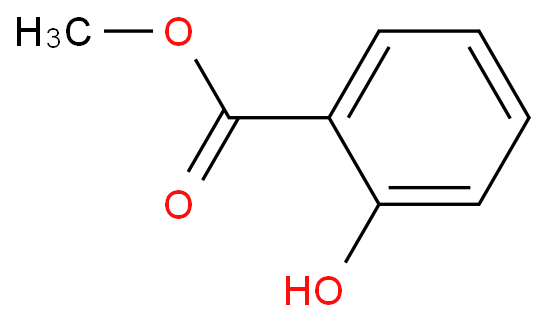
Methyl Salicylate in Cosmetics & Personal Care Products: Technical Guide to Function, Formulation, Safety and Regulatory Compliance
Methyl Salicylate
Menthol
Camphor
Methyl salicylate is the methyl ester of salicylic acid with molecular formula C8H8O3, molecular weight 152.15 g/mol and CAS 119-36-8. For cosmetic and personal care formulation.
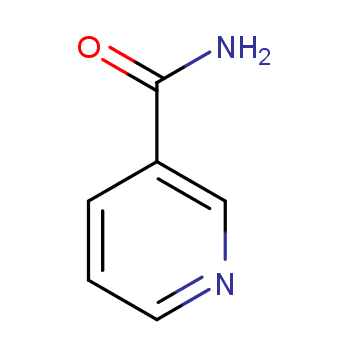
Niacinamide in Skincare & Personal Care Products: Technical Guide to Function, Formulation, Stability and Regulatory Compliance
Niacinamide
Niacinamide is a water-soluble vitamin B3 form with molecular formula C6H6N2O, molecular weight 122.12 g/mol and CAS 98-92-0. For cosmetic and personal care formulation.
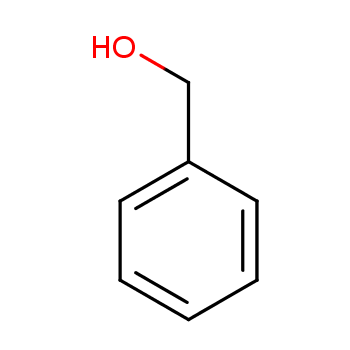
Benzyl Alcohol: Technical Guide to the Aromatic Alcohol Preservative and Solvent in Cosmetic Formulation
Benzyl Alcohol
Benzyl alcohol (CAS 100-51-6, C7H8O, 108.14 g/mol) is a colourless aromatic alcohol used in cosmetics as a preservative, solvent, viscosity-decreasing agent, pH adjuster and fragrance.
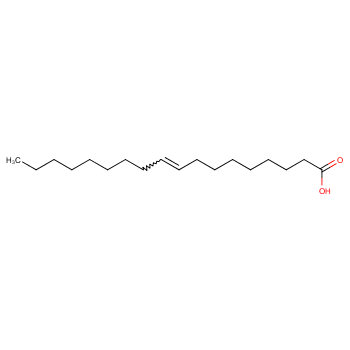
Oleic Acid in Food and Nutrition: A Technical Guide for Formulation Chemists
Oleic Acid
Oleic acid is a C18 monounsaturated fatty acid with a single cis double bond at carbon 9. That one unsaturation keeps it liquid at room temperature and gives it greater oxidative stability than polyunsaturated fats.
< Pre
1
...
4
5
6
7
8
9
10
...
16
Next >
Articles Archives
Hot Articles
Castor oil vs Jamaican black castor oil: Key Differences & Buyer Guide
Glycol vs Glycerin: What B2B Buyers Should Compare Checklist
Jamaican black castor oil vs Castor oil: Key Differences & Buyer Guide
Aluminum chlorohydrate vs Aluminum zirconium: Key Differences & Buyer Guide
Jbco vs Castor oil: What B2B Buyers Should Compare Checklist
Aluminium chlorohydrate vs Aluminium zirconium: Key Differences & Buyer Guide
Acetone vs Non acetone nail polish remover: Key Differences & Buyer Guide
Black castor oil vs Black seed oil: Complete Comparison & Procurement Guide
Related Exhibition
All Categories
Agri & Industry
Food
History
Laboratory
Pharmaceutical





 EN
 Agricultural News
 Food News
 Industrial News
 Cosmetic News
 Pharmaceutical News
 Science News

