-
We detected your language preference as English. Would you like to switch to the English version for a better experience?
Switch to English
Stay here


Oleic acid is a monounsaturated fatty acid present in plants and animals, abundant in avocados, nuts, seeds, and oils such as olive, canola, sunflower, and safflower. It serves as a source of dietary energy, contributes to healthy cell membranes, and functions technically as an emulsifier, stabiliser, and flavour contributor in a wide range of food products.
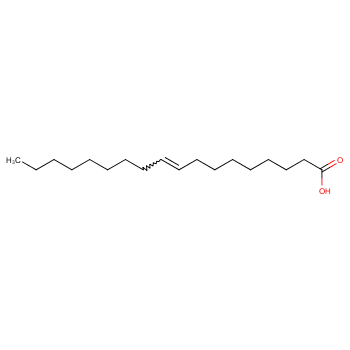
For product developers, the key technical questions are not simply whether oleic acid is nutritious, but how its single cis double bond governs melting behaviour, oxidative stability, and emulsifying function in a finished matrix. This guide examines its chemistry, production, applications, and the formulation and regulatory parameters that determine its practical use.
| Function | Suitable Users | Core Technical Indicators | Compliance Framework |
|---|---|---|---|
| Fatty acid / nutrient | Cooking oil and supplement formulators | 9 Cal/g energy contribution; fat-soluble vitamin absorption | FDA permitted food additive; EU E570 |
| Emulsifier and stabiliser | Sauce, dressing, and spread developers | Sodium salt emulsifying action; phase separation prevention | Category conditions of use apply |
| Flavour enhancer | Savory and convenience food producers | Mild fatty taste contribution; sensory enhancement | Standard flavour and label rules |
| Coating and barrier agent | Fresh produce coating developers | Uniform surface dispersion; moisture-barrier formation | Coating-specific rules per market |
| Lubricant and defoamer | Processing aid users | Lubricant, binder, and defoaming properties | Direct addition permitted under US rules |
The structure of oleic acid is a long hydrocarbon chain with a carboxylic acid group at one end. It has the molecular formula C18H34O2 and a molecular weight of 282.46 g/mol. The chain contains eighteen carbon atoms with a single double bond between carbons 9 and 10, and it is this one unsaturation that gives the molecule its monounsaturated character.
The double bond is in the cis configuration, meaning the hydrogen atoms attached to the two carbons sit on the same side of the bond. That geometry introduces a kink in the chain which prevents tight packing, lowering the melting point and keeping the acid liquid at room temperature, in contrast to the saturated stearic acid of the same carbon length.
The carboxylic acid group at the other end of the molecule accounts for the acidic properties. It can donate a proton and form salts with bases, a reaction that is central to its role as an emulsifier, since the sodium salt is surface-active and helps combine oil and water phases in dressings, sauces, and spreads.
For a broader reference on nomenclature and identity data, see the encyclopedia entry at Guidechem Chemical Encyclopedia.
| IUPAC name | (Z)-octadec-9-enoic acid |
| CAS number | 112-80-1 |
| EC number | 204-007-1 |
| Food additive codes | E 570; INS 570 (fatty acids) |
| Molecular weight | 282.468 g/mol |
The cis double bond bends the hydrocarbon chain so that molecules cannot stack efficiently, which depresses the melting point to 13-14 °C. This is why oleic acid is a liquid or semi-solid at ambient temperature and why it contributes a smooth, creamy mouthfeel when added to dressings, sauces, and spreads where a solid fat would feel waxy.
When neutralised, the carboxyl group forms the sodium salt, which is amphiphilic: the charged head prefers water while the hydrocarbon tail prefers oil. This makes oleic acid, in its salt form, an effective emulsifying agent that prevents phase separation and contributes to a stable, homogeneous texture, typically in combination with other co-emulsifiers.
With only one double bond, oleic acid is more resistant to oxidative degradation than polyunsaturated fats such as omega-3 and omega-6 fatty acids. This makes high-oleic oils suitable for cooking at higher temperatures without the oxidative damage that would produce off-flavours in a more unsaturated oil.
Oleic acid is obtained from plant and animal sources primarily through extraction. Oilseeds such as canola, sunflower, and safflower are crushed and pressed to release the oil, which is then refined to separate and purify the oleic acid fraction. This vegetable route supplies the majority of food-grade material.
Animal fats are a second source. Oleic acid constitutes 37-56 % of chicken and turkey fat and 44-47 % of lard, and these fats are obtained through rendering, in which heat separates the fat from other tissues before it is processed further to isolate the acid.
A more controlled route uses enzymatic hydrolysis. In one example, high-oleic sunflower seed oil at 60-80 % oleic acid is hydrolysed in an aqueous medium at 20-60 °C, with agitation exposing the oil-water interface so that the fatty acid moieties of the triglycerides are cleaved. An oleic acid layer then forms and separates from the aqueous phase.
Oleic acid belongs to the family of monounsaturated fatty acids, a group defined by a single double bond in an otherwise saturated chain. Its position within that family determines both its nutritional role and its technical behaviour.
Oleic acid is the most common dietary monounsaturated fatty acid. It is not an essential fatty acid, because humans can synthesise it endogenously, with the enzyme stearoyl-CoA desaturase 1 (SCD1) responsible for its production and more generally for synthesising monounsaturated fatty acids.
Stearic and palmitic acids share the same straight-chain architecture but lack the double bond, so they remain solid at ambient temperature. Blending saturated and monounsaturated fatty acids is how formulators tune the melting profile of shortenings and spreads.
Linoleic and other polyunsaturated acids contain multiple double bonds, giving them lower melting points but far greater susceptibility to oxidation. The higher stability of oleic acid relative to these counterparts is a key reason high-oleic oils are specified for frying and extended shelf life.
Structure-function relationship: the single cis double bond is the defining feature. It lowers the melting point enough to keep the acid fluid, while leaving enough saturation to resist oxidation better than a polyunsaturate. Moving from zero double bonds (stearic acid, solid) to one (oleic acid, liquid and stable) to many (linoleic acid, liquid and unstable) traces the entire trade-off between texture and stability.
Oleic acid is best understood by comparison with the saturated and polyunsaturated fatty acids that share its carbon length. The table below positions it on the parameters most relevant to food formulation.
| Parameter | Oleic Acid (MUFA) | Stearic Acid (Saturated) |
|---|---|---|
| Double bonds | One cis double bond at C9 | None |
| State at room temperature | Liquid or semi-solid | Solid |
| Melting point | 13-14 °C | Higher; solid at ambient temperature |
| Oxidative stability | Moderate; better than polyunsaturates | High |
| Texture contribution | Smooth and creamy mouthfeel | Firmer, more waxy body |
| Physical form and appearance | Colourless to yellowish oily liquid at room temperature |
| Odour | Odourless or with a lard-like odour |
| pKa | 9.85 |
| Viscosity at 25 °C | 26.7 cP |
| Melting / boiling point | 13-14 °C / 360 °C |
| Acid and saponification value | 195-205 and 197-207 mg KOH/g |
| Specific gravity at 25 °C | 0.89 g/mL |
| Solubility and storage | Insoluble in water; store at 2-8 °C |
Oleic acid spans cooking oils, emulsified products, and coatings. The table below maps its functions to representative applications and the objective each serves.
| Function | Typical Applications | Key Formulation Objective |
|---|---|---|
| Cooking oil base | Olive oil, canola oil, sunflower oil for frying, sauteing, dressings | Provide a monounsaturated fat base with good heat stability |
| Emulsifier and stabiliser | Sauces, dressings, spreads, margarine, mayonnaise | Prevent separation and deliver a smooth, creamy texture |
| Flavour enhancer | Bakery, snacks, savory products | Add a mild fatty taste and enhance sensory experience |
| Coating and barrier | Edible coatings for fresh produce | Form a moisture barrier, provide luster, and slow weight loss |
| Nutrient and delivery aid | Dietary supplements, energy bars, cereal bars | Contribute energy and aid absorption of fat-soluble vitamins |
Beyond texture and emulsification, oleic acid contributes functionally to nutrition: it supplies 9 Cal/g and helps the body absorb fat-soluble vitamins such as A, D, E, and K. Its high-oleic oils are also used to build zero trans-fat crystallised fats by blending palm stearin and high-oleic safflower oil, producing shortenings whose oxidative stability and functionality match their trans-fat counterparts.
Identify whether the acid is acting as a nutrient, an emulsifier, a flavour contributor, or a coating agent, since the required grade and use level differ substantially. Dosage across applications ranges from 0.5 % up to 60 % depending on the intended effect.
Establish the maximum process temperature, because oxidation becomes significant above 140 °C and degradation occurs between 151 and 285 °C. Where the process exceeds these thresholds, shorten exposure or add antioxidant protection to protect flavour quality.
Where emulsification is the goal, neutralise the acid to its sodium salt and combine it with co-emulsifiers for a stable system. The salt form is what provides the amphiphilic surface activity that prevents separation in sauces and dressings.
Store the acid between 2 °C and 8 °C to limit autoxidation, and verify the acid and saponification values on incoming lots as a purity and freshness check. Sealed, cool storage preserves both the sensory quality and the functional performance of the material.
The formulations below are illustrative examples drawn from published sources. They demonstrate how oleic acid functions in an emulsion, a shortening, a cookie dough, and an edible coating, and should be adapted to local specifications rather than copied unchanged.
| Ingredient | Illustrative Quantity | Technical Role |
|---|---|---|
| Nano-emulsion - DHA | 30 % | Omega-3 active being delivered in the system |
| Nano-emulsion - oleic acid | 1.15 % | Lipid phase component aiding self-emulsification |
| Nano-emulsion - Cremophor RH40 | 22.2 % | Surfactant forming the nano-emulsion droplets |
| Shortening - palm stearin and high-oleic safflower | Blend with 42.9 % oleic acid | Zero trans-fat crystallised fat structure |
| Cookie dough - high oleic sunflower oil | 19.1 % (77 % oleic acid) | Fat phase contributing texture and spread |
| Cookie dough - wheat flour | 47.8 % | Structural base of the dough |
| Edible coating - oleic acid | 3.0 % | Ensures uniform dispersion and surface interaction |
| Edible coating - glycerol monostearate | 5.0 % | Coating agent forming the barrier film |
Oleic acid is accepted as a food additive and nutrient across major markets, but the permitted uses and labelling obligations differ by jurisdiction. The overview below is for orientation only and should not be interpreted as a substitute for the current legal text. Always verify current requirements with the competent authority before commercialising.
| Market / Framework | Technical Relevance | Compliance Action |
|---|---|---|
| United States (FDA) | Permitted additive for direct addition to food; uses include lubricant, binder, and defoaming agent | Confirm the intended use is within the permitted functions and declare on the label |
| European Union (E 570) | Listed among permitted food additives as fatty acids | Check the category conditions of use in the EU food additives database |
| Codex / JECFA (INS 570) | Grouped with fatty acids; JECFA number 333 | Apply the group provisions for the fatty acids |
| Acceptable daily intake | Group ADI set as "not specified" by the Scientific Committee on Food for myristic, stearic, palmitic, and oleic acid | Document the basis for use and retain the safety reference on file |
Oleic acid is generally considered safe for consumption and is a naturally occurring fatty acid. It is a common component of the human diet and is well tolerated by most individuals, and the Scientific Committee on Food has established a group acceptable daily intake of "not specified" for the saturated and monounsaturated fatty acids that includes oleic acid.
Its nutritional role is well characterised. Oleic acid contributes 9 Cal/g to the energy content of food and helps the body absorb fat-soluble vitamins A, D, E, and K. It is not an essential fatty acid because humans synthesise it endogenously through the action of stearoyl-CoA desaturase 1, so dietary supply is a matter of preference rather than requirement.
Human studies associate the acid with several health effects, including favourable changes in LDL and HDL cholesterol, anti-inflammatory activity, satiety and insulin sensitivity benefits, and support for skin moisture. These associations are observational and should be handled carefully in claims, framed as consistent with a diet rich in monounsaturated fats rather than as a therapeutic outcome.
| Reference Point | Value / Guidance |
|---|---|
| Typical use level | 0.5-60 % depending on application and intended effect |
| Energy contribution | 9 Cal/g |
| Oxidation onset | Lipid oxidation readily above 140 °C; degradation 151-285 °C |
| Storage temperature | 2-8 °C |
| Acid value | 195-205 mg KOH/g |
| pH stability | pH stable |
Note: the values above are reference points for orientation and vary with product category, processing conditions, and the regulatory framework applied. Confirm all figures against current official sources before use in a commercial formulation.
Why is oleic acid liquid at room temperature?
Its single cis double bond at carbon 9 introduces a kink that prevents the hydrocarbon chains from packing tightly, which depresses the melting point to 13-14 °C. The acid therefore stays fluid at ambient temperature instead of solidifying like its saturated counterpart.
Is oleic acid an essential fatty acid?
No. Unlike linoleic and linolenic acids, oleic acid can be synthesised endogenously in humans. The enzyme stearoyl-CoA desaturase 1 is responsible for producing it, and more generally for synthesising monounsaturated fatty acids.
How does oleic acid act as an emulsifier?
In its sodium salt form the carboxyl group becomes amphiphilic, with a charged head that prefers water and a hydrocarbon tail that prefers oil. This surface activity lets it hold oil and water phases together, preventing separation in sauces, dressings, and spreads, usually alongside co-emulsifiers.
Why is oleic acid preferred for high-heat cooking over polyunsaturated oils?
With only one double bond, it is more resistant to oxidative degradation than oils rich in omega-3 and omega-6 polyunsaturates. That greater stability allows high-oleic oils to withstand higher cooking temperatures without the oxidative damage that would produce off-flavours.
The following identification data supports specification writing, incoming-goods verification, and supplier sourcing for food-grade oleic acid.
| Identifier | Value | Lookup Resource |
|---|---|---|
| CAS number | 112-80-1 | Dictionary entry |
| Supplier listings | Food and technical grades; vegetable and animal derived | Supply channel |
| Verified suppliers | Regional and global oleochemical suppliers | Supplier directory |
|
 |
 |
 |
 EN
EN
 Agricultural News
 Food News
 Industrial News
 Cosmetic News
 Pharmaceutical News
 Science News

 1YR
1YR


