-
We detected your language preference as English. Would you like to switch to the English version for a better experience?
Switch to English
Stay here


Formulators face a persistent squeeze: consumers want clean labels, zero trans fat and stable shelf life, while processors demand longer fry life, fewer oil changes and cleaner fryer performance. Conventional commodity oils rich in polyunsaturated linoleic acid oxidize rapidly at frying temperatures, generating rancid flavors, off-odors and elevated total polar materials. High-oleic oils — selectively bred sunflower, safflower, canola and soybean varieties whose triglycerides carry 70–85% oleic acid — were developed specifically to close this gap. As clinical dietitian Jamie Marchetti noted, these oils deliver the oxidative robustness the food industry needs without sacrificing the favorable monounsaturated fatty acid profile that nutrition science associates with cardiovascular health. This article examines their chemistry, functional performance, formulation practice and global compliance status.

High-oleic oils combine fry-life performance with heart-smart monounsaturated nutrition.
| Function | Target Applications | Key Specifications | Compliance Status |
|---|---|---|---|
| High-stability frying and processing oil; trans-fat-free alternative to partially hydrogenated oils (PHOs); heart-smart fat delivery | Industrial and restaurant deep frying, par-fried foods, spray oils for snacks and crackers, nut roasting, bakery shortening systems, salad and finishing oils | Oleic acid ≥70% of total fatty acids; iodine value 75–95; free fatty acids ≤0.05%; peroxide value ≤1.0 meq/kg; OSI 18–45 h at 110 °C | GRAS in the US; FDA qualified health claim for oleic acid (21 CFR 101.767 low sat/low trans + oleic acid claim); Codex STAN 210 vegetable oil standard; EU novel food status for high-oleic soybean |
| Nutritional lipid: replaces saturated and trans fat with monounsaturated (MUFA) calories | Better-for-you snacks, foodservice frying programs, retail bottled oil blends, institutional feeding | Saturated fat 6–10%; linoleic acid 9–20%; trans fat <0.5 g/serving; vitamin E 0.3–0.7 mg/g natural tocopherols | JECFA-compatible edible oil; EU Regulation 1169/2011 nutrition labeling; heart-health messaging subject to local claim rules |
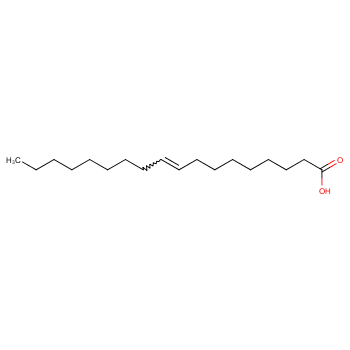
All high-oleic oils derive their performance from a single structural feature: the fatty acid composition of their triglycerides. Oleic acid (cis-9-octadecenoic acid, CAS 112-80-1) is an 18-carbon monounsaturated omega-9 fatty acid containing exactly one cis double bond between carbon 9 and carbon 10:
Its polyunsaturated rival, linoleic acid (CAS 60-33-3), carries two double bonds separated by a bis-allylic methylene at carbon 11:
That single, innocuous-looking —CH2— between the two double bonds is the entire story of oil stability. Bis-allylic hydrogens have a C—H bond dissociation energy roughly 50–75 kJ/mol lower than allylic hydrogens, so the initiation step of autoxidation proceeds dramatically faster in linoleic-rich oils. The propagation chain then cascades:
The hydroperoxides (ROOH) so generated fragment during frying into aldehydes such as hexanal, nonanal and 2,4-decadienal — the compounds tasters perceive as "cardboard," "painty" or "fishy." Because oleic acid has no bis-allylic position, its rate constant for autoxidation is on the order of 10–40 times lower than that of linoleic acid at frying temperatures. Swapping linoleic for oleic acid therefore slows hydroperoxide formation at its kinetic root rather than merely scavenging radicals downstream.
High-oleic oils are not the product of hydrogenation or chemical modification; they are the product of plant breeding. In sunflower, high-oleic traits trace to mutations in the FAD2-1 gene (encoding delta-12 oleate desaturase), the enzyme that converts oleic acid to linoleic acid in the developing seed. When FAD2 activity is silenced, oleic acid accumulates to 75–90% of the oil instead of the ~20% typical of linoleic (traditional) sunflower. The same desaturase logic underlies high-oleic safflower, canola and soybean programs — some achieved through mutagenesis and marker-assisted selection, others (notably Plenish high-oleic soybean) through biotechnology. Because the triglyceride backbone remains a natural vegetable oil, high-oleic varieties need no "hydrogenated" declaration and contain essentially no trans fat (typically <0.5 g per serving).
Nutritionally, oleic acid works through well-characterized lipid-metabolism pathways. Replacing dietary saturated fatty acids with monounsaturated fatty acids lowers LDL cholesterol without reducing HDL, and does not activate the inflammatory and lipogenic signaling that excess saturated fat can promote. Oleic acid is also the predominant fatty acid in the Mediterranean diet's signature fat, olive oil, and is endogenously produced by the stearoyl-CoA desaturase (SCD) enzyme system. Because the US FDA's 2018 enforcement of the partial hydrogenation ban removed PHOs from the GRAS list, high-oleic oils became one of the few structurally stable, trans-free options that simultaneously support a favorable lipid panel — a dual mandate few other fry media can meet. In her analysis, Marchetti emphasized precisely this point: high-oleic oils let food manufacturers remove trans fat without sliding back into saturated-fat-heavy tropical hard stocks.
High-oleic oils are best understood as a functional category rather than a single product. What unites them is elevated oleic acid (CAS 112-80-1) content; what differentiates them is minor fatty acid balance, tocopherol profile, flavor carry-over and supply economics.
The category benchmark, at 80–90% oleic acid — often the most monounsaturated of all commercial seed oils. HOSO offers a clean, neutral flavor that does not mask seasoned snacks, naturally high alpha-tocopherol content for added oxidative protection, and a long history of industrial frying use in Europe and Latin America. Its limitation is price volatility tied to sunflower growing regions and, at very high oleic levels, a slight tendency toward polymerization foaming in extreme continuous fryer duty compared with high-oleic canola.
Delivering 74–80% oleic acid from a naturally drought-tolerant crop, high-oleic safflower is favored where a light, quick-draining fry oil with very low saturated fat (~6%) is desired. Historically it served infant formula and clinical nutrition because of its clean fatty acid profile. Its constraint is more limited agronomic availability, which keeps it a premium, regionally sourced ingredient rather than a bulk fryer oil.
At 65–75% oleic acid with only ~7% saturated fat and a useful omega-3 alpha-linolenic acid residue (~2–3%), high-oleic canola provides the best nutritional balance sheet in the family. It resists polymerization in heavy fry cycles, has a very neutral taste and benefits from large, stable North American supply. Its modest linolenic content means it is usually winterized or lightly processed if maximum flavor stability is required, and it carries a slightly lower oxidative stability ceiling than top-tier HOSO.
The newest entrant (e.g., Plenish, Calyno), at ~75% oleic acid, developed to give the enormous US soybean crush a trait-enhanced, trans-free frying option with the lowest saturated fat of the family. In the European Union these varieties are regulated as novel foods and require pre-market authorization under Regulation (EU) 2015/2283, so availability there lags North America. Zero trans fat and commodity-scale logistics are its selling points.
Not all high-oleic oils are engineered. Olive oil (55–83% oleic) and avocado oil are cold-pressed, flavor-forward oils whose polyphenols add antioxidant muscle beyond the MUFA backbone. They excel as finishing, dressing and premium bakery oils but are too expensive and too flavor-active for mainstream industrial frying. Almond and macadamia oils occupy similar artisan niches.
| Oil / Fat | Oleic Acid (%) | Key CAS Chemistry | Oxidative Stability (OSI, 110 °C) | Trans / Sat Fat | Primary Food Use |
|---|---|---|---|---|---|
| High-oleic sunflower (HOSO) | 80–90 | Oleic acid 112-80-1 dominant | 25–45 h (highest of seed oils) | ~0% trans / ~9% sat | Industrial frying, spray oils, snacks |
| High-oleic safflower | 74–80 | Oleic acid 112-80-1 dominant | 20–30 h | ~0% trans / ~6% sat | Premium frying, clinical nutrition |
| High-oleic canola | 65–75 | Oleic acid 112-80-1 + residual ALA | 18–25 h | ~0% trans / ~7% sat | Foodservice deep frying, bakery |
| High-oleic soybean | ~75 | Oleic acid 112-80-1; low linolenic | 18–25 h | ~0% trans / ~6% sat | US industrial frying, school programs |
| Conventional sunflower | 20–30 | Linoleic acid 60-33-3 dominant (60–70%) | 6–11 h | ~0% trans / ~10% sat | Salad oils, short shelf-life products |
| Partially hydrogenated soybean (legacy) | Variable | Artificial trans isomers (elaidic-type) | High, but trans 10–35% | High trans / ~15–20% sat | Banned for food use in US (FDA 2018) |
| Palm oil / palm olein | 36–44 | Palmitic 16:0 rich triglycerides | 20–35 h | ~0% trans / 40–50% sat | Frying, bakery hard stock — high saturates |
The matrix makes the strategic position obvious: high-oleic varieties are the only family that simultaneously scores high on oxidative stability and near-minimal saturated fat with zero artificial trans isomers. Conventional oils lose on stability; tropical fats lose on saturated fat; the historical PHO solution is no longer legal. More detail on each fatty acid building block is available through the Guidechem encyclopedia and oleic acid supplier listings.
Specification on intake: oleic acid ≥75% (per fatty acid profile by GC), free fatty acids ≤0.05%, peroxide value ≤1.0 meq/kg, anisidine value ≤6, and OSI at 110 °C documented on the certificate of analysis. Operation: hold fryer temperature at 175–190 °C; high-oleic oils tolerate these temperatures without the rapid hydroperoxide buildup seen with linoleic oils, but they do not license uncontrolled overheating. Top up continuously with fresh oil ("make-up oil") to keep degradation by-products diluted; a well-run high-oleic fryer typically requires 30–50% less oil turnover per week than a linoleic fryer. Endpoints: change the oil when total polar materials reach 24–27% (the widely used discard threshold) or when free fatty acids exceed 1.5–2.0%, whichever comes first. Filter daily to remove crumbs whose phospholipids and trace metals catalyze oxidation.
For crackers, cereals and snack seasoning adhesion, apply high-oleic oil at 3–8% of finished weight through electrostatic or spinning-disc sprayers heated to 60–70 °C for viscosity control. The low iodine value of high-oleic oil is what allows seasoned snacks to survive 4–6 months of distribution without the "painty" note that limits conventional oils to 8–12 weeks. If additional protection is needed, 100–200 ppm of mixed natural tocopherols (or 0.02% rosemary extract) works synergistically with the inherent MUFA stability — antioxidants scavenge the few radicals that do form, while the fatty acid profile keeps formation slow in the first place.
High-oleic sunflower oil can replace up to 100% of the oil phase in muffin, bar and cookie formulas one-for-one by weight. Where solid-fat functionality is required (laminated doughs, creams), blend high-oleic oil with a small fraction of fully hydrogenated or tropical hard stock and interesterify, or use high-oleic oil at 70–80% of the fat system with the balance as palm. For nut roasting (almonds, peanuts, cashews), high-oleic oil dramatically extends roasted-nut flavor life because the nut's own surface oil — also oleic-rich in improved varieties — resists rancidity in the same way.
| Jurisdiction / Body | Instrument | Status for High-Oleic Oils |
|---|---|---|
| United States (FDA) | GRAS status; 21 CFR 101.767 qualified health claim for oleic acid; 2018 PHO ban (21 CFR 184, revocation) | High-oleic oils from conventional breeding are GRAS edible oils. FDA authorized a qualified claim: "supportive but not conclusive scientific evidence suggests that eating about 1½ tablespoons (20 grams) of oils high in oleic acid per day may reduce the risk of coronary heart disease" — usable when the food also meets low-saturated-fat, low-trans-fat criteria. |
| European Union | Regulation (EU) 1169/2011 labeling; Reg (EU) 432/2012 claims; Reg (EU) 2015/2283 novel foods; Reg (EU) 1924/2006 nutrition claims | Conventionally bred high-oleic sunflower/safflower/canola are standard edible oils under Codex-aligned rules; "high unsaturated fat" and "high monounsaturated fat" claims are permitted subject to 432/2012 conditions. High-oleic soybean (GMO-derived) requires novel food/authorization clearance. |
| Codex Alimentarius / JECFA | Codex STAN 210 (named vegetable oils); CXS 19-1985 fats and oils; JECFA specifications | High-oleic sunflower, safflower and canola oils have entries with identity characteristics (fatty acid ranges) in STAN 210, enabling international trade. JECFA evaluates edible oil specifications for the CCFO; no ADI restrictions apply — these are macro-ingredients, food components rather than additives. |
| Trans fat labeling (US/EU/WHO) | FDA trans labeling; WHO REPLACE action package; EU 2 g/100 g limit (Reg (EU) 2019/649) | High-oleic oils contain no artificial trans fat and comfortably meet the EU industrial trans limit and WHO elimination targets — a key compliance driver for switching from PHOs. |
Food-safety authorities treat high-oleic oils not as additives but as ordinary edible vegetable oils, so the compliance burden centers on identity, freshness metrics and labeling claims rather than intake limits. The practical message from Marchetti's food-safety review holds across jurisdictions: these oils were bred to answer the trans-fat and oxidation problems regulators themselves flagged, so they align naturally with modern labeling law. For further reading on the oleic acid molecule and its regulatory chemistry, consult the Guidechem encyclopedia.
Yes, they are safe — they are standard edible vegetable oils evaluated under the same frameworks as conventional oils (GRAS in the US, Codex STAN 210 identity standards internationally). Most high-oleic sunflower and safflower varieties were created through conventional mutagenesis and breeding, not transgenic methods. High-oleic soybean varieties are biotech-derived and are cleared for food use in North America; in the EU they fall under novel food review. Regardless of breeding method, the oil itself is a purified triglyceride mixture containing no protein or DNA, which is why GMO-related safety concerns do not transfer to the refined oil.
Industrially, operators typically report two to three times the fry life of conventional linoleic oils — measured by slower rise in free fatty acids, total polar materials and darkening. On the shelf, oxidative stability index values of 25–45 hours at 110 °C for HOSO versus 6–11 hours for conventional sunflower translate (via Arrhenius acceleration) to seasoning-carrying snack shelf life of roughly 4–6 months versus 8–12 weeks. Exact multipliers depend on temperature control, filtration discipline and light exposure in your specific line.
Yes — oleic acid is the omega-9 monounsaturated fatty acid, so "high-oleic" and "omega-9 rich" describe the same composition. The nutrition evidence base, largely from Mediterranean-diet research on olive oil and from controlled MUFA-for-SFA substitution trials, supports improved LDL/HDL balance when oleic acid replaces saturated fat. In the US, manufacturers may reference the FDA's qualified health claim for oils high in oleic acid (about 20 g/day) when the product also qualifies as low in saturated fat and trans fat. The claim is deliberately qualified — "supportive but not conclusive" — so wording on-pack must follow the exact FDA phrasing.
In most frying and spray applications, yes — the swap is essentially one-for-one by weight, with only viscosity and flavor-release checks needed. Where reformulation matters: baked goods relying on a plastic fat crystal network (use blends with hard stock), products where the legacy oil's flavor was part of the profile (e.g., peanut flavor in traditional snacks), and nutrition-panel updates since saturated fat and monounsaturated fat declarations will change. Always re-validate fryer set-points, because high-oleic oils can run slightly hotter for the same oil-quality trajectory — an energy and throughput opportunity as much as a caution.
Disclaimer: This article is for technical information only and does not constitute regulatory or medical advice. Verify claim language with current local regulations before use on-pack.
 |
|
 |
 |
 |
 EN
EN
 Agricultural News
 Food News
 Industrial News
 Cosmetic News
 Pharmaceutical News
 Science News

 1YR
1YR


