-
We detected your language preference as English. Would you like to switch to the English version for a better experience?
Switch to English
Stay here


Acetic acid is a simple carboxylic acid that is used ubiquitously in the food industry and is known for its characteristic sour taste and pungent odor. It is an organic acid with applications across multiple industries, but its food role is uniquely broad: it is an acidulant, a flavoring agent, a preservative and a pH regulator, and it is the defining component of vinegar, which has served as a food preservative for centuries.
For product developers, the decisive questions are not simply whether acetic acid is sour, but how its carboxyl group, its volatility and its effect on pH shape flavor, shelf life and texture in each matrix. This guide consolidates its identity, mechanism, production, formulation practice and regulatory position into a practical framework.
| Function | Suitable Users | Core Technical Indicators | Compliance Framework |
|---|---|---|---|
| Acidulant and flavoring agent | Beverage, confectionery, sauce and dressing manufacturers who need a sharp sour note and a vinegary character | Supplies sourness and pungency; typical vinegar levels of 4 to 8 percent acetic acid; acetic acid can reach 12 to 155 mg/L in ales and about 200 mg/L in lambic beers | Authorized as food additive E260 and used as a conventional food acid; labeling rules differ by market |
| Preservative and pH regulator | Pickle, preserve, dressing and dairy producers seeking shelf-life extension and stable pH control | Lowers matrix pH and inhibits spoilage microbes, including below the concentration needed for a pH shift; freezing point about 16.6 degrees Celsius for glacial acid | Recognized preservative and acidulant; permitted uses and maximum levels vary by product category and market |
| Raising agent and coagulant | Bakery producers using chemical leavening and dairy or soy processors coagulating proteins | Reacts with bicarbonate to release carbon dioxide and improve leavening; reduces milk and soy milk pH to the isoelectric point so proteins curdle | Used in chemically leavened bakery and in cheese, curd, tofu and tempeh production; verify category-specific rules |
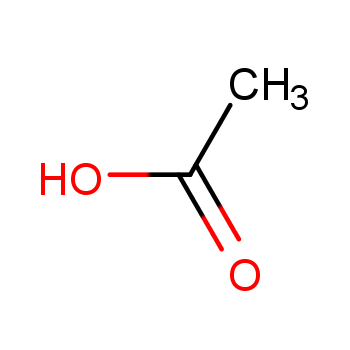
Chemically, acetic acid, or ethanoic acid, is a colorless liquid organic compound with the chemical formula CH3CO2H. A methyl group is attached to a carboxyl functional group, and that carboxyl group gives the molecule its acidic character and its ability to donate a proton in aqueous solution. The name derives from the Latin word for vinegar, acetum.
Acetic acid is a simple carboxylic acid that is used ubiquitously in the food industry and is known for its characteristic sour taste and pungent odor. It plays a multifaceted role in culinary applications, from acting as a preservative to enhancing flavors and tenderizing meats, and it has been vital to human culinary practice for centuries. It is an integral part of the vinegar traditionally used in food preservation, and pickling in vinegar or vinegar-containing solutions ranks among the oldest preservation methods.
Vinegar made from palm wine was known in the East as long ago as 5000 BC, and acetic acid continues to occupy a firm place in food preservation today. That long history matters to a formulator because the ingredient is well characterized and embedded in food standards, while its behavior still depends on concentration, matrix and process.
Explore the acetic acid technical encyclopedia for additional application information.
Acetic acid is not simply an ingredient that makes food sour; its function depends on the chemistry of the carboxyl group and how that group behaves in an aqueous food matrix. Understanding the mechanism means understanding how the molecule dissociates, how it partitions across microbial membranes, and how it interacts with proteins and bicarbonate systems.
When acetic acid is added to a food matrix it dissociates partially into a proton and an acetate ion, and the resulting shift in hydrogen-ion concentration lowers the pH. This pH reduction is the foundation of its preservative action, because a lower pH is less favorable to many spoilage and pathogenic microorganisms, and it also stabilizes pH-sensitive pigments and gelling systems.
The antimicrobial effect is not purely a function of total acidity. Acetic acid can inhibit microorganisms even when used at concentrations lower than those required for a pH shift, because the undissociated acid is small and lipid-soluble enough to cross the cell membrane and disrupt internal pH homeostasis. Formulators therefore consider both the measured pH and the concentration of the acid itself.
Acetic acid has a characteristic sour taste and pungent odor, and it provides the tang together with its peculiar odor when added to food products. In lower concentrations the slightly sour taste uplifts the flavor profile of many foods, especially sweet, spicy and umami notes, which is why it functions as both a flavoring agent and a flavor enhancer rather than a single-purpose acidulant.
Acetic acid is more volatile than many other food acids, so its pungency is more perceptible and its flavor is experienced partly through the nose. That volatility explains why its contribution is described as a vinegary note rather than a clean tang, and why the sensory result depends on when the acid is added relative to heating and packaging.
In dairy and soy applications acetic acid is used as a coagulant that reduces the pH of milk or soy milk to the isoelectric point of the proteins, which makes them curdle. That controlled acidification is the basis of cheese, paneer, curd and tofu production, and it depends on reaching a target pH rather than a fixed acid dose, because the isoelectric point differs between protein systems.
In chemically leavened bakery products acetic acid reacts with baking powder or a baking soda base to release carbon dioxide. It thus contributes to improved taste, texture or consistency due to raising, and the reaction rate and residual acid are part of the leavening design rather than incidental to it.
Acetic acid is produced in two broad ways that matter to food applications: biological fermentation, which yields vinegar and related fermented products, and chemical synthesis, which yields food-grade acetic acid at controlled concentration. The fermentation route is central to the food industry because it generates the flavor and aroma compounds that distinguish vinegar from a simple acid solution.
Vinegar is produced by the action of acetic acid bacteria, which oxidize ethanol to acetic acid aerobically, and the product typically contains 4 to 8 percent acetic acid together with residual flavor compounds. Acetic acid bacteria are also responsible for the acidity of many fermented foods and beverages, and their physiology governs the rate and yield of that fermentation.
On the industrial side, acetic acid is also a key chemical used in the manufacture of acetic anhydride, the vinyl acetate monomer and synthetic fibers, so food-grade material is drawn from a large global production base. Buyers should confirm the grade, assay, residual impurity profile, water content and purity documentation for each lot, and match the certificate of analysis against the purchasing specification rather than relying on the generic acetic acid label.
From a formulation perspective the most useful distinction is between the dilute vinegar form, the food-grade diluted acetic acid form and glacial acetic acid, because they differ in acid concentration, water content and handling requirements even though they share the same active molecule.
Vinegar is the traditional form in which acetic acid reaches the diet, with acetic acid at about 4 to 8 percent of the product, giving it its characteristic sour taste and pungent smell. It also carries fermentation-derived flavor compounds that give each vinegar its identity, making it the preferred form when a specific vinegary character is part of the sensory brief.
Dilute food-grade acetic acid is an aqueous solution of controlled concentration used when a precise acid level is required without the flavor variation of a fermented product. It is convenient for industrial dosing, because the acid content is uniform and can be added on a calculated basis rather than adjusted by sensory trial.
Glacial acetic acid is the concentrated, essentially water-free form, with a freezing point of about 16.6 degrees Celsius, or 61.9 degrees Fahrenheit. In a cooler environment it can solidify into ice-like crystals, which gives it its nickname, and that behavior is both a handling consideration and a useful way to distinguish it from dilute solutions.
| Parameter | Vinegar | Dilute Food-Grade Acetic Acid | Glacial Acetic Acid |
|---|---|---|---|
| Acetic acid content | About 4 to 8 percent | Controlled, typically more concentrated than vinegar | Concentrated, essentially water-free |
| Flavor profile | Fermentation-derived, product-specific vinegary note | Clean sourness with little fermentation character | Very pungent and volatile; not used neat in food |
| Physical behavior | Liquid at ambient temperature | Liquid and easy to dose | Freezes at about 16.6 degrees Celsius, forming ice-like crystals |
| Typical use | Pickling, dressings and flavor where vinegar is expected | Precise acidification and industrial dosing | Dilution to make working solutions and synthesis feedstock |
| Property | Typical Description |
|---|---|
| Appearance | Colorless liquid in the pure and dilute forms |
| Odor and taste | Characteristic pungent odor and sharp sour taste |
| Molecular formula | CH3CO2H, a methyl group attached to a carboxyl group |
| Freezing point | About 16.6 degrees Celsius for glacial acetic acid, so it solidifies in cool conditions |
| Volatility | Readily volatile, which strengthens its pungency and vinegary perception |
Acetic acid is a multipurpose food additive, and its functions include acting as an acidulant, a flavoring agent, a preservative and antimicrobial agent, a color retention aid, an edible coating agent and a raising agent. The table below summarizes the main application platforms and the function the acid typically performs in each, because the same molecule is dosed very differently across categories.
| Platform | Examples | Primary Function |
|---|---|---|
| Beverages | Vinegar drinks, kombucha, kefir water, beer, gueuze, soft drinks, flavored sodas and fruit juices and nectars | Flavoring agent and pH regulator supplying sharp sourness and vinegary notes, plus a color retention aid that augments natural fruit tanginess |
| Bakery | Sourdough and yeast-leavened bread; biscuits, cookies, pancakes, muffins and scones | Flavoring agent and pH regulator in sourdough, and raising agent through reaction with basic leavening agents |
| Confectionery | Candies, soft chews, gummies and chewing gums; candied fruit preserves | Slow-release tangy flavor and preservative that balances the sweetness of sucrose |
| Convenience foods | Ketchup, sauces, gravies, broths, jams, jellies, marmalades, canned produce, pickles and dressings | Preservative and pH regulator that lowers the system pH, extends shelf life and lifts the sour component |
| Dairy and soy | Ice cream, cheese, paneer, curd, yogurt, buttermilk, tofu and tempeh | Coagulant that lowers pH to the isoelectric point so proteins curdle, and flavor enhancer in frozen and fluid dairy |
| Meat and analogues | Canned meats, restructured meat products and vegan meat analogues | Flavor enhancer, pH regulator and shelf-life extender |
Pickles deserve particular emphasis because they are the classical application. Pickling in vinegar or vinegar-containing solutions extends the shelf life of fruit and vegetable pieces by preventing the growth of spoilage microorganisms on the surface, and the characteristic pickle taste comes from the vinegar-like notes of the acid. The effect combines pH control and direct antimicrobial action, so systems are designed around both acid concentration and equilibration time.
Start from the purpose, because the same ingredient is used as an acidulant, a preservative, a raising agent or a coagulant, and each role implies a different target. Define the pH window required for preservation or protein coagulation, and confirm whether the intention is flavor, shelf life or a structural reaction before selecting the acid level.
Decide between vinegar, dilute food-grade acetic acid and glacial acetic acid based on the flavor brief and required dosing precision. Vinegar is chosen when a product-specific vinegary character matters, dilute acid when a clean and calculable acid level is preferred, and glacial acid only as a feedstock to be diluted to a working solution rather than added neat.
Set the dose against the buffering capacity of the matrix rather than a fixed percentage, because a high-solids jam, a protein-rich dairy base and a dilute beverage require very different amounts to reach the same pH. Account for acids already present in the recipe, and remember that the undissociated fraction, not only the pH, drives antimicrobial performance.
Position the acid addition in the process so that the volatile pungency is controlled. Consider whether the acid should be added before or after heating, since volatilization losses change both the residual acidity and the sensory balance, and taste the finished product rather than predicting the flavor from the dosing calculation alone.
Confirm microbiological stability, color retention and texture over the intended shelf life, and check the permitted use level and labeling for each destination market. Because acetic acid is both a preservative and a flavor ingredient, the final validation should cover safety, shelf life and sensory acceptance together.
The following formulations are illustrative technical examples rather than universal recipes. Actual levels must be recalculated according to the target pH, flavor and destination-market requirements.
In a classic pickle brine, vinegar supplies the acid that lowers pH and preserves the vegetable pieces, salt and sugar balance the flavor, and spices provide character; the acid level and the equilibration time are set so the interior of the vegetable reaches the target pH. In a salad dressing, vinegar or dilute acetic acid supplies the sharp sour note and the pH regulation that improves shelf stability, while oil, emulsifier and seasoning build the body.
Regulatory treatment of acetic acid depends on its identity as a food acid and on the intended use of the finished food. A supplier statement that a material is food grade does not by itself establish compliance in every market, and permitted categories and maximum levels vary between frameworks.
| Market / Framework | Technical Relevance | Compliance Action |
|---|---|---|
| EU food additives | Acetic acid is authorized as the food additive E260 and is used as an acidulant and preservative across many categories. | Check the category-specific conditions of use and labeling before launch. |
| United States FDA | Acetic acid is a recognized direct food substance and is used as a conventional acidulant, flavoring agent and preservative. | Confirm the intended category and the current permitted use for each application. |
| Food Standards Australia New Zealand | Acetic acid is listed as a permitted food acid in the relevant food standards schedule. | Verify the listing and any category limits for the specific product. |
| Labeling and claims | Preservative and acidity claims depend on the ingredient list and the category in which the acid is used. | Confirm the required labeling wording for each destination market. |
| Industrial handling | Concentrated acetic acid has its own transport, storage and safety obligations that are separate from food-use rules. | Verify the handling classification rather than assuming food use removes every obligation. |
Acetic acid is a conventional food acid with a long history of use, so its food-safety considerations relate mainly to use level, concentration and handling rather than toxicity at normal intake. In the dilute forms used as vinegar and food-grade solutions it is a normal component of the diet, and its preservative role is well established.
The handling risk is concentrated in the glacial form, which is corrosive and volatile and requires controlled dilution, ventilation and appropriate protective equipment. Workplaces should treat concentrated acetic acid as an industrial chemical with its own storage and transport obligations, separate from the food-use question.
The practical guidance is to treat the use level as a combined flavor, preservation and regulatory decision. Confirm that the level achieves the required pH and microbiological stability, that it is consistent with the flavor brief and any claim, and that it complies with the market-specific maximum for the category.
| Reference Point | Illustrative Value |
|---|---|
| Acetic acid in vinegar | About 4 to 8 percent |
| Acetic acid in lambic beer | About 200 mg/L |
| Acetic acid in ales, lagers and stouts | 12 to 155 mg/L in ales, 22 to 107 mg/L in lagers and 30 to 35 mg/L in stouts |
| Freezing point of glacial acetic acid | About 16.6 degrees Celsius |
These values are reference examples drawn from published sources and should not be interpreted as universal legal maximums. Developers should use the current regulatory limits applicable to the intended market.
Acetic acid is used across many categories because one molecule delivers several functions at once: it is an acidulant and flavoring agent that supplies a sharp sour note, a preservative that lowers pH and inhibits microorganisms, a raising agent when it reacts with a bicarbonate base and a coagulant that curdles milk and soy proteins. That multifunctionality makes it economical.
No. Although the pH reduction creates an unfavorable environment for many microorganisms, acetic acid also inhibits them at concentrations below those required for a pH shift, because the undissociated acid crosses the cell membrane and disrupts internal pH homeostasis. Formulators therefore track both the pH and the concentration of undissociated acid.
Acetic acid is more volatile than many other food acids, so it reaches the olfactory system more readily and is perceived partly through the nose. That volatility produces the characteristic vinegary note rather than a clean tang, and it also means that heating losses can shift the residual acidity and flavor of the finished product.
Glacial acetic acid should be used only as a concentrated feedstock diluted to a working solution, or where a precise, flavor-neutral acid source is required and cannot be supplied by a fermented product. It should never be added neat to a food, both because it is corrosive and highly pungent and because its near-zero water content changes the formulation balance.
| Identifier | Value | Resource |
|---|---|---|
| Product name | Acetic acid; ethanoic acid; E260 | Technical encyclopedia |
| CAS number | 64-19-7 | Chemical dictionary |
| EC number | 200-580-7 | Supply search |
| Supplier / trade search | 64-19-7 | Supplier search |
1. Food Standards Australia New Zealand. Acetic acid in foods.
2. Chemicals.co.uk. What are common uses of acetic acid?
3. CulinaryLore. Acetic acid in foods: definition, uses and safety.
4. PubMed Central. Acetic acid bacteria: physiology and carbon sources.
5. Frontiers in Microbiology. Acetic acid bacteria in fermented foods: a review.
6. EU food additives database. Acetic acid, E260.
7. U.S. Food and Drug Administration. Direct food substances and acidulant uses.
8. Codex Alimentarius. Food additives and acidity regulators.
 |
 |
 |
 |
 |
 EN
EN
 Agricultural News
 Food News
 Industrial News
 Cosmetic News
 Pharmaceutical News
 Science News

 3YRS
3YRS

