-
We detected your language preference as English. Would you like to switch to the English version for a better experience?
Switch to English
Stay here


Tartaric acid (2,3-dihydroxybutanedioic acid, C4H6O6, E334) is a naturally occurring diprotic organic acid produced commercially as a by-product of the wine industry. It functions as an acidulant, flavoring agent, preservative, leavening acid and chelating agent, and it gives foods and beverages a sharp, mouthwatering, astringent tartness that is distinct from the softer sourness of citric acid. Because it is one of the most water-soluble solid acidulants and carries two ionizable protons per molecule, it is used at far lower doses than monoprotic alternatives to achieve a comparable pH drop.
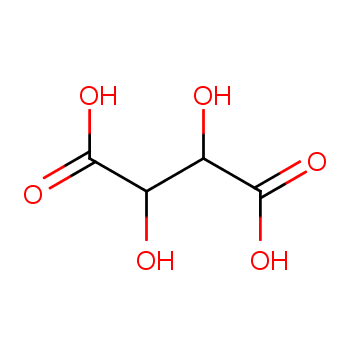
For product developers, the key technical questions are not simply whether tartaric acid can acidify a beverage or set a jelly, but how its pKa profile, solubility and chelation behavior interact with flavor balance, shelf life and processing conditions across different matrices. This guide examines its mechanism, industrial production, comparative performance against citric and malic acid, practical formulation steps, and the regulatory framework that governs its use in food and beverage systems.
| Function | Suitable Users | Core Technical Indicators | Compliance Framework |
|---|---|---|---|
| Acidulant and flavoring agent that lowers pH and delivers sharp tartness. | Beverage, confectionery and bakery developers seeking a potent, clean tart note. | pKa1 2.98 and pKa2 4.34; 1 mM solution pH 3.18; freely soluble in water and ethanol. | E334 / INS 334; JECFA number 621; ADI 30 mg per kg body weight per day set by the EU Scientific Committee for Food. |
| Leavening acid that reacts with bicarbonate to release carbon dioxide during baking and in effervescent systems. | Bakery, instant beverage and effervescent tablet manufacturers using chemical leavening. | Diprotic reactivity gives two protons per molecule; typically blended with sodium bicarbonate in defined ratios. | Permitted food additive status in the EU and US; verify current national limits before launch. |
| Preservative and pH control agent that creates an environment too acidic for most spoilage organisms. | Sauce, jam, beverage and brewing formulators seeking extended shelf life without heat abuse. | Sustained low pH improves microbiological stability; also lowers pH of fermenting wort to suppress bacteria. | Generally recognized as safe when used per good manufacturing practice; confirm category-specific rules. |
| Sequestrant and chelating agent that binds metal ions to prevent enzymatic browning and color degradation. | Canned fruit, wine and juice processors protecting color and clarity. | Chelates form as the acid binds free metals via unshared electron pairs, supporting antioxidant activity. | Food-grade purity and heavy-metal specifications must be documented under supplier quality agreements. |
| Wine stabilization and acidulation agent central to maintaining chemical and color stability. | Wineries and brewing operations balancing acidity and pre-fermentation hygiene. | Raises titratable acidity and lowers pH; contributes to the classic "acidity" structure in wine. | Oenological use governed by national wine regulations; check approved addition rates per market. |
Tartaric acid is a naturally occurring organic acid found in grapes, apricots, apples, bananas, avocados and tamarinds, and it is one of the principal acids of wine. Its chemical name is 2,3-dihydroxybutanedioic acid, and its formula is C4H6O6. It is a diprotic acid, meaning each molecule can donate two protons in solution, which is why it acidifies more efficiently than monoprotic acids such as acetic or lactic acid. For a broader reference on the compound and its synonyms, see the tartaric acid encyclopedia entry.
The compound exists as three stereoisomers: dextro (D), levo (L) and meso. The D and L forms are optically active, while the meso form is optically inactive. The naturally occurring and commercially dominant form is L(+)-tartaric acid, the isomer most often specified in food-grade purchasing because it matches the acid found in grapes and carries the food-additive designation E334.
Tartaric acid was first isolated by the alchemist Jabir Ibn Hayyan, though the Swedish chemist Carl Wilhelm Scheele is credited with its discovery in 1769. Experiments with the acid reach back to the Romans and Greeks, who recognized "tartar" as a partially purified form of the substance. That link to wine explains why the wine industry remains both a major source of raw material and a major consumer of the finished acid.
In practical terms, tartaric acid is a crystalline white solid with a slightly astringent, refreshing sour taste. It hits the tip and front of the tongue and is perceived as sharper than citric acid, which is why it is prized where a crisp, wine-like acidity is desired rather than a softer, rounder sourness.
| Chemical name | 2,3-Dihydroxybutanedioic acid |
| Common names | Tartaric acid, L(+)-tartaric acid, dihydroxysuccinic acid, E334 |
| Molecular formula | C4H6O6 |
| Molecular weight | 150.09 g/mol |
| CAS Number | 87-69-4 (L(+)-isomer); 147-71-7 (D(-)-isomer); 147-73-9 (meso) |
| EC Number | 201-766-0 |
| E / INS number | E 334 / INS 334 |
| JECFA number | 621 |
Tartaric acid lowers the pH of a food system by donating protons into solution. With pKa1 of 2.98 and pKa2 of 4.34, it buffers strongly in the mildly acidic range that dominates beverages, jams and confectionery. A 1 mM solution sits at pH 3.18, and because the second proton dissociates within a useful range, tartaric acid maintains a more stable pH than a monoprotic acid as the product ages or is diluted.
By driving pH downward, tartaric acid creates an environment too acidic for most spoilage and pathogenic microorganisms to proliferate. This effect is not a substitute for thermal processing or aseptic filling, but it does suppress microbial growth in sauces, jams and beverages and extends shelf life. In brewing, lowering the pH of fermenting wort helps prevent bacterial contamination and acts as a preservative after fermentation.
Tartaric acid functions as a sequestrant and chelating agent. Chelates form when the organic acid binds a metal ion, preventing that metal from reacting with other components in the matrix. By complexing free metals and inhibiting the enzymatic reactions that cause browning, tartaric acid preserves color stability and clarity in canned fruit, juices and wine, and it reinforces antioxidant activity by keeping pro-oxidant metals unavailable.
Tartaric acid occurs naturally in grapes, apricots, apples, bananas, avocados and tamarinds, and it can be isolated from these plant sources. In commercial practice, however, the dominant route is recovery from the wine industry, where tartaric acid and its salts precipitate as "tartar" or argol during fermentation and cold stabilization. This by-product stream makes winemaking the principal feedstock for food-grade acid.
The recovered potassium tartrate is then chemically treated to release the free acid. Calcium or potassium bitartrate is reacted with a mineral acid, typically sulfuric acid, to form insoluble calcium sulfate and soluble tartaric acid, which is filtered, decrystallized and purified. Continuous ion-exchange and membrane purification have improved yields and reduced waste, and producers increasingly market the process as valorization of winery residues.
Purity and qualification matter for food and beverage grade material. Buyers should confirm the L(+)-isomer content, heavy-metal limits, residue-on-ignition and assay, and should request a certificate of analysis for each lot. Because stereochemistry affects taste and regulatory status, a supplier certificate should clearly state that the material is L(+)-tartaric acid and not a racemic or meso blend.
The potassium salt of tartaric acid, potassium bitartrate, is the common by-product of winemaking and a familiar pantry ingredient. It is far less acidic in the free-acid sense and is typically used as a leavening acid and stabilizer rather than as a primary acidulant. Formulators choose it when they need a gentler, slower-reacting acid for baking systems.
Sodium tartrate and potassium sodium tartrate, the latter known as Rochelle salt, are salts of tartaric acid used as buffers, emulsifiers and sequestrants. In the formulations below, a sodium citrate to sodium tartrate blend acts as a texture and stability aid in jelly systems, illustrating how the tartrate family extends beyond the free acid into salt-based functionality.
Tartaric acid is frequently discussed alongside citric and malic acid, the two other fruit-derived acidulants that dominate food formulating. Citric acid is the workhorse acidulant with a rounded sourness, while malic acid adds a green, lingering tartness. Tartaric acid is the sharpest of the three and the most soluble solid acidulant, which defines its niche in wine, effervescents and fast-dissolving powders.
| Parameter | Tartaric Acid | Citric Acid | Malic Acid |
|---|---|---|---|
| CAS number | 87-69-4 for L(+)-isomer, the naturally occurring food-grade form. | 77-92-9, the most widely used acidulant globally. | 6915-15-7 for the L-isomer, found in apples. |
| Chemical type | Diprotic hydroxy diacid; two carboxyl and two hydroxyl groups. | Triprotic hydroxy triacid; three ionizable carboxyls. | Diprotic hydroxy diacid; one hydroxyl group. |
| Molecular weight | 150.09 g/mol. | 192.12 g/mol. | 134.09 g/mol. |
| Water solubility | Freely soluble; the most water-soluble of the solid acidulants. | Very soluble, especially in cool water. | Highly soluble and deliquescent in humid conditions. |
| Key property | Sharp, astringent tartness hitting the tip and front of the tongue. | Clean, rounded sourness with broad buffering capacity. | Green, lingering tartness perceived later in the tasting sequence. |
| Primary use | Wine, effervescents, candy, jams and leavening systems. | Beverages, candies, jams and general pH control. | Fruit flavors, sour candies and acidified confectionery. |
| Formulation advantage | Effective at 0.1-0.2 percent where citric acid needs 1-2 percent. | Broad supply, mild taste and predictable buffering. | Reinforces fruit identity and extends sour perception. |
| Key limitation | Can turn harsh and astringent if overdosed; higher cost per use. | Softer acidity may be insufficient where a crisp edge is wanted. | Hygroscopic handling can complicate dry-blend storage. |
| Molecular weight | 150.09 g/mol |
| Melting point | 171 °C |
| Density | 1.79 g/cc |
| Appearance | Crystalline white solid |
| Solubility | Freely soluble in water and ethanol |
| Heat of solution | -14.42 kJ/mol |
| pKa | pKa1 2.98; pKa2 4.34 |
| Function | Typical Applications | Key Formulation Objective |
|---|---|---|
| Acidulant, preservative, flavor enhancer | Powder mixes, jams, jellies, sauces | Lower pH to extend shelf life while sharpening the perceived tartness of the base. |
| Acidulant, pH regulator, flavor enhancer | Candies, gummies, soft chews, frozen desserts | Deliver a bright, front-of-tongue sourness that survives freezing and long shelf storage. |
| Leavening agent, acidulant, flavor enhancer, antioxidant | Cake, bread | React with bicarbonate to control crumb structure and lift timing during baking. |
| Acidulant, flavor enhancer, effervescent | Carbonated beverages, acidified beverages, fruit juices, marmalades, carbonated water | Deliver crisp acidity and, blended with bicarbonate, controlled carbon-dioxide release. |
| pH regulator, stabilizer | Wine, brewing | Balance titratable acidity, protect color and suppress spoilage organisms before and after fermentation. |
Define the finished-product pH and titratable acidity before selecting a dose, because tartaric acid is dosed to a pH target rather than a fixed percentage. Establish the sensory benchmark with a bench trial, using roughly 0.1-0.2 percent as a starting range and adjusting against the desired profile. Because the acid is potent, small increments matter more here than with citric acid.
Tartaric acid is generally used in combination with other acids such as citric and malic acid to build a rounded flavor profile rather than a one-dimensional sharpness. A three-acid blend lets the formulator control the onset, peak and duration of sourness. Document the ratio, since changing it later shifts sensory perception even when total acidity is unchanged.
Dissolve the acid under agitation and add it gradually, monitoring pH in real time. Where the process involves heating, as in candy melts or pasteurization, add the acid late to limit acid-catalyzed inversion and flavor loss. In dry mixes, blend the acid with bulking agents to prevent localized pockets of intense acidity.
Run accelerated shelf-life testing to confirm that the chosen pH holds over time and that color and clarity are maintained. Because tartaric acid chelates metals, confirm that it does not strip away nutrients or interact with fortification systems. Where browning is a risk, evaluate the acid alongside the chelation strategy jointly.
The following examples, drawn from published formulation literature, illustrate how tartaric acid is dosed in practice. They are provided for orientation only and should be treated as starting points rather than validated recipes; every commercial product must be developed and verified against its own sensory and stability targets.
| Ingredient | Illustrative Quantity | Technical Role |
|---|---|---|
| Fructose | 100 parts (sugar basis) | Bulk sweetener and glass-forming base for the candy matrix. |
| Tartaric acid (alone or with other acids) | 3.0 parts (sugar basis) | Acidulant and flavoring agent delivering the tart candy note. |
| Color | 0.02 parts | Visual identity; acid-tolerant colorant required for low pH. |
| Fruit flavor | 0.2 parts | Aroma and taste top-notes that complement the acid profile. |
| Propylene glycol | 1.0 part | Carrier and humectant improving mix handling and mouthfeel. |
| Sodium bicarbonate, citric acid, tartaric acid | 2 : 1 : 3 parts | Effervescent system; bicarbonate plus acids release CO2 on dissolution and provide self-cooling. |
| Papaya pulp with sugar/glucose to 80-81 °Brix | 100 percent (pulp basis) | Fruit base providing body, natural pectin and flavor. |
| Citric : malic : tartaric acid (40:35:25) | 1.2 percent | Blended acid system tuning the onset and duration of tartness. |
| Sodium citrate : sodium tartrate (1:1) | 0.3 percent | Buffer salts stabilizing gel texture and pH over storage. |
Regulatory treatment of tartaric acid is broadly permissive but not uniform, and requirements vary by market, product category and intended use level. The table below summarizes common frameworks and the compliance actions a formulator should confirm. It is a risk-management overview and does not by itself establish compliance in any jurisdiction.
| Market / Framework | Technical Relevance | Compliance Action |
|---|---|---|
| US FDA | Tartaric acid is addressed under 21 CFR Part 184 as a direct food substance affirmed as GRAS. | Confirm the use level falls within GRAS practice and document intended use in the food-contact record. |
| EU food additives | L(+)-tartaric acid is regulated as E334 with an ADI of 30 mg per kg body weight per day established by the EU Scientific Committee for Food. | Verify the additive is permitted in the specific food category and that usage stays within the ADI-based exposure estimate. |
| Codex / JECFA | JECFA number 621 and INS 334 provide an international identity and purity reference. | Align specification sheets to Codex identity and purity criteria for cross-border trade. |
| EFSA | EFSA scientific opinions support the safety of tartaric acid and its salts as food additives under stated conditions. | Monitor for re-evaluation outcomes and update specifications if opinions change. |
| REACH (EU) | Tartaric acid is registered as an industrial chemical, separate from its food-additive status. | Confirm supplier REACH registration and safe-use information for non-food industrial applications. |
| National authorities and oenology rules | Wine addition is regulated by national oenological codes that may cap acidulation rates. | Check the specific market's wine regulations before adjusting titratable acidity. |
| ISO / HACCP | Food-grade material requires documented purity, identity and traceability controls. | Maintain lot-level certificates of analysis and integrate the ingredient into the HACCP plan. |
L(+)-tartaric acid carries a favorable safety profile at typical food-use levels, and its acceptable daily intake of 30 mg per kg body weight per day reflects a wide margin between normal consumption and any threshold of concern. In normal formulating practice, the acid is used at fractions of a percent, so intakes remain well below the ADI even in products where it appears alongside other acidulants.
At excessive doses, tartaric acid can cause increased thirst, vomiting, diarrhea, abdominal pain and gastrointestinal inflammation. These effects are associated with overconsumption rather than with compliant use, and they reinforce the importance of respecting dosage guidance and finished-product pH targets. Because the acid is potent, a formulating error that raises the level several-fold is the most plausible route to an adverse sensory or gastrointestinal response.
Beyond acute effects, formulators should consider interactions. Tartaric acid chelates minerals, so in fortified products it may reduce the bioavailability of added calcium or iron. In pharmaceutical and oral care contexts, the acid has traditional uses tied to laxative properties and glucose-determination solutions, but those carry their own regulatory expectations distinct from food use.
| Application Area | Typical Use Level | Functional Rationale |
|---|---|---|
| Beverages and acidified drinks | 0.05-0.2 percent | Crisp acidulation and pH control with rapid dissolution. |
| Confectionery and gummies | 0.1-0.5 percent or more | Sharp sour notes and low-pH stability for color and texture. |
| Jams, jellies and sauces | 0.1-0.3 percent | Gel set, preservation and flavor balance. |
| Wine and brewing | Set to titratable-acidity target | Acid balance, color stability and pre-fermentation hygiene. |
Note: use levels are indicative only and must be validated per product, matrix and market against current regulatory limits and sensory targets.
It works as an acidulant, flavoring agent, preservative, leavening acid, chelating agent and antioxidant. It delivers a sharp, mouthwatering tartness, lowers pH to extend shelf life, controls leavening with bicarbonate, and chelates metals to protect color and clarity.
No. Cream of tartar is potassium bitartrate, the potassium salt of tartaric acid and a common winemaking by-product. The free acid is the more potent acidulant, while cream of tartar is used mainly as a gentle leavening acid and stabilizer.
Tartaric acid is diprotic and delivers a sharper, astringent sourness that hits the front of the tongue, whereas citric acid is softer and more rounded. Because tartaric acid is more potent, formulators use roughly 0.1-0.2 percent where citric acid would require 1-2 percent.
L(+)-tartaric acid is approved as food additive E334 in many markets, and the EU Scientific Committee for Food set an acceptable daily intake of 30 mg per kg body weight per day. Overconsumption may cause thirst, abdominal discomfort or gastrointestinal upset, so use should stay within established guidance.
1. FDA, Title 21, Part 184, Subpart B — Tartaric Acid (direct food substances affirmed as GRAS).
2. WHO/JECFA Food Additives Database — Tartaric Acid, JECFA number 621.
3. EU Scientific Committee for Food — opinion establishing an ADI of 30 mg/kg bw/day for L(+)-tartaric acid (E334).
4. USDA — Tartaric Acid Report, 2011.
5. ScienceDirect — Organic Acids: Tartaric Acid (reference module).
6. Google Patents — WO2007147226A1, Tartaric Acid Production Process.
7. Google Patents — US3957579A, Process for Producing Tartaric Acid.
8. NCBI — Tartaric Acid: A Potential Nutraceutical Agent.
9. ResearchGate — Effect of Tartaric Acid and Dietary Fibre from Sun-Dried Raisins on Colonic Function.
10. Aqion — pH of Organic Acids (pKa and solution pH data).
|
 |
 |
 EN
EN
 Agricultural News
 Food News
 Industrial News
 Cosmetic News
 Pharmaceutical News
 Science News
