-
We detected your language preference as English. Would you like to switch to the English version for a better experience?
Switch to English
Stay here


Ferric ammonium citrate, also called iron (III) ammonium citrate, is a coordination complex of ferric iron and citrate that is used across the pharmaceutical and food industries as an anticaking agent, an acidity regulator and a nutritional iron supplement. Its combination of high water solubility and a chelated, bioavailable iron centre is what makes it useful in fortification.
For product developers, the questions that matter are not simply whether the salt prevents caking, but how the citrate ligand keeps iron soluble and available, why the green and brown hydrated forms differ in iron content, and how fortification levels must be reconciled with the tolerable intake of iron. This guide consolidates those considerations into a practical B2B framework.
| Function | Suitable Users | Core Technical Indicators | Compliance Framework |
|---|---|---|---|
| Iron fortification agent | Food manufacturers fortifying staples where iron deficiency is prevalent | Provides 14 to 18 percent elemental iron in a chelated, water-soluble and readily absorbable form | Permitted as a nutrient supplement; intake expressed as iron against the tolerable limit |
| Anticaking agent | Developers of salt, salt mixes and powder premixes for bakery and savory use | Prevents lump and clump formation in powdery or granular products and improves pressed-salt dry strength | Allowed in edible salt at a maximum of 25 ppm in the finished product in the US |
| Acidity regulator | Beverage and premix formulators needing mild, water-soluble acid buffering | Solutions contain moderate hydrogen ion concentrations with pH below 7 and react as acids to neutralize bases | Recognized as a food additive for acidity regulation alongside its other roles |
| Nutritional and pharmaceutical iron source | Nutraceutical and supplement manufacturers and clinical iron preparations | Reported as an efficient oral hematinic comparable to ferrous sulfate | Use in medicines and supplements subject to separate pharmaceutical review |
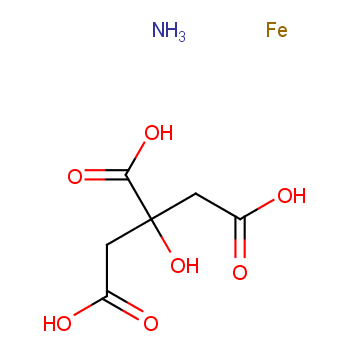
Iron ammonium citrate comprises iron III, Fe3+, and citrate ions, C6H5O73-, complexed together. The ferric ion acts as the core metal ion in this combination, creating numerous coordination bonds with the citrate ligand, and the citrate ions act as a chelating agent. This chelation prevents iron from forming insoluble precipitates or interacting with other compounds that could affect its stability or bioavailability.
The practical consequence of that chelation is solubility. Ferric ammonium citrate is highly soluble in water compared with ferric citrate, which is not readily soluble, and the complex formation between iron III and ammonium citrate enhances the solubility of iron in water. This matters because iron must be dissolved in the acidic environment of the stomach before it can be absorbed into the small intestine.
The compound is a derivative of citric acid chemistry and belongs to the family of iron-citrate complexes. Because the citrate ligand both solubilizes and stabilizes the ferric centre, the material acts as a single ingredient that delivers iron, moderates acidity and resists caking in dry blends.
Explore the iron ammonium citrate technical encyclopedia for additional chemical and application information.
| Parameter | Specification / Description |
|---|---|
| IUPAC name | Azane; 2-hydroxypropane-1,2,3-tricarboxylic acid; iron(3+) |
| Common names | Ferric ammonium citrate, iron ammonium citrate, ammonium ferric citrate |
| Formula | C6H11FeNO7 |
| Molecular weight | 265.00 g/mol |
| CAS number | 1185-57-5 (green form 1333-00-2; brown form 1332-98-5) |
| EC number | 214-686-6 |
| E and INS numbers | E 381; INS 381 |
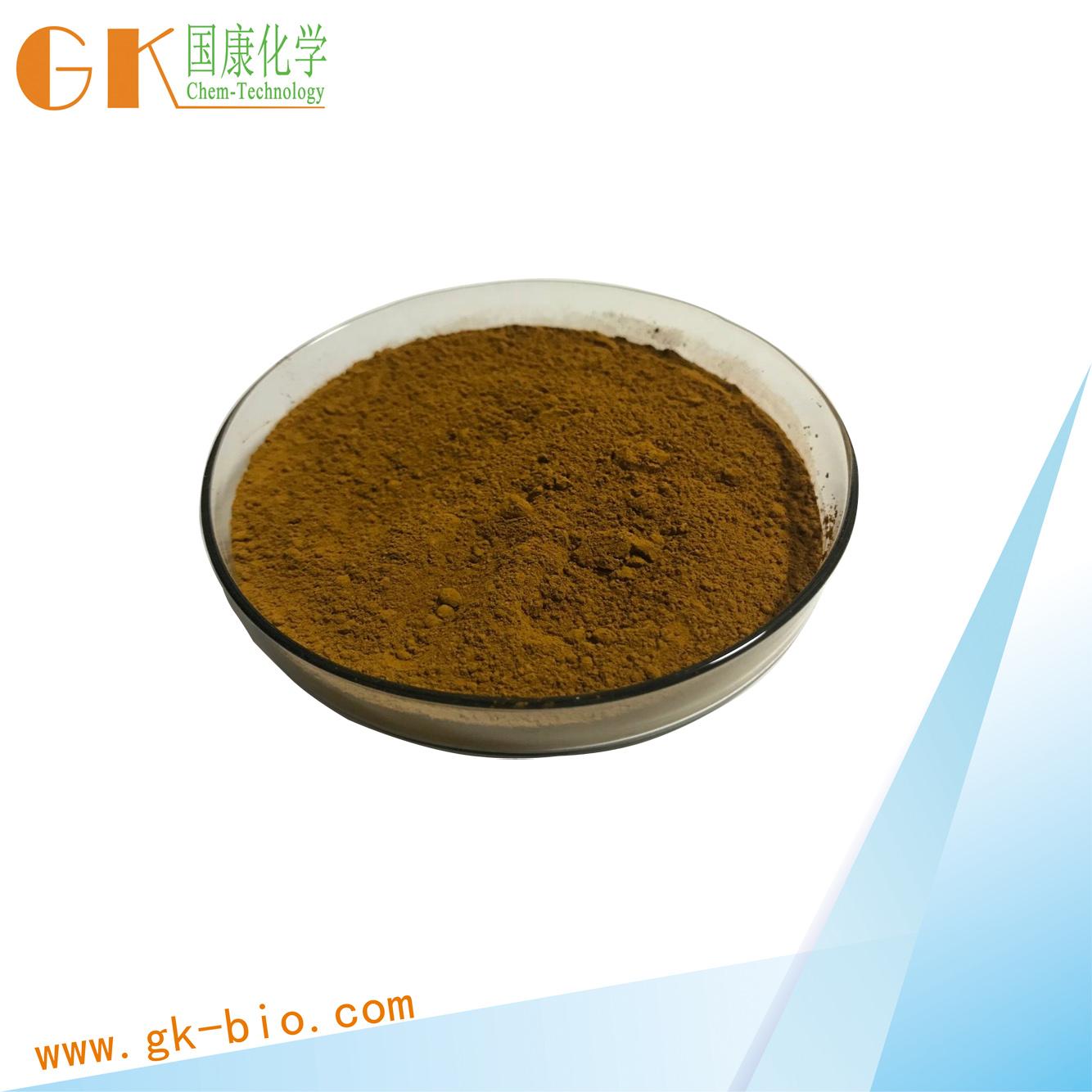
| Appearance | Brown-yellow to brown, or green; powder, granules or crystals |
Iron ammonium citrate works through three linked behaviours: chelation that keeps iron soluble and stable, weak acid behaviour that buffers pH, and the physical separation of particles that prevents caking in dry products. Because these effects come from one molecule, the ingredient can serve several formulation objectives at once.
The citrate ions chelate the ferric ion, creating numerous coordination bonds that prevent iron from forming insoluble precipitates or interacting with other compounds. This stabilization is what makes the iron available for absorption rather than locked into an insoluble phase, and it is why the ammonium-citrate complex performs better in water than plain ferric citrate when dissolved in the acidic environment of the stomach.
Iron ammonium citrate is generally soluble in water, and the resulting solutions contain moderate concentrations of hydrogen ions with pH levels below 7.0. They react as acids to neutralize bases, so the salt serves as an acidity regulator that can moderate pH in a beverage, premix or liquid system without introducing an aggressive acid.
In powdery and granular products, iron ammonium citrate prevents the formation of lumps or clumps, keeping the material free-flowing during storage and handling. Its behaviour in pressed salt illustrates a further benefit: the dry strength of salt containing the iron ammonium citrate complex performs better than that of salt pressed with a conventional anticaking agent, which matters where a product must be pressed into a specific shape.
Ferric ammonium citrate is prepared by reacting ferric hydroxide with citric acid, followed by treatment with ammonium hydroxide, then evaporating and drying. The resulting product occurs in two forms depending on the stoichiometry of the initial reactants, and the form chosen determines the iron content and the physical appearance of the delivered material.
The green hydrated form, iron (III) ammonium citrate with CAS 1333-00-2, is a complex salt composed of 14.5 to 16 percent iron, approximately 7.5 percent ammonia and 75 percent citric acid, occurring as thin transparent green scales, granules, powder or transparent green crystals. The brown hydrated form, CAS 1332-98-5, is a complex salt of undetermined structure composed of 16.5 to 18.5 percent iron, approximately 9 percent ammonia and 65 percent citric acid, and occurs as reddish brown or garnet red scales or granules, or as a brownish-yellow powder. The higher iron content of the brown form makes it the more concentrated choice for fortification.
Iron ammonium citrate belongs to the family of iron-citrate coordination complexes, and its position within that family explains why it is chosen over simpler iron salts. Comparing the forms and the alternatives clarifies the trade-offs a formulator faces.
The green form carries a lower iron load of 14.5 to 16 percent and a higher citric acid content of about 75 percent, while the brown form carries 16.5 to 18.5 percent iron with about 65 percent citric acid. The choice between them is therefore a choice of iron density against citric character and appearance, and it should be made against the target fortification level and the sensory and color constraints of the finished product.
Ferric ammonium citrate is highly soluble in water, whereas ferric citrate is not readily soluble, and the ammonium-citrate complex formation is what enhances the solubility of iron. Since iron must dissolve before it can be absorbed, the more soluble ammonium complex offers a practical advantage in beverages and liquid systems where an insoluble iron salt would settle or fail to deliver.
Ferric salts are not preferred over ferrous salts, because the ferric ion first requires reduction to the ferrous form in the intestinal lumen before absorption can proceed. Ferric ammonium citrate compensates for this by its solubility and favourable complex chemistry, and it has been reported as an efficient oral hematinic comparable to ferrous sulfate.
| Parameter | Green Hydrated Form | Brown Hydrated Form |
|---|---|---|
| CAS number | 1333-00-2 | 1332-98-5 |
| Iron content | 14.5 to 16 percent | 16.5 to 18.5 percent |
| Ammonia content | Approximately 7.5 percent | Approximately 9 percent |
| Citric acid content | About 75 percent | About 65 percent |
| Appearance | Thin transparent green scales, granules, powder or crystals | Reddish brown or garnet red scales or granules, or brownish-yellow powder |
| Key advantage | Higher citric acid content and a lighter color | Higher iron density for concentrated fortification |
| Property | Typical Value / Description |
|---|---|
| Physical form | Powder, granules or crystals |
| Color and odor | Brown-yellow to brown, or green; faint odor of ammonia |
| Molecular weight | 265.00 g/mol |
| Density | About 1.06 g/cc |
| pH | 6 to 8 at 100 g/L in water at 20 degrees C |
| Melting point | Greater than 193 degrees C |
| Solubility at 20 degrees C | About 1,200 g/L in water |
| Stability | Hygroscopic; decomposes via six weight-loss processes forming Fe2O3 |
| Storage | Cool, dry place in a closed container |
| Shelf life | 12 months |
| Function | Typical Product Examples | Key Formulation Objective |
|---|---|---|
| Anticaking agent | Edible salt and salt mixes; powder premixes for bakery, savory and convenience foods | Prevent lump and clump formation while preserving pressing and flow behaviour |
| Acidity regulator | Powder premixes and flavored beverage systems | Provide mild acid buffering through moderate hydrogen ion concentration |
| Iron supplement | Nutraceuticals, supplements and fortified beverages | Deliver bioavailable elemental iron that the body can readily absorb |
| Colorant contributor | Colored soft drinks such as Irn-Bru, which contains 0.002 percent ammonium ferric citrate | Contribute to the characteristic color of certain beverages |
Iron ammonium citrate is used in salt and salt mixes as an anticaking agent, and it can also be added to powder premixes for bakery, savory and convenience foods as an anticaking agent and acidity regulator. It is sometimes used in beverages, and it can serve in nutraceuticals and supplements as a source of iron, making it a genuinely multi-role ingredient rather than a single-purpose additive.
Choose the brown hydrated form where the highest iron density is required and the green form where a higher citric acid content and a lighter color suit the product. Because the two forms differ in iron content from 14.5 to 18.5 percent, the dosing calculation should always be based on the elemental iron contributed rather than on the weight of the salts.
Dose the material against the iron contribution and the applicable tolerable intake rather than against the total additive weight. The WHO expresses the maximum tolerable intake as 0.8 mg/kg body weight expressed as iron, and the GFSA provision for liquid or solid concentrates for water-based flavored drinks is 10 mg/kg, so the level should be set with those limits in view.
Because the material is hygroscopic, protect it from moisture during storage and handling to avoid caking before use. It can interact with bases in solution and is incompatible with strong oxidizing agents, so it should be kept away from alkaline components and oxidizers in both the raw-material store and the finished formula.
In salt and premix applications, exploit the anticaking and acidity-regulating roles together, and in fortified products let the soluble iron complex serve as the iron source. Where the product is pressed into a shape, the improved dry strength delivered by the iron ammonium citrate complex over conventional anticaking agents makes it the more suitable choice.
The formulation below is an illustrative technical example drawn from published sources rather than a universal commercial recipe. Actual ingredient levels must be recalculated against the target performance, iron content and destination-market requirements of each project.
| Component | Illustrative Quantity | Technical Role |
|---|---|---|
| Salt | 250 g/L | Base matrix for the pressed salt product |
| Iron ammonium citrate | 17 g/L | Anticaking complex that improves the dry strength of the pressed salt |
| Sulfuric acid | 45 g/L | Process acid that participates in forming the salt complex |
Conventional anticaking additives prevent caking when the salt is stored but interfere with pressing the salt into a specific shape. The dry strength of the salt containing the iron ammonium citrate complex performs better than that of products pressed using salt with a conventional anticaking agent, illustrating how the same ingredient can satisfy a functional requirement and a processing requirement at once.
Iron ammonium citrate is treated as an established food additive in the major markets, but its use is constrained by the tolerable intake of iron rather than by a chemical restriction on the additive itself. Because permitted uses and limits change by jurisdiction, the compliance path should be confirmed against the current legislation of every intended market.
| Market / Framework | Technical Relevance | Compliance Action |
|---|---|---|
| US FDA | The FDA permits iron ammonium citrate as a food additive for direct addition to food for human consumption, and it is allowed as an anticaking agent in edible salt with a maximum dosage of 25 ppm in the finished product. | Confirm the permitted use and the 25 ppm salt limit for the specific application. |
| JECFA and WHO | JECFA classifies iron ammonium citrate as a food additive for anticaking and nutrient supplement applications, and the maximum tolerable intake is expressed as 0.8 mg/kg body weight, as iron. | Express all nutrient intake calculations on an elemental iron basis. |
| Codex GSFA | The GSFA provision for liquid or solid concentrates for water-based flavored drinks sets a maximum usage level of 10 mg/kg. | Check the GSFA category maximum for each specific food or beverage product. |
| EU additives framework | Ferric ammonium citrate carries E 381 and INS 381 as an established iron-based food additive. | Verify the current additive listing and category conditions for the intended use. |
| GMP and labeling | Good manufacturing practice supports control of moisture, contamination and traceability for a hygroscopic iron salt. | Maintain supplier qualification, batch traceability and validated quality procedures. |
Iron ammonium citrate supplies iron, an element the body needs for hemoglobin production and for enzymes involved in energy transfer, including cytochrome oxidase, xanthine oxidase and succinic dehydrogenase. Ferric ion is also present in compounds necessary for the transfer and use of oxygen, such as hemoglobin and myoglobin.
Absorption is influenced by the form administered, the dose, the iron reserve, the erythroid degree and diet. In one study, healthy subjects absorbed approximately 5 to 10 percent of dietary iron, while iron-deficient subjects absorbed 10 to 30 percent, and dietary iron absorption is performed primarily through enterocyte cells in the duodenum and upper jejunum. Because humans do not have an active iron excretion system, intestinal absorption is critical for maintaining iron balance.
After absorption, ferric iron passes through the lining of the gastrointestinal tract directly into the blood and is immediately linked to carrier proteins, with the beta-1-globulin transporter carrying iron to the bone marrow for incorporation into hemoglobin. Approximately 70 percent of iron is found in hemoglobin, 25 percent in ferritin iron and hemosiderin, 4 percent in myoglobin, 0.5 percent in heme enzymes and 0.1 percent in transporters.
Because intestinal uptake is the main control point and humans cannot actively excrete excess iron, the intake of fortified products must be managed carefully. By supplying iron, iron ammonium citrate can help boost hemoglobin production and prevent or treat iron-deficiency anemia, and ferric ammonium citrate has been reported as an efficient oral hematinic comparable to ferrous sulfate. A separate study found that ferric ammonium citrate inhibited Influenza A virus, HIV, Zika and Enterovirus 71 infections by inducing viral fusion and blocking endosomal viral release, though this antiviral activity is a research finding rather than a basis for food-fortification claims.
| Application Context | Reference Level | Formulation Note |
|---|---|---|
| Anticaking in edible salt | Maximum 25 ppm in the finished product | Dose against the finished salt, not the additive weight. |
| Flavored drink concentrates | 10 mg/kg per the GSFA provision | Account for the color contribution to the beverage base. |
| Nutrient supplement use | 0.8 mg/kg body weight expressed as iron | Calculate from elemental iron across all dietary sources. |
| Elemental iron in the ingredient | 14 to 18 percent iron | Convert additive mass to iron mass before setting the dose. |
| Pressed salt products | Application dependent | Validate dry strength against conventional anticaking agents. |
These use levels are illustrative regulatory references and should not be interpreted as universal legal maximums. Product developers should use the current permitted levels and category limits applicable to the intended market, product category and population.
Iron ammonium citrate is used as an anticaking agent that prevents lumps in powdery or granular foods, as an acidity regulator whose solutions react as acids to neutralize bases, and as a bioavailable source of elemental iron in food fortification and supplements. It is added to edible salt, bakery and savory premixes, and beverages.
Ferric ammonium citrate is highly soluble in water compared with ferric citrate, which is not readily soluble. The complex formation between iron III and ammonium citrate enhances the solubility of iron in water, and solubility matters because iron must dissolve in the acidic environment of the stomach before it can be absorbed in the small intestine.
The green hydrated form, CAS 1333-00-2, contains about 14.5 to 16 percent iron, approximately 7.5 percent ammonia and 75 percent citric acid, and occurs as thin transparent green scales, granules, powder or crystals. The brown hydrated form, CAS 1332-98-5, has undetermined structure, contains 16.5 to 18.5 percent iron, about 9 percent ammonia and 65 percent citric acid, and occurs as reddish brown or garnet red scales or a brownish-yellow powder.
The US FDA permits iron ammonium citrate as a food additive for direct addition to food and allows it as an anticaking agent in edible salt at a maximum of 25 ppm in the finished product. JECFA classifies it as a food additive for anticaking and nutrient supplement uses, and the WHO expresses the maximum tolerable intake as 0.8 mg/kg body weight, expressed as iron. Requirements change by jurisdiction, so the current provisions of each intended market should be verified.
| Identifier | Value | Resource |
|---|---|---|
| CAS number | 1185-57-5 | Chemical dictionary |
| EC number | 214-686-6 | Technical encyclopedia |
| E and INS numbers | E 381; INS 381 | Supply search |
| Supplier / trade search | ferric ammonium citrate | Supplier search |
1. US Food and Drug Administration. Code of Federal Regulations Title 21, Volume 3, Section 184.1296, on ferric ammonium citrate as a direct food additive and anticaking agent in salt.
2. FAO and WHO, JECFA. Food additive specifications and GSFA Online additive details for ferric ammonium citrate.
3. World Health Organization. Guidance on iron intake and the expression of maximum tolerable intake as elemental iron.
4. Sigma Aldrich. Product information sheet for ferric ammonium citrate.
5. ScienceDirect. Topic and reference material on ferric ammonium citrate chemistry and applications.
6. Google Patents. Published pressed salt formulations containing iron ammonium citrate.
7. Peer-reviewed pharmacology and virology literature. Studies on oral hematinic efficacy and on ferric ammonium citrate antiviral activity.
 |
 |
 |
 EN
EN
 Agricultural News
 Food News
 Industrial News
 Cosmetic News
 Pharmaceutical News
 Science News

 1YR
1YR

