-
We detected your language preference as English. Would you like to switch to the English version for a better experience?
Switch to English
Stay here


Oleic acid takes its name from the Latin word oleum, meaning oil, and it is the most abundant monounsaturated fatty acid in nature, making up the greater part of olive oil. In personal care it serves as an emollient, an emulsifier, a moisturizer and a soap-forming fatty acid, and its ability to improve skin penetration gives it a role few other lipids can duplicate.
For product developers, the decisions that matter are not simply whether oleic acid softens skin, but how its degree of unsaturation shapes melting point and oxidation behaviour, how it should be placed in the oil phase during manufacture, and why its comedogenic potential makes it a poor default choice for a facial leave-on. This guide consolidates those considerations into a practical B2B framework.
| Function | Suitable Users | Core Technical Indicators | Compliance Framework |
|---|---|---|---|
| Emollient and moisturizer | Developers of body lotions, creams and cleansers seeking softening and barrier support | Plasticizes and smooths the stratum corneum by filling the voids between corneocytes and replacing lost lipids | CIR has ruled oleic acid safe as used in cosmetics, with typical usage of 1 to 10 percent |
| Emulsifier and co-emulsifier | Formulators building stable oil-in-water and water-in-oil emulsions | Selection drives emulsion stability and influences consistency, viscosity, color, odor and functional properties | GRAS-listed and present in the FDA Inactive Ingredients Database |
| Soap-forming fatty acid | Manufacturers of body wash, soap and foaming cleansers | Reacts with alkalis to form soap; combined with other neutralized fatty acids it produces dense, smooth foam | Included in the Canadian List of Acceptable Non-medicinal Ingredients |
| Penetration enhancer | Brands delivering actives through the skin barrier | Improves a product's skin penetration ability by increasing membrane fluidity | Classified as highly comedogenic; avoid default use in leave-on facial products for acne-prone skin |
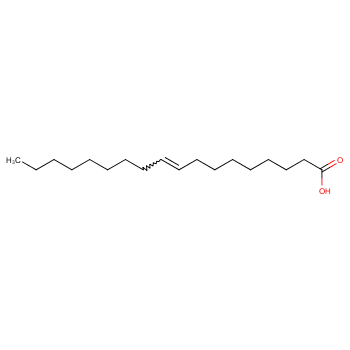
In chemical terms, oleic acid is classified as a monounsaturated omega-9 fatty acid, abbreviated with a lipid number of 18:1 cis-9, and it is a main product of delta-9 desaturase activity. Its formula is CH3-(CH2)7-CH=CH-(CH2)7-COOH, and the salts and esters derived from it are called oleates. It is obtained by the hydrolysis of various animal and vegetable fats and oils.
Biosynthesis of oleic acid involves the enzyme stearoyl-CoA 9-desaturase acting on stearoyl-CoA, so stearic acid is dehydrogenated to give the monounsaturated fatty acid derivative. In biological systems fatty acids and their salts typically do not occur as such; instead they occur in ester forms, and oleic acid is found in fats as triglycerides, in the phospholipids that make membranes, in cholesterol esters and in wax esters.
The abundance of oleic acid in common oils explains both its commercial availability and its natural association with skin care: oleic acid triglycerides make up about 70 percent of olive oil, 59 to 75 percent of pecan oil, 61 percent of canola oil, 36 to 67 percent of peanut oil, 60 percent of macadamia oil, 20 to 80 percent of sunflower oil and 40 percent of sesame oil. It is also abundant in animal fats, constituting 37 to 56 percent of chicken and turkey fat and 44 to 47 percent of lard.
Explore the oleic acid technical encyclopedia for additional chemical and application information.
| Parameter | Specification / Description |
|---|---|
| IUPAC name | (9Z)-Octadec-9-enoic acid |
| Common names | Oleic acid, cis-9-octadecenoic acid, oleic acid 80, oleic acid 90 |
| Formula | C18H34O2 |
| Molecular weight | 282.47 g/mol |
| CAS number | 112-80-1 (also 67701-08-0) |
| EC number | 204-007-1 |
| FEMA number | 2815 |
| Appearance | Colorless to pale yellow oily liquid; lard-like odor |
Oleic acid acts through the physical and biological properties of its unsaturated C18 chain. Because the single cis double bond disrupts packing of the alkyl chains, the molecule is fluid at room temperature and readily integrates into lipid membranes, and that fluidity underlies both its emollient character and its penetration-enhancing behaviour.
Essential fatty acids including oleic acid influence skin physiology through their effects on skin barrier function, membrane fluidity and cell signaling. Emollients are designed to plasticize, soften and smooth the skin, usually by filling the void between the corneocytes and replacing the lipids lost from the stratum corneum, and they can also provide protection and lubrication on the skin surface to minimize chafing and enhance aesthetic smoothness and softness.
Emulsifiers are a core component of most personal care products because most moisturizing, nourishing and protective formulations are emulsions, and emulsifier selection is crucial for emulsion stability and strongly affects consistency, viscosity, color, odor and functional properties. Oleic acid is commonly used as an emulsifier alongside other co-emulsifiers, and it can also improve a product's skin penetration ability, an effect that is useful when an active must reach beyond the surface.
Oleic acid reacts with alkalis to form soap, and in cleansing products a combination of other neutralized fatty acids with oleic acid produces a dense, smooth foam that leaves the skin feeling moisturized, luxurious and clean. Combining oleic acid with other lipids further boosts its skin-calming ability, making it helpful in reducing signs of dryness and sensitivity when used in that capacity.
Commercial oleic acid is obtained by the hydrolysis of various animal and vegetable fats and oils, a process that splits triglycerides into fatty acids and glycerol. The crude fatty acid mixture is then separated, typically by fractional crystallization or distillation, to enrich the oleic fraction and to remove the saturated stearic and palmitic components that would otherwise raise the melting point of the final material.
At the level of the plant or the animal, the same molecule is generated biologically when stearoyl-CoA 9-desaturase dehydrogenates stearoyl-CoA, and this enzymatic step links the saturated fatty acids to their monounsaturated counterparts in all living systems. Product grades are commonly specified by oleic content, such as oleic acid 80 and oleic acid 90, and the choice of grade sets the balance of fluidity, color and oxidative stability that the formulator must work with.
Oleic acid belongs to the family of monounsaturated fatty acids, and its closest commercial relative is stearic acid, the saturated C18 acid from which it is biochemically derived. Because the two share a carbon skeleton but differ in degree of unsaturation, comparing them makes the structure-function relationship especially clear.
Stearic acid is fully saturated and solid at room temperature, so it is used to build structure, hardness and body in sticks, creams and soaps. Oleic acid carries a cis double bond that lowers its melting point to 13 to 14 degrees C and keeps it liquid, so it contributes fluidity, spreadability and penetration rather than structure. A formulator choosing between them is really choosing between hardness and fluidity.
The salts and esters of oleic acid are collectively called oleates, and these derivatives extend the molecule into emulsifiers and emollient esters with distinct sensory profiles. Because the parent acid is defined by its unsaturation, the derivatives inherit that fluidity, which is why oleate esters are often selected where a light, spreading feel is wanted.
Commercial oleic acid is fractionated into grades such as oleic acid 80 and oleic acid 90, distinguished by the proportion of the monounsaturated fraction. Higher-purity grades offer greater fluidity and more predictable behaviour, while lower grades contain more saturated and polyunsaturated material that can raise the melting range or accelerate oxidation.
| Parameter | Oleic Acid | Stearic Acid |
|---|---|---|
| Saturation | Monounsaturated, one cis double bond at carbon 9 | Fully saturated, no double bonds |
| Physical form at 25 degrees C | Oily liquid above 5 to 7 degrees C | Solid waxy material |
| Melting point | 13 to 14 degrees C | About 69 degrees C |
| Primary cosmetic role | Emollient, emulsifier, moisturizer, penetration enhancer | Structure, hardness, consistency builder |
| Oxidative stability | Prone to oxidation on air exposure; darkens and develops odor | Relatively stable toward oxidation |
| Skin compatibility note | Classified as highly comedogenic | Generally considered less comedogenic |
| Property | Typical Value / Description |
|---|---|
| Appearance at 25 degrees C | Colorless to pale yellow oily liquid above 5 to 7 degrees C |
| Molecular weight | 282.47 g/mol |
| Density at 25 degrees C | 0.895 g/mL; specific gravity 0.892 at 20/4 degrees C |
| Solubility | Water insoluble; soluble in ethanol |
| Saponification and acid value | Saponification value 196 to 206; acid value 198 to 207 |
| Stability | Stable but combustible; incompatible with strong oxidizing agents and aluminum |
| Storage | Store in a well-filled, well-closed container protected from light in a cool, dry place near -20 degrees C |
| Shelf life | 12 to 18 months |
| Category | Typical Product Examples | Key Formulation Objective |
|---|---|---|
| Skin care | Face creams, body lotions, soaps and body butters | Deliver emolliency, softening and barrier support |
| Hair care | Conditioners, nourishing hair masks, serums and shampoos | Improve lubrication, conditioning and manageability |
| Color cosmetics | Lipsticks, lip balm, foundation, eye shadow and mascara | Provide slip, pigment dispersion and a soft pay-off |
| Bath and body | Soap, moisturizing body wash and foaming body cleansers | Form dense, smooth foam with a moisturized after-feel |
| Baby care | Baby oils, lotions, creams and mild baby shampoo | Soften and protect delicate skin with mild chemistry |
| Skin cleansers | Make-up remover and micellar skin cleansers | Dissolve makeup and oil while conditioning the skin |
Always add oleic acid in the oil phase of manufacture, where its compatibility with mineral oils, fats and other plant-derived oils allows it to blend cleanly before emulsification. Adding it to the water phase or after emulsification risks uneven distribution and a loss of the intended emollient and emulsifying effect.
The pH range to be considered when formulating with oleic acid is 8 to 9, and this target follows from the role the molecule plays in neutralization and soap formation. Where oleic acid is used as part of a cleansing system, the alkali level should be set to neutralize the fatty acid fraction fully and to reach the intended pH for skin compatibility.
Because oleic acid is classified as highly comedogenic, its use should be matched to the product type. It is well suited to rinse-off cleansers, body products and treatments, but for leave-on facial products marketed to acne-prone consumers the formulator should either reduce the level or substitute a less comedogenic lipid.
Oleic acid gradually absorbs oxygen on air exposure, darkens and develops a more pronounced odor, and it decomposes at 80 to 100 degrees C under atmospheric pressure. Protect the material and the finished product from light and air, keep the container well filled and well closed, and avoid prolonged high-temperature processing to preserve color and odor.
The formulation below is an illustrative technical example drawn from published sources rather than a universal commercial recipe. Actual ingredient levels must be recalculated against the target texture, performance and destination-market requirements of each project.
| Phase | Component | Illustrative Quantity | Technical Role |
|---|---|---|---|
| A | Propylene glycol, lauric, myristic, palmitic and oleic acids | 22.00 percent | Fatty acid blend for soap formation and foam structure |
| A | Oleic acid | 1.00 percent | Contributes fluidity and dense foam to the cleansing base |
| B | Potassium hydroxide dissolved in deionized water | 3.50 percent | Neutralizes the fatty acids to form soap |
| C | Cocamide DEA, sodium laureth sulfate, cocamidopropyl betaine, glycol distearate | 16.00 percent | Surfactant system, foam booster and pearlizing agent |
| D | Water, tetrasodium EDTA and acrylates copolymer | 28.01 percent | Rheology modifier, chelant and dispersion medium |
| E | Hydrolyzed jojoba esters and potassium hydroxide | 7.89 percent | Conditioning agent and secondary neutralizer |
| F | Fragrance and deionized water to 100 percent | q.s. to 100 percent | Fragrance and batch weight adjustment |
The procedure heats the propylene glycol and Phase A ingredients to 65 to 70 degrees C with stirring until fully dissolved, then dissolves the potassium hydroxide in its water and adds it slowly at 70 to 75 degrees C to neutralize the fatty acids. Phase C is added at 60 to 65 degrees C, a premixed Phase D is dispersed into the batch to develop the polymer, and Phase E is used to condition the system and complete the neutralization. The fragrance is added at 60 to 65 degrees C, the batch is adjusted to 100 percent theoretical weight and cooled to room temperature, and the pH and viscosity are determined before release.
Oleic acid is widely accepted across the major markets, and its regulatory profile is mature rather than restrictive. Because permitted uses and labelling provisions change by jurisdiction, the compliance path should nevertheless be confirmed against the current legislation of every intended sales market.
| Market / Framework | Technical Relevance | Compliance Action |
|---|---|---|
| US FDA | Oleic acid is GRAS-listed and appears in the FDA Inactive Ingredients Database for inhalation and nasal aerosols, tablets, and topical and transdermal preparations. | Confirm the permitted use and level for the specific dosage form or preparation. |
| Canada | Oleic acid is included in the Canadian List of Acceptable Non-medicinal Ingredients. | Verify the current listing and any conditions for the intended product class. |
| United Kingdom and EU | Oleic acid is included in nonparenteral medicines licensed in the UK, such as metered dose inhalers, oral capsules, prolonged release granules, and topical creams and gels. | Check the current medicinal and cosmetic ingredient provisions for each market. |
| CIR Expert Panel | The independent Cosmetic Ingredient Review panel has ruled oleic acid safe as used in cosmetics, where typical usage ranges from 1 to 10 percent. | Use the CIR conclusion as risk-assessment input alongside each market's legal framework. |
| ISO 22716 / GMP | Cosmetic good manufacturing practice supports control of oxidation, odor and traceability for an oxidation-sensitive raw material. | Maintain supplier qualification, batch traceability and validated quality procedures. |
Oleic acid has been judged safe for use in cosmetics by the Cosmetic Ingredient Review panel at typical usage of 1 to 10 percent, and it is GRAS-listed as well as being an established inactive ingredient in pharmaceutical preparations. That favourable standing reflects a long history of use rather than an absence of effects, and the effects that do occur are primarily local and dose-related.
Slight to moderate skin irritation has been observed with the use of oleic acid, and it may cause slight skin edema with long-term use. The more consequential finding for product design is its comedogenic potential: a significant increase in lipid peroxide level was observed after 18 hours of UVA irradiation, and the lipid peroxide concentration is positively correlated with the degree of comedo formation, for which reason oleic acid is classified as highly comedogenic.
No evidence of mutagenicity and carcinogenicity has been reported for oleic acid, which places it in a favourable category for systemic endpoints. The practical conclusion is that the formulation risk is dominated by oxidative degradation on storage and by local comedogenicity, so shelf-life protection and product-type selection matter more than systemic toxicology in most cosmetic applications.
| Product Type | CIR Ideal Composition | Formulation Note |
|---|---|---|
| Face, body and hand skin care | 1 to 10 percent | Balance emolliency against comedogenicity for the intended user. |
| Baby oils and lotions | 1 to 5 percent | Keep levels modest and use mild, well-purified grades. |
| Hair masks and conditioners | 10 to 25 percent | Higher loading suits rinse-off conditioning systems. |
| Shampoos | 8 to 15 percent | Contributes conditioning and foam quality in rinse-off use. |
| Lipsticks and bath oils | 5 to 10 percent | Provides slip and emolliency in anhydrous or oil-rich systems. |
| Aftershave lotions and creams | 0.1 to 1 percent | Low additions reduce the risk of irritation on freshly shaved skin. |
These use levels are illustrative formulation references and should not be interpreted as universal legal maximums. Product developers should use the current permitted levels and regulatory limits applicable to the intended market, product category and population.
Oleic acid is used as an emollient that softens and smooths skin, as an emulsifier and co-emulsifier in emulsions, as a moisturizer with skin-calming properties, and as a fatty acid that reacts with alkalis to form soap. It also improves the penetration of other ingredients and contributes a dense, smooth foam to cleansing products.
Oleic acid is classified as highly comedogenic. A significant increase in lipid peroxide level was observed after 18 hours of UVA irradiation, and the lipid peroxide concentration is positively correlated with the degree of comedo formation. This makes it less suitable for leave-on facial products intended for acne-prone skin, where a less comedogenic lipid is usually preferred.
Oleic acid is a monounsaturated omega-9 fatty acid with a carbon-carbon double bond, giving it a lower melting point and an oily liquid form, whereas stearic acid is a saturated fatty acid that is solid at room temperature. This difference means oleic acid contributes fluidity, penetration and emolliency, while stearic acid contributes structure and hardness.
The Cosmetic Ingredient Review panel has ruled oleic acid safe as used in cosmetics, where typical usage ranges from 1 to 10 percent. It is GRAS-listed and appears in the FDA Inactive Ingredients Database, is included in the Canadian List of Acceptable Non-medicinal Ingredients, and appears in nonparenteral medicines licensed in the UK. Requirements change by jurisdiction, so the current provisions of each intended market should be verified.
| Identifier | Value | Resource |
|---|---|---|
| CAS number | 112-80-1 | Chemical dictionary |
| EC number | 204-007-1 | Technical encyclopedia |
| FEMA number | 2815 | Supply search |
| Supplier / trade search | oleic acid 90 | Supplier search |
1. Cosmetic Ingredient Review. Safety assessment of oleic acid as used in cosmetics, including reported use levels by product category.
2. US Food and Drug Administration. GRAS listing and the Inactive Ingredients Database entries for oleic acid.
3. Health Canada. List of Acceptable Non-medicinal Ingredients, including oleic acid.
4. European Chemicals Agency. Substance information and identification data for oleic acid.
5. ChemicalBook. Identification and property data for oleic acid and its derivatives.
6. Journal of Lipid Research and related literature. Studies on stearoyl-CoA 9-desaturase and the biosynthesis of oleic acid.
7. Published formulation literature. Example body wash and cleansing formulations containing oleic acid.
 |
 |
 |
 |
 |
 EN
EN
 Agricultural News
 Food News
 Industrial News
 Cosmetic News
 Pharmaceutical News
 Science News

 1YR
1YR


