We detected your language preference as English. Would you like to switch to the
English
version for a better experience?
Switch to English
Stay here
EN
En
Es
JP
Category
Encyclopedia
Dictionary
Database & Tools
CN Chemical Plant Database
CN Chemical Capacity Database
Cosmetic ingredients
Supplier
GuideTrends
GuideView
News
Industry News
Agricultural News
Food News
Industrial News
Cosmetic News
Pharmaceutical News
Science News
Exhibition News
Chemical Policy
Articles
Trends
Application
Research
Property
History
Trades
HOT RFQ
Featured Suppliers
TradeShow
FAQ
Structure Search
About Us
News
Industry News
Exhibition News
Chemical Policy
Articles
Trends
Application
Research
Property
History
Trades
HOT RFQ
Featured Suppliers
FAQ
Visit Guidechem
EN
En
Es
JP
Guideview
>
Articles
> Cosmetic
Cosmetic
Explore Guideview's Cosmetic articles! Stay updated with the latest news, policies, and scientific insights relevant to the cosmetic industry.
HOT Topics
Comparison
Castor oil
Application
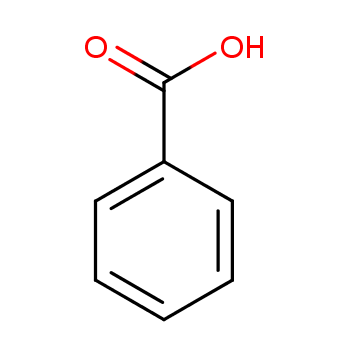
Benzoic Acid in Personal Care: A Technical Guide for Formulation Chemists
Benzoic Acid
Benzoic acid works as a preservative mainly in its undissociated form, so its efficacy is tightly linked to product pH. It is most active in acidic systems and loses potency as pH rises.
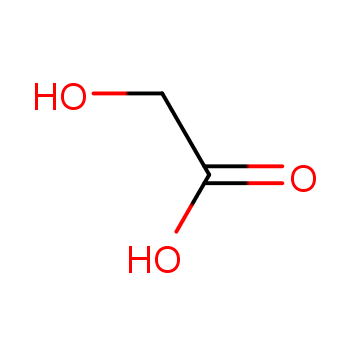
Glycolic Acid: Technical Guide to the Smallest Alpha Hydroxy Acid in Personal Care Formulation
Glycolic Acid
Glycolic acid (CAS 79-14-1, C2H4O3, 76.05 g/mol) is the smallest alpha hydroxy acid and the most skin-penetrating of the family. It is a colourless, odourless, hygroscopic crystalline solid that is highly soluble in water.
Butylphenyl Methylpropional in Cosmetics & Personal Care: Technical Guide to Function, Status, Reformulation and Regulatory Compliance
Butylphenyl Methylpropional
Alpha-Tocopherol Stabilizer
Butylphenyl methylpropional is a synthetic floral fragrance aldehyde with molecular formula C14H20O, molecular weight 204.31 g/mol and CAS 80-54-6. It is a CMR category 1B substance, now prohibited in EU and UK cosmetics.
Polyols (Sugar Alcohols) in Personal Care Products: Technical Guide to Function, Formulation, Stability and Regulatory Compliance
Polyols (Sugar Alcohols)
Glycerol
Sorbitol
Erythritol
Polyols are hydrogenated carbohydrates whose multiple hydroxyl groups give them strong water-binding and humectant behaviour. In personal care their principal value is dual functionality.
Alpha-Tocopherol in Cosmetics and Personal Care: Technical Guide to Function, Formulation, Stability and Regulatory Compliance
Alpha-Tocopherol
Gamma-Tocopherol
Butylated Hydroxytoluene
BHT
Alpha-tocopherol is the most potent naturally occurring scavenger of reactive oxygen and nitrogen species, with molecular formula C29H50O2, molecular weight 430.71 g/mol and CAS 59-02-9.
Benzalkonium Chloride: Technical Guide to the Quaternary Ammonium Preservative in Cosmetic and Personal Care Formulation
Benzalkonium Chloride
Benzalkonium chloride (CAS 8001-54-5) is a quaternary ammonium compound supplied as a mixture of alkyl dimethyl benzyl ammonium chlorides. It functions as a cationic surfactant.
Ethanolamine in Personal Care Products: Technical Guide to Function, Formulation, Safety and Regulatory Compliance
Ethanolamine
Ethanolamine is a bifunctional amino alcohol with molecular formula C2H7NO, molecular weight 61.08 g/mol and CAS 141-43-5. For personal care formulation, its principal value is the ability to act as a proton donor or acceptor for pH regulation.
Oleic Acid in Cosmetic & Personal Care Products: Technical Guide to Function, Formulation and Regulatory Compliance
Oleic Acid
Oleic acid of formula CH3-(CH2)7-CH=CH-(CH2)7-COOH, molecular weight 282.47 g/mol and CAS 112-80-1, is a monounsaturated omega-9 fatty acid with a lipid number of 18:1 cis-9 and a melting point of 13 to 14 degrees C.
Hydroxyapatite: Technical Guide to the Biocompatible Calcium Phosphate in Oral Care and Cosmetic Formulation
Hydroxyapatite
Hydroxyapatite (CAS 1306-06-5, Ca5(PO4)3(OH), 502.31 g/mol) is the hydroxyl end member of the apatite group and the main inorganic constituent of human bone and teeth.
Rosemary Extract in Cosmetics and Personal Care: A Technical Guide for Formulation Chemists
Rosemary Extract
Rosemary extract delivers its antioxidant protection chiefly through the phenolic diterpenes carnosic acid and carnosol, which scavenge free radicals and interrupt oxidative chain reactions.
< Pre
1
...
5
6
7
8
9
10
11
...
16
Next >
Articles Archives
Hot Articles
Castor oil vs Jamaican black castor oil: Key Differences & Buyer Guide
Glycol vs Glycerin: What B2B Buyers Should Compare Checklist
Jamaican black castor oil vs Castor oil: Key Differences & Buyer Guide
Aluminum chlorohydrate vs Aluminum zirconium: Key Differences & Buyer Guide
Jbco vs Castor oil: What B2B Buyers Should Compare Checklist
Aluminium chlorohydrate vs Aluminium zirconium: Key Differences & Buyer Guide
Acetone vs Non acetone nail polish remover: Key Differences & Buyer Guide
Black castor oil vs Black seed oil: Complete Comparison & Procurement Guide
Related Exhibition
All Categories
Agri & Industry
Food
History
Laboratory
Pharmaceutical





 EN
 Agricultural News
 Food News
 Industrial News
 Cosmetic News
 Pharmaceutical News
 Science News

