-
We detected your language preference as English. Would you like to switch to the English version for a better experience?
Switch to English
Stay here


Glycolic acid, a hydroxyacetic acid, is an alpha hydroxy acid with a small molecular size. Alpha hydroxy acids are a group of organic acids found in natural foods, such as sugarcane for glycolic acid, milk for lactic acid, apples for malic acid, citrus fruits for citric and ascorbic acid, and grapes for tartaric acid. Derived predominantly from sugarcane, glycolic acid has been embraced by the personal care industry owing to its various applications and has been adopted in many daily skin care routines.
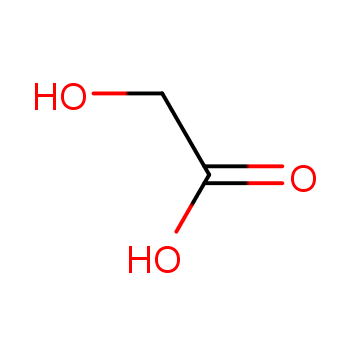
For product developers, the key technical questions are not simply whether glycolic acid exfoliates, but how its molecular size, pH-dependent bioavailability, neutralisation behaviour and UV-sensitivity warnings interact with the vehicle and the regulatory limits for the intended category. This guide consolidates those considerations into a practical B2B formulation framework.
| Parameter | Value | Technical Relevance |
|---|---|---|
| Chemical name | Glycolic acid (hydroxyacetic acid; hydroxyethanoic acid) | The simplest alpha hydroxy acid, with only two carbons. |
| Formula | C2H4O3 (H2OCH2CO2H) | Explains the small molecular size and the high water solubility. |
| Molecular weight | 76.05 g/mol | The lowest in the AHA family, which drives its penetration advantage. |
| CAS number | 79-14-1 | Unique identifier for the material; must match the substance ordered. |
| EC number | 201-180-5 | Regulatory identifier in the EU for registration and labelling. |
| Typical use level | 2% to 70% in lotions, creams and gels | Concentration determines whether the product is consumer or professional use. |
Among the alpha hydroxy acid family, the different acids differ in the length of their molecules, and glycolic acid is the smallest one because it contains only two carbons. This structure makes glycolic acid particularly easy to handle for dermatological applications since it can seep through the skin layers. Glycolic acid is a type of alpha hydroxy acid, and alpha hydroxy acids are natural acids found in foods. It is a colourless, odourless and hygroscopic crystalline solid that is highly soluble in water.
Being the smallest AHA, glycolic acid can penetrate the skin more effectively than other AHAs. Because of the presence of a hydroxyl group, its polar molecular structure and small molecular size enable it to seep into the skin, making it a powerful ingredient in skin care products. It is highly soluble in water and maintains a relatively low pH, a factor that significantly contributes to its exfoliating properties.
Its relation to the wider acid family is useful context. Glycolic acid and salicylic acid are two popular skincare ingredients for acne treatment, but salicylic acid is a beta hydroxy acid, naturally found in willow bark and wintergreen leaves, while glycolic acid is an alpha hydroxy acid found naturally in sugarcane. Both can be made artificially as well.
For further chemical and commercial background, the technical encyclopedia entry provides additional context on nomenclature, synonyms and suppliers.
| Identifier | Value |
|---|---|
| Chemical name | Glycolic acid (hydroxyacetic acid) |
| Molecular formula | C2H4O3 |
| Molecular weight | 76.05 g/mol |
| CAS number | 79-14-1 |
| EC number | 201-180-5 |
| Acid class | Alpha hydroxy acid (AHA) |
Glycolic acid is not merely an acidic additive; its function depends on penetration, pH and biological response, and the mechanisms below explain why the smallest AHA behaves so differently from a keratolytic scrub.
Glycolic acid promotes skin cell turnover by breaking down the substances that bind older, dull cells at the skin's surface, revealing younger, brighter cells underneath, and this process lends the skin a more vibrant, rejuvenated appearance and smoothens its texture. Low concentrations produce diminished corneocyte cohesion and subsequent prevention of stratum corneum thickening, and crucially glycolic acid does not cause disaggregation of the corneocytes of the mature upper levels of the stratum corneum as keratolytic agents do, but instead exerts its influence at the lower, newly forming levels.
Glycolic acid promotes collagen synthesis and is therefore instrumental in mitigating signs of ageing such as fine lines and wrinkles, and its humectant properties attract moisture, providing hydration and enhancing the skin's elasticity. The wrinkle reduction observed clinically is likely due to the increased biosynthesis of dermal glycosaminoglycans and new collagen formation in the papillary dermis rather than to surface exfoliation alone.
For acne, glycolic acid decreases inflammation and protects against ultraviolet B radiation, and it also works against the bacteria that cause acne breakouts, complementing salicylic acid, which removes excess sebum and reduces sebum production to unclog pores. For pigmentation, glycolic acid removes and exfoliates the darkest skin cells to reveal a fresh, more even skin tone underneath, and it has also been shown to diminish corneocyte adhesion at the lower levels of the stratum corneum and to cause epidermolysis.
Glycolic acid is derived predominantly from sugarcane, which is why it sits naturally within the alpha hydroxy acid group alongside lactic acid from milk, malic acid from apples, citric and ascorbic acid from citrus fruits and tartaric acid from grapes. The same substance can also be produced by artificial synthesis, so a developer should distinguish between the natural-source narrative used for marketing and the actual chemical identity of the material supplied.
For buyers, the qualification points centre on assay content, the concentration of the aqueous solution supplied, the residual by-products of synthesis and the pH of the raw material as delivered. Because the material is often traded as a 70% solution rather than as the crystalline solid, the specification must state the basis of the assay so that the formulator can convert the delivered quantity into an active concentration.
From a formulation perspective, glycolic acid is best understood as a member of the alpha hydroxy acid family, alongside the other fruit acids, rather than as a standalone exfoliant. Its closest relatives behave similarly in formulation, so a developer should recognise them as a group.
Glycolic acid is a type of alpha hydroxy acid, and alpha hydroxy acids are natural acids found in foods. The family includes lactic acid, malic acid, citric acid, ascorbic acid and tartaric acid, and the members differ mainly in molecular size and chain length, which is exactly what determines penetration and the choice of acid for a given skin concern.
Salicylic acid is a beta hydroxy acid, naturally found in willow bark and wintergreen leaves, and like glycolic acid it has an exfoliating effect on the skin. It can remove excess sebum and reduce sebum production, which makes it an excellent ingredient for unclogging pores, but it is oil soluble rather than water soluble, and the two classes are often blended rather than substituted.
Mandelic acid is an aromatic alpha hydroxy acid frequently blended with glycolic acid to obtain a gentler overall exfoliation, and it appears alongside lactic acid in illustrative formulations. Because the members differ in molecular size, blending them allows a formulator to tune both the depth of penetration and the irritancy of the finished product.
| Parameter | Glycolic Acid | Lactic Acid | Salicylic Acid |
|---|---|---|---|
| Acid class | Alpha hydroxy acid | Alpha hydroxy acid | Beta hydroxy acid |
| Molecular weight | 76.05 g/mol (smallest) | Larger than glycolic | 138.12 g/mol |
| Natural source | Sugarcane | Milk | Willow bark, wintergreen |
| Solubility character | Highly water soluble | Water soluble | Oil soluble |
| Primary function | Exfoliation, collagen, pigmentation | Gentle exfoliation, hydration | Sebum removal, pore unclogging |
| Penetration | Fastest of the AHAs | Slower than glycolic | Pore-focused |
| Key concern | Low pH and sun sensitivity | Lower irritancy than glycolic | Not for those salicylate sensitive |
| Main categories | Serums, creams, toners | Lotions, peel blends | Acne treatments |
| Property | Value |
|---|---|
| Appearance at 25 °C | White powder or colourless crystals |
| Molecular weight | 76.05 g/mol |
| Density at 18 °C | 1.49 g/cm3 |
| Solubility | Soluble in water; soluble in alcohols, acetone, acetic acid and ethyl acetate |
| Melting point | 75–80 °C |
| Boiling point | 112 °C |
| Refractive index | 1.424 |
| Odour | Odourless, very mild buttery |
| pH | 2 |
| Shelf life | 12–18 months |
| Stability | Stable; incompatible with bases, oxidising agents and reducing agents |
| Function | Applications |
|---|---|
| Anti-acne | Low concentrations produce diminished corneocyte cohesion and prevent stratum corneum thickening, and a 70% solution applied weekly for several months effectively reduces wrinkles, likely through increased dermal glycosaminoglycan biosynthesis and new collagen formation. |
| Ageing and photoageing | Glycolic acid is used in skin resurfacing treatments, chemically exfoliating by dissolving dead skin cells and oils, helping boost collagen production and supporting skin moisture while removing the top layer of cells without scrubbing. |
| Chemical exfoliant | As a chemical exfoliant it removes the very top layer of skin cells without the irritation that physical scrubbing can cause, and its effect depends on the time the agent is left on the skin and its concentration. |
| Reduced age spots and pigmentation | Removal of age spots can be achieved with repeated high concentrations or with lower formulations applied daily for long periods, and glycolic acid mixed with 2% hydroquinone can benefit patients with less irritation. |
| Dermatological therapy | Several patients with plaque psoriasis have been treated with 70% solutions with excellent results, and ichthyosis, hyperkeratosis palmaris and plantaris, keratosis pilaris and warts can benefit from glycolic acid as alternative or adjuvant therapy. |
Product examples in skin care include skin serums, brightening creams, anti-ageing creams, lotions, anti-acne creams, anti-spot formulations and exfoliating toning solutions. Glycolic acid is beneficial in the treatment of a variety of hyperproliferative diseases and skin conditions, and its versatility makes it popular across formats from cleansers and toners to serums and brightening creams.
Unless particularly stated by suppliers, glycolic acid requires a low pH, around 3.5, to be bioavailable and effective, and the optimal pH range for the final product is about 3.5 to 5.0. Separate considerations apply when formulating at a high acid input, where the final pH may sit around 4.5 or even 5, and the developer must accept that the neutralised fraction contributes little to efficacy.
Because partially neutralised acid may not be present in active form at all, any preservatives, gums, emulsifiers or even surfactants intended for the formula must be compatible with the low pH required to ensure their effectiveness. Even though the formulas have a low pH, a preservative is still needed any time the pH exceeds 3, so the preservation system must be selected for the acid environment rather than for a neutral one.
In an emulsion format the acid blend is added after emulsification and cooling so that the low pH does not destabilise the interface. After adding glycolic acid some over-the-counter products separate due to the low pH and need to be stabilised, so the emulsifier and rheology modifier should be chosen with acid tolerance in mind.
The final product must be tested for safe pH due to its acidity for peels, creams, lotions, masks and cleansers, and the optimal range of 3.5 to 5.0 should be verified on the finished product rather than predicted from the formula. Glycolic acid can boost the performance of a personal care regime, but the formulas need careful checks to ensure safety, stability and efficacy.
The formulation below is an illustrative example of an AHA exfoliator cream, a beige viscous cream with a pH ranging from 2 to 5, that uses glycolic acid alongside lactic and mandelic acids. It is reproduced from published cosmetic reference data for illustration only and is not a recommended commercial formula.
| Phase | INCI Name | % Wt. |
|---|---|---|
| A | Deionized Water | 76.900 |
| A | Disodium EDTA | 0.100 |
| A | Glycerin | 2.00 |
| A | Xanthan Gum (and) Lecithin (and) Sclerotium Gum (and) Carrageenan (and) Silica | 2.00 |
| B | Glyceryl Stearate (and) Palmitic Acid (and) Cetyl Alcohol (and) Sodium Cocoyl Glutamate (and) Cetyl Palmitate (and) Hydrogenated Lecithin (and) Stearic Acid | 1.50 |
| B | Glyceryl Stearate Citrate (and) Polyglyceryl-3 Stearate (and) Shea Butter (and) Hydrogenated Lecithin (and) Xanthan Gum | 3.50 |
| B | Caprylic/Capric Triglyceride | 3.00 |
| B | Butyrospermum Parkii Butter | 2.00 |
| C | Glycolic Acid | 4.00 |
| D | Lactic Acid | 2.00 |
| E | Mandelic Acid | 2.00 |
| F | Phenoxyethanol (and) Ethylhexylglycerin | 1.00 |
| Total | — | 100 |
The illustrated procedure mixes phase A until the product is homogeneous, heats phases A and B separately up to 75 °C, emulsifies by adding phase B into phase A with strong mixing, cools down, and then adds the remaining ingredients individually with mixing after each addition.
Regulatory treatment of glycolic acid varies by jurisdiction and by concentration, so a statement that a material is cosmetic grade does not by itself establish compliance in every destination market. The concentration, the final pH and the destination should each be checked explicitly.
| Market / Framework | Technical Relevance | Compliance Action |
|---|---|---|
| United States FDA | Glycolic acid is GRAS accepted and FDA approved, and the agency has issued guidance for industry on the labelling of cosmetics containing alpha hydroxy acids. | Follow the AHA labelling guidance, including sun-protection directions and eye-contact warnings. |
| EU SCCNFP / SCCP | The SCCNFP adopted a position paper on the safety of AHA based on short-term phototoxicity and skin irritation studies. It considered that more information was needed for a full assessment but suggested, on the precautionary principle, that glycolic acid may be used safely at up to 4% and a pH of 3.8 or above, with warnings to avoid eye contact and to protect against UV. | Respect the 4% and pH 3.8 precautionary values where applicable and apply the warning statements. |
| Cosmetic Ingredient Review | The CIR Expert Panel concluded that products containing AHAs are safe for consumers if the AHA concentration is 10% or less, the final product pH is 3.5 or greater, and the product protects the skin from increased sun sensitivity or its directions tell consumers to use daily sun protection. | Satisfy all three conditions and document the pH and concentration on the finished product. |
| ASEAN and other Asian markets | According to ASEAN safety guidelines, products with a concentration lower than 10% can be used by consumers, products between 10% and 20% should only be used by a professional such as an aesthetician, and concentrations above 20% can only be used as a treatment by a qualified medical practitioner such as a dermatologist. | Match the concentration to the permitted user group and label accordingly. |
| REACH | The substance carries EC number 201-180-5, and industrial supply is subject to REACH registration and safety data sheet obligations for the relevant tonnage band. | Confirm the registration status and obtain a compliant safety data sheet. |
| ISO / HACCP | Manufacturing is normally managed under a documented quality and safety management system with controlled microbiological and heavy-metal limits. | Require the supplier's quality certification and specification of impurity limits. |
Common side effects of glycolic acid include dry skin, erythema, a burning sensation, itching, skin irritation and skin rash, so a patch test is always recommended before using glycolic acid actively. For sensitive skin it is advisable to use lower concentrations less frequently and to patch test first, and because it can make the skin more sensitive to sunlight, consumers should use sunscreen and protective clothing before going outdoors.
On barrier function, some concern had been expressed that removing dead surface cells might adversely affect the barrier function of the stratum corneum and increase transepidermal water loss. However, data provided to the SCCNFP demonstrated no compromise in the skin barrier after either short or longer-term AHA application as measured by transepidermal water loss, and in all cases it was shown that AHA does not compromise the integrity of the skin barrier.
Dose and exposure time govern the effect. The commonly available concentrations vary from 2% to 70% in lotions, creams and gels, and at concentrations of 5 to 20% glycolic acid exerts corneocyte detachment among cells at the lower levels of the stratum corneum and stimulates cellular mitosis. Its peeling effect depends on the time the agent is left on the skin and its concentration, which is why professional and consumer products are regulated against different concentration bands.
The following reference framework summarises the concentration bands and conditions associated with glycolic acid and should be read as general guidance rather than as a fixed specification. Actual use depends on the product category and the destination market.
| Band | Reference Value | Functional Basis |
|---|---|---|
| SCCNFP precautionary level | Up to 4% at pH 3.8 or above | Level suggested as safely usable pending a fuller assessment. |
| CIR consumer level | 10% or less at pH 3.5 or greater | Conditions under which AHA products are considered safe for consumers. |
| Professional and medical bands | 10–20% professional; above 20% medical | Concentration determines the qualification of the person applying the product. |
| Optimal product pH | 3.5 to 5.0 | Range in which the acid remains bioavailable and the product is still tolerable. |
Note: The figures above are indicative and should be confirmed against the current regional cosmetic regulation and the requirements of the specific product category.
Glycolic acid is the smallest alpha hydroxy acid because it contains only two carbons. Its small molecular size and polar structure allow it to seep through the skin layers more effectively than other AHAs, which makes it easy to handle for dermatological applications.
Unless otherwise stated by suppliers, glycolic acid requires a low pH around 3.5 to be bioavailable and effective, and the optimal final pH is about 3.5 to 5.0. If the pH is adjusted back up, the acid is effectively converted to its inactive salt form.
On the precautionary principle the SCCNFP suggested that glycolic acid may be used safely at up to 4% and a pH of 3.8 or above, and recommended warnings to avoid eye contact and to protect against UV while using products containing AHA.
Some concern had been expressed that removing dead surface cells may impair the stratum corneum barrier and raise transepidermal water loss. However, data provided to the SCCNFP demonstrated no compromise in the skin barrier after short or longer-term AHA application, as measured by transepidermal water loss.
| Identifier | Value | Resource |
|---|---|---|
| Chemical name | Glycolic acid (hydroxyacetic acid) | Technical encyclopedia |
| CAS number | 79-14-1 | Chemical dictionary |
| CAS product lookup | 79-14-1 | Supply search |
| Supplier / trade search | 79-14-1 | Supplier search |
1. Opinion of the Scientific Committee on Consumer Products (SCCP) on the safety of alpha-hydroxy acids in cosmetics.
2. Scientific opinion on the safety of alpha-hydroxy acids (AHAs) in cosmetic products.
3. Alpha Hydroxy Acids Safety Information, US Food and Drug Administration.
4. In vitro skin penetration of glycolic acid: effect of pH, concentration and surfactant.
5. Registration Dossier, glycolic acid, European Chemicals Agency.
6. ASEAN Consumer Information Handbook on Cosmetic Products.
7. Efficacy of glycolic acid peeling in treatment of melasma.
8. Toxicology and Carcinogenesis Studies of Glycolic Acid (CAS No. 79-14-1) in F344/N Rats and B6C3F1 Mice, National Toxicology Program.
9. Guidance for Industry: Labeling of Cosmetics Containing Alpha Hydroxy Acids, US Food and Drug Administration.
10. Cosmetic Ingredient Review, safety assessment of alpha hydroxy acids as used in cosmetics.
 |
|
 |
 |
 |
 |
 EN
 Agricultural News
 Food News
 Industrial News
 Cosmetic News
 Pharmaceutical News
 Science News


 1YR

