-
We detected your language preference as English. Would you like to switch to the English version for a better experience?
Switch to English
Stay here


Glycolic acid, identified by CAS Registry Number 79-14-1, is the smallest alpha-hydroxy acid (AHA), a versatile hydroxycarboxylic acid that bridges the personal-care, cosmetics, textile, and industrial cleaning sectors. As a high-demand specialty chemical prized for its small molecular size and exceptional skin penetration, it is simultaneously a premium cosmetic active and a workhorse industrial agent for etching, cleaning, and formulating, traded across both consumer-facing and bulk-chemical channels with distinct purity and regulatory expectations.
Global consumption of Glycolic acid is propelled by the sustained expansion of the anti-aging and exfoliating skincare market, where AHAs are mainstays of chemical peels and daily formulations, alongside steady industrial uptake in electroplating, textile dyeing, and household descaling. Manufacturing is led by synthetic routes from glycolic precursors and by bio-based fermentation pathways that appeal to clean-beauty and sustainability-minded formulators, with China, Europe, and the United States representing the principal production and consumption hubs.
This 2026 white paper delivers a professional B2B assessment of Glycolic acid's chemistry and keratolytic mechanism, synthetic and bio-based production routes, the cosmetic and industrial application matrix, global supply-demand and export shifts, and the compliance, safety, and ESG frameworks governing its trade. We cover EU REACH and cosmetic-regulation limits, US TSCA and FDA cosmetic oversight, MoCRA implications, and the handling hazards that define safe global logistics.
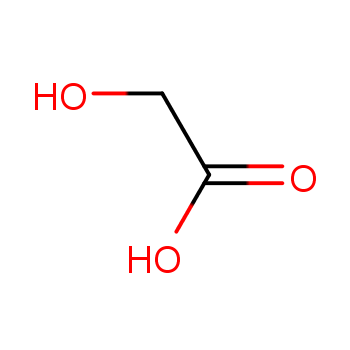
Glycolic acid is 2-hydroxyacetic acid, a colorless to pale-yellow deliquescent crystalline solid or aqueous solution that is completely miscible with water and many polar solvents, with a low molecular weight that confers high dermal penetration relative to larger AHAs. It is a strong organic acid with corrosive potential in concentrated form, requiring pH-controlled handling, and it functions through both chemical exfoliation and chelation depending on the application context. Its small molecular size relative to other alpha-hydroxy acids grants superior stratum-corneum penetration, a property that underpins its efficacy in low-concentration daily cosmetics yet also dictates conservative formulation pH and buffering to manage irritancy and maintain consumer-skin tolerance across leave-on products.
Industrial Glycolic acid is produced primarily by the hydrolysis of chloroacetic acid with sodium hydroxide followed by acidification, or by the carbonylation of formaldehyde, with the chloroacetic route dominating legacy capacity due to feedstock availability. An increasingly important bio-based route ferments sucrose or glucose using engineered microorganisms to yield glycolate, offering a renewable, low-chloride profile favored by clean-label cosmetic and ESG-conscious buyers seeking to avoid halide residues.
Demand for Glycolic acid is led by the resilient global skincare and cosmeceutical industry, where consumer preference for clinically substantiated exfoliants sustains premium-grade consumption, amplified by K-beauty, clean-beauty, and at-home chemical-peel trends. Parallel industrial demand from textiles, electronics, and cleaning provides volume stability, while the shift toward bio-based and halide-free grades is reshaping formulation specifications among Western and APAC personal-care brands seeking sustainability differentiation. Concurrently, regulatory limits on AHA concentration and mandatory sun-exposure warnings in several markets are pushing formulators toward gentler, buffered systems, sustaining demand for high-purity acid while raising the compliance and documentation burden on cosmetic-grade suppliers serving global brands.
Production capacity for Glycolic acid spans China, Europe, and the United States, with Chinese commodity and technical-grade output feeding global industrial and mid-tier cosmetic demand, while Western producers emphasize high-purity and bio-based specialty grades for premium cosmetics. Export flows run from Asian bulk producers to formulation clusters in Europe, North America, and Southeast Asia, and regional capacity is gradually diversifying into India and Southeast Asia as personal-care manufacturing localizes closer to fast-growing consumer markets. Tariff structures and anti-dumping considerations occasionally reshape trade flows, while the concentration of high-purity fermentation capacity in fewer Western sites preserves a quality-led premium tier that Asian commodity producers have not fully displaced despite scale advantages in technical grades.
The market clearly bifurcates between low-cost technical and industrial grades trading on bulk commodity economics and a premium cosmetic-plus-bio-based tier differentiated by chloride, heavy-metal, and microbial limits plus renewable-content certification. Pricing is sensitive to chloroacetic acid and caustic soda feedstock costs, energy for crystallization, and the cost premium of fermentation capacity, prompting buyers to segment sourcing by application and to contract strategically for high-purity cosmetic supply subject to stricter audit.
Glycolic acid is regulated differently across its cosmetic and industrial identities, and exporters must classify shipments by intended use and concentration to meet divergent cosmetic, chemical, and occupational-safety frameworks. Concentrated material is corrosive, so hazard communication and safe-handling documentation are central to compliant cross-border movement.
ESG considerations for Glycolic acid center on feedstock origin, halide and wastewater discharge from chemical routes, and the renewable-content advantages of bio-based fermentation, making sustainability credentials a growing differentiator in cosmetic procurement. Buyers pursuing clean-beauty positioning increasingly request product carbon footprints, bio-based content certification, and evidence of circular-economy practices in production.
The chloroacetic hydrolysis route carries a halogen and saline-waste burden that bio-fermentation avoids, so manufacturers pursuing low Scope 1-2 emissions adopt renewable energy, closed-loop water, and by-product recovery while reporting under ISO 14064 frameworks. Circular-economy metrics such as recovered salt reuse and reduced chloride effluent convert environmental performance into a market-access advantage for EU and North American cosmetic customers demanding verifiable green chemistry. Producers that pair emissions accounting with renewable feedstock claims increasingly win preferred-supplier status, while transparent lifecycle documentation helps brands substantiate clean-beauty marketing without incurring greenwashing risk under tightening consumer-protection scrutiny.
Traceability from feedstock—whether chloroacetic acid or plant sugar—through to finished grade is essential for verifying bio-based claims, halide-free status, and absence of prohibited impurities, supported by ISO 9001 quality systems and batch-level documentation. Third-party certifications for renewable content and environmental management (ISO 14001) provide the audit trail that premium personal-care brands require, while transparent chain-of-custody mitigates reputational risk in sustainability-sensitive markets.
Glycolic acid is commonly shipped as aqueous solution or crystalline solid, with the concentrated forms classified as corrosive dangerous goods that dictate specific packaging, labeling, and segregation during multimodal transit. Supply-chain resilience focuses on safe handling infrastructure, dual sourcing across chemical and bio-based routes, and buffer inventory for formulation-critical cosmetic supply.
Concentrated Glycolic acid is typically classified as a corrosive substance under ADR, IMDG, and IATA dangerous-goods rules, requiring UN-approved packaging, hazard labeling, and dangerous-goods declarations for road, sea, and air freight. Exporters must train personnel in DG handling, segregate from incompatible loads, and supply compliant SDS and emergency-response information, while diluted cosmetic-grade solutions may fall below classification thresholds and move under simplified protocols with documented concentration proof.
Competitive advantage in Glycolic acid is built on grade specialization, sustainable production, and reliable dangerous-goods logistics rather than undifferentiated commodity supply, allowing suppliers to capture premium cosmetic and specialty-industrial segments.
Glycolic acid is a dual-natured specialty chemical whose value spans premium cosmeceutical actives and essential industrial processing, making it resilient across economic cycles and attractive to suppliers with both chemical and bio-based capabilities. Success depends on matching grade, purity, and sustainability profile to the right application channel while mastering the corrosive-material compliance that governs its safe trade.
As 2026 unfolds, bio-based and halide-free supply, MoCRA-aligned cosmetic documentation, and robust dangerous-goods logistics will define market leadership, while buyers balance cost, purity, and ESG credentials through segmented, dual-source sourcing strategies across a globally distributed but increasingly sustainability-driven landscape. The maturation of bio-based routes and the enforcement of MoCRA-era transparency will continue to raise the compliance floor, rewarding suppliers who can deliver both halide-free quality and auditable environmental performance at competitive scale.
Powered by Guidechem
This white paper is exclusively compiled by the Guidechem Intelligence Team based on global customs data, regulatory databases, and industry research. Guidechem is a leading global B2B chemical platform, dedicated to connecting global buyers with verified, high-quality manufacturers.
Relying on Guidechem's extensive global database, we have mapped the core participants in the current global Glycolic acid supply chain:
Disclaimer: The content of this white paper is compiled based on public market data and regulatory information available as of 2026. Global chemical regulations are subject to dynamic adjustments. In actual export operations, enterprises must consult professional regulatory advisors or relevant competent authorities to obtain the latest compliance guidance.
|
 |
 |
 |
 |
 EN
EN
 Agricultural News
 Food News
 Industrial News
 Cosmetic News
 Pharmaceutical News
 Science News

 1YR
1YR

