-
We detected your language preference as English. Would you like to switch to the English version for a better experience?
Switch to English
Stay here


Chemical Naming & Substance Identity
Where each spelling is used, what it actually refers to, and how to write the order so the right material ships — for Apple Cider Vinegar.

Yes. These are the same product under regional names: “cider vinegar” is the traditional British term, “apple cider vinegar” the American one. Both mean vinegar produced by fermenting apple cider.
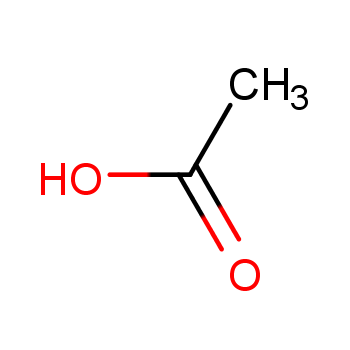
Both names map to CAS 64-19-7 (C2H4O2, 60.05 g/mol). One half is simply shorthand for the other; the expanded form is what should appear in specifications.
| Attribute | Cider vinegar | Apple cider vinegar |
|---|---|---|
| Refers to | Apple Cider Vinegar | Apple Cider Vinegar |
| CAS Registry Number | 64-19-7 | 64-19-7 |
| Molecular formula | C2H4O2 | C2H4O2 |
| Molar mass | 60.05 g/mol | 60.05 g/mol |
| Typical name domain | One is the short form, the other the full trade name | One is the short form, the other the full trade name |
| Chemically different substance? | No | No |
| Lewis structure guide | Cider vinegar Lewis structure | Apple cider vinegar Lewis structure |
Identical CAS, formula and molar mass on both sides is the proof of identity: the difference is purely in how the name is written.
One half is simply shorthand for the other; the expanded form is what should appear in specifications.
These are the same product under regional names: “cider vinegar” is the traditional British term, “apple cider vinegar” the American one. Both mean vinegar produced by fermenting apple cider.
| Context | Term Used | What Must Be Verified |
|---|---|---|
| UK / Ireland / NZ | Cider vinegar | Default meaning: apple-based. |
| US / CA | Apple cider vinegar (ACV) | Apple origin made explicit. |
| Edge case | Other-fruit vinegars | A pear or grape “cider” must be labelled as such. |
Where the word cider alone may mean non-vinegar fermented apple drinks, confirm the product is the acidified vinegar with stated acidity.
Because the substance is identical either way, grade and documentation do the real separating: pharmacopoeial vs food vs technical grade, assay basis, impurity limits (heavy metals, residual solvents, water), container size and, for stereochemical names, an optical-purity clause.
Yes. These are the same product under regional names: “cider vinegar” is the traditional British term, “apple cider vinegar” the American one.
Both map to CAS 64-19-7.Both are accepted, but in different domains: One half is simply shorthand for the other; the expanded form is what should appear in specifications.
Controlled documents should use the qualified form and always add the CAS.Name plus CAS plus grade plus quantity. For Apple Cider Vinegar the CAS alone removes every ambiguity created by spelling, shorthand or stereochemistry prefixes.
Yes — and that is precisely why the specification, not the name, decides what ships. One half is simply shorthand for the other; the expanded form is what should appear in specifications.
Editorial note
This article clarifies naming equivalence for procurement and documentation use. It is not legal or regulatory advice; the controlled source for any label is the current monograph, CAS index entry and applicable market regulations.
 |
 |
 |
 EN
 Agricultural News
 Food News
 Industrial News
 Cosmetic News
 Pharmaceutical News
 Science News


 3YRS

