-
We detected your language preference as English. Would you like to switch to the English version for a better experience?
Switch to English
Stay here


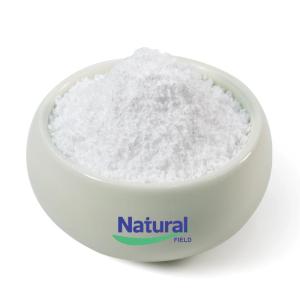
Micronized creatine monohydrate is chemically identical to conventional creatine monohydrate, yet its engineered particle size distribution dramatically changes dissolution behavior, suspension stability, sensory texture, and manufacturing performance. This technical guide quantifies how granulometry, purity standards, impurity control, and salt-form selection influence supplement formulation, bioavailability, and sourcing decisions in 2026.

From a powder engineering perspective, the fundamental difference between standard creatine monohydrate and micronized creatine monohydrate is not chemistry but particle size distribution (PSD). Conventional creatine monohydrate typically exhibits an average particle size of approximately 180–250 μm (around 80 mesh), whereas micronized grades are generally processed to ≥200 mesh with particle diameters ≤75 μm. Advanced jet-milled grades may reach D50 values below 20 μm.
The significance of particle size reduction can be explained using the Noyes-Whitney Equation:
dM/dt = D × A × (Cs − Ct) / h
Where A represents the available surface area. As particle diameter decreases, specific surface area increases exponentially. Reducing creatine particles from 250 μm to 75 μm can increase effective surface area by more than 3-fold, significantly accelerating dissolution kinetics.
In practical formulation scenarios, micronized creatine exhibits superior suspension stability in cold-water systems, reducing sedimentation, phase separation, and consumer-perceived grittiness. These advantages are particularly important for pre-workout powders, intra-workout beverages, and stick-pack applications where rapid dispersion is required.
Modern jet milling systems commonly operate using compressed nitrogen or filtered air streams at pressures ranging from 6–12 bar. Unlike mechanical grinding, jet milling minimizes thermal degradation and preserves crystalline integrity while generating narrow PSD profiles suitable for premium sports nutrition formulations.
A common industry question is whether micronized creatine monohydrate is "better" than conventional creatine monohydrate. The answer depends on the performance metric being evaluated.
Chemically, both forms deliver the same creatine molecule. However, faster dissolution may provide formulation advantages under physiological conditions. In gastric environments (pH 1.2–2.0), dissolved creatine can gradually cyclize into creatinine, an inactive degradation product. Faster dissolution and gastric transit may reduce residence time and help preserve active creatine availability.
Following gastric emptying, creatine absorption primarily occurs in the small intestine via the sodium-dependent creatine transporter (CRT/SLC6A8). While published evidence indicates that overall intestinal absorption of creatine monohydrate already approaches 99%, micronized particles may improve local dispersion and mucosal contact characteristics before transporter saturation occurs.
The primary commercial advantage therefore lies in improved formulation behavior rather than dramatic improvements in systemic bioavailability. Better dissolution can translate into:
Dr. Richard Kreider, one of the world's most cited creatine researchers, has repeatedly emphasized that creatine monohydrate remains the reference standard for efficacy, while formulation improvements primarily influence user experience rather than muscle saturation outcomes.
For product managers, the strongest science-backed marketing position is not "higher absorption" but rather "improved dispersibility, smoother texture, and enhanced gastrointestinal comfort."
The belief that all creatine monohydrate is identical is analytically incorrect. HPLC and LC-MS investigations consistently demonstrate significant differences among manufacturing routes and purification systems.
The highest-quality creatine monohydrate grades maintain exceptionally low impurity profiles while delivering assay values of 99.9% or greater. Particular attention should be paid to the following contaminants:
Premium suppliers routinely validate these parameters using HPLC, ICP-MS, and third-party laboratory verification systems. Such controls reduce recall risk and strengthen clean-label positioning in highly regulated markets.
According to AlzChem's Creapure® quality documentation, premium creatine monohydrate batches achieve ≥99.9% purity, maintain DCD levels below 20 mg/kg, and demonstrate non-detectable DHT under EFSA-referenced analytical thresholds.
Expert Commentary: The industry is increasingly moving toward supplier transparency rather than brand-based trust. In 2026, procurement teams should request full chromatograms, impurity trend data, heavy metal certificates, and batch-specific Certificates of Analysis (COAs) rather than relying solely on marketing claims such as "pharmaceutical grade" or "ultra-pure."
When evaluating creatine monohydrate suppliers, assay percentage alone is insufficient. Moisture stability, crystal structure integrity, particle morphology, and long-term storage behavior are equally important.
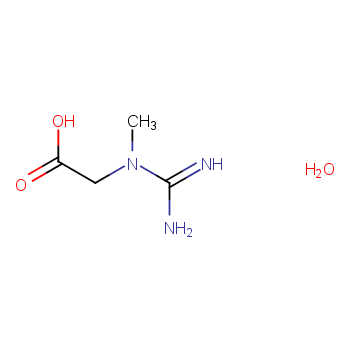
A properly manufactured creatine monohydrate crystal contains approximately 12% crystal water by weight. Significant deviations may indicate improper drying, hydration imbalance, or storage-related degradation.
For pharmaceutical and premium sports nutrition applications, recommended specifications include:
In manufacturing environments, high-purity creatine exhibits superior flowability, more predictable capsule fill weights, and better tableting characteristics. These properties contribute directly to production efficiency and batch consistency.
Creatine monohydrate and creatine hydrochloride (Creatine HCl) represent fundamentally different formulation strategies.
Creatine monohydrate remains the industry benchmark due to its extensive scientific validation, low cost, and robust supply chain. Creatine HCl, meanwhile, was developed primarily to address solubility limitations.
Although Creatine HCl may be approximately 40–60 times more soluble than monohydrate, current human evidence does not consistently demonstrate superior muscle saturation, strength gains, or body composition outcomes. Therefore, formulation selection should be driven by product positioning rather than efficacy assumptions.
For mass-market products, creatine monohydrate remains the optimal choice. For RTD beverages, low-dose concentrates, and premium digestive-comfort lines, Creatine HCl may offer meaningful formulation advantages.
In 2026, successful ingredient sourcing requires digital verification rather than traditional distributor relationships alone. R&D directors and procurement managers increasingly rely on integrated sourcing platforms capable of validating:
Guidechem's Global Nutritional Ingredients Gate provides a practical framework for supplier screening by consolidating technical dossiers, certificates, analytical reports, and global RFQ workflows into a single sourcing environment.
For enterprise buyers, combining HPLC chromatogram review, impurity profiling, GMP audits, and multi-supplier price benchmarking creates a defensible procurement strategy that reduces supply chain risk while accelerating product commercialization timelines.
FAQs
Q1: Is micronized creatine the same as creatine monohydrate?
Yes. Micronized creatine is chemically identical to creatine monohydrate. The only difference is particle size, which improves dispersibility, dissolution speed, and texture.
Q2: Does micronized creatine have higher bioavailability?
Current evidence suggests total creatine absorption is already extremely high for standard creatine monohydrate. Micronization mainly improves formulation performance and user experience rather than dramatically increasing systemic absorption.
Q3: What purity level should premium creatine monohydrate achieve?
High-end pharmaceutical or sports nutrition grades should achieve ≥99.9% assay while maintaining DCD ≤20 ppm, DHT ≤3 ppm, and compliance with USP/EP heavy metal limits.
Q4: Is Creatine HCl better than creatine monohydrate?
Not necessarily. Creatine HCl offers superior solubility and may improve gastrointestinal comfort, but creatine monohydrate remains the most studied, cost-effective, and scientifically validated form.
References
[1] Kreider RB, Kalman DS, Antonio J, et al. International Society of Sports Nutrition Position Stand: Safety and Efficacy of Creatine Supplementation in Exercise, Sport, and Medicine. Journal of the International Society of Sports Nutrition, 2017.
[2] EFSA Panel on Food Additives and Nutrient Sources Added to Food. Scientific Opinion on Creatine Monohydrate for Use in Foods Intended for Particular Nutritional Uses. European Food Safety Authority.
[3] Persky AM, Brazeau GA. Clinical Pharmacology of the Dietary Supplement Creatine Monohydrate. Pharmacological Reviews, 2001.
[4] AlzChem Group AG. Creapure® Quality and Purity Documentation, Manufacturing and Impurity Specifications, 2026.
[5] United States Pharmacopeia (USP) Monographs for Creatine Monohydrate and Related Substances.
[6] European Pharmacopoeia (Ph. Eur.) Standards for Creatine Monohydrate Raw Materials.
[7] Noyes AA, Whitney WR. The Rate of Solution of Solid Substances in Their Own Solutions. Journal of the American Chemical Society, 1897.
Looking for stable, high-purity creatine monohydrate with full regulatory compliance, validated impurity control, and third-party laboratory testing? Discover why leading global sports nutrition brands rely on premium-grade supply networks for consistent quality and scalable production.
 |
 |
|
 |
 |
|
 EN
EN
 Agricultural News
 Food News
 Industrial News
 Cosmetic News
 Pharmaceutical News
 Science News

 1YR
1YR


Expert Commentary: After more than 15 years working with powdered nutraceutical formulations, one of the most overlooked causes of consumer complaints is not ingredient efficacy but poor powder engineering. Brands frequently invest in flavor systems while ignoring PSD optimization. For creatine-containing products intended for cold-water consumption, targeting D90 below 80 μm often delivers a more noticeable consumer experience improvement than expensive flavor masking technologies.