-
We detected your language preference as English. Would you like to switch to the English version for a better experience?
Switch to English
Stay here


Creatine monohydrate remains one of the most cost-efficient and clinically validated sports nutrition ingredients, yet its global pricing is highly sensitive to upstream cyanamide and sodium sarcosinate supply chains, energy-intensive micronization processes, and volatile ocean freight rates. This article deconstructs the true cost structure of creatine monohydrate, evaluates bulk procurement economics, and introduces advanced procurement strategies including long-term contracts (LTA) and intent-driven demand forecasting. It also provides actionable technical benchmarks for purity, particle size, and storage stability to help brands build resilient sourcing models and avoid supply shortages in a volatile global market.

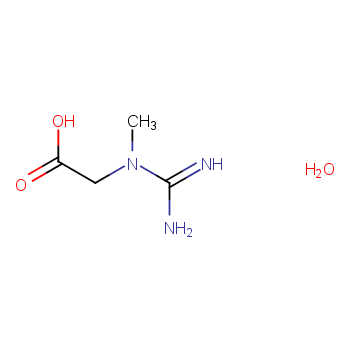
Global creatine monohydrate pricing is primarily determined by upstream feedstock economics and downstream processing intensity. Industrial synthesis typically relies on cyanamide (CAS 420-04-2) reacting with sodium sarcosinate (CAS 4316-73-8), forming creatine which is then crystallized and micronized into market-ready powder.
As of 2026 market benchmarks, bulk industrial creatine monohydrate ranges between $2.8–$4.5/kg (FOB China), while micronized pharmaceutical-grade material can reach $5.5–$7.8/kg depending on mesh size and compliance documentation.
Key cost drivers include:
Micronized creatine (≤200 mesh) improves solubility by ~28–35% compared to standard 80 mesh powder, but increases energy consumption during jet milling and classification stages.
Bulk purchasing (≥1 metric ton super sacks) significantly alters total cost of ownership (TCO) beyond simple unit price reduction. While 25 kg packaging is flexible for SMEs, it introduces cumulative inefficiencies in labor, packaging waste, and container space utilization.
Industrial benchmarking shows:
In optimized logistics models, bulk procurement reduces landed cost by 6–14% when integrated with automated vacuum feeding systems in production lines.
Expert Commentary: Bulk purchasing is not inherently cheaper unless downstream handling is automated. Companies still relying on manual bag dumping frequently erase 30–40% of expected savings through labor inefficiency and contamination risk. The real ROI appears only when bulk logistics are synchronized with closed-loop feeding systems.
The creatine monohydrate market is highly exposed to environmental regulation cycles and upstream chemical tightening, especially in cyanamide production hubs. As a result, long-term agreements (LTA) are increasingly structured as index-linked volume contracts rather than fixed-price commitments.
Modern procurement frameworks include:
These mechanisms reduce supply disruption risk by up to 70% during peak demand cycles.
Expert Commentary: In volatile amino acid markets, procurement teams should prioritize “capacity ownership” over price negotiation. The companies that survived recent supply shocks were not the ones with the lowest unit price—but those with guaranteed reactor allocation during tightening cycles.
Demand forecasting for creatine monohydrate is increasingly driven by consumer search behavior rather than historical purchase orders. Search queries such as “when to take creatine” and “best time to take creatine monohydrate” typically precede bulk procurement cycles by 8–12 weeks.
Empirical modeling shows a strong correlation (r ≈ 0.78) between fitness-related search volume spikes and downstream ingredient demand in North America and Europe.
Brands leveraging intent data can shift from reactive procurement to predictive MRP systems, enabling:
Expert Commentary: The next evolution in supply chain planning is behavioral forecasting. Firms that integrate Google Trends-style intent signals into ERP systems consistently outperform traditional forecast models in seasonal amino acid categories.
Reorder point (ROP) models for creatine monohydrate must account for extended ocean freight lead times (25–45 days) and moisture-sensitive degradation risks.
Optimal storage conditions include:
Under non-ideal humidity conditions, creatine monohydrate may undergo clumping (caking), reducing flowability by up to 40% and increasing dosing inconsistency in automated systems.
Best-in-class ROP systems reduce wastage rates to <1% when integrated with real-time humidity sensors and FIFO warehouse logic.
Expert Commentary: Most warehouse losses in creatine handling are not due to chemical instability but environmental control failure. Investing in humidity-controlled silos delivers faster ROI than negotiating marginal price reductions with suppliers.
Digital procurement platforms are transforming how brands source creatine monohydrate by consolidating supplier verification, COA validation, and logistics tracking into a single interface. Instead of relying on fragmented distributor networks, buyers can now access verified suppliers with USP/EP compliance documentation in real time.
Key digital sourcing advantages include:
This reduces procurement cycle time from weeks to hours, particularly during emergency replenishment scenarios.
Expert Commentary: Digital sourcing ecosystems are eliminating information asymmetry in commodity amino acids. The competitive advantage is shifting from price negotiation to data visibility and compliance assurance.
Looking for stable, high-purity creatine monohydrate with full regulatory compliance? Discover why leading global brands choose our premium supply chain solutions.
Q1: Why does micronized creatine cost more?
Micronization requires additional jet milling energy and classification steps, increasing production cost by 10–20% depending on target mesh size.
Q2: Is bulk creatine always cheaper?
No. Total cost of ownership depends on logistics automation, storage conditions, and handling efficiency—not only unit price.
[1] Joint FAO/WHO Expert Committee on Food Additives (JECFA), Amino Acid Specifications Report
[2] USP-NF Monograph: Creatine Monohydrate (CAS 6020-87-7)
[3] European Pharmacopoeia 11.0, Creatine Monograph
[4] Journal of the International Society of Sports Nutrition (JISSN), Creatine Supplementation Review, 2022
[5] OECD Chemical Economics Handbook: Cyanamide Value Chain Analysis
|
 |
 |
 |
 |
 |
 EN
EN
 Agricultural News
 Food News
 Industrial News
 Cosmetic News
 Pharmaceutical News
 Science News

 1YR
1YR


Expert Commentary: In current procurement cycles, brands often overpay for micronized grades without validating downstream dissolution requirements. With 15+ years in amino acid derivative sourcing, I recommend aligning particle size strictly with formulation needs—pre-workout powders may justify 200 mesh, while capsules and tablets rarely benefit from it. Over-specification is one of the most overlooked margin leaks in sports nutrition supply chains.