-
We detected your language preference as English. Would you like to switch to the English version for a better experience?
Switch to English
Stay here


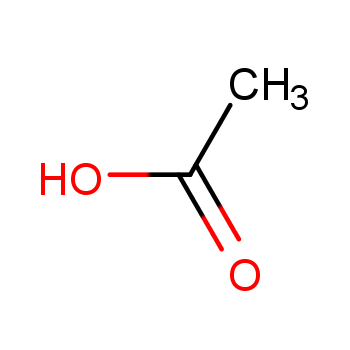
Acetic acid, a mild carboxylic acid characterized by its pungent aroma, remains in a liquid state at room temperature. It stands as one of the earliest acids produced on a large scale. The nomenclature "acetic" is derived from the Latin term "acetum," translating to "sour," reflecting its association with the bitter taste found in fermented juices. Widely utilized for industrial purposes, acetic acid is generated through the natural and synthetic processes facilitated by common bacteria, such as Acetobacter and Clostridium. Notably, Acetobacter aceti proves to be a more efficient acetic acid producer compared to Clostridium, yielding higher concentrations.
Vinegar, a diluted aqueous solution of acetic acid, boasts a rich historical application dating back over 10,000 years. The ancient Egyptians employed vinegar for its antibiotic properties, crafting apple vinegar. Babylonians, around 5000 B.C.E., produced vinegar from wine for medicinal and preservative purposes. Renowned as the "father of medicine," Hippocrates (ca. 460–377 B.C.E.) incorporated vinegar into his medical practices, utilizing it as an antiseptic and remedy for various conditions such as fever, constipation, ulcers, and pleurisy. Oxymel, a historical cough remedy, combined honey and vinegar. A tale recounted by Roman writer Pliny the Elder (ca. 23–79 C.E.) narrates Cleopatra's extravagant wager, dissolving pearls in vinegar wine for consumption. Vinegar's references are also found in Roman writings, describing Hannibal's strategic use of vinegar to soften boulders during his Alps crossing. Biblical mentions, both direct and indirect, often portray vinegar as inferior wine. The 1717 Vinegar Bible gained its name due to multiple errors, including a mislabeling of Luke 20 as "the parable of the vinegar" instead of "the parable of the vineyard." Alchemists, recognizing vinegar's perceived special properties, frequently incorporated it into their concoctions.
Distillation was employed by alchemists to concentrate acetic acid to high purities. Pure acetic acid, often termed glacial acetic acid, earned its name because it freezes slightly below room temperature at 16.7°C (62°F). Until the 19th century, acetic acid and vinegar were predominantly obtained through natural processes. In a groundbreaking development in 1845, German Chemist Hermann Kolbe (1818–1884) successfully synthesized acetic acid from carbon disulphide (CS2). Kolbe's achievements significantly contributed to the establishment of organic synthesis, challenging the prevailing concept of vitalism, which attributed all organic substances to a vital life force.
Acetic acid finds widespread application in various industrial chemical preparations, and its large-scale production involves several distinct processes. The primary method of preparation is methanol carbonylation, wherein methanol reacts with carbon monoxide to yield acetic acid: CH3OH + CO → CH3COOH. Originally hindered by the necessity for high pressures (200 atmospheres), this method gained viability in the 1960s with the advent of specialized catalysts, enabling operation at lower pressures. Monsanto's eponymous methanol carbonylation process is a notable development in this regard. Another common method involves the catalytic oxidation of acetaldehyde: 2CH3CHO + O2 → 2CH3COOH. Alternatively, acetic acid can be synthesized through the oxidation of butane: 2C4H10 + 5O2 → 4CH3COOH + 2H2O. This latter reaction, predating the Monsanto process, is conducted at approximately 150°C and 50 atmospheres pressure.
In industrial contexts, acetic acid plays a pivotal role, particularly in its reactions with hydroxyl-containing compounds, such as alcohols, yielding acetate esters. Its predominant application lies in the production of vinyl acetate, a crucial precursor for polyvinyl acetate (PVA) used in the manufacture of fibers, films, adhesives, and latex paints.
Cellulose acetate, employed in textiles and photographic film, is produced by reacting cellulose with acetic acid and acetic anhydride in the presence of sulfuric acid. Various esters of acetic acid, including ethyl acetate and propyl acetate, serve diverse industrial purposes.
Furthermore, the condensation reaction of two acetic acid molecules results in the formation of acetic anhydride and water:
Acetic acid finds widespread application in various industrial chemical preparations, and its large-scale production involves several distinct processes. The primary method of preparation is methanol carbonylation, wherein methanol reacts with carbon monoxide to yield acetic acid: CH3OH + CO → CH3COOH. Originally hindered by the necessity for high pressures (200 atmospheres), this method gained viability in the 1960s with the advent of specialized catalysts, enabling operation at lower pressures. Monsanto's eponymous methanol carbonylation process is a notable development in this regard. Another common method involves the catalytic oxidation of acetaldehyde: 2CH3CHO + O2 → 2CH3COOH. Alternatively, acetic acid can be synthesized through the oxidation of butane: 2C4H10 + 5O2 → 4CH3COOH + 2H2O. This latter reaction, predating the Monsanto process, is conducted at approximately 150°C and 50 atmospheres pressure.
In industrial contexts, acetic acid plays a pivotal role, particularly in its reactions with hydroxyl-containing compounds, such as alcohols, yielding acetate esters. Its predominant application lies in the production of vinyl acetate, a crucial precursor for polyvinyl acetate (PVA) used in the manufacture of fibers, films, adhesives, and latex paints.

Cellulose acetate, employed in textiles and photographic film, is produced by reacting cellulose with acetic acid and acetic anhydride in the presence of sulfuric acid. Various esters of acetic acid, including ethyl acetate and propyl acetate, serve diverse industrial purposes.
Furthermore, the condensation reaction of two acetic acid molecules results in the formation of acetic anhydride and water:

Acetic acid also plays a pivotal role in the production of polyethylene terephthalate (PET) and pharmaceuticals, such as acetylsalicylic acid.
Vinegar, the initial form of acetic acid, is produced through the fermentation of sugars in wine and other substances. The term "vinegar" originates from the French "vin aigre," signifying "sour wine." Typically, vinegar is an acetic acid solution ranging between 4% and 8%, distinct from simple diluted acetic acid. Its production involves the fermentation of sugars in fruits and vegetables, incorporating additional nutrients from the source material. While industrial acetic acid production surpasses vinegar acetic acid production, the latter holds significance in the food and beverage industry.
The U.S. Food and Drug Administration mandates that vinegar must contain over 4 grams of acetic acid per 100 mL of solution. The labeling requires stating "diluted with water to percent acid strength," specifying the acid strength. Most commercially available vinegars in grocery stores contain approximately 5% acetic acid.
Vinegar is commonly associated with alcohol and fruit juice fermentation, with numerous sources available. Various vinegars, such as distilled white, apple cider, balsamic, malt, and wine, reflect their geographic origins. Additional varieties come from potatoes, rice, a variety of fruits, grains, and sugar cane. In modern vinegar production, large vats or casks are charged with alcohol, supplemented with seed bacteria (Acetobacter sp.), nutrients, and oxygen, forming a mixture known as "mother of vinegar." The vats contain wood shavings to facilitate the formation of a biofilm by vinegar-producing bacteria. The mixture circulates through the vats until the desired acetic acid concentration is achieved.
Distilled white vinegar typically results from the fermentation of distilled alcohol, but it can also be diluted industrial acetic acid. Some countries specify that vinegar used in food production must be naturally produced. The alcohol in white vinegar commonly originates from corn. Apple cider vinegar is derived from the fermentation of apple cider to hard cider and then transformed into apple cider vinegar. Balsamic vinegar, with a history spanning over 1,000 years, takes its name from the Italian "aceto balsamico," translating to soothing vinegar. True balsamic vinegar is crafted from white Trebbiano grapes in the Modena region, Italy, undergoing a meticulous aging process in casks of various woods for a minimum of 12 years, sometimes extending to decades. The limited production volume renders original balsamic vinegar relatively expensive, whereas mass-market versions in supermarkets often use additives to imitate its characteristics.
Richard L. Myers (2009). The 100 Most Important Chemical Compounds: A Reference Guide. Greenwood Publishing Group. October 1, 2009. https://doi.org/10.1021/ed086p1182
 |
 |
 |
 |
 |
 |
 EN
EN
 Agricultural News
 Food News
 Industrial News
 Cosmetic News
 Pharmaceutical News
 Science News

 3YRS
3YRS

