-
We detected your language preference as English. Would you like to switch to the English version for a better experience?
Switch to English
Stay here


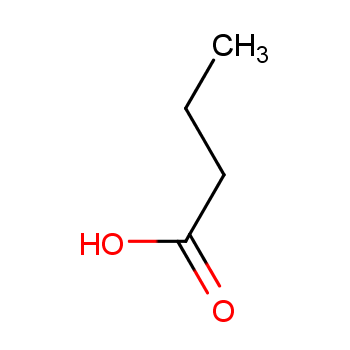
Butyric acid, classified as a carboxylic acid and a fatty acid, is found in two isomeric forms. This discussion specifically centers on n-butyric acid or butanoic acid. It is a colorless, viscous liquid with a rancid odor, present as esters in animal fats and plant oils. Butter contains butyric acid as a glyceride, constituting approximately 4% of its composition, making dairy and egg products significant sources. Rancidity in butter or similar food items leads to the release of free butyric acid through hydrolysis, contributing to the unpleasant odor. The acid is also present in animal fat and plant oils. The nomenclature "butyric" is derived from the Latin term "butyrum," signifying butter. Adolf Lieben (1836–1914) and Antonio Rossi discovered it in 1869.
Butyric acid is among the simplest fatty acids, serving as fundamental components of fats and oils. These natural compounds consist of carbon chains with a carboxyl group (-COOH) at one end. Fatty acids generally exhibit unbranched carbon chains and an even number of carbon atoms due to biosynthesis involving two-carbon units from acetyl coenzyme A (CoA). Butyric acid, an unsaturated fatty acid, features single carbon-carbon bonds. Common names for fatty acids are derived from their natural origins. Alongside butyric acid, other prevalent saturated fatty acids include lauric acid, palmitic acid, and stearic acid. Lauric acid was first identified in Lauraceae (Laurus nobilis) seeds, palmitic oil is derived from palm oil, and stearic acid was discovered in animal fat, its name originating from the Greek word "stear" denoting tallow.
Monounsaturated fatty acids are characterized by the presence of a single carbon-carbon double bond in the molecular chain, while polyunsaturated fatty acids possess multiple carbon-carbon double bonds. Oleic acid, a monounsaturated fatty acid, is notably found in olive oil. Within unsaturated fats, the arrangement of hydrogen atoms around the double bond can assume either a trans or cis configuration. Trans fatty acids exhibit hydrogen atoms on opposing sides of the double bond, as opposed to the cis formation where they are positioned on the same side. Extensive research indicating the association of trans fatty acids with an increased risk of heart disease has prompted the inclusion of trans fat amounts on food labels, leading to a reduction in trans fats in processed foods in recent years.

Unsaturated fatty acids can also be distinguished by the position of the double bond, with a physiological numbering system starting from the methyl end of the molecule. The methyl carbon is denoted as the omega carbon, owing to its position as the last letter in the Greek alphabet, while the first carbon at the carboxyl end is termed the alpha carbon. The location of the double bond is then identified based on its displacement from the omega carbon. For example, an omega-3 fatty acid has its terminal double bond positioned three carbon atoms away from the omega carbon. Omega fatty acids, such as omega-3, are utilized as dietary supplements for various conditions.

Butyric acid is produced through the oxidation of butyraldehyde (CH3(CH2)2CHO) or butanol (C4H9OH). Additionally, biological synthesis occurs via the oxidation of sugar and starches using bacteria. This acid serves as a raw material in plastics for cellulose acetate butyrate (CAB). CAB, an ester produced by treating fibrous cellulose with butyric acid, butyric anhydride (CH3CH2CH2CO)2O], acetic acid (CH3COOH), and acetic anhydride (CH3CO)2O) in the presence of sulfuric acid, is a durable plastic that exhibits resistance to weathering and high transparency. Available in various dimensions as sheets and tubes, CAB finds application in signs, goggles, sunglasses, tool handles, pens, and stencils. Ester formation occurs by reacting butyric acid with alcohols, producing compounds like methyl butyrate (C5H10O2), which often contribute pleasant aromas to food flavorings and perfumes. Butyric acid is also utilized in disinfectants, pharmaceuticals, and as feed supplements for both plants and animals.

Butyric acid derivatives play a significant role in plant and animal physiology. Gamma-aminobutyric acid (GABA), the principal inhibitory neurotransmitter in humans and other organisms, is one such derivative. Another derivative, indole-3-butyric acid, closely resembles a natural growth hormone found in plants. Applied in numerous nutrient formulations, indole-3-butyric acid promotes the growth and development of roots, flowers, and fruits, contributing to increased crop yields.


Richard L. Myers (2009). The 100 Most Important Chemical Compounds: A Reference Guide. Greenwood Publishing Group. October 1, 2009. https://doi.org/10.1021/ed086p1182
 |
|
 |
 |
|
 EN
EN
 Agricultural News
 Food News
 Industrial News
 Cosmetic News
 Pharmaceutical News
 Science News

 3YRS
3YRS

