-
We detected your language preference as English. Would you like to switch to the English version for a better experience?
Switch to English
Stay here


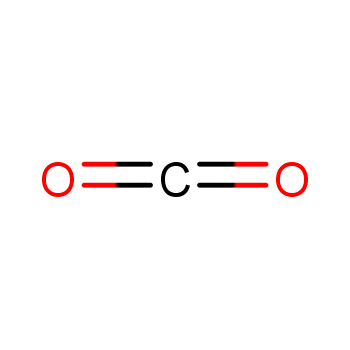
Carbon dioxide is a colorless, odorless gas that permeates the Earth's atmosphere and is integral to sustaining life on our planet. Furthermore, it is also identified on celestial bodies within our solar system. Notably, Mars exhibits icecaps primarily composed of frozen carbon dioxide, while Venus's atmosphere is predominantly comprised of this gas. The acknowledgment of carbon dioxide is attributed to Joseph Black (1728–1799), whose findings significantly contributed to discrediting the phlogiston theory and propelling the progression of modern chemistry.
Joseph Black, during his medical investigations, initially sought a substance for dissolving kidney stones but redirected his focus to the study of stomach acidity. His experimentation with carbonates, specifically magnesia alba (magnesium carbonate) and calcium carbonate (limestone), revealed that heating or reacting magnesia alba with acids produced a gas and a salt. In 1756, Black published his work, referring to the gas as "fixed air" and recognizing its properties akin to those described by Jan Baptista van Helmont (1577–1644) for spiritus sylvestrius. Spiritus sylvestrius, identified as the gas produced during combustion processes, led van Helmont to comprehend its association with fermentation and the reaction of acids with seashells.
Constituting a mere 0.037% by volume of the atmosphere, carbon dioxide's low concentration necessitates the acquisition of most commercial supplies as by-products from industrial chemical reactions. Various methods exist for generating significant quantities of CO2, such as the combustion of coke or other carbonaceous substances, resulting in CO2 production: C(coke) + O2 → CO2(g). In combustion processes, CO2 is concentrated by employing scrubbing and absorption techniques to separate it from other gases. Another source of CO2 is the calcination (slow heating) of carbonates like limestone, represented by CaCO3: CaCO3(s) → CaO + CO2(g). This process occurs in a lime kiln during the production of precipitated calcium carbonate at temperatures ranging from 500°C to 900°C. Additionally, carbon dioxide is generated as a by-product in fermentation reactions, as seen in the fermentation of glucose, C6H12O6, to ethanol (C2H5OH): C6H12O6(aq) → 2C2H5OH (aq) + 2CO2(g). Furthermore, it is a by-product in various syntheses, including the Haber process for ammonia production.
Carbon dioxide serves various significant purposes. One notable application involves its transformation into solid form, known as dry ice, which is utilized as a refrigerant. Charles Thilorier, a French scientist (1797–1852), first produced dry ice in 1834, noting its formation during the expansion of carbon dioxide from pressurized containers. Despite Thilorier's 1835 findings, commercial utilization of dry ice did not commence until the 1920s. The original trademark for dry ice was established by Prest Air Devices of Long Island in 1924, subsequently leading to a company name change to DryIce. This nomenclature is fitting as, under atmospheric pressure, carbon dioxide can exist as a solid or gas based on temperature, undergoing sublimation from solid to gas without transitioning through a liquid state, with the reverse process termed deposition. Sublimation and deposition of carbon dioxide occur at -78.5°C.
Another significant application of carbon dioxide is evident in the soda industry. Soda, specifically sodium carbonate monohydrate (Na2CO3• H2O), encompasses various forms, such as washing soda (sodium carbonate decahydrate, Na2CO3• 10H2O) and baking soda (sodium bicarbonate, NaHCO3). The Solvay process, employing ammonia, carbon dioxide, and water, produces soda ash, historically derived by leaching wood ashes. Baking soda, a byproduct of the reaction Na2CO3(s) + H2O(l) + CO2(g) → 2NaHCO3(s), exemplifies the versatility of carbon dioxide in chemical processes.
The role of carbon dioxide extends to the carbonation of beverages, a discovery credited to the English chemist Joseph Priestley (1733–1804). Priestley's investigations in chemistry, initiated near his parish in Leeds, led to the production of soda water, a precursor to sparkling water. Jacob Schweppe (1740–1821), founder of the eponymous company, commercialized Priestley's carbonation process in the 1790s.
Carbon dioxide further finds application as a gas in fire extinguishers, an inflation gas for flotation devices, and a propellant in air guns. Its utilization as a supercritical fluid in green chemistry has grown, given its properties above its critical point (31.1°C and 73 atmospheres). Supercritical CO2 (scCO2) offers advantages such as inertness, non-flammability, low toxicity, abundance, and cost-effectiveness. Its applications include replacing traditional solvents in caffeine extraction, pharmaceutical compound extraction, spice and flavoring production, and industrial cleaning processes, gradually supplanting substances like perchloroethylene in the dry cleaning industry.

Plants rely on carbon dioxide for the process of photosynthesis, and concurrently, carbon dioxide is generated during respiration. Photosynthesis comprises a sequence of biochemical reactions in which plants (as well as certain bacteria) assimilate inorganic carbon dioxide and water, utilizing solar energy to synthesize carbohydrates. These carbohydrates undergo oxidation for energy during cellular respiration and contribute to the construction of other compounds such as lipids, proteins, and nucleic acids. The generalized photosynthesis reaction is expressed as: nCO2 + nH2O (CH2O)n + nO2. The synthesis of the carbohydrate glucose (C6H12O6) is represented by the equation: 6CO2 + 6H2O → C6H12O6 + 6O2.
This depiction of photosynthesis is a simplification; the actual process involves intricate biochemical reactions occurring in two phases termed light-dependent and light-independent (alternatively known as light and dark) reactions. Oxygen is produced during the light-dependent phase when water undergoes splitting, while the light-independent reactions convert carbon dioxide into carbohydrates. The process of converting carbon dioxide into carbohydrates is referred to as carbon fixation.
Carbon dioxide readily dissolves in water, generating the weak acid carbonic acid (H2CO3). The presence of CO2 in aqueous solution results in equilibria involving carbon dioxide, carbonic acid, bicarbonate, and carbonate: CO2(aq) + H2O(l) → H2CO3(aq) → H⁺ + HCO₃⁻ → H⁺ + CO₃²⁻. This dissolution of CO2 in water explains the naturally acidic nature of rainwater, with a pH of approximately 5.6 due to the presence of carbonic acid. The solubility of carbon dioxide in water significantly influences the earth's carbon cycle, as dissolved CO2 can be incorporated into carbonate sediments in oceans and lakes.
The solubility of CO2 in blood as carbonic acid is a crucial buffering system in the human body, maintaining a blood pH of around 7.4. Three primary buffer systems, involving carbonate, phosphate, and proteins, regulate the blood pH. The primary buffer system utilizes carbonic acid and bicarbonate, with carbonic acid neutralizing excess base and bicarbonate ion neutralizing excess acid. Kidney excretion of bicarbonate and the removal of carbon dioxide through respiration further regulate the carbonic acid/bicarbonate blood buffer.
Carbon dioxide is recognized as a greenhouse gas, contributing significantly to the ongoing global warming and climate change discourse. It is considered the most significant anthropogenic greenhouse gas, contributing to approximately 60% of recent global warming. The concentration of CO2 in the atmosphere has increased from around 280 ppmv to 370 ppmv in the last 160 years, primarily due to the combustion of fossil fuels and land clearing. The greenhouse effect remains a debated topic, shifting from uncertainties about human impact on the climate to discussions about the degree and nature of this impact. The complexity arises from separating human influences from the natural variability of the climate. While some skepticism persists, the prevailing consensus suggests human influence on climate change, though the extent and necessary actions remain subjects of ongoing debate. The oceans' substantial capacity to absorb carbon dioxide and vegetation's impact on global carbon concentrations through photosynthesis further contribute to the intricate dynamics of the issue.
Richard L. Myers (2009). The 100 Most Important Chemical Compounds: A Reference Guide. Greenwood Publishing Group. October 1, 2009. https://doi.org/10.1021/ed086p1182
 |
 |
 |
 |
|
 |
 EN
EN
 Agricultural News
 Food News
 Industrial News
 Cosmetic News
 Pharmaceutical News
 Science News

 4YRS
4YRS

