-
We detected your language preference as English. Would you like to switch to the English version for a better experience?
Switch to English
Stay here


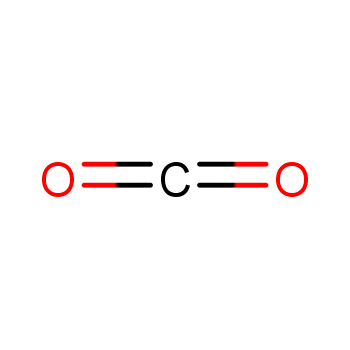
Linear Carbon Dioxide (CO2), also known as carbon dioxide, is a simple inorganic compound that plays a crucial role in various chemical processes and applications. It is a colorless, odorless gas composed of one carbon atom and two oxygen atoms, forming a linear structure. The molecule's linear geometry arises from the sp hybridization of the carbon atom, which allows for the formation of strong covalent bonds with the two oxygen atoms. As a diatomic molecule, CO2 exhibits a unique combination of physical and chemical properties. Its polarity is a fundamental characteristic that influences its behavior and applications. The polarity of CO2 is due to the unequal sharing of electrons between the carbon and oxygen atoms, resulting from the difference in electronegativity.
Polarity describes the uneven distribution of electrons within a molecule or compound, leading to the formation of positive and negative poles. This uneven distribution occurs when there is an unequal sharing of electrons between atoms, typically due to differences in electronegativity—the ability of an atom to attract electrons. In the context of chemistry, polarity arises when there is a difference in electronegativities between bonded atoms, usually greater than 0.5 on the Pauling scale. When atoms in a bond have significantly different electronegativities, the shared electrons tend to be pulled closer to the more electronegative atom, creating a partial negative charge on the more electronegative atom and a partial positive charge on the less electronegative atom. Polar molecules, such as water, exhibit distinctive chemical and physical behaviors, including higher solubility in water, elevated boiling and melting points, and unique interactions in biological systems. These characteristics make polarity a crucial factor in many chemical and biological processes.
Molecular Geometry:Linear Carbon Dioxide (CO2) has the chemical formula CO2, consisting of a carbon atom double-bonded to two oxygen atoms. The molecular geometry around the carbon atom is linear, with the two oxygen atoms arranged symmetrically on either side. The linear arrangement ensures that the molecule has no net dipole moment.

Dipole Moment:A molecule's dipole moment is a measure of the separation of positive and negative charges. In CO2, the oxygen atoms are more electronegative than the carbon atom. However, since the carbon-oxygen bonds are identical and symmetrical, the individual bond dipoles cancel each other out, resulting in a net dipole moment of zero. Thus, CO2 is a nonpolar molecule.

Electronegativity:The difference in electronegativity between the carbon and oxygen atoms in CO2 is minimal (O: 3.44, C: 2.55). This small difference does not lead to a significant separation of electron density, further confirming the nonpolar nature of the molecule.

Therefore, Linear Carbon Dioxide (CO2) is a nonpolar molecule, despite the electronegativity difference between the carbon and oxygen atoms. Its linear geometry, resulting from the identical and symmetrical bond dipoles, ensures that the molecule remains nonpolar.
Greenhouse Gas:As a nonpolar molecule, CO2 plays a critical role in the Earth's atmosphere as a greenhouse gas. It absorbs infrared radiation emitted by the Earth's surface, contributing to the greenhouse effect and influencing global climate patterns.
Carbon Capture and Storage (CCS):Due to its nonpolar nature, CO2 is easily compressed into a liquid under pressure, making it suitable for capture and storage in geological formations, reducing atmospheric concentrations of the gas.
Industrial Applications:CO2 finds applications in various industries, including food preservation (as a carbonated beverage ingredient), fire suppression, and as a coolant in refrigeration systems. Its nonpolar character allows it to be used effectively in these applications without forming hydrogen bonds with polar solvents or substrates.
 |
 |
|
 |
|
 |
 EN
EN
 Agricultural News
 Food News
 Industrial News
 Cosmetic News
 Pharmaceutical News
 Science News

 4YRS
4YRS

