-
We detected your language preference as English. Would you like to switch to the English version for a better experience?
Switch to English
Stay here


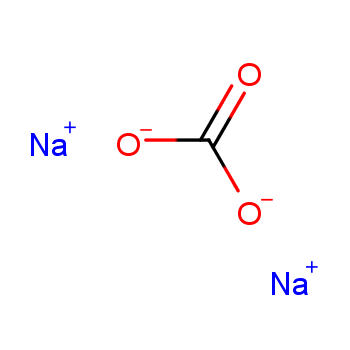
Sodium carbonate, commonly known as soda ash or washing soda, is a widely utilized inorganic compound with a global production of approximately 45 million tons, derived from both natural and synthetic processes. Natural sources of soda ash include the mineral trona, nahcolite (NaHCO3), and salt brine deposits. Trona, a freshwater sodium carbonate-bicarbonate evaporite with the formula Na3CO3HCO3 2H2O, is primarily obtained from deposits such as the substantial one in Wyoming's Green River area, alongside deposits in Egypt's Nile Valley and California's Searles basin near the city of Trona. The production of soda ash involves crushing, screening, and heating mined trona, resulting in impurity-mixed soda ash. To obtain pure soda ash, this product is dissolved, and impurities are precipitated and filtered.
Historically, sodium carbonate (Na2CO3) has played a crucial role in the manufacturing of glass, soap, and gunpowder. Together with potassium carbonate, known as potash, sodium carbonate formed the foundation of the alkali industry, marking one of the earliest major chemical industries. Alkalis were initially sourced from natural deposits throughout history, with evidence of Egyptians using soda ash for glassmaking as early as 3500 B.C.E. Natron (Na2CO3•10H2O) imported from Egyptian lakes was a significant source of soda ash for Europe. Additionally, soda ash was produced through the burning of wood and leaching the ashes, creating a solution that yielded soda ash when boiled. The name "soda ash" stems from the barilla plant, scientifically known as Salsola soda, or commonly referred to as sodawort or glasswort due to its application in glassmaking. Barilla, found in saline waters along the Mediterranean Sea in Spain and Italy, was dried and burned to produce soda ash.
During the late 18th century, depletion of European forests and international disputes raised uncertainty about the availability of alkali salts. In response, the French Academy of Science in 1783 offered a reward for developing a method to produce soda ash from common sea salt (NaCl). Nicolas LeBlanc (1743–1806) proposed a solution in 1783, leading to the opening of a plant based on his method in 1791. Unfortunately, LeBlanc's association with French Royalty resulted in the confiscation of the plant during the French Revolution, and despite conflicting claims to his method, he never received the reward. Disheartened and destitute, LeBlanc took his own life in 1806.
LeBlanc's method utilizes sulfuric acid and common salt to initially produce sodium sulfate (Na2SO4). The subsequent reaction involves sodium sulfate with charcoal and limestone to generate sodium carbonate and calcium sulfide:

The separation of sodium carbonate and calcium sulfide is achieved through water mixing. Due to sodium carbonate's solubility in water and calcium sulfide's insolubility, the former remains suspended in the solution.
The implementation of LeBlanc's process led to an increased demand for sulfuric acid, marking the inception of the first modern large-scale chemical industries in alkali and acid. Plants employing the LeBlanc process were strategically located in areas with salt mines, naturally establishing hubs for industries reliant on soda ash. However, the alkali industry, utilizing the LeBlanc process, posed environmental challenges near the alkali plants. Hydrogen chloride gas emitted from these plants caused vegetation death in their immediate vicinity. To mitigate air pollution, the gas was dissolved in water, forming hydrochloric acid discharged into streams, transforming the air pollution issue into a water pollution concern. Another issue arose from the solid calcium sulfide product. Stored calcium sulfide tailings around alkali plants reacted with air and water, producing noxious substances like sulfur dioxide and hydrogen sulfide. Landowners near alkali plants sought relief from the environmental damage stemming from soda production. The severity of the situation in England led to the enactment of the first "Alkali Acts" in 1863 by the Parliament's House of Lords. These laws aimed to regulate soda ash production and compelled producers to reduce environmental impacts on the surrounding countryside.
The LeBlanc process remained the primary method for producing soda ash until 1860, when the Belgian Ernest Solvay (1838–1922) developed the Solvay process, sometimes referred to as the ammonia method of soda production. The Solvay process utilizes ammonia (NH3), carbon dioxide, and salt to produce sodium bicarbonate (baking soda), NaHCO3. Sodium bicarbonate is then heated to yield soda ash. The series of reactions representing the Solvay process are:


Natural sources fulfill the demand for soda ash in the United States, while countries without a natural source rely more heavily on synthetic soda ash and imports. A drawback of synthetic soda ash production is the generation of environmental pollutants. Industrial soda ash comes in two primary grades: light and dense. Light soda ash has a larger grain size. The primary application of soda ash is in glass production, constituting approximately 30% of soda ash production in the United States. Decahydrate soda ash, Na2CO3.10H2O, referred to as washing soda, was traditionally used with laundry soap as a softening agent. Presently, it is employed with laundry soaps and detergents to maintain pH and as a builder, an additive enhancing cleaning. Soda ash plays a role in the paper-making industry, softening wood chips in pulp production, and serves as a base in the chemical industry to increase pH, also acting as a source of sodium ions in chemical processes. Sodium bicarbonate or baking soda (NaHCO3) is produced by reacting carbon dioxide with a solution of sodium carbonate.
Richard L. Myers (2009). The 100 Most Important Chemical Compounds: A Reference Guide. Greenwood Publishing Group. October 1, 2009. https://doi.org/10.1021/ed086p1182
 |
 |
 |
 |
 |
 |
 EN
EN
 Agricultural News
 Food News
 Industrial News
 Cosmetic News
 Pharmaceutical News
 Science News

 1YR
1YR

