-
We detected your language preference as English. Would you like to switch to the English version for a better experience?
Switch to English
Stay here


Adipic acid, as an important organic compound, has a wide range of applications. Its unique structure and properties confer various uses and functions to adipic acid. This article aims to explore the adipic acid application in various fields. By understanding the adipic acid application areas and characteristics of adipic acid, we can better grasp its mechanisms and advantages in different fields, providing important references for related industries' research and practices.
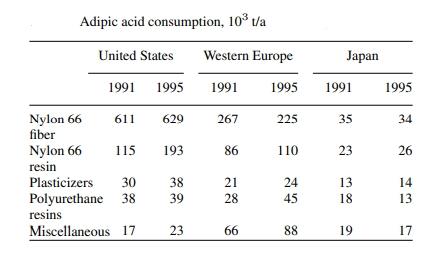
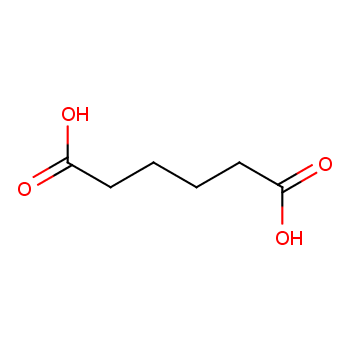
Dicarboxylic acids, such as succinic acid, glutaric acid, or adipic acid, are intriguing natural chemical substances. Adipic acid (butane-1,4-dicarboxylic acid, C6H10O4) has a wide range of applications. Approximately 80% of adipic acid worldwide is consumed in the production of nylon 66 fibers and resins. This has decreased from 87% in 1981. A small amount of adipic acid is still used to produce adiponitrile. It is extensively converted into esters for use as plasticizers, lubricants, and various polyurethane resins. Monomeric esters are significant plasticizers for polyvinyl chloride and other resins, while polymeric esters are used when high plasticizer levels are required. Polyurethane resins are utilized in specialty foams, paints, adhesives, surface coatings, and elastomeric fiber stretching abrasion.
What is adipic acid used for? Adipic acid is added to gelatins and jams as an acidulant and to other foods as a buffer or neutralizer. It is also used to modify the performance of unsaturated polyester resins for enhanced plastics and alkyd coatings. Polyamide-epoxy resins employing adipic acid can improve the wet strength of paper products. Other applications include adhesives, insecticides, tanning and dyeing, and the textile industry. Adipic acid and mixed dicarboxylic acids (DBAs) are used as buffer solutions in flue gas desulfurization treatments in power plants.
Adipic acid itself is not a direct pharmaceutical, but it plays a role in controlled-release tablets. In medicine, adipic acid has been incorporated into controlled-release matrix tablets to achieve pH-independent release of weakly acidic and weakly basic drugs. Specifically, it helps to:
Adipic acid can be incorporated into tablet matrices to form a controlled-release mechanism. This means that over time, the drug is released at a steady rate, beneficial for both weakly acidic and weakly basic drugs.
By using adipic acid in polymer coatings of certain drugs, it can help influence the pH within the dosage form, thereby providing more controlled drug release.
Adipic acid is a key component of the textile industry, primarily used in the production of nylon 66, a widely used synthetic fiber. Here are its roles:
Adipic acid reacts with another chemical, 1,6-hexanediamine, to form the polymer of nylon 66. This polymer is the basic raw material for many textile products.
Nylon 66 fibers are renowned for their strength, elasticity, and abrasion resistance. They are widely used in textile applications, including:
- Carpets
- Automotive tire cord yarns
- Apparel
- Interior furnishings
- Industrial yarns
While adipic acid itself is not directly used in textiles, it is a crucial component in the production of Nylon 66, a major textile fiber.
Adipic acid is a white crystalline powder with low hygroscopicity and a persistently high acid taste, supplementing grape-flavored products and other delicate-flavored products. The acid is slightly stronger than citric acid at any pH. Its aqueous solution is the least acidic of all food acids, with strong buffering capacity in the pH range of 2.5 - 3.0.
The primary roles of adipic acid are as an acidulant, buffer, plasticizer, and chelating agent. It is used in candies, cheese analogs, fats, and flavor extracts. Due to its low hygroscopicity, it is particularly useful in dry goods such as powdered fruit-flavored beverage mixes, fermentation systems for cake mixes, gelatin desserts, evaporated milk, and instant puddings.
Adipic acid plays a crucial role in the automotive industry, being linked with a strong material called Nylon 6,6. Nylon 6,6 is a polyamide known for its excellent mechanical strength, heat resistance, and lightness. These properties make it an ideal choice for various automotive applications. Here are the specifics:
Components such as engine compartments, intake manifolds, and other structural parts can benefit from the strength and heat resistance of Nylon 6,6 composite materials.
Items such as engine covers, rocker covers, and even some airbag containers can be made from Nylon 6,6.
Nylon 6,6 finds applications in various interior parts as well.
Adipic acid is also utilized as an intermediate in organic synthesis for lubricants, plasticizers, wet-strength resins, coatings, adhesives, sealants, and elastomers, perfumes, and cosmetics. Additionally, adipic acid is used in formulations of pH regulators and buffering agents and serves as a laboratory chemical.
Adipic acid is a mild irritant with low oral toxicity. The lowest published lethal dose (LDLo) is 3600 mg/kg (rats, oral), LD50 is 275 mg/kg (rats, oral), and LD50 is 1900 mg/kg (mice, oral). Some delayed weight gain and changes in enzymes as well as levels of urea and chloride in the blood were observed in chronic feeding studies. No teratogenic activity was found in studies on pregnant mice. Adipic acid was detected in the urine of rats fed 14C-labeled adipic acid, including unchanged adipic acid and normal metabolic products. Exposure to mucous membranes (eyes, respiratory tract) causes irritation; prolonged contact with the skin can result in dryness or irritation. Personnel should be protected from inhalation or excessive skin contact in case of leaks or spills. Dust should be controlled, and static sparks should be avoided. The area can be washed with water. Although no TLV or MAK has been established, airborne exposure levels should be less than organic dust toxicants: ACGIH (1979) 8-h TWA 10 mg/m3 (total dust) and 8-h TWA 5 mg/m3 (respirable dust) (OSHA TLV for total dust 15mg/m3).
The development and utilization of bio-based adipic acid is a growing trend, driven by the desire for more sustainable and environmentally friendly materials. Traditionally, adipic acid is extracted from fossil fuels. Bio-based alternatives are produced from renewable resources such as plant oils, reducing the industry's environmental footprint.
While Nylon 6,6 remains a primary application, adipic acid's usage in polyurethane is expected to continue growing. Polyurethane's versatility makes it valuable across various industries, including construction, automotive, and furniture.
Research is exploring new applications of adipic acid. Some potential areas include:
Specialty Plasticizers: Adipic acid derivatives can be used to develop the next generation of plasticizers with higher performance and reduced environmental impact.
Unsaturated Polyester Resins: These resins are used in composite materials like wind turbine blades and lightweight automotive components. Adipic acid may play a role in their development.
Overall, adipic acid, as a multifunctional organic compound, has significant applications across various fields. From chemicals to pharmaceuticals, from food to materials science, adipic acid plays vital roles. The potential applications of adipic acid are vast, with new application areas continually being discovered and developed. It is hoped that this paper will provide readers with a comprehensive understanding and inspiration, promoting the wider application and development of adipic acid.
[1] https://atpgroup.com/product/adipic-acid-2/
[2] https://www.atamanchemicals.com/adipic-acid_u28476/
[3] https://www.domochemicals.com/en/products/chemical-intermediates/adipic-acid
[4] https://doi.org/10.1002/9783527629114.ch7
[5] https://www.sciencedirect.com/topics/agricultural-and-biological-sciences/adipic-acid
 |
|
 |
 |
 |
|
 EN
EN
 Agricultural News
 Food News
 Industrial News
 Cosmetic News
 Pharmaceutical News
 Science News

 3YRS
3YRS

