-
We detected your language preference as English. Would you like to switch to the English version for a better experience?
Switch to English
Stay here


Product formulators have a variety of antimicrobial cosmetic preservatives to choose from, and among the most effective are benzoic acid, phenoxyethanol, DMDM hydantoin, and benzalkonium chloride. Each belongs to a distinct chemical family, operates by a different antimicrobial mechanism, and carries its own pH window, thermal limits, and regulatory constraints, so selecting between them is rarely a matter of picking the strongest biocide but of matching the molecule to the formulation and the market.
For product developers, the key technical questions are not simply which preservative is most potent, but how each one's chemistry governs where it works, how it behaves in an emulsion, and what concentration and labelling rules apply in each jurisdiction. This guide compares these four systems on physico-chemical properties, mode of action, typical applications, formulation conditions, and global compliance, and consolidates them into a practical selection framework.
| Preservative | Chemical family | CAS | Mechanism |
|---|---|---|---|
| Benzoic Acid | Organic acid | 65-85-0 | Undissociated acid penetrates the cell and disrupts internal pH |
| Phenoxyethanol | Aromatic alcohol / phenol ether | 122-99-6 | Membrane disruption and interference with cell energetics |
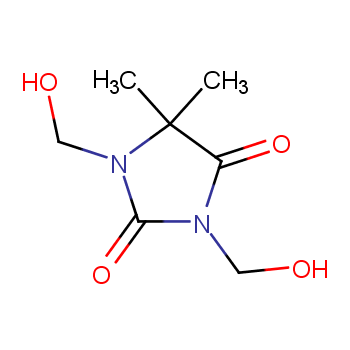
| DMDM Hydantoin | Formaldehyde releaser | 6440-58-0 | Slow hydrolysis releases formaldehyde, which denatures proteins |
| Benzalkonium Chloride | Quaternary ammonium compound | 8001-54-5 | Cationic surfactant disrupts cell membranes and denatures enzymes |
An antimicrobial preservative is a natural or synthetic substance added to a cosmetic or personal-care product to inhibit the development of microorganisms and protect the formulation from microbial spoilage. Unlike antibiotics, which act on specific sites of biosynthetic processes, preservatives act on multiple targets within the microbial cell, a breadth of action that is central to their effectiveness. A well-chosen preservative must be effective over a broad activity spectrum and must remain active for a duration that exceeds the expected shelf-life of the product plus its in-use period.
The four ingredients compared here illustrate how chemistry determines function. Benzoic acid and other organic acids depend on an equilibrium between their undissociated and dissociated forms, so their activity is closely tied to pH. Phenoxyethanol and the other alcohols and phenols act as membrane-active agents across a wider pH range. DMDM hydantoin belongs to the formaldehyde-releasing family and functions through the gradual liberation of formaldehyde during use. Benzalkonium chloride is a quaternary ammonium compound whose antimicrobial power is a direct function of its N-alkyl chain length, which confers the lipophilicity needed to disrupt cell membranes.
Because each family targets the cell differently, formulators often combine preservatives from different families to broaden the spectrum, reduce the required concentration of any single active, and lower the risk of microbial adaptation. This is why the practical question is usually not which single preservative to use but which combination best fits the product's pH, water activity, packaging, and regulatory market.
View the preservatives encyclopedia entry →
| Benzoic Acid | CAS 65-85-0, EC 200-618-2, C7H6O2, MW 122.12 |
| Phenoxyethanol | CAS 122-99-6, EC 204-589-7, C8H10O2, MW 138.17 |
| DMDM Hydantoin | CAS 6440-58-0, EC 229-222-8, C7H12N2O4, MW 188.18 |
| Benzalkonium Chloride | CAS 8001-54-5, EC 616-786-9, C17H30ClN (typical), MW 283.88 |
For organic acids such as benzoic acid, pH is the major determinant of effectiveness because it controls the concentration of the undissociated acid. Only the uncharged molecule can readily penetrate the microbial cell envelope, and once inside the more alkaline cytoplasm it dissociates, releasing protons that collapse the internal pH gradient and disrupt metabolism. Activity therefore falls sharply as pH rises above the preservative's pKa, which is why these preservatives require acidic formulations and why a pH drift of 1.5 units or more toward neutrality can cause a progressive loss of antimicrobial power.
Phenoxyethanol and benzalkonium chloride act primarily at the cell membrane rather than through internal acidification. Phenoxyethanol partitions into the membrane and interferes with cell energetics, retaining useful activity across a broad pH range. Benzalkonium chloride, as a cationic surfactant, adsorbs onto the negatively charged bacterial surface, disrupts the membrane, and denatures membrane-bound enzymes; its potency is governed by the length of its N-alkyl chain, with optimum action against Gram-positive bacteria and yeast at chain lengths of twelve to fourteen carbons and against Gram-negative bacteria at fourteen to sixteen, while chains shorter than four or longer than eighteen carbons are effectively inactive.
DMDM hydantoin is not itself the active biocide; it is a donor that slowly releases formaldehyde through hydrolysis in the presence of water, and it is the liberated formaldehyde that denatures proteins and inhibits microbial growth. This release mechanism gives good persistence but also means the finished product may need formaldehyde-related labelling once the free formaldehyde concentration exceeds the applicable threshold, typically 0.05%.
Preservatives are grouped by chemical family, and this classification is more than academic because the family predicts both the mechanism and the formulation constraints. Organic acids such as sorbic, benzoic, and propionic acid share the pH-dependent mechanism described above and are suited to acidic leave-on and rinse-off products but generally not to oral or eye products. Alcohols and phenols, including phenoxyethanol and benzyl alcohol, are membrane-active and pH-tolerant. Aldehydes and formaldehyde releasers, such as imidazolidinyl urea, diazolidinyl urea, quaternium-15, DMDM hydantoin, and bronopol, act through liberated formaldehyde. Quaternary ammonium compounds, led by benzalkonium chloride, are cationic surfactants used as antiseptics and disinfectants.
Selection begins with a set of practical criteria. The preservative should not interfere with the product's intended action, should not alter its odour, colour, or feel, must not cause toxic or irritating effects to the user, should provide sufficient shelf life, must be stable to moisture, heat, and dryness, must be active at low concentrations, and should remain effective across the product's pH range. Very rarely does one molecule satisfy all of these at once, which is why blends such as phenoxyethanol with an organic acid are common in practice.
The table below compares the physico-chemical properties of the four preservatives. Read together, these values explain why, for example, phenoxyethanol suits water-based serums and emulsions while benzoic acid demands an acidic system and DMDM hydantoin is confined to products where formaldehyde release is acceptable.
| Property | Benzoic Acid | Phenoxyethanol | DMDM Hydantoin | Benzalkonium Chloride |
|---|---|---|---|---|
| Physical form | Solid, white crystalline powder | Clear, colorless oily liquid | Solid, white crystalline powder | White or yellow powder; gelatinous lumps |
| Molecular weight | 122.12 g/mol | 138.17 g/mol | 188.18 g/mol | 283.88 g/mol |
| Odour | Faint, pleasant | Faint aromatic to odourless | Odourless | Aromatic |
| pH (1% solution) | 4.0-4.2 | 6.5-7.15 | 6.5-7.5 | 6.5-7.15 |
| Solubility | Poorly soluble in water; soluble in alcohol, ether, benzene | Partially water-soluble | Highly water-soluble | Freely soluble in water, alcohol, acetone |
| Melting point | 122.3 °C | -2 °C | 1.0-2.5 °C | -5 °C |
| Density | 1.27 g/cm3 | 1.102 g/cm3 | 1.34 g/cm3 | 0.98 g/cm3 |
| Storage / shelf life | Cool, dry, 15-30 °C; 36 months | Cool, dry, 15-30 °C; 36 months | Cool, dry, 15-30 °C; 36 months | Airtight, protected from light and metals; 24-36 months |
| Benzoic Acid formula | C7H6O2; boiling point 249.2 °C; effective only in acidic systems |
| Phenoxyethanol formula | C8H10O2; boiling point 247 °C; stable aqueous solutions |
| DMDM Hydantoin formula | C7H12N2O4; boiling point 303.7 °C; releases formaldehyde |
| Benzalkonium Chloride formula | C17H30ClN (typical); hygroscopic; affected by light, air, metals |
Based on their properties, each preservative is well-suited to a particular set of product types. The table below maps each one to its typical applications and the reason it fits those formats.
| Preservative | Typical applications and rationale |
|---|---|
| Benzoic Acid | Anti-aging products, moisturizers, and sunscreens, where the naturally acidic pH of these systems keeps the undissociated, active form of the acid available. |
| Phenoxyethanol | Serums, creams, lotions, and anti-acne products, where its broad pH tolerance and partial water solubility suit both emulsions and clear aqueous gels. |
| DMDM Hydantoin | Shampoos, hair conditioners, skin gels, and hair-grooming products, largely rinse-off formats where formaldehyde release is acceptable and dilution limits exposure. |
| Benzalkonium Chloride | Hair conditioners, antiseptic products, anti-lice treatments, antistatic hair products, and sanitizers, where its cationic surface activity adds conditioning or disinfecting value. |
Two patterns emerge from these applications. First, rinse-off products tolerate the more aggressive systems such as formaldehyde releasers and QACs far better than leave-on products do, because contact time and residue are limited. Second, the physical form of the product constrains the choice: a clear aqueous gel favours a water-soluble preservative, while an emulsion may require the preservative to partition between phases without deactivating in the oil phase.
Establish the target pH before choosing a preservative, because it narrows the field immediately. An acidic product can support benzoic acid; a near-neutral product rules it out and points toward phenoxyethanol or a QAC. High water activity also raises the microbial challenge and argues for a robust, broad-spectrum system.
All four preservatives are typically added to the water phase below 80 °C or during the cool-down phase at around 40 °C, because each has a thermal limit: benzoic acid resists heat well, phenoxyethanol tolerates up to about 85 °C, and both DMDM hydantoin and benzalkonium chloride are better kept at or below 60 °C. Adding too early risks volatilisation or degradation of the active.
Set the dosage within the recommended range: up to 0.5% for benzoic acid, 0.3-1.0% for phenoxyethanol, 0.15-0.4% for DMDM hydantoin, and up to 0.1% for benzalkonium chloride. Then check compatibility, because cationic QACs are neutralised by anionic surfactants and thickeners, and nonionic surfactants can deactivate other preservatives.
Confirm real-world performance with a preservative-efficacy test in the finished formula, not in a simplified model. Finally, confirm the labelling obligations for the chosen molecule, especially the formaldehyde warning threshold that applies to DMDM hydantoin and the use-condition warnings required for benzalkonium chloride.
The following example illustrates a hypothetical water-based leave-on emulsion preserved with a phenoxyethanol and organic-acid blend. It is presented for illustration only; actual concentrations must be established by challenge testing and adjusted to the product's pH, water activity, and market.
| Component | Function | Illustrative use level |
|---|---|---|
| Phenoxyethanol | Broad-spectrum membrane-active preservative across the product's pH range | 0.3-1.0% |
| Benzoic acid | Organic-acid co-preservative active against fungi in the acidic pH window | Up to 0.5% |
| pH adjuster (citric acid / base) | Sets pH in the range where the organic acid remains largely undissociated | To target pH |
| Water phase to balance | Carrier; preservatives added below 80 °C or during cool-down at about 40 °C | q.s. |
Regulation of these preservatives varies by jurisdiction and product category, and the summaries below are for orientation only. They are not legal advice and may not reflect the latest amendments; always confirm current status with the competent authority or a qualified regulatory professional before commercialising a product.
| Jurisdiction / Body | Instrument | Relevance to these preservatives |
|---|---|---|
| US FDA | GRAS list; Inactive Ingredients Database | Benzoic acid is on the GRAS list; phenoxyethanol and benzalkonium chloride appear in the Inactive Ingredients Database for topical or other preparations; DMDM hydantoin is approved for rinse-off and leave-on use, up to 0.6%. |
| European Union | Cosmetics Regulation; REACH 1907/2006 | Benzoic acid is authorized up to 2.5% in rinse-off, 1.7% in oral care, and 0.5% in leave-on; phenoxyethanol up to 1.0%; DMDM hydantoin requires a formaldehyde warning above 0.05% free formaldehyde; benzalkonium chloride up to 3% in rinse-off hair care and 0.1% elsewhere. |
| National authorities | UK and Canada non-medicinal ingredient lists | Benzoic acid, phenoxyethanol, and benzalkonium chloride are included in nonparenteral medicines licensed in the UK and in the Canadian list of acceptable non-medicinal ingredients. |
| EFSA / equivalent | Food and cosmetic safety evaluation | Organic-acid preservatives are subject to separate food-additive assessments; cosmetic use is governed by the dedicated cosmetic framework rather than food rules. |
| REACH | Regulation (EC) 1907/2006 | All four substances fall under REACH and carry classification, labelling, and safety-data-sheet obligations, with restrictions on some uses. |
| ISO / HACCP | Quality and food-safety management standards | Where preservatives are used in food-contact or hygiene products, document purity, sourcing, and traceability under the site's HACCP plan. |
Antimicrobial efficacy is the primary function of a cosmetic preservative, but the inherent toxicity of these actives is a problem the industry must manage carefully, which is why many regulations limit or prohibit the most potent preservatives. Benzoic acid and phenoxyethanol are generally regarded as low-hazard at permitted use levels but can irritate skin and eyes at higher concentrations. DMDM hydantoin is a formaldehyde releaser and is therefore subject to sensitisation concerns and to labelling once free formaldehyde exceeds the applicable threshold; it is also prohibited in oral-care products.
Benzalkonium chloride deserves particular care. As a cationic surfactant it is corrosive and irritating to skin, eyes, and mucous membranes at higher concentrations, and because it is permitted only at low levels in leave-on products, exceeding these limits raises both safety and regulatory risk. It is also prohibited in leave-on products intended for the diaper area of children under three years of age. Formulators should respect these category exclusions and never extrapolate a rinse-off allowance to a leave-on product.
Across all four preservatives, the guiding principle is that safety and efficacy must be balanced rather than maximised in one direction. Using blends at low individual concentrations, verifying performance by challenge test, and staying within category-specific limits delivers both microbial protection and consumer safety, and it reduces the likelihood that a single high-dose active becomes the source of irritation or regulatory non-compliance.
| Selection question | Guidance |
|---|---|
| Is the product acidic? | If yes, benzoic acid is a strong candidate; if near-neutral, prefer phenoxyethanol, a QAC, or a formaldehyde releaser. |
| Is it rinse-off or leave-on? | Rinse-off tolerates formaldehyde releasers and higher QAC levels; leave-on products are tightly restricted for both. |
| Are anionic ingredients present? | If so, avoid or carefully evaluate benzalkonium chloride, which is neutralised by anionic surfactants and thickeners. |
| Is a formaldehyde claim unacceptable? | If so, exclude DMDM hydantoin regardless of its efficacy, and consider an organic-acid plus phenoxyethanol blend. |
Benzoic acid acts through its undissociated form, which can penetrate the cell wall, so its efficacy collapses as pH rises above its pKa. Phenoxyethanol acts at the membrane and is far less pH-dependent, which is why it works across a wide range of formulations while benzoic acid is confined to acidic systems.
It works by slowly releasing formaldehyde, which is a sensitiser. Finished products may need a "contains formaldehyde" warning once free formaldehyde exceeds 0.05%, and the ingredient is not permitted in oral-care products. It is best suited to rinse-off formats where exposure is limited.
No. As a cationic compound it is neutralised by anionic surfactants and thickeners, losing much of its microbiocidal activity. It is compatible with nonionic and cationic systems, which is why it is used in conditioners and antiseptic formulations rather than in anionic cleansers.
Although it is a powerful biocide, it is also a corrosive, irritating cationic surfactant, particularly to eyes and mucous membranes. It is therefore permitted only at low levels such as up to 0.1% in most leave-on products, and it is excluded from leave-on products for the diaper area of children under three.
| Preservative | CAS | Look-up |
|---|---|---|
| Benzoic Acid | 65-85-0 | Find suppliers |
| Phenoxyethanol | 122-99-6 | Find suppliers |
| DMDM Hydantoin | 6440-58-0 | Find suppliers |
| Benzalkonium Chloride | 8001-54-5 | Find suppliers |
 |
 |
 |
 EN
EN
 Agricultural News
 Food News
 Industrial News
 Cosmetic News
 Pharmaceutical News
 Science News

 1YR
1YR

