-
We detected your language preference as English. Would you like to switch to the English version for a better experience?
Switch to English
Stay here


In the field of chemistry, solubility is an important property that reflects the ability of a substance to dissolve in a solvent. Benzoic acid, as a common organic compound, its solubility is crucial for understanding its applications in chemical reactions and experiments. This article will explore the solubility of benzoic acid to gain insight into the behavior of this compound in solution.
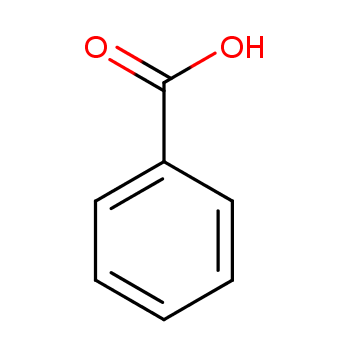
Benzoic acid is a white (or colorless) solid organic compound with the molecular formula C6H5COOH. Its structure consists of a benzene ring (C6H6) and a carboxyl group (?C(=O)OH) substituent. Benzoic acid is often abbreviated as "Bz" (not to be confused with "Bn" for benzyl), hence it is also represented as BzOH, as the molecular formula of benzoic acid is -C6H5CO. It is the simplest aromatic carboxylic acid. The name is derived from gum benzoin, which was its only source for a long time.
Benzoic acid occurs naturally in many plants and is synthesized as an intermediate in many secondary metabolite biosynthesis pathways. Benzoic acid salts are used as food preservatives. Benzoic acid is an important precursor for the industrial synthesis of many other organic substances. Salts and esters of benzoic acid are called benzoates.
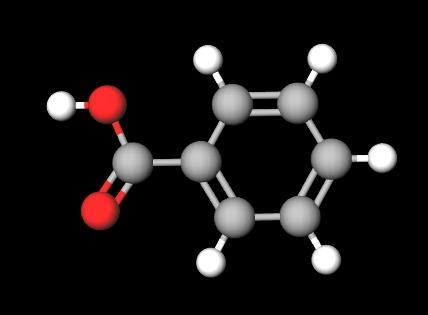
Benzoic acid has varying degrees of solubility depending on the solvent. Here's a classification:
Is benzoic acid soluble in water? While soluble, it's not highly soluble. However, its solubility increases with temperature.
Benzoic acid is readily soluble in various organic solvents such as benzene, carbon tetrachloride, acetone, alcohols (ethanol, methanol, etc.). This is because these solvents can form hydrogen bonds with the carboxylic acid group of benzoic acid, aiding in its dissolution.
Benzoic acid is slightly soluble in water but highly soluble in ethanol and other organic solvents. However, the solubility of benzoic acid in water increases with temperature. At 0°C, the solubility of benzoic acid in water is 1.7 grams per liter, while at 100°C, its solubility increases to 56.31 grams per liter.
Benzoic acid does not readily dissolve in hydrochloric acid (HCl). Benzoic acid is a weak acid, while hydrochloric acid is a strong acid. Although both are acidic solutions, the key factor affecting solubility is that benzoic acid is an organic acid. Organic molecules, such as benzoic acid, dissolve more readily in other organic solvents than inorganic acids like hydrochloric acid.
Benzoic acid dissolves more readily in sodium hydroxide (NaOH) solution than in pure water. This is because a chemical reaction occurs between them. Benzoic acid is a weak acid, and NaOH is a strong base. When they react, sodium benzoate is formed, which is a salt that is more soluble in water than benzoic acid itself.
Benzoic acid has moderate solubility in ethanol. Benzoic acid exhibits moderate solubility in ethanol (about 3.4 g/100 mL at 20°C) due to the ability of both to form hydrogen bonds.
Benzoic acid is considered soluble in ether. This means that it readily dissolves in ether at room temperature. Diethyl ether has similar functional groups (C-O-C) that can interact with the carbonyl (C=O) and hydroxyl (O-H) groups of benzoic acid through dipole-dipole interactions. This allows benzoic acid to be well solvated in diethyl ether.
High solubility. Benzoic acid is highly soluble in dichloromethane (approximately 1.1 g/mL at 25°C) because both are nonpolar molecules and have similar London dispersion forces.
The solubility of a substance refers to its ability to dissolve in a particular solvent. For benzoic acid (C6H5COOH), several factors influence its solubility in a given solution. Here, we will discuss two key factors:
Benzoic acid has both polar and nonpolar components in its molecular structure. The carboxyl group (COOH) is polar, meaning its charge distribution is uneven. This allows it to form hydrogen bonds with water molecules (also polar). However, benzoic acid also has a large benzene ring (C6H6) which is nonpolar and does not interact well with water molecules.
The competition between these opposing forces determines the overall solubility of benzoic acid in water. Although polar groups can form hydrogen bonds, the nonpolar ring hinders its interaction with water molecules. This results in benzoic acid being only slightly soluble in water at room temperature (about 3.44 g/L at 25°C).
(1) Solubility generally increases with temperature. As the temperature increases, the kinetic energy of solute molecules increases. This increased motion enables them to overcome the attractive forces between solute particles, making it easier for them to break free and enter the solvent. In the case of benzoic acid, its solubility increases with temperature. For example, its solubility in water increases from 1.7 g/L at 0°C to 21.45 g/L at 75°C.
(2) Pressure has little effect on the solubility of solids in liquids. This is because most solids are relatively incompressible compared to gases. However, for gases dissolved in liquids, pressure plays a significant role. According to Henry's law, the solubility of a gas in a liquid is directly proportional to the partial pressure of the gas above the liquid. Therefore, for solid benzoic acid, changes in pressure will not significantly affect its solubility in water.
Benzoic acid and its nitro derivatives (3-nitrobenzoic acid and 3,5-dinitrobenzoic acid) are crucial intermediates in organic synthesis. The nitration of benzoic acid yields 3-nitrobenzoic acid and 3,5-dinitrobenzoic acid, which are used in industrial batch reactors. However, despite improvements in conversion rates, the separation efficiency of 3-nitrobenzoic acid and 3,5-dinitrobenzoic acid remains relatively low. Advanced microreactors with very high surface areas, thousands of times greater than traditional reactors, enable rapid heat exchange during reactions, thereby preventing runaway reactions. While current microreactors address the shortcomings of traditional kettle reactors and enhance the nitrification rate of benzoic acid, the large amount of product dissolved in the nitration mother liquor makes it difficult to remove, resulting in relatively low product yields and purity. There is a need to find better recrystallization solvents to improve product purity.
X. Zhang et al. studied the solubility of benzoic acid and its nitro derivatives in seven common pure solvents: water, methanol, ethanol, acetonitrile, toluene, dichloromethane, and ethyl acetate. These were measured by static methods within the temperature range of 273.15 K to 323.15 K at P = 0.1 MPa. The research results help in comparing the solubility of benzoic acid, 3-nitrobenzoic acid, and 3,5-dinitrobenzoic acid, as well as optimizing the industrial nitrification of benzoic acid.
The solubility of benzoic acid and its nitro derivatives (3-nitrobenzoic acid and 3,5-dinitrobenzoic acid) in the seven pure solvents (water, methanol, ethanol, acetonitrile, dichloromethane, toluene, and ethyl acetate) was experimentally determined within the temperature range of 273.15 K to 323.15 K at 101.3 kPa. The solubility of these substances in these solvents increases with increasing temperature. The solubility of benzoic acid in these seven solvents is arranged in the following order: ethanol > methanol > acetonitrile > ethyl acetate > dichloromethane > toluene > water, while that of its nitro derivatives follows this order: methanol > ethanol > ethyl acetate > acetonitrile > dichloromethane > toluene > water. There are significant differences in the solubility of benzoic acid, 3-nitrobenzoic acid, and 3,5-dinitrobenzoic acid in the same solvent. The obtained solubility data are very helpful for the recrystallization and yield improvement of 3-nitrobenzoic acid and 3,5-dinitrobenzoic acid.
The solubility behavior of benzoic acid is a complex interplay of factors such as temperature, pH, and solvent polarity. While its solubility in water is limited under ambient conditions, it can be significantly enhanced by altering relevant factors. Further research into the molecular interactions controlling its solubility in various solvents and conditions is expected to shed light on its behavior, offering potential applications from pharmaceuticals to materials science. Understanding these complexities not only deepens our understanding of basic chemical principles but also paves the way for leveraging the properties of benzoic acid in different industrial and scientific contexts.
[1]Zhang X, Chen J, Hu J, et al. The solubilities of benzoic acid and its nitro-derivatives, 3-nitro and 3, 5-dinitrobenzoic acids[J]. Journal of Chemical Research, 2021, 45(11-12): 1100-1106.
[2]https://en.wikipedia.org/wiki/Benzoic_acid
[3]https://www.chegg.com/homework-help/questions-and-answers
[4]https://www.chemicalforums.com/index.php?topic=4722.0
[5]https://home.miracosta.edu/dlr/210exp1c.htm
[6]https://www.geeksforgeeks.org/benzoic-acid/?ref=header_search
 |
 |
 |
 |
|
 |
 EN
EN
 Agricultural News
 Food News
 Industrial News
 Cosmetic News
 Pharmaceutical News
 Science News

 3YRS
3YRS

