-
We detected your language preference as English. Would you like to switch to the English version for a better experience?
Switch to English
Stay here


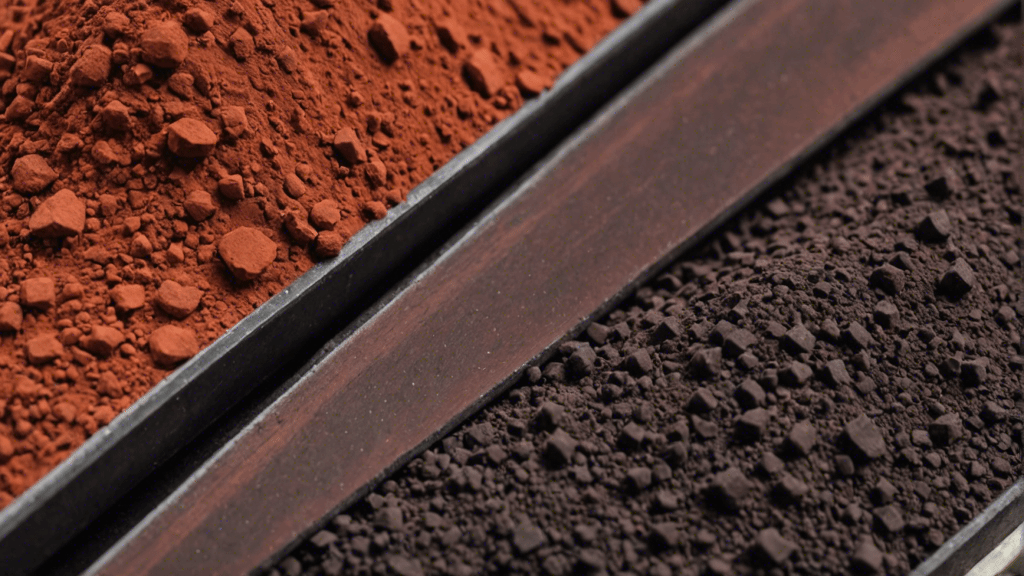
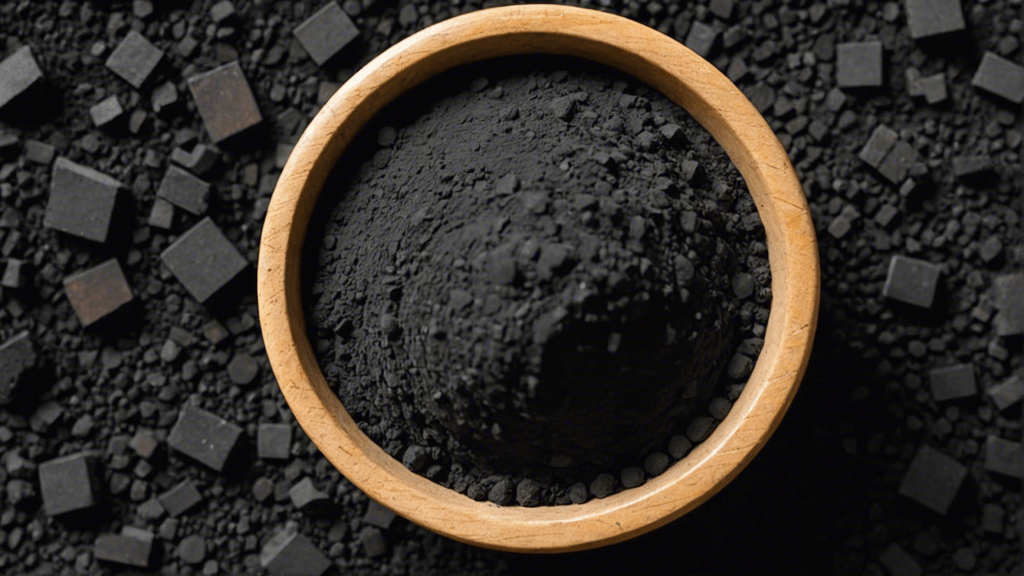
Black iron oxide, also known as iron black, with the molecular formula Fe3O4, chemical name ferric oxide. Is black iron oxide natural? Black iron oxide is a naturally occurring mineral. The source of natural black oxide is typically magnetite, an iron ore. Magnetite, also known as lodestone, is a type of iron oxide, heavy in color, black, and opaque. In theory, black iron oxide contains slightly more iron metal than red iron oxide, but far less than yellow iron oxide. Natural minerals may contain varying amounts of manganese, sulfur, clay, and silica.
Iron black pigment is a black or reddish-black amorphous powder, with a theoretical FeO content by mass fraction of 31.3%, and a density of 5.24 g/cm3. The crystal structure of Fe3O4 is cubic spinel, with a complex face-centered cubic structure lattice, each unit cell accommodating 24 cations and 32 anions, equivalent to 8 Fe3O4 molecular formulas, cations distributed as Fe(III) A[Fe(II)Fe(III)] B, A is the tetrahedral position, B is the octahedral position, lattice constant a=8.396?. The figure below shows the structure of the Fe3O4 1/8 cell.
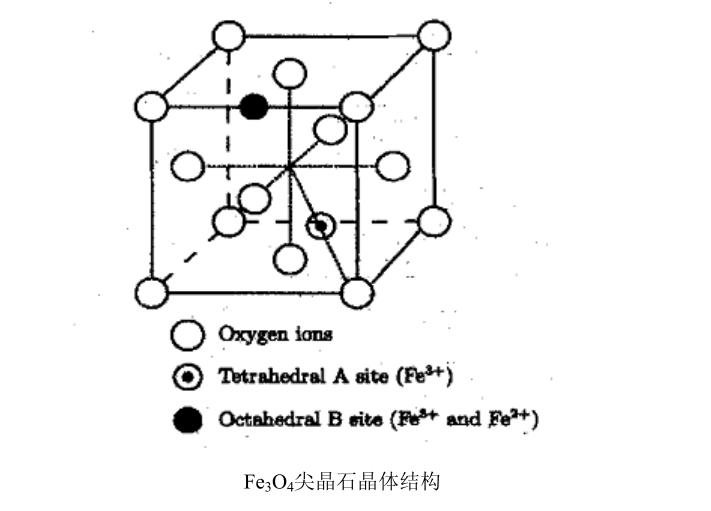
Fe3O4 is a ferrimagnet, with the magnetic moment of the trivalent iron ions in the tetrahedral position and the trivalent iron ions in the octahedral position both being 5μB, with two trivalent iron ions arranged in an anti-parallel manner causing their magnetic moments to cancel each other, thus the magnetization strength of Fe3O4 is only contributed by the divalent iron ions. Fe3O4 has the highest magnetic moment at room temperature of 4μB, the theoretical saturation magnetization strength at room temperature is 92A·m2/kg, magnetic crystal anisotropy constant K1= -1.1×10⁵ erg/cm3, K2=-2.8×10⁵ erg/cm3, Curie temperature is 585℃, and resistivity is 4×10⁻³ Ω·cm.
What is black iron oxide used for? Black iron oxide pigment, as a commonly used chemical raw material, is widely applied due to its extensive color spectrum, non-toxic nature, moderate price, abrasion resistance, and fire resistance. It is primarily used in industries such as construction materials, coatings, plastics, rubber, ceramics, glass, inks, artistic pigments, cosmetics, catalysts, papermaking, pharmaceuticals, food packaging, magnetic recording materials, and feed additives. The black iron oxide uses pigments range from coloring concrete to high-end automotive paints, with grades ranging from primer to food grade, covering various grades of applications.
As an important inorganic color pigment, the annual output of iron oxide pigments ranks first among inorganic color pigments. With increasing global environmental awareness, iron oxide pigments continuously replace organic pigments and toxic inorganic pigments such as red dan, lead chromate yellow, and chromium series. From the perspective of global consumption, construction materials are the largest users of iron oxide pigments, accounting for about half of the total market demand, while coatings account for about 28%. These two items alone account for approximately 80% of the total usage, with plastics, rubber, papermaking, glass, and ceramics accounting for 6%, and other areas accounting for 14%. The consumption structure in China slightly differs, with coatings dominating, accounting for over 50%, and construction accounting for approximately 30%.
Black iron oxide pigment is a versatile black pigment with excellent fire resistance, alkali resistance, and light resistance. Therefore, it is widely used in coatings and colorants for floors, walls, artificial marble, and concrete in the construction sector. Its usage in concrete can reach 5-8%. This pigment has good rust and corrosion resistance, strong coverage, obvious coloring effect, good compatibility with other coating components, and effective UV absorption, making it widely used in various outdoor paints, traffic coatings, metal anti-rust primers, and topcoats. After being processed into transparent iron black through ultrafine treatment, it is also suitable for automotive topcoats, wood coloring, canned coatings, and pharmaceutical packaging coloring. In addition, black iron oxide pigments enhance the aging resistance of rubber products and are unaffected by sulfur or hydrogen sulfide during hot vulcanization reactions, thus widely added to various rubber products including various inner tubes, models, leather goods, and hard products. It also has corresponding applications in plastic products, especially in molding process products with low requirements for thermal stability.
Iron oxide is widely used in cosmetics and beauty products due to its rich natural colors and long-lasting durability. Because iron oxide has natural moisture resistance, the color applied is not easily blurred or stained, thereby improving the user's experience of cosmetics. In skincare products, iron oxide also has sunscreen properties, effectively resisting harmful UV rays, making it an ideal ingredient in sunscreen creams, tinted moisturizers, and mineral cosmetics, providing both color effects and natural sun protection.
Similar to sunscreen, the natural barrier provided by iron oxide for the skin can also protect our skin tone from environmental damage such as pollution, smoke, and climatic stress.
Iron oxide contains antioxidant properties, can neutralize free radicals, reduce oxidative stress on the skin. This helps prevent premature aging, reduce inflammation, and promote overall skin health.
Black iron oxide is an FDA-approved color additive without batch certification necessary. It can be safely used for general cosmetic coloring, including cosmetics for the eyes, in quantities compliant with good manufacturing practices.
What is black iron oxide used for in food? In March 20, 2015, red, yellow, and black iron oxides were approved by the FDA as "exempt" (natural) food colorants suitable for the production of gummies, hard candies, peppermints, and chewing gums. In Europe, iron oxides have been widely used in the food sector for many years and have shown high stability. These pigments do not undergo chemical or physical reactions to acid, heat, light, moisture, oil, oxygen, or pH changes. Therefore, considering various process variables, iron oxide has become one of the ideal choices for candy applications.
Iron oxide is not only highly economical compared to other natural colors but also cost-effective compared to synthetic colors due to its strong coloring power, thus reducing production costs. The usage amount is self-limiting as long as it complies with Good Manufacturing Practices (GMP). Iron oxides exhibit electroplating characteristics similar to synthetic colors, making them suitable for use in compressed tablets and composite coatings. Additionally, these pigments are also very suitable for sugar coatings, hard candies, gummies, licorice, and chewing gums.
Recently, many researchers have been drawn to the environmental applications of magnetic iron oxide-based nanostructures. These nanoparticles have shown significant potential for removing organic and inorganic pollutants. Despite some unresolved uncertainties in the application of iron oxide-based nanostructures, synthesized forms hold promise as beneficial tools for removing various pollutants from water, soil, and air at both experimental and field levels. Furthermore, iron oxide-based nanostructures exhibit great flexibility in in-situ applications. Modified iron oxide-based nanostructures supporting and catalyzing nanoparticles have been synthesized to further enhance the speed and efficiency of nanoparticle remediation (Faraji et al., 2010). Tran et al. (2011) demonstrated that iron oxide-based nanostructures can serve as excellent adsorbents to remove toxic metals such as lead and arsenic from polluted water.
Black iron oxide is highly regarded in the art world for its deep, rich color. It finds wide application in classical paintings, murals, and modern design projects. Artists and craftsmen exploit its versatility, as it not only exerts a powerful aesthetic influence but also blends well with other colors to create a wide range of hues, enabling creativity across various artistic disciplines.
The chemical simplicity and strong chemical stability of black iron oxide pigments have ensured their enduring popularity. Our ancestors understood its value in ancient cave paintings, where it has weathered the ages. In modern times, black iron oxide pigments are extensively used in paints and coatings.
Reportedly, ongoing research on black iron oxide pigments involves both the development of new products and the continuous improvement of existing varieties in terms of performance.
(1) Improving the application performance of black iron oxide pigments through interactions with surfactants, polymers, metal oxides, and their salts attached to the surface functional groups of iron oxide pigments. This method enhances the wetting properties and improves the dispersion and stability of pigments. In the past, the types of black iron oxide pigments were limited, but now a series of new types with high coloring power and high blackness have been introduced. For example, adding citric acid as an additive can produce iron oxide black pigments with effective small particle size, narrow particle size distribution, and good coloring effects. Polyethylene glycol as an additive can produce iron oxide black pigments with excellent color hue, small particle size, and outstanding coloring power.
(2) Ultrafine black iron oxide pigments are increasingly valued and welcomed because of their high radiation and UV absorption capabilities among inorganic pigments.
Black iron oxide, as a multifunctional pigment, holds broad application prospects in fields such as coatings, building materials, and rubber products. With advancing technology and growing demand, black iron oxide is expected to continue playing a vital role, injecting new vitality into various industries.
[1] https://www.naturalpigments.com/natural-black-oxide-dispersion.html
[2] https://sensientfoodcolors.com/en-us/confection/iron-oxides-approved-by-the-fda/
[3] https://makingcosmetics.com/PGIO-IOBL-01.html?lang=en_US
[4] https://lamav.com/blogs/articles/what-s-in-my-skin-care-iron-oxide
[5] https://www.ncbi.nlm.nih.gov/pmc/articles/PMC9533193/
[6] Li, Y. (2010). Study on preparation of iron black pigment from pyrite wastewater. Zhejiang University of Technology.
 |
|
 |
 |
|
|
 EN
EN
 Agricultural News
 Food News
 Industrial News
 Cosmetic News
 Pharmaceutical News
 Science News

 4YRS
4YRS

