-
We detected your language preference as English. Would you like to switch to the English version for a better experience?
Switch to English
Stay here


Cardanol, a natural phenolic compound derived from renewable natural wood materials such as cashew nut shell liquid, is a long-chain alkyl phenol substance with unique advantages including abundance, low cost, excellent performance, and environmental sustainability. Cardanol uses are diverse, and this article will briefly outline the multifunctionality of cardanol and its various applications, highlighting the importance of understanding the multiple uses and benefits of cardanol.
Cardanol is a natural phenol derived mainly from the major component anacardic acid in cashew nut shell liquid (CNSL), a by-product of cashew processing serving as an eco-friendly alternative to phenol. Comparable to nonylphenol, cardanol maintains flexibility and liquid state at very low temperatures; its melting point is below -20°C, density is 0.930 g/mL, and it boils under vacuum (10 mmHg) at 225°C. CAS Registry Number: 37330-39-5.
What are the advantages of cardanol? Cardanol contributes to enhanced flexibility, good drying properties after baking, high electrical insulation performance, and thermal stability. These properties make cardanol an effective substitute for petroleum-based phenols. Cardanol is used in the chemical industry for oil-soluble and alcohol-soluble resins, laminating resins, rubber compounds, and coatings, serving as excellent raw materials for advanced insulating varnishes, paints, and enamels. It is employed in friction materials and surfactants, serves as a pigment dispersant in water-based inks, and is used to manufacture phenolic amines, which act as curing agents for durable epoxy coatings used on concrete floors. In the plywood adhesive resin and laminating industry, cardanol can substitute up to 30% of phenol.

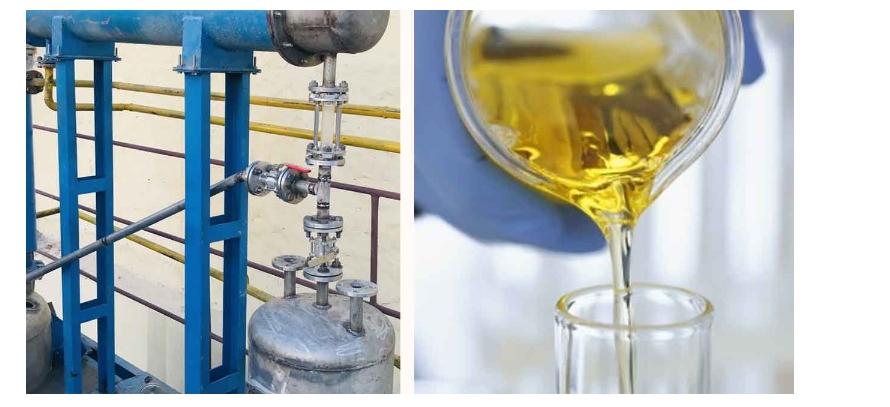
Cardanol appears as a light yellow transparent oily liquid with a slightly pungent odor, insoluble in water, but soluble in organic solvents such as ether, petroleum ether, chloroform, dichloromethane, ethanol, acetone, butyl acetate, and cyclohexane. When left in the air for a long time, it turns reddish-brown. Newly distilled cardanol has a refractive index of about 1.509, viscosity of 0.45-0.52 Pa·s, and relative density of 0.955-0.957.
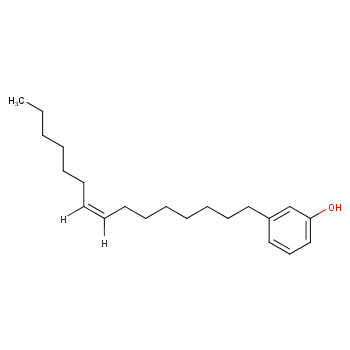
Due to its benzene ring, phenol, and long-chain fatty alkyl, cardanol exhibits high stability, strong heat resistance, good flexibility, hydrophobicity, low permeability, and self-drying properties. Its typical reactions include hydrogenation, addition, epoxidation, and polymerization reactions on double bonds; esterification, allylation, epoxidation, alkylation, propoxylation, and phosphoration reactions on phenolic hydroxyl groups; and condensation, nitration, bromination, hydrogenation, and Mannich reactions with aromatic compounds. Designing numerous novel compounds can be achieved based on the reactive properties of cardanol.
Cardanol, with its long alkyl chain structure and positional substitution, becomes an excellent oil-soluble solvent, exhibiting high-end properties such as electrical insulation and chemical resistance. It can aid in producing semi-solids and solids sols or phenolic varnish resins relying on the reactivity of aldehydes and catalysts.
Cardanol-based varnishes possess high reaction conditions like electrical insulation and water/chemical resistance, providing top-quality varnishes for stamping. Due to their high insulation performance and dielectric loss, they can be used in phenol or cresol-based compositions.
Cardanol resin-based varnishes exhibit excellent air-drying and baking characteristics, making them suitable for wood finishes, food cans, and premium paints. Cardanol resins have good compatibility with epoxy resins, chlorinated rubber, alkyd resins, and phenolic resins, serving as raw materials for various coatings.
Pure cardanol acts as a plasticizer and antioxidant when incorporated into rubber. As an agricultural by-product of cashew manufacturing, it is a cost-effective and widely applicable renewable resource. Due to the various applications of cardanol in the polymer and rubber industries, there is a high demand for them. Furthermore, the chemical grafting of this material onto natural rubber at the latex stage is gaining recognition.
Cardanol-based resins for lamination can enhance the flexibility while improving water and chemical resistance. They also exhibit remarkable electrical insulation properties in laminated boards.
Friction dust prepared from cardanol exhibits unique qualities, aiding in supporting clutch facings and brake linings as a strong adhesive. Cardanol-based resins have been widely used in automotive brake lining applications as adhesives/friction dust, improving impact performance and significantly reducing fading by dissipating heat faster than phenol-formaldehyde (PF) resins.
In the medical field, cardanol serves as a raw material to enhance the manufacturing of ointments, toothpaste, and eye care products. With effective antibacterial and anti-inflammatory properties, cardanol holds promise as a potential drug. Research indicates its antibacterial activity against various pathogens, making it a candidate for developing new antibacterial drugs. Additionally, its anti-inflammatory properties spark interest in its potential applications in treating inflammatory diseases such as arthritis and inflammatory bowel disease. Ongoing research and development in the pharmaceutical industry are exploring the therapeutic potential of cardanol, paving the way for developing new drugs utilizing its beneficial properties.
In recent years, cardanol has emerged as a versatile and sustainable resource, finding innovative applications in various emerging technologies and niche markets. From renewable energy to bioplastics, the unique chemical properties of cardanol pave the way for the development of new products and processes. For example, in the field of renewable energy, cardanol-based biofuels as a promising alternative to traditional fossil fuels have garnered attention for their environmental benefits and economic opportunities. In the realm of bioplastics, cardanol-derived resins have been used to produce eco-friendly packaging materials and durable biodegradable products, addressing the issues of plastic pollution and sustainability. These innovative applications of cardanol not only demonstrate its potential to drive positive environmental change but also highlight its importance in shaping the future of various industries.
Cardanol offers significant environmental benefits mainly due to its eco-friendliness and sustainability. Sourced from natural origins such as cashew and apples, cardanol is a renewable resource that can be harvested without causing significant harm to the environment. Moreover, the production process of extracting cardanol is typically energy-efficient with minimal waste generation, further promoting their eco-friendly image.
The characteristics of cardanol make it an ideal alternative to synthetic chemicals in various industries. For instance, its antioxidant and antibacterial properties make it suitable for food preservation and cosmetics, reducing the need for synthetic preservatives and chemicals that may have harmful effects on the environment. By adopting cardanol as an eco-friendly alternative, industries can significantly reduce their environmental impact while promoting sustainability and environmental stewardship.
Hydrogenated cardanol (HC) is a natural biophenol, also known as 3-pentadecylphenol, extracted from natural raw materials such as cashew nut shell liquid. Its long-chain alkyl structure provides it with high thermal stability, and the phenolic hydroxyl group exhibits a strong ortho-positioning effect, offering the possibility of synthesizing new structural antioxidants. Nitrogen-containing heterocyclic compounds show certain antioxidant properties due to the inclusion of N, S, and other functional groups in their structure and have been applied as antioxidants and photostabilizers in plastics or rubbers
With the continuous progress of technology and scientific understanding, there is significant untapped potential for further exploration and innovation in the application of cardanol. Future research may focus on expanding the use of cardanol across various industries, including pharmaceuticals, agriculture, and materials science, leveraging its unique properties to address emerging challenges and demands. Additionally, exploring sustainable production methods and optimizing extraction processes can further enhance the economic feasibility and environmental sustainability of cardanol.
This article comprehensively outlines the various applications and benefits of cardanol, emphasizing its multifunctionality and potential across various industries. As readers, it is important to recognize the significance of staying updated on the latest research and developments in cardanol applications, as this knowledge can inspire new ideas and solutions. I encourage readers to explore the countless possibilities offered by cardanol and continue to seek ways to harness its unique characteristics to improve society and the environment. Let us explore the potential applications of cardanol and contribute to a more sustainable and prosperous future.
[1] He Yulin, Zeng Xuemei, Xiang Benhao, et al. Application of Hydrogenated Cardanol-Nitrogen Heterocyclic Antioxidant in Polypropylene [J]. Engineering Plastics Application, 2023, 51 (10): 140-147.
[2] Cai Jingrong. Overview of Cardanol Surfactants [J]. China Surfactant Industry, 2023, (09): 36-42. DOI:10.16054/j.cnki.cci.2023.09.009.
[3] Cai Shiqi, Meng Fuliang, Shi Jian, et al. Research Progress of Cardanol-Modified Phenolic Resin [J]. Chemical New Materials, 2023, 51 (06): 29-33. DOI:10.19817/j.cnki.issn1006-3536.2023.06.006.
[4] https://en.wikipedia.org/wiki/Cardanol
[5] https://bansaltrading.com/cardanol-uses-and-manufacturing-process
[6] http://www.senesel.pl/en/applications/cardanol_application
[7] https://iopscience.iop.org/article/10.1088/1757-899X/592/1/012039/pdf
|
 |
 |
|
|
 EN
EN
 Agricultural News
 Food News
 Industrial News
 Cosmetic News
 Pharmaceutical News
 Science News

 4YRS
4YRS

