-
We detected your language preference as English. Would you like to switch to the English version for a better experience?
Switch to English
Stay here


Cashew phenol plays an increasingly important role in our lives. It has extensive applications in industries such as cosmetics, pharmaceuticals, and food. As a crucial chemical raw material, the wonder of cashew phenol lies in its naturally alkylated phenolic structure, combining the waterproof and moisture resistance of aliphatic compounds with the rigidity and chemical resistance of aromatic compounds. In the following article, we will delve into the relevant content of cashew phenol, including its sources, chemical formula, manufacturing process, and significance in various industries, aiming to provide readers with a better understanding of this important chemical substance.
Cardanol is a phenolic lipid compound, primarily obtained from the main component anacardic acid in the by-product cashew nutshell liquid (CNSL) processed from cashews. It finds applications in the chemical industry as resins, coatings, friction materials, and surfactants, serving as a pigment dispersant for water-based inks. It is used in the production of phenolamines, which act as curing agents for durable epoxy coatings used on concrete floors. The name of this substance is derived from the abbreviation of the genus Anacardium, which includes the cashew tree Anacardium occidentale. The name of the genus itself is based on the Greek word for heart. Due to its environmental advantages, durability, water/oil resistance, corrosion resistance, and many unique properties, they are widely used in various industrial applications.
Cardanol, known for its antioxidant properties and various industrial applications, primarily originates from the cashew tree (Anacardium occidentale). The shells, kernels, and even bark of cashews contain phenolic compounds. There are various methods for extracting cardanol, including solvent extraction and steam distillation. In solvent extraction, organic solvents such as ethanol or methanol are used to dissolve the phenolic compounds present in cashew shells, separating them from the raw materials. Steam distillation involves subjecting cashew shells to high temperatures and pressures to release volatile phenolic compounds, which are then collected and concentrated.
Cardanol production is mainly concentrated in regions where cashew trees are grown, such as tropical and subtropical regions in Asia, Africa, and South America. These regions provide ideal climatic conditions for the growth of cashew trees, ensuring a stable supply of raw materials for phenol extraction. It is noteworthy that countries such as India, Vietnam, Nigeria, and Brazil are major producers of cashews and cardanol. Understanding the geographical distribution of cardanol production areas can provide insights into the global supply chain, facilitating strategic planning for industries relying on this valuable compound.
Cardanol is a recognized phenolic lipid, a naturally occurring category of compounds consisting of a phenolic ring and long aliphatic chains. Phenolic lipid, also a component of cashew nutshell oil. Cardanol can be separated from cashew processing through vacuum distillation. The application of cashew liquid in the field of high polymer chemistry has gradually become popular and commercialized. Cardanol is an effective substitute for phenol, accounting for about 30% of phenolic resin, and is the best component to save costs in plywood adhesive resin and laminate industry. The process for producing stable colored cardanol is as follows:
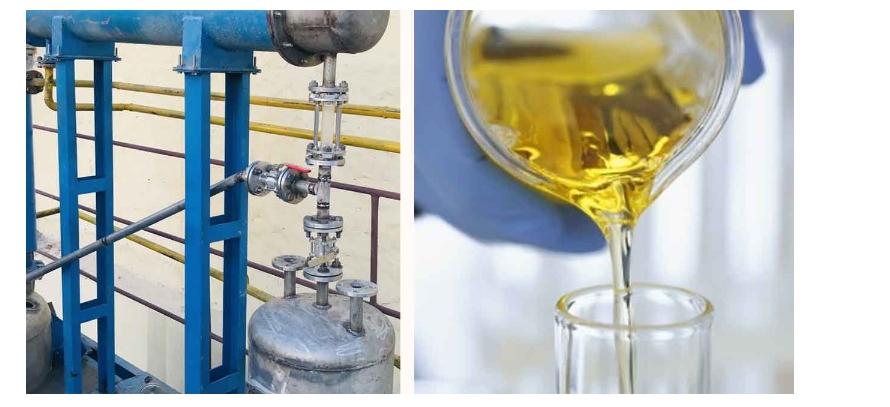
(1) Distillation of crude cardanol to obtain distillate.
(2) The distillate reacts with boric acid to obtain a reaction mixture.
(3) Retain the reaction mixture for further distillation processes.
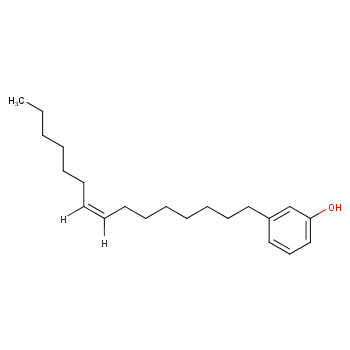
The name cardanol is used for decarboxylation derivatives obtained by heating any naturally occurring inert acid. This includes more than one compound, as the composition of the side chain varies in its degree of unsaturation. Triunsaturated cardanol, the major component (41%). The remaining cardanol is 34% mono-unsaturated, 22% di-unsaturated, and 2% saturated. The general structural formula of cardanol is as follows:
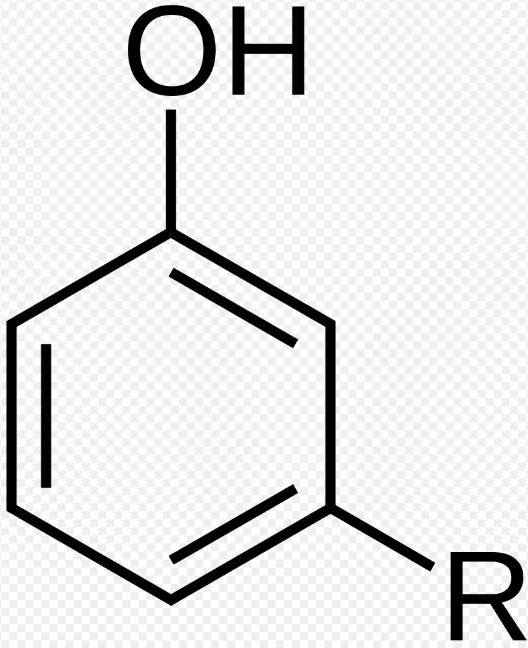
The chemical structure example of Cardanol:
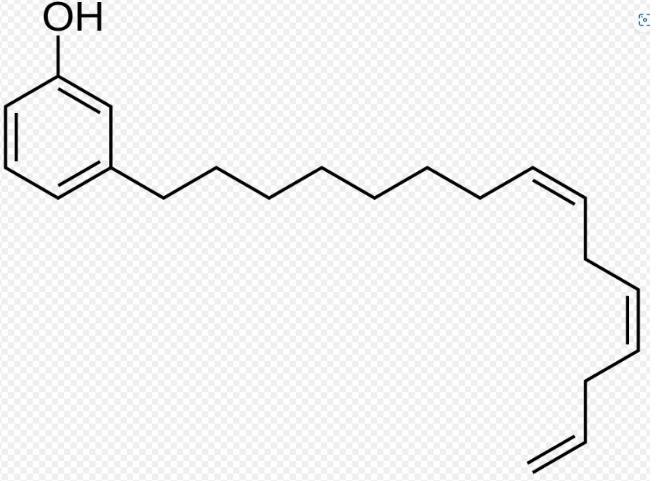
The molecular structure of cardanol plays a crucial role in determining its properties and behavior in chemical reactions. The presence of the benzene ring imparts aromaticity and allows resonance stabilization, making cardanol less reactive compared to aliphatic compounds. Additionally, the long alkyl side chain contributes to the hydrophobicity of cardanol, affecting its solubility and interaction with other molecules. Understanding the molecular structure of cardanol helps comprehend its reactivity, stability, and potential applications in pharmaceuticals, food preservation, and materials science.
Due to the unique structure of cardanol, they possess strong water resistance, high electrical insulation, chemical resistance, and considerable flexibility. The hydrocarbon side chains contribute to the high solubility of cardanol aldehyde in drying oils such as tung oil and linseed DCO. Cardanol is flexible, maintaining a liquid state even at low temperatures. Its melting point is below 20°C, boiling under reduced pressure at 225°C. Cardanol can also be an ideal formation for biobased eco-design polymer microcapsules. They can be added to catalysts, self-healing agents, drugs, and more. Cardanol is also a type of terpene, which can be found in essential oils. They also possess high antioxidant properties, making them a perfect choice against skin cancer, pancreatic cancer, etc. The core properties of cardanol are as follows:
(1) The residue of cardanol obtained by distillation can be used to produce friction dust in rubber composite materials and brake pads.
(2) Cardanol is a renewable, inexpensive, and adaptable material.
(3) Derivatives of cardanol are used in the laminate industry to reduce brittleness and improve the flexibility of laminates.
(4) Quick drying after baking, high thermal conductivity, high electrical conductivity, and high flexibility.
(5) They are resistant to the smoothing effect of mineral oils.
(6) Cardanol has good resistance to alkaline solutions and insects.
(7) The molecular structure of this material is unique, with long hydrocarbon components and a simple cross-linked structure.
Studies on the biodegradability of cardanol indicate that the biodegradability of cardanol depends on factors such as concentration, environmental conditions, and microbial activity. While some studies suggest that cardanol can be degraded by microorganisms in soil and water over time, others indicate that under certain conditions, the biodegradability of cardanol may be limited. In comparison, the environmental impact of cardanol is considered lower than that of synthetic phenolic compounds commonly used in industrial applications. This is due to its natural origin and biodegradability potential, which reduces its persistence in the environment and minimizes long-term ecological risks.
The biodegradability of cardanol and its relatively low environmental impact make it an attractive choice for environmentally friendly and sustainable products. Industries are increasingly incorporating cardanol into various applications, including biodegradable plastics, coatings, adhesives, and preservatives, as part of efforts to reduce reliance on fossil fuel-derived chemicals and mitigate environmental pollution. By leveraging the natural properties of cardanol, companies can develop eco-friendly alternatives with considerable performance while minimizing ecological footprints. Thus, cardanol is poised to promote environmental sustainability across different industries.
Here is an overview of the industrial applications of cardanol:
(1) Vulcanizing agents for natural rubber.
(2) Acrylic coatings.
(3) Composite materials for reinforcing natural fibers.
(4) Epoxy resins and adhesives.
(5) Cardanol derivatives: liquid crystal polyester.
(6) Ship and heavy-duty applications such as protective coatings.
(7) Epoxy resin anticorrosive coatings.
What is the polymerization of cardanol? The polymerization of cardanol, which involves linking multiple cardanol molecules together through covalent bonds, has become a key element in today's innovative materials. This chemical derived from natural cashew nutshell oil, with its benzene ring structure, high-temperature resistance, polar hydroxyl groups, and carbon 15 straight-chain containing unsaturated double bonds, makes it an ideal foundation for polymers.
Polymerizing cardanol is a highly promising new material manufacturing technology that can be used to produce various functional materials, such as thermosetting phenolic resins, liquid or powdered epoxy curing agents, etc. Polymerized cardanol also has many unique advantages, such as the ability to adjust material properties such as strength, transparency, and heat resistance by adjusting its structure. Therefore, in many application areas, polymerized cardanol has demonstrated excellent performance and broad application prospects.
Through the polymerization of cardanol, we can create various innovative materials, which have extensive applications in aerospace, electronic equipment, building materials, and other fields. High-strength carbon fibers can be used to manufacture lightweight, high-strength aerospace materials, while transparent plastic materials can be used to manufacture high-quality optical devices.
The properties of cardanol and its prospects in various industries are extensive. From its antioxidant and antibacterial properties to its role in polymerization and material innovation, cardanol offers a variety of benefits, contributing to its versatility and practicality. As we continue to explore the potential of cardanol, further research and development efforts are expected to unlock new applications and enhance existing ones. We encourage readers to delve deeper into the field of cardanol products, whether through exploring the wide range of available products or delving into the complexity of their manufacturing processes. By harnessing the potential of cardanol, we can leverage its unique properties to address numerous challenges and pave the way for sustainable and innovative solutions across various sectors.
[1] Loureiro T, Dip R M M, Lucas E, et al. Cardanol polymerization under acid conditions by addition and condensation reactions[J]. Journal of Polymers and the Environment, 2018, 26: 555-566.
[2] https://en.wikipedia.org/wiki/Cardanol
[3] https://www.kumarasamyindustries.com/what-is-cardanol/
[4] https://bansaltrading.com/cardanol-uses-and-manufacturing-process
 |
|
 |
|
|
 EN
EN
 Agricultural News
 Food News
 Industrial News
 Cosmetic News
 Pharmaceutical News
 Science News

 4YRS
4YRS

