-
We detected your language preference as English. Would you like to switch to the English version for a better experience?
Switch to English
Stay here


Dimethyl isophthalate is a significant organic compound commonly used as a plasticizer in plastic production and finds extensive applications in areas such as coatings, inks, adhesives, and more. Its distinctive chemical structure and properties confer unique functionality and application value. This article aims to explore the definition, properties, and application areas of dimethyl isophthalate to help readers gain a comprehensive understanding of this important compound and promote its broader application and further research across various fields.
DMIP, Dimethyl isophthalate, CAS: 1459-93-4, is a derivative of dimethyl isophthalate. It is considered a specialty chemical with various chemical component applications. Dimethyl isophthalate serves as an intermediate in polyester synthesis, allowing for the production of high-quality fibers and polyester films, enhancing clarity and structural strength. Apart from aiding in altering the transparency of PET, dimethyl isophthalate also lowers the melting point of PET resin, facilitating its use in films, bottles, and other applications, attributed to increased processing temperatures.
Dimethyl isophthalate's primary advantage lies in its ability to yield high molecular weight polyester fibers through the ester interchange reaction of methanol with ethylene glycol. Another significant application area for DMIP is in engineering plastics. Due to its purity, DMIP also serves as an intermediate for pharmaceutical applications. Its structure is illustrated below:
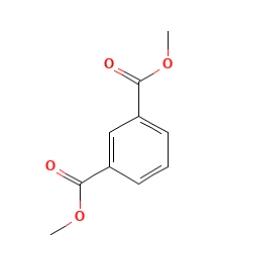
Dimethyl isophthalate is a widely used industrial chemical with two main applications:
Dimethyl isophthalate is essential in synthesizing polyesters, particularly key intermediates for high-quality fibers and polyester films, enhancing their clarity and structural strength. Additionally, dimethyl isophthalate reduces the melting point of PET resin, making it more suitable for film, bottle, and other product processing.
Dimethyl isophthalate also serves as a plasticizer, a substance that enhances the flexibility and elasticity of plastics. However, unlike some other phthalate esters, due to its volatility, dimethyl isophthalate is not widely used as a plasticizer for PVC. It is more commonly utilized as a plasticizer for cellulose esters like cellulose acetate, used in various products such as films and coatings. In the past, due to its plasticizing properties, dimethyl isophthalate was used in nail polish and artificial nails, but this application is now less common. Dimethyl isophthalate is also a plasticizer for cellulose acetate phthalate (CAP), a material used in enteric coating for pharmaceuticals. These coatings aid in drug dissolution in the intestine rather than the stomach.
Dimethyl isophthalate undergoes nitration to produce nitrodimethyl isophthalate, an intermediate with wide-ranging application value. Nitration involves the replacement of hydrogen atoms on the aromatic ring of dimethyl isophthalate with nitro groups (NO2). Ideally, achieving regioselective nitration is the goal, meaning the nitro group preferably ends up at specific positions on the ring.
Nitration reactions, particularly those involving concentrated nitric acid, can be exothermic (release heat) and have potential hazards. Conducting experiments in a well-ventilated fume hood and adhering to appropriate safety protocols are crucial.
Dimethyl isophthalate exhibits very low solubility in water, with a specific value of approximately 290 milligrams per liter.
Dimethyl isophthalate is soluble in common alcohols such as methanol and ethanol. Specific concentrations of solubility are often not provided but described as "sparingly soluble," meaning it dissolves to some extent but not as readily as in good solvents.
The CAS number of dimethyl isophthalate is 1459-93-4. CAS number, i.e., Chemical Abstracts Service number, is a unique identifier assigned to each chemical substance registered with the Chemical Abstracts Service (CAS) of the American Chemical Society. It serves as the globally recognized standard for chemical identification. In the case of dimethyl isophthalate, the CAS number 1459-93-4 acts as a fingerprint for this particular compound. This unique code ensures clear and unambiguous communication of isophthalate across scientific disciplines, regulatory agencies, and international borders. CAS numbers play a crucial role in various aspects of chemical identification:
It eliminates confusion caused by synonyms or trade names, ensuring everyone refers to the same compound.
CAS numbers are used to search extensive chemical databases like PubChem or SciFinder for detailed information on the properties, safety data, and scientific literature of dimethyl isophthalate.
CAS numbers are often required for regulatory purposes, such as registering chemicals with government agencies or labeling products for safe handling.
The future outlook for dimethyl isophthalate appears positive, with the market expected to grow significantly at a compound annual growth rate (CAGR) by 2030. This contrasts sharply with the closely related dimethyl phthalate (DMP) market, which is projected to decline over the same period. The following are driving forces behind this phenomenon:
Applications across various industries such as textiles, personal care products, and plastics are expected to drive demand for dimethyl isophthalate.
Developing new uses for dimethyl isophthalate can further expand the market.
In conclusion, dimethyl isophthalate plays a vital role as an important organic compound with widespread applications in plastics, coatings, inks, and other fields. Its unique chemical structure and properties make it an indispensable component in many products, providing robust support for the development of various industries. In the future, with continued technological advancements and growing demand, the application areas of dimethyl isophthalate are expected to expand further, while also necessitating enhanced environmental and safety management in its production and use processes. It is hoped that this article will provide readers with a comprehensive understanding of dimethyl isophthalate, promoting its broader application and further research across various fields.
[1] https://pubchem.ncbi.nlm.nih.gov/compound/Dimethyl-isophthalate
[2] https://www.ehs.washington.edu/about/latest-news/nitric-acid-incident-campus
[3] https://pubchem.ncbi.nlm.nih.gov/source/hsdb/6138
[4] https://www.tecnosintesi.com/Chemicals/DMIP.html
|
 |
|
|
 EN
EN
 Agricultural News
 Food News
 Industrial News
 Cosmetic News
 Pharmaceutical News
 Science News

 3YRS
3YRS

