-
We detected your language preference as English. Would you like to switch to the English version for a better experience?
Switch to English
Stay here


Direct Yellow 12 (Direct Yellow 12), an important organic compound, finds wide applications in dyeing, pigments, and printing industries. Past research has identified potential risks to human health associated with this substance. This article will provide a detailed overview of the properties, uses, and potential risks of Direct Yellow 12.

Direct Yellow 12, also known as Chrysophenine G, is a synthetic azo dye. It is a deep yellow uniform powder soluble in water. Direct Yellow 12 dye is a powder form of direct yellow dye. This dye is primarily used in the leather industry to dye leather yellow. Besides leather, it is also used in the paper and textile industries, imparting a deep yellow color to the products. This water-soluble Chrysophenine G dye is known for its lightfastness, acid resistance, and alkali resistance. Direct Yellow 12 is a relatively safe dye, but caution should be exercised in handling it like any chemical. When handling Direct Yellow 12, gloves and goggles should be worn, and inhalation of dust should be avoided. Direct Yellow 12 appears as a brown powder. It is red-yellow in water, slightly soluble in ethylene glycol ether, and a brown powder in other organic solvents.
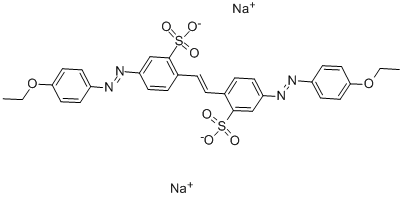
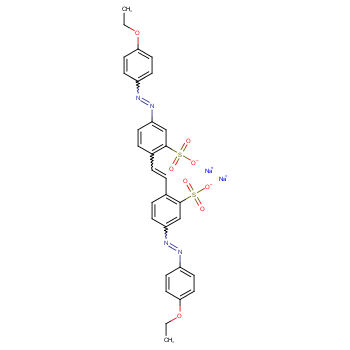
Direct Yellow 12 is an azo dye, meaning it contains a central azo group (-N=N-) connected to two aromatic rings. This dye also contains a sulfonic acid group (-SO3Na) soluble in water. The direct yellow 12 structure is as follows:

The molecular formula indicates that the molecule contains 30 carbon atoms (C), 26 hydrogen atoms (H), 4 nitrogen atoms (N), 8 oxygen atoms (O), and 2 sulfur atoms (S). Two sodium atoms (Na) are attached to the sulfonic acid group.
Direct Yellow 12, a dye used for coloring various materials, has been assigned a unique CAS number, 2870-32-8. The CAS number, allocated by the Chemical Abstracts Service, is an essential identifier and a universal code for chemicals. This unique identifier plays a crucial role in the scientific community and regulatory bodies, allowing unambiguous identification of specific chemicals across different databases and facilitating global tracking, regulation, and safety assessment of chemicals.
Direct Yellow 12 is a versatile dye with various applications:
Direct Yellow 12 is particularly suitable for dyeing cellulosic fibers such as cotton, linen, viscose rayon, acetate, and jute. This is because the dye has an affinity for cellulose, allowing it to adhere well to these fibers.
Direct Yellow 12 can be used to color various types of paper, including coated paper, uncoated paper, newsprint, tissue paper, and specialty paper. It imparts a bright yellow color to the paper, making it suitable for decorative applications or colored packaging.
Direct Yellow 12 is also used for leather coloring. It provides rich yellow hues to leather products such as handbags, shoes, and interior furnishings.
Due to its good solubility in water, Direct Yellow 12 can be used in ink production. It is used in various printing applications such as flexographic and inkjet printing.
Direct Yellow 12 can also be used to color other materials such as plastics, rubber, and biological stains. However, these applications are less common compared to those mentioned above.

Direct Yellow 12 exhibits excellent resistance to fading caused by light exposure. This ensures that colored materials, especially paper, maintain their bright yellow color for an extended period, making it an ideal choice for applications where lasting visual appeal is crucial.
Unlike some dyes restricted to specific materials, Direct Yellow 12 demonstrates versatility by effectively coloring various paper-based substrates. This includes coated paper, uncoated paper, and even recycled paper. This characteristic makes it a valuable asset for manufacturers and publishers, enabling them to achieve consistent coloring across a range of paper products.
While comprehensive assessments require a deeper understanding of specific manufacturing processes and potential waste disposal methods, some sources suggest that Direct Yellow 12 may offer environmental advantages. It is worth noting that further research is needed to conclusively confirm this.
Avoid creating dust clouds or inhaling dust particles. If dust is present, wear a dust mask or respirator.
Direct Yellow 12 can irritate the skin and eyes. Wear chemical-resistant gloves, safety glasses, and protective clothing to prevent contact.
Do not eat, drink, or smoke near Direct Yellow 12. Thoroughly wash hands after handling.
Ensure ventilation to prevent inhalation of dust or smoke.
Direct Yellow 12 is not highly flammable, but it's best to avoid handling near heat sources.
(1) Skin Irritation (may cause irritation or inflammation)
(2) Severe Eye Irritation (can cause eye damage)
Store Direct Yellow 12 in a cool, dry, well-ventilated area. Keep in sealed containers to prevent contamination from dust or moisture. Keep away from direct sunlight and heat sources.
Do not pour Direct Yellow 12 directly into drains or dispose of it with household waste. Contact local waste disposal authorities to learn about proper disposal procedures, which may involve specialized hazardous waste treatment facilities. Safety should always come first when handling chemicals. If you're unsure about any aspect of using Direct Yellow 12, consult safety professionals or the manufacturer's Safety Data Sheets (SDS).
Unlike some dyes that require specific mordants (chemicals that help dyes bond with fabrics), Direct Yellow 12 has an affinity for cellulose fibers such as cotton and viscose. This makes the dyeing process simpler and more direct. Additionally, Direct Yellow 12 has good color fastness, which can cover defects on "dead cotton," cotton affected by chemical treatments that affect its dyeing performance.
Direct Yellow 12 is typically applied in the exhaust dyeing process. The dye dissolves in water at specific temperatures, and then the fabric is immersed in the dye solution. Dye molecules attach directly to the fibers, resulting in bright yellow coloration. This process can also be used for printing on cotton or viscose fabrics.
Direct Yellow 12 is not approved for use as a food dye. Dyes used in food must undergo rigorous safety testing to ensure they are non-toxic for human consumption. Direct Yellow 12 is specifically designed for industrial applications and may not meet the strict regulations for food additives.
Direct Yellow 12 is primarily sold by chemical suppliers specializing in dyes and textile industry products. These suppliers often have minimum order quantities, so they may not be suitable for occasional users. Alternatively, some online retailers may offer small quantities of Direct Yellow 12, but it's important to ensure you're purchasing from a reputable source.
Direct Yellow 12, as a commonly used dye, plays an important role in the textile industry, with its excellent dyeing performance and stability making it an ideal choice for fiber dyeing and printing. It is hoped that this article will provide readers with valuable information, enriching their understanding of Direct Yellow 12 and promoting its widespread application in the textile industry. Let us focus on the development of the dyeing field together, exploring the characteristics and applications of more excellent dyes, and contributing to the development of the textile industry. Additionally, the use of Direct Yellow 12 also requires compliance with relevant laws, regulations, and safety standards to ensure its legality and safety of use.
[1] https://patents.google.com/patent/CN105670339A/en
[2] https://www.xcwydyes.com/news/you-need-to-get-basic-knowledge-of-direct-yellow-12-nature-application-and-production-process
[3] https://www.shivamchemicalsank.com/direct-chrysophenine-g-direct-yellow-12--7731871.html
[4] https://pubchem.ncbi.nlm.nih.gov/
[5] https://textileengg.blogspot.com/2015/11/direct-dye.html
|
 |
 |
|
 EN
EN
 Agricultural News
 Food News
 Industrial News
 Cosmetic News
 Pharmaceutical News
 Science News

 15YRS
15YRS

