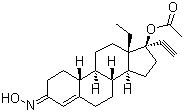
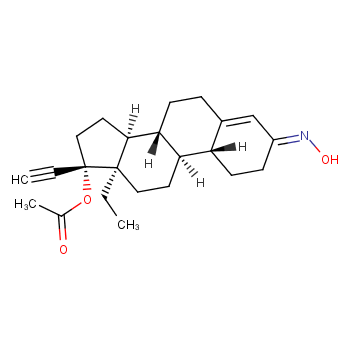
Norgestimate is a white or off-white crystalline powder with a molecular formula of C23H31NO3, a density of 1.22 g/cm³, a melting point of 216°C, and a boiling point of 497.9°C at 760 mmHg. Also known as norgestrel and ethynodiol diacetate, this newer, potent progestin is used in combination with ethinyl estradiol in contraceptives. It functions similarly to norgestrel, with slightly stronger activity than norethindrone. Norgestimate lacks androgenic activity, but has antiestrogenic effects. It minimally impacts lipid metabolism, is well-tolerated, and does not increase weight. It does not have adverse androgenic effects and is known for reliable contraceptive efficacy, good cycle control, and favorable lipid profiles.
Combination of ethinyl estradiol and norgestimate is an effective method of contraception. This oral contraceptive containing two hormones effectively prevents pregnancy by inhibiting the full maturation of the female egg, making it unable to be fertilized by sperm. Additionally, this hormone combination is used to treat moderate acne in females who are at least 15 years old and wish to use it for contraception.
Side effects of using estrogen and norgestimate together include menstrual irregularities, headaches, nausea, abdominal pain, breast tenderness, and mood changes. Norgestimate is preferred over other progestins as it typically does not induce male characteristics, which is beneficial since androgenic activity is associated with atherosclerosis and increased risk of myocardial infarction.

Clinical studies have evaluated single-phase and triphasic ethinyl estradiol with norgestimate (a progestin with significant progesterone receptor affinity and minimal androgen receptor affinity) formulations to determine if norgestimate's receptor binding characteristics provide higher safety without compromising efficacy. So far, clinical trials show that both single-phase and triphasic ethinyl estradiol/norgestimate formulations offer contraceptive effects comparable to other oral contraceptives. These formulations have not been associated with weight gain or increased blood pressure in clinical trials. Importantly, single-phase and triphasic ethinyl estradiol/norgestimate formulations have shown favorable impacts on metabolic parameters, including increased serum high-density lipoprotein cholesterol and decreased low-density lipoprotein/high-density lipoprotein ratio, which is considered sensitive to atherosclerosis risk. The impact on carbohydrate metabolism is minimal, with no clinical effects observed.
A few women may experience weight gain while using norgestimate and other contraceptives, usually due to fluid retention and changes in appetite.
A review of studies on hair loss and oral contraceptive (OC) use shows that during early treatment, a temporary increase in the proportion of patients in the telogen phase occurs, but it returns to pre-treatment levels after six months. Despite increased OC use from 1952 to 1971, the incidence of diffuse hair loss in women remained unchanged, suggesting minimal impact of OCs on hair loss. There may be a causal relationship between stopping estrogen and hair loss. However, genetically susceptible women may be affected by oral contraceptives. It is recommended to discontinue contraceptives for patients with hair loss accompanied by seborrheic dermatitis or hirsutism.
Norgestimate has extremely low androgenic activity and does not significantly affect other hormone levels. Hormones in contraceptives might prolong the hair follicle's resting phase or cause premature shedding, leading to hair loss. Although hormones in all contraceptives may trigger hair loss, norgestimate, norgestrel, desogestrel, and ethynodiol diacetate have the weakest androgenic activity, making them less likely to cause hair loss. Androgens, particularly dihydrotestosterone (DHT), are the major hormones causing hair follicles to enter and stay in the shedding phase, so choosing drugs with lower androgenic activity helps reduce the risk of hair loss.
Managing weight while on norgestimate is crucial for overall health. To maintain a healthy weight, consider combining lifestyle and dietary recommendations. Regular physical exercise, a balanced diet rich in fruits, vegetables, and whole grains, and limiting processed foods are essential. If you are concerned about weight gain or loss while taking norgestimate, be sure to consult your healthcare provider. Their expert advice can help you create a personalized plan to meet your specific needs and ensure ongoing health.
Norgestimate is an oral contraceptive that effectively suppresses ovulation and alters cervical mucus. However, despite its excellent contraceptive performance, individual health conditions and needs vary, so consulting a doctor before using norgestimate is essential. A doctor can provide professional advice based on individual health conditions and medical history, ensuring the safety and effectiveness of this medication.
[1]https://pubmed.ncbi.nlm.nih.gov/4736624/
[2]https://pubmed.ncbi.nlm.nih.gov/8178906/
[3]https://en.wikipedia.org/wiki/Norgestimate
[4]https://baike.baidu.com/item/%E8%AF%BA%E5%AD%95%E9%85%AF
[5]https://www.sciencedirect.com/topics/medicine-and-dentistry/norgestimate
[6]https://pubmed.ncbi.nlm.nih.gov/1605287/
[7]https://www.ncbi.nlm.nih.gov/pmc/articles/PMC1589552/
[8]Kang Song, Zhou Ziqing, Gao Ruichang. Synthesis of norgestimate[J]. Chemical Industry and Engineering, 2008, (03): 233-236.
|
 |
 |


 4YRS
4YRS