Flumethrin, as an effective insecticide, finds extensive use across various domains owing to its potent insecticidal effect and broad spectrum capabilities. This article will delve into the diverse flumethrin uses, elucidating its significant roles and value in different fields.
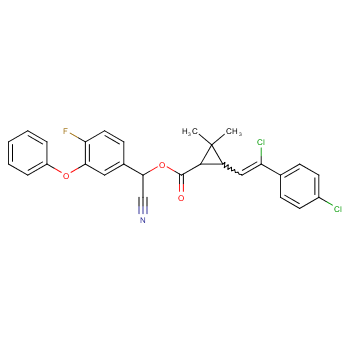
Flumethrin is a synthetic pyrethroid insecticide, used since 1986 as an acaricide in animals. Its pharmacological action involves targeting sodium channels in nervous tissues. With its chemical name as (RS)-α-cyano-4-fluoro-3-phenoxybenzyl-3-(β,4-dichlorostyryl)-2,2-dimethylcyclopropanecarboxylate, flumethrin affects insects, causing paralysis and death. Widely used against ectoparasites in livestock such as cattle, sheep, and goats, it's also applied to cats and dogs. Flumethrin is extensively employed in controlling varroa mites in apiculture. Research detects residues of flumethrin in wax and honey in Spain, Italy, and China. However, it exhibits toxic effects on various experimental animals, impacting liver enzymes, metabolic pathways, and inducing oxidative stress and hepatotoxicity.

Flumethrin serves as a valuable tool in veterinary medicine for combating ectoparasites, parasites living on the outer surface of animals. What is the drug flumethrin used for? Acting as a neurotoxin to ticks, lice, and mites, synthetic pyrethroid insecticides like flumethrin disrupt their nervous systems, leading to death. In livestock such as cattle, sheep, and goats, flumethrin is commonly used as a wash or dip, providing persistent protection against these pests. It's also formulated for horses, dogs, and even beekeeping to control varroa mites threatening bee colonies. Flumethrin is licensed for use in bovine demodicosis, requiring thorough treatment until chronic infection subsides.
Though not the most widely used insecticide in agriculture, flumethrin plays a crucial role in crop protection and pest management. Specifically targeting destructive insects and mites, it serves as a valuable tool for farmers seeking to ensure crop health and yields. Flumethrin is generally not used as a medication for humans or crops. Proper application minimizes environmental and avian risks but is toxic and hazardous to aquatic organisms, emphasizing the importance of flea baths or dips for livestock.
Flumethrin exhibits potent dual action: repelling and killing insects that carry diseases like malaria, leishmaniasis, and Lyme disease. This disrupts transmission cycles, preventing the spread of these diseases. Research explores the use of flumethrin-treated mosquito nets, clothing, and applications on animals to establish protective barriers against disease vectors. Treated mosquito nets repel mosquitoes, significantly reducing malaria transmission, or injecting clothes with flumethrin can prevent ticks carrying Lyme disease.
Effective control strategies necessitate a deep understanding of insect responses to insecticides, extending beyond direct effects. Scientists study how flumethrin influences insect behavior in controlled laboratory environments. Observing its impact on activities like feeding, mating, and flight patterns provides valuable insights, aiding in designing targeted interventions to maximize effectiveness against disease-carrying insects.
The potential link between flumethrin and cancer is a controversial issue. Here's what we know:
A review by the Joint FAO/WHO Meeting on Pesticide Residues indicates a long-term study on rats exposed to flumethrin did not show an increased tumor incidence. This suggests that at tested doses, flumethrin is unlikely to be carcinogenic. The meeting reviewed toxicological investigation results, concluding that flumethrin with low trans-isomer content has no carcinogenic potential.
Some in vitro studies suggest that flumethrin may possess genotoxicity, implying it could damage DNA and increase cancer risk. However, these studies typically involve high concentrations of flumethrin unlikely encountered under normal usage conditions.
S. Kara-Ertekin et al. assessed flumethrin's cytotoxicity, apoptosis, genotoxicity, and estrogenic effects on MCF-7 breast cancer cells. Cell viability decreased dose-dependently at concentrations of 100 μM and higher compared to controls. Significant increases in cytotoxicity and apoptosis were observed at concentrations of 1000 μM. Expression of the anti-apoptotic gene BCL2 significantly decreased, while the expression of BAX, TP53, and P21 increased significantly. Comet assay results indicated significant alterations in tail length, tail % DNA, tail moment, and Olive tail moment at concentrations higher than 1 and 10 μM. Additionally, flumethrin at a concentration of 0.1 μM affected ERα-mediated cell proliferation and increased the transcription of estrogen-responsive genes pS2 (TFF1) and progesterone receptor (PGR). Thus, flumethrin induces apoptosis and cytotoxicity at high concentrations and also induces genotoxicity at lower concentrations. Flumethrin is an endocrine-disrupting insecticide with estrogenic effects at very low concentrations.
Flumethrin, with its efficacy and broad applicability, has demonstrated extensive uses in agriculture, public health, and pest control. In agriculture, it effectively protects crops from pests, enhancing yield and quality. In public health, it serves as a crucial tool in controlling disease vectors and preventing disease spread. In veterinary medicine, flumethrin is used against parasitic insects and ticks on livestock and in treating parasitic mites in bee colonies. Its multifunctionality renders it an indispensable tool in modern pest management. However, to ensure its continued efficacy and environmental safety, future research needs to further optimize its usage strategies, reduce impacts on non-target organisms, and explore more environmentally friendly application methods.
[1] Kara-Ertekin S, Yazar S, Erkan M. In vitro toxicological assessment of flumethrin’s effects on MCF-7 breast cancer cells[J]. Human & Experimental Toxicology, 2021, 40(12): 2165-2177.
[2] https://en.wikipedia.org/wiki/Flumethrin
[3] https://www.chemservice.com/flumethrin-n-13139-100mg.html
[4] https://www.sciencedirect.com/topics/agricultural-and-biological-sciences/flumethrin
[5] https://www.apvma.gov.au/chemicals-and-products/chemical-review/listing/flumethrin
 |
 |
|


 2YRS
2YRS