 EN
EN


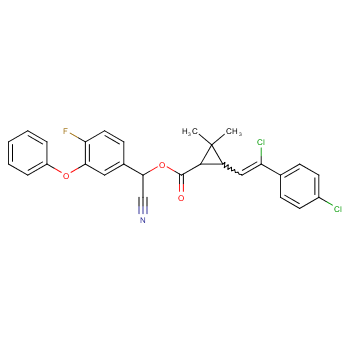
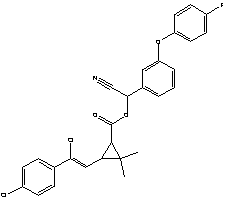
Flumethrin's chemical formula is C19H14F3NO3, and it has a molecular weight of 345.31 g/mol. Its structure features a fluorinated phenyl ring and a cyano group, which are crucial for its strong insecticidal activity. The compound's unique chemical makeup enhances its efficacy as a pest control agent by influencing its interaction with insect nervous systems.

Flumethrin is typically a white to pale yellow solid with a melting point of around 105-110°C and a boiling point of approximately 283°C. It is soluble in organic solvents such as acetone and methanol, but has low solubility in water. The compound is stable under normal conditions but can degrade under extreme environmental conditions. Its CAS number is 69770-45-2, and it is characterized by a faint odor or is generally odorless.
Flumethrin affects nerve impulses by interacting with the voltage-gated sodium channels in the neurons of insects, leading to prolonged nerve signaling and eventual paralysis.
The compound disrupts feeding and reproductive behaviors in insects, contributing to its effectiveness as a pest control agent.
Compared to other pyrethroids, Flumethrin has a distinct chemical structure that influences its potency and duration of action against various pests.
FFlumethrin is widely used in veterinary medicine to manage parasitic infestations in livestock. Its primary applications include controlling ectoparasites such as ticks and fleas. By effectively targeting these pests, Flumethrin helps maintain the overall health and productivity of animals. It is commonly used in various formulations, including spot-on treatments, pour-on solutions, and medicated collars. These treatments help prevent the spread of diseases transmitted by parasites and improve the welfare of farm animals.
In agriculture, Flumethrin is employed to protect crops from pest infestations. It is used in various formulations, such as sprays and granules, to manage a range of agricultural pests that can damage crops. By applying Flumethrin, farmers can reduce pest-related damage, which in turn helps improve crop yield and quality. This application is crucial for protecting valuable crops and ensuring a consistent and high-quality harvest.
Flumethrin is incorporated into several pest control products designed for household use. These products target common household pests such as mosquitoes and flies. It is included in insecticides and repellents to help control and eliminate pests that can be a nuisance or pose health risks to residents. Household formulations often come in the form of sprays, diffusers, or other easy-to-use applications, providing effective pest management solutions for home environments.
In industrial settings, Flumethrin is utilized to address pest issues in warehouses, processing facilities, and other commercial spaces. Its use in these environments helps to prevent infestations that could potentially damage goods or disrupt operations. Flumethrin-based pest control measures in industrial settings are often implemented through targeted treatments and regular monitoring to ensure a pest-free environment, contributing to efficient and hygienic operations.
Exposure to Flumethrin can pose potential health risks to humans and animals, particularly affecting the nervous system. Symptoms of exposure may include neurological disturbances such as headaches and dizziness. To mitigate these risks, it is vital to avoid inhalation, ingestion, or skin contact with the compound. Additionally, Flumethrin can impact non-target species and ecosystems, making responsible use and adherence to environmental guidelines essential for minimizing ecological harm.
Flumethrin is a powerful insecticide with significant applications in various fields. Understanding its properties, mechanism of action, and safety considerations is essential for effective and responsible use.
|
 |
 |
 |
|
 |
 Agricultural News
 Food News
 Industrial News
 Cosmetic News
 Pharmaceutical News
 Science News

 2YRS
2YRS

