Gossypol, as a natural compound, carries substantial potential for medical and agricultural applications. Its unique structure and properties have attracted significant attention and exploration from both the scientific and industrial communities.
What is Gossypol?
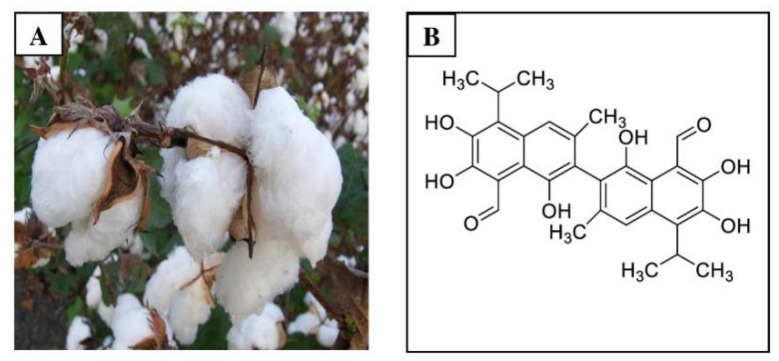
Gossypol Definition: Gossypol (GOSSYPOL) is a phenolic compound that was first isolated in 1899. The name derives from the genus name of the plant (Gossypium) combined with the suffix "ol" from phenol. Gossypol is produced by pigment glands in the stems, leaves, seeds, and flower buds of cotton plants. These pigment glands appear as small black dots throughout the cotton plant, but their highest concentration is in the seeds. Sea Island cotton seeds can contain up to 34 grams of gossypol per kilogram. Gossypol has various toxic effects on vertebrates but provides the cotton plant with insect resistance. The pigment glands produce additional phenolic pigments (at least 14 types), but these are present in much lower concentrations and are thus much less toxic than gossypol.

Chemical Properties and Structure of Gossypol
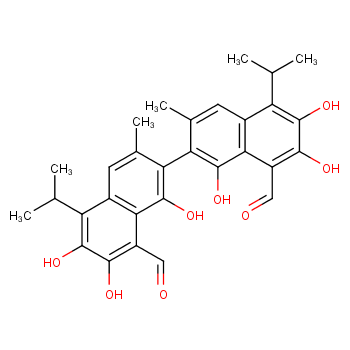
Gossypol has a molecular weight of 518.55 Daltons, appears as a yellow pigment, and forms crystals that are insoluble in water and hexane, but soluble in acetone, chloroform, ether, and methyl ethyl ketone. Its chemical formula is C30H30O8, and its chemical structure is 2,2′-bis(8-formyl-1,6,7-trihydroxy-5-isopropyl-3-methyl-naphthalene).
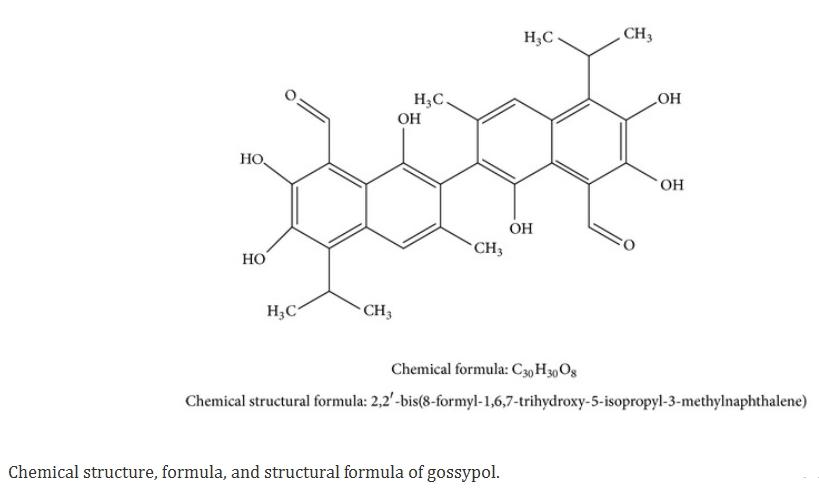
Gossypol is a mixture of two enantiomers, namely (?) and (+) gossypol. The (?) gossypol enantiomer is eliminated more slowly, even though it is the most biologically active form. Therefore, it is more toxic than (+) gossypol. Different Gossypium species produce these enantiomers in varying ratios, which is genetically determined. For example, the proportion of (-) gossypol in Upland cotton (G. hirsutum) seeds ranges from 33.8% to 47.0%, while in Sea Island cotton (G. barbadense) seeds, it ranges from 24.9% to 68.9%.
Two forms of gossypol have been observed: free and bound. The bound form results from covalent bonds between gossypol and the free ε-amino groups of lysine and arginine through browning or Maillard reactions. However, this reaction reduces the availability of amino acids for animal absorption, with lysine being most affected.
Sources of Gossypol: What Foods Contain Gossypol?
Gossypol is a natural phenol and a chemical compound found in various parts of the cotton plant, particularly in the seeds, roots, and stems. Although it has some potential health benefits, it can also be toxic if consumed in large quantities.
Natural Sources of Gossypol
The primary source of gossypol is the cotton plant (Gossypium species). Here is a breakdown of where gossypol is concentrated in the cotton plant:
(1) Cotton Seeds
These are the richest source of gossypol. The pigment glands in cotton seeds contain gossypol, which can be toxic if consumed directly.
(2) Cotton Roots and Stems
These parts of the cotton plant also contain gossypol but at lower concentrations than the seeds.
Common Foods and Plants Containing Gossypol
Since cotton seeds are rich in gossypol, foods derived directly from cotton seeds are the main dietary sources of gossypol. Here are a few examples:
(1) Cottonseed Meal
If improperly processed, protein-rich meal used as livestock feed may contain gossypol. Cottonseed and cottonseed meal are widely used as protein supplements in animal feed.
(2) Cottonseed Oil Soapstock
Soapstock, a by-product of cottonseed oil refining, is increasingly used as an animal feed additive.
(3) Unrefined Cottonseed Oil
While most gossypol is removed during the processing of cottonseed oil, trace amounts may still remain. Fortunately, refined cottonseed oil is generally considered safe. However, unrefined cottonseed oil might contain higher levels of gossypol than refined oil and can be found in some foods, such as baked goods and fried snacks.
Medical Applications of Gossypol: Therapeutic Uses and Benefits
(1) Potential Male Contraceptive
Gossypol has been studied as a male contraceptive because it can interfere with sperm production. However, studies have shown that it can cause irreversible infertility in some men, making it unsuitable for this purpose.
(2) Anticancer Properties
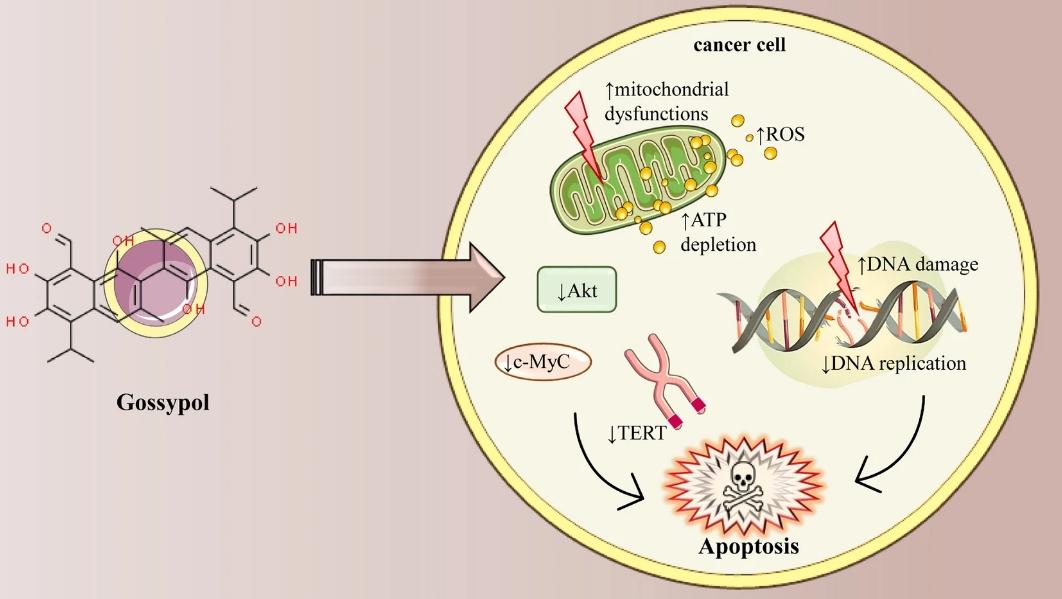
Research is exploring the potential use of gossypol in cancer treatment. It appears to have antitumor properties and may be effective against various cancers.
Agricultural Applications of Gossypol: Benefits and Uses
Natural Insecticide. Gossypol produced by cotton acts as a natural defense mechanism against insects and other pests. This property makes gossypol a potential alternative to synthetic pesticides.
Potential Risks and Side Effects of Gossypol
Traditionally, cottonseeds have been treated as a by-product due to the natural toxicity of gossypol, which greatly limits their edibility. Gossypol, a sesquiterpene found in cottonseeds, serves as a phytoalexin to protect the plant from pests, diseases, and abiotic stress. However, when ingested, gossypol can severely impair the normal functions of the respiratory, reproductive, and immune systems in humans, with only large ruminants like cattle being able to safely digest this toxin (Gadelha et al., 2014). This not only increases the processing cost of cottonseed oil by 20% but also hinders the use of cottonseed protein (CSP) and cottonseed meal (CSM) as human food (Zhang and Wedegaertner, 2021). The US Food and Drug Administration (USFDA) has approved cottonseed containing no more than 450 ppm of free gossypol for human consumption. However, most cottonseed harvested in agricultural production exceeds this threshold, preventing its full utilization for enhancing human nutrition and health.
Frequently Asked Questions About Gossypol
(1) What is Gossypol?
Gossypol is a natural toxin found in the cotton plant.
(2) Is Gossypol Safe to Eat?
It depends on the context. Refined cottonseed oil, commonly used in cooking, contains negligible amounts of gossypol and is safe to consume. However, unrefined cottonseed products or whole cottonseeds may contain high concentrations of gossypol, which can be harmful.
Future Research and Development on Gossypol Applications
While research into the potential applications of gossypol continues, particularly its prospects as an anticancer agent, future developments may focus on improving its safety. This involves creating gossypol derivatives that retain therapeutic benefits while minimizing potential side effects. Additionally, exploring how gossypol can synergize with existing cancer treatments could expand its use in oncology. Overall, future gossypol research aims to maximize its efficacy and availability while ensuring patient safety.
Conclusion
Continuous research and exploration in the scientific community are gradually revealing the impressive diversity and broad scope of gossypol's potential uses. With a deeper understanding of its properties and applications, we can expect to see more innovative uses of gossypol in medicine, agriculture, and even environmental protection. The discovery and utilization of this natural compound will continue to bring new hopes and opportunities for human progress and development.
References:
[1]https://www.msdvetmanual.com/toxicology/gossypol-poisoning/gossypol-poisoning-in-animals
[2]https://www.ncbi.nlm.nih.gov/pmc/articles/PMC4033412/
[3]https://www.frontiersin.org/journals/plant-science/articles/10.3389/fpls.2022.1080407/full
[4]https://cmjournal.biomedcentral.com/articles/10.1186/s13020-023-00869-8
[5]https://pubmed.ncbi.nlm.nih.gov/6928215/



 4YRS
4YRS