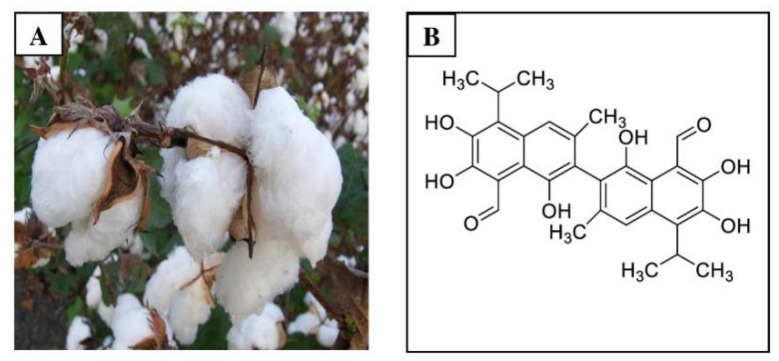
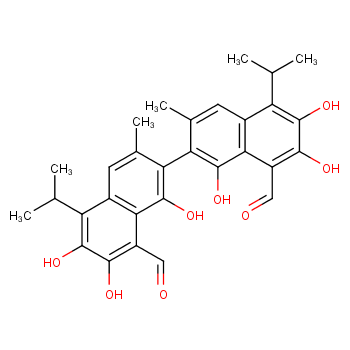
Gossypol is a lipophilic polyphenol derived from cotton plants (Gossypium spp.) and the tropical tree Thespesia populnea (L.) Sol. ex Corre (Malvaceae). Chemically known as (2,2′-binaphthalene)-8,8′-dicarboxaldehyde, 1,1′,6,6′,7,7′-hexahydroxy-5,5′-diisopropyl-3,3′-dimethyl), it is the most important natural pigment in cotton (Gossypium hirsutum L.). In the late 19th century, Longmore and Marchlewski isolated and crystallized gossypol, naming it for its origin in the Gossypium genus and its phenolic properties. Gossypol (molecular formula: C30H30O8) is rich in fiber but low in protein content (as shown in the figure). G. hirsutum seeds produce both free and bound forms of gossypol. Both forms are generated during the growth and maturation phases, though their proportions may fluctuate during storage or depending on the method of cottonseed oil extraction. The free form of gossypol is toxic and can have harmful consequences for animals and humans, such as infertility, while the bound form, attached to proteins, is harmless. Bound gossypol reduces the nutritional value of proteins, the bioavailability of lysine (an essential amino acid), and the digestibility of cottonseed meal through its interaction with the ε-amino group of lysine. Although gossypol was initially used as a male contraceptive, further research has shown that gossypol uses are highly diverse. This polyphenol has nutritional value and medicinal properties, including antiviral, antioxidant, antiparasitic, and antibacterial activities.

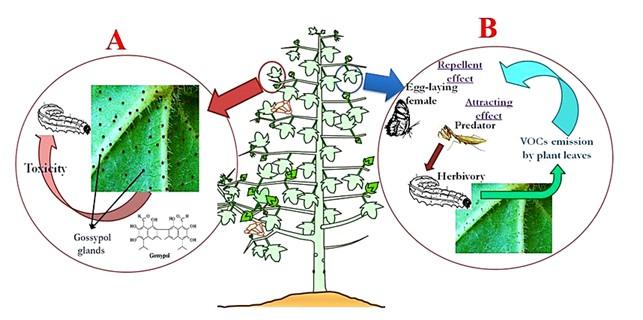
Gossypol has insecticidal properties, meaning it can kill or repel insects. This characteristic makes it a potential biopesticide for organic agriculture and integrated pest management (IPM) programs.
Seham Ismail and colleagues evaluated the gossypol levels in different parts of the cotton plant (Giza 86, Giza 80, and Giza 45) during growth stages. They studied its effects on cotton thrips, tobacco thrips, pink bollworm, and cotton bollworm under field conditions. Statistical analysis indicated a positive correlation between the gossypol content in the seeds and the detected gossypol amount in various plant parts. Giza 86 and Giza 45 seeds had significantly higher gossypol content, 1.90% and 1.52%, respectively, compared to 1.45% in Giza 80. Consequently, the Giza 86 cotton variety exhibited higher gossypol content in all plant parts. The 2019 field trials showed that higher gossypol levels negatively impacted the population size of whitefly adults and nymphs and cotton bollworm larvae infesting cotton bolls.
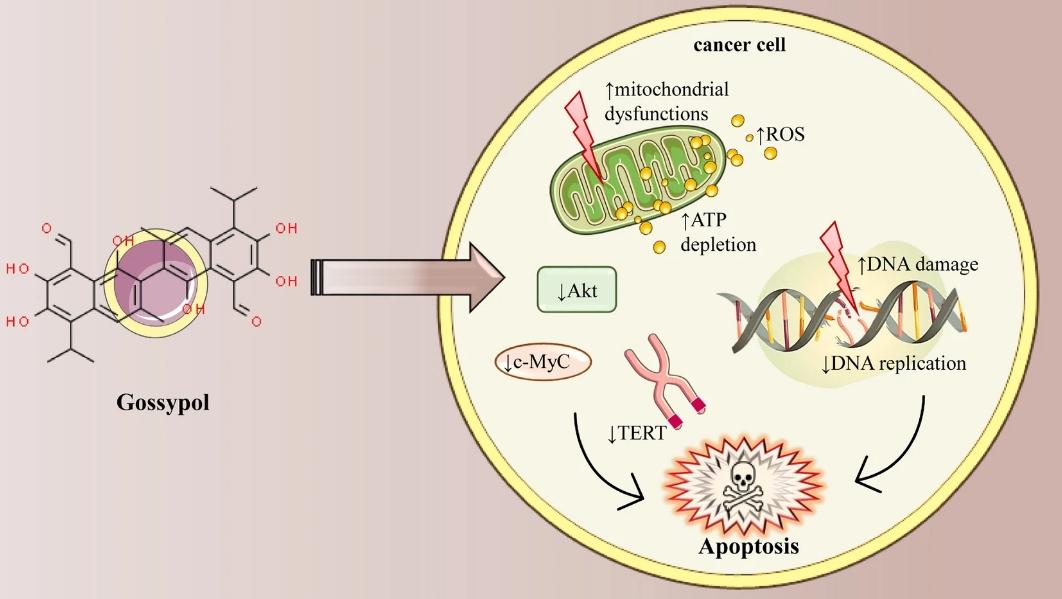
Gossypol induces infertility in most animals and halts spermatogenesis in humans at relatively low doses. Studies conducted in China, Africa, and Brazil showed good tolerance of this substance without side effects leading to discontinuation. Clinical trials in China in the 1970s proposed gossypol as a male contraceptive.
Reports from studies in China confirmed the effectiveness of gossypol as a male contraceptive. G. M. Waites and colleagues conducted extensive studies on formal animal toxicology and the recovery of male fertility after discontinuation. Research by the International Chemical Sciences Development Organization indicated that out of 70 highly purified new gossypol structures, 40 had activity not higher than gossypol itself. Experiments on Sprague-Dawley rats and crab-eating macaques confirmed that (-) or (+) gossypol toxicity was too high for human contraceptive development. Among gossypol's side effects, the most severe was hypokalemic paralysis, with varying incidence rates potentially due to regional differences in dietary potassium intake and genetic predisposition. Two independent studies confirmed the risk of permanent infertility in healthy reproductive males, with an irreversible infertility incidence of 25%. Failure to recover in patients discontinuing gossypol treatment was attributed to longer treatment durations, higher total gossypol doses, smaller testicular volume, and elevated follicle-stimulating hormone concentrations. Due to the increased risk of irreversible testicular damage and low recovery rates, M. Waites and colleagues recommended halting clinical studies on gossypol.
Cottonseed can be processed into edible oil, cottonseed meal, linters (short fibers), and cottonseed hulls. Marketed cottonseed meal contains 50%–90% protein, depending on its intended use. Cottonseed and cottonseed meal are widely used as protein supplements in animal feed. Cottonseed oil soapstock is a major by-product of cottonseed oil refining. Soapstock is increasingly used as an animal feed additive, and cottonseed hulls provide additional fiber in animal feed with much lower gossypol concentrations than whole cottonseed.
Besides its use in cooking, gossypol oil has potential health benefits. Research suggests it may have antioxidant and anti-inflammatory properties. However, more studies are needed to confirm these effects.
In summary, gossypol is a multifunctional compound with broad application prospects. With further research into its properties and characteristics, we can anticipate its expanded use and development in various fields. By continuously exploring and innovating, we can maximize gossypol's potential, bringing more benefits to the advancement and progress of human society.
 |
 |
|


 4YRS
4YRS