-
We detected your language preference as English. Would you like to switch to the English version for a better experience?
Switch to English
Stay here


Embarking on the journey to understanding thiourea dioxide's synthesis process unveils a realm of possibilities in various chemical reactions and industrial applications. In this article, we delve into the methodologies of producing thiourea dioxide, exploring its production intricacies, and its manifold applications across the chemical industry. Understanding the production process of thiourea dioxide is pivotal in ensuring product quality and enhancing production efficiency, thereby driving advancements in chemical engineering, textiles, and beyond.
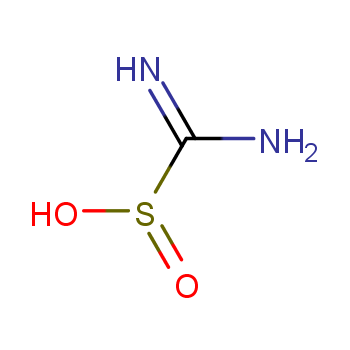
Thiourea dioxide presents as white or pale yellow odorless crystalline powder, with a melting point at 126°C. It dissolves in water (27 g/L at room temperature) and exhibits exothermic decomposition above 126°C, releasing toxic gases (sulfur oxides, ammonia, carbon monoxide, nitrogen oxides, and hydrogen sulfide) and carbon dioxide. Prolonged exposure to temperatures exceeding 50°C and humidity may lead to significant degradation. It irritates the skin and mucous membranes and is corrosive to ocular tissues. Thiourea dioxide finds utility as a bleaching agent in leather processing, papermaking, photography, and textile processing industries.
Synthesis pathways of thiourea dioxide commonly encompass three methods: utilizing ozone and thiourea, employing calcium cyanamide, ammonium sulfide, and hydrogen peroxide, and utilizing thiourea and hydrogen peroxide. These methods can be categorized into two major classes based on the solvents used: aqueous and non-aqueous solvent methods, and further classified into batch and continuous methods based on operational techniques.

This method employs solvents such as carbon tetrachloride, dichloroethane, chloroform, ethanol, and isopropanol. Although this method yields high process efficiency due to the complete crystalline precipitation of the product, it compromises product purity, significantly affecting product quality.
This involves preparing thiourea into an aqueous solution, continuously adding hydrogen peroxide into the reaction vessel in proportion, controlling the pH of the slurry, reaction temperature, and residence time, rapidly cooling the reaction product discharged from the reactor to obtain a slurry of crystals, and subsequently separating the crystal product. However, due to the complexity of the process, large equipment footprint, and low yields, this method hasn't gained widespread recognition.
This method, predominantly used in domestic production, typically operates in an intermittent manner with water as the solvent. While this method offers advantages such as a short process, fewer equipment requirements, and simple operation, it suffers from prolonged material residence time in the reactor, increased secondary reactions, and unstable product quality.
Various methods have long been known for the reaction of thiourea with hydrogen peroxide to produce thiourea dioxide, with efforts to enhance reaction yields and obtain high-purity products. For instance, maintaining the reaction temperature within a certain range, refining the feeding method of thiourea and hydrogen peroxide, controlling the molar ratio of thiourea to hydrogen peroxide in the reaction solution, and maintaining the pH of the reaction solution as neutral or weakly acidic are primary methods to prevent side reactions.
U.S. Patent US4235812 provides a method for preparing thiourea dioxide, characterized by the addition of ammonium hydrogen carbonate to the reaction solution at an appropriate time during the reaction of thiourea with hydrogen peroxide in an aqueous solution to produce thiourea dioxide. The specific steps include adding ammonium hydrogen carbonate (10g/l) to a thiourea solution with a concentration of 130g/l to prepare a mixed solution. Then, simultaneously adding the mixed solution and hydrogen peroxide (concentration of 600 g/l) into the reactor and vigorously stirring, maintaining the temperature below 10°C; as the reaction progresses, crystals of thiourea dioxide deposit to form a mixed solid-liquid phase. The deposited crystals can be continuously separated or left as a mixed solid-liquid phase until the reaction is complete. Ideally, after the reaction between thiourea and hydrogen peroxide is complete, the crystals of thiourea dioxide are aged and then filtered. According to this operation, a yield of 85% to 90% and a purity of 99% or higher of thiourea dioxide can be obtained.
The preparation methods of thiourea dioxide mainly include batch aqueous solvent methods and continuous production processes. Among them, the batch aqueous solvent method is the main production technology in China at present, but there is still a certain gap compared to foreign countries. The continuous production process is the direction of future research and development, with advantages such as increased yield, improved purity, and extended shelf life. Some innovative methods and technologies are also disclosed in patents. For example, a low-temperature synthesis method of thiourea dioxide, which reduces the excessive oxidation of thiourea dioxide by controlling the temperature of the reaction solution, dripping hydrogen peroxide under stirring conditions, resulting in rapid product precipitation and increased reaction yield. This method is simple and suitable for industrial production.
Thiourea dioxide is utilized in pulp bleaching, particularly demonstrating excellent deinking effects on waste newspaper pulp. It requires minimal usage, ensures safety and stability, corrodes equipment minimally, and minimizes environmental pollution.
Thiourea dioxide enhances the photosensitivity of silver halides in the photographic film industry. It is used as a sensitizer for anti-fouling agents or as a reducing agent for heavy amine fuels.
Adding thiourea dioxide in detergents enhances the solubility of proteins, boosting detergent's cleaning efficacy, exhibiting bleaching properties, and removing rust, blood, and other stains from garments.
Thiourea dioxide serves as a reagent for reducing aromatic nitro compounds and diazo compounds to amines, quinones to hydroquinones, and certain dyes to colorless derivatives. It also acts as an extractant for rare metals like platinum, silver, uranium, rhodium, and iridium.
Thiourea dioxide excels in bleaching natural fibers like wool, silk, and cotton, especially in weakly alkaline environments, without damaging the fibers. Its bleaching agent waste is easily treatable. It's also used for dyeing pure cotton, polyester, and blended fibers, providing uniform color, wash resistance, abrasion resistance, sun resistance, colorfastness, high brightness, minimal usage, and low toxicity in wastewater discharge, thereby facilitating environmental protection.
Thiourea dioxide's application in textile industry spans desizing, bleaching, dyeing, and stripping processes, offering concentration flexibility, mild conditions, high whiteness, excellent gloss, stable solutions, and a wide range of bleaching dyes. A mixture of thiourea dioxide and tripolyphosphate de sodium applied to soak wool-polyester blends achieves excellent reduction cleaning, maintains color stability for an extended period without discoloration or yellowing. Due to its superior reducing power compared to other chemical agents, it exhibits strong dye removal capabilities, suitable for dye stripping and vat cleaning with remarkable results.
Given thiourea dioxide's potential hazards, prioritizing safety precautions is paramount during handling. It poses various risks upon contact or inhalation, irritating skin, eyes, and respiratory systems. Hence, employing appropriate personal protective equipment (PPE) like gloves, safety goggles, and respiratory protection is imperative when using this compound. Adequate ventilation in workspace minimizes exposure to fumes or vapors. Careful handling and adherence to proper procedures are essential to prevent accidental leaks or spills. Optimal storage conditions, such as storing the compound in cool, dry, well-ventilated sealed containers, are necessary to maintain stability and minimize accident risks during transportation.
In conclusion, this article encapsulates the preparation methods and applications of thiourea dioxide, underscoring its significance across various industries and processes. Analyzing relevant patents provides insights into innovative preparation methods and technologies. Thiourea dioxide finds extensive utility in industries such as textiles, photography, and pharmaceuticals, with optimized preparation methods and innovations aiding in enhancing product quality, reducing costs, and driving the development of related industries. Therefore, further research exploration is encouraged to unearth thiourea dioxide's potential application areas, fostering its broader utilization in industrial production and scientific research.
[1] Guo, C., & Zou, C. (2014). Production and applications of thiourea dioxide. Shandong Chemical Industry, 43(09), 110+118. DOI:10.19319/j.cnki.issn.1008-021x.2014.09.042.
[2] [Patent] Retrieved fromhttps://patentimages.storage.googleapis.com/89/26/05/ef6d72069708a2/US4235812.pdf
[3] Thiourea dioxide. (n.d.). In Wikipedia. Retrieved fromhttps://en.wikipedia.org/wiki/Thiourea_dioxide
[4] Thiourea dioxide. (n.d.). In PubChem. Retrieved fromhttps://pubchem.ncbi.nlm.nih.gov/compound/61274
 |
|
 EN
EN
 Agricultural News
 Food News
 Industrial News
 Cosmetic News
 Pharmaceutical News
 Science News

 6YRS
6YRS


